SEARCH
FIND ANYTHING I'VE EVER WRITTEN, RECORDED, OR BUILT. ALL 200+ PIECES OF CONTENT IN ONE PLACE. I'M BASICALLY A ONE-MAN MEDIA EMPIRE, EXCEPT WITHOUT THE EMPIRE PART.
206 RESULTS
FILTER BY TYPE

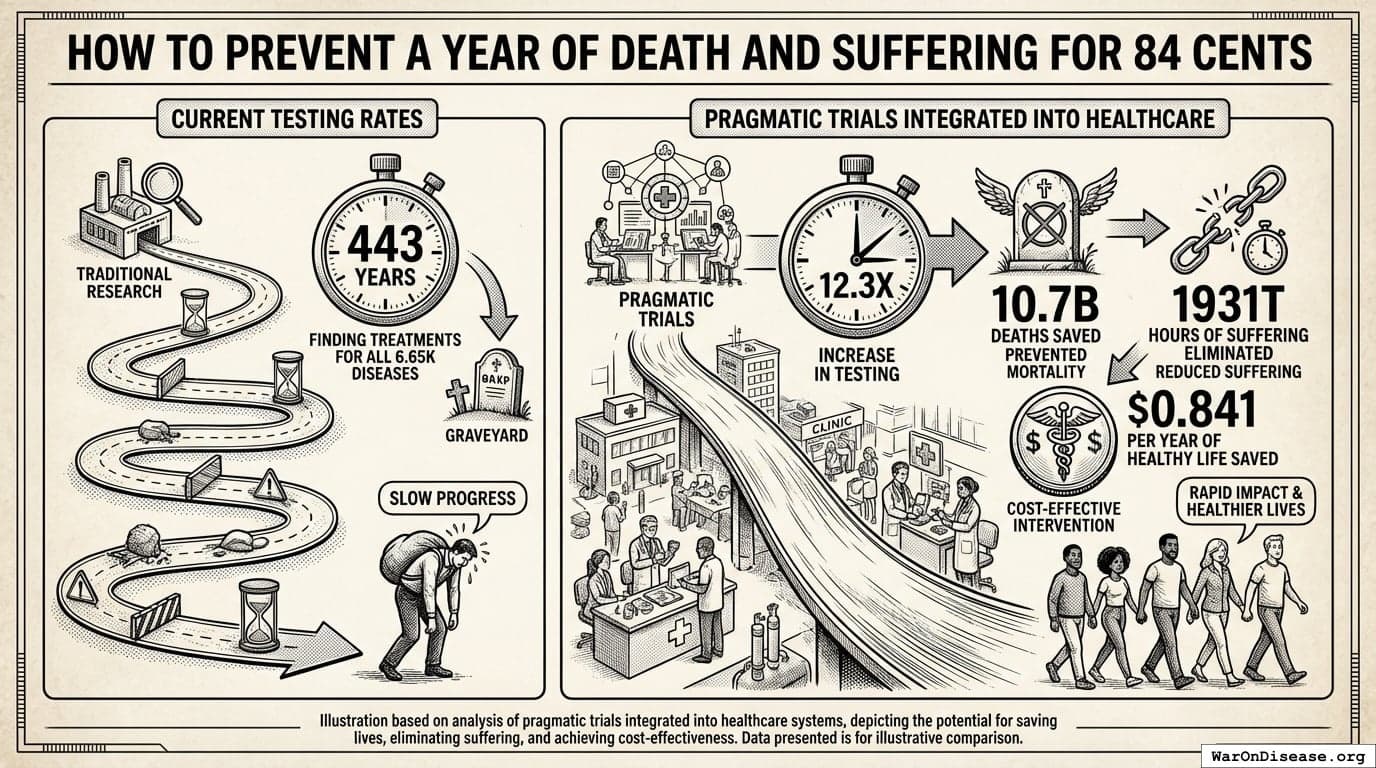
Ubiquitous Pragmatic Trial Impact Analysis: How to Prevent a Year of Death and Suffering for 84 Cents
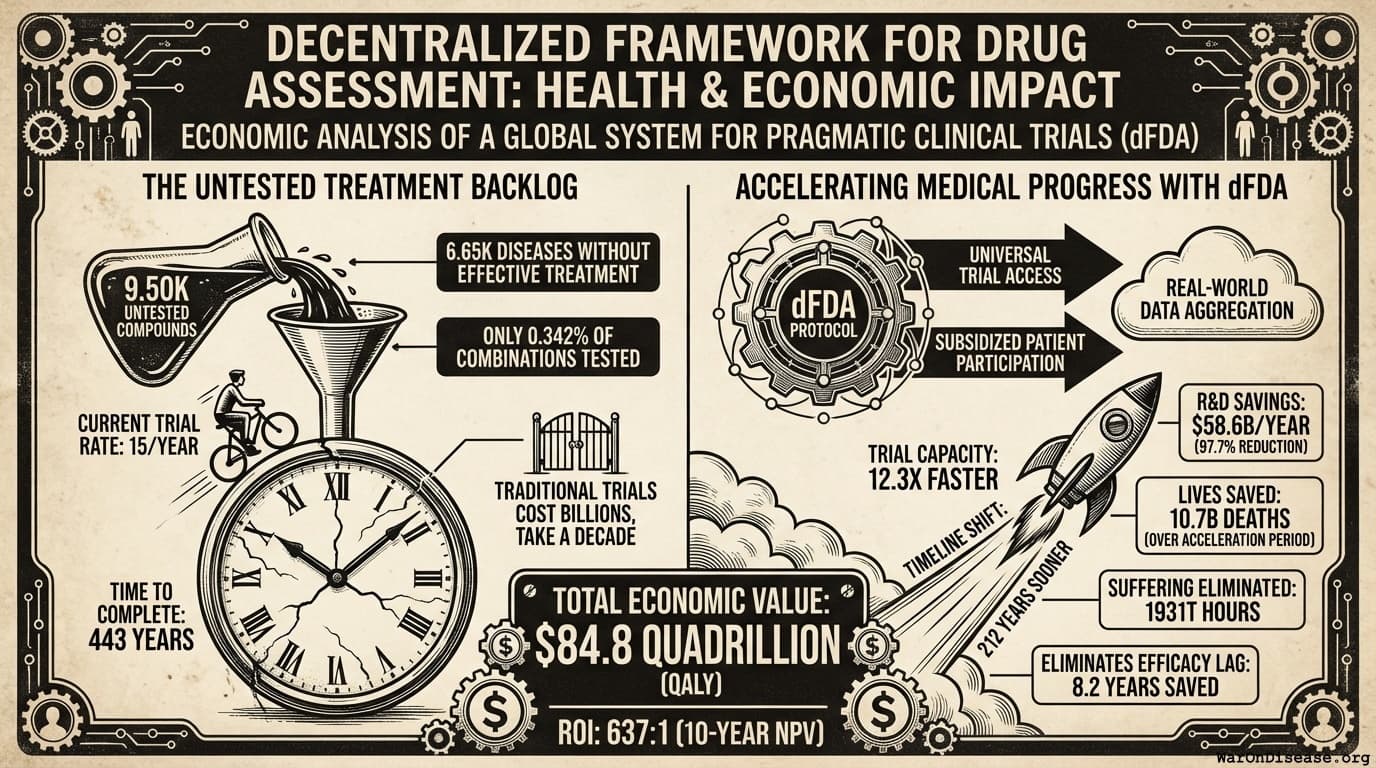
Only 15 diseases/year (95% CI: 8 diseases/year-30 diseases/year) get their first treatment each year. With 6.65 thousand diseases (95% CI: 5.70 thousand diseases-8.24 thousand diseases) lacking effective treatments, the backlog would take 443 years (95% CI: 324 years-712 years) to clear. Integrating pragmatic trials into standard healthcare increases trial capacity 12.3x (95% CI: 4.2x-61.4x), cutting that timeline from 443 years (95% CI: 324 years-712 years) to 36 years (95% CI: 11.6 years-77.1 years). The average untreated disease gets a treatment 212 years (95% CI: 135 years-355 years) earlier, saving 10.7 billion deaths (95% CI: 7.40 billion deaths-16.2 billion deaths) at $0.842 (95% CI: $0.242-$1.75) per year of healthy life saved.
Is This Crazy? – Ubiquitous Pragmatic Trial Impact Analysis: How to Prevent a Year of Death and Suffering for 84 Cents
Integrating pragmatic trials into routine healthcare claims to clear a 443 years (95% CI: 324 years-712 years) treatment backlog at $0.842 (95% CI: $0.242-$1.75)/DALY. One-page calculation chain for economist review.
Methodology, Parameters, and Calculations – Ubiquitous Pragmatic Trial Impact Analysis: How to Prevent a Year of Death and Suffering for 84 Cents
Parameter definitions, formulas, uncertainty ranges, and data sources.
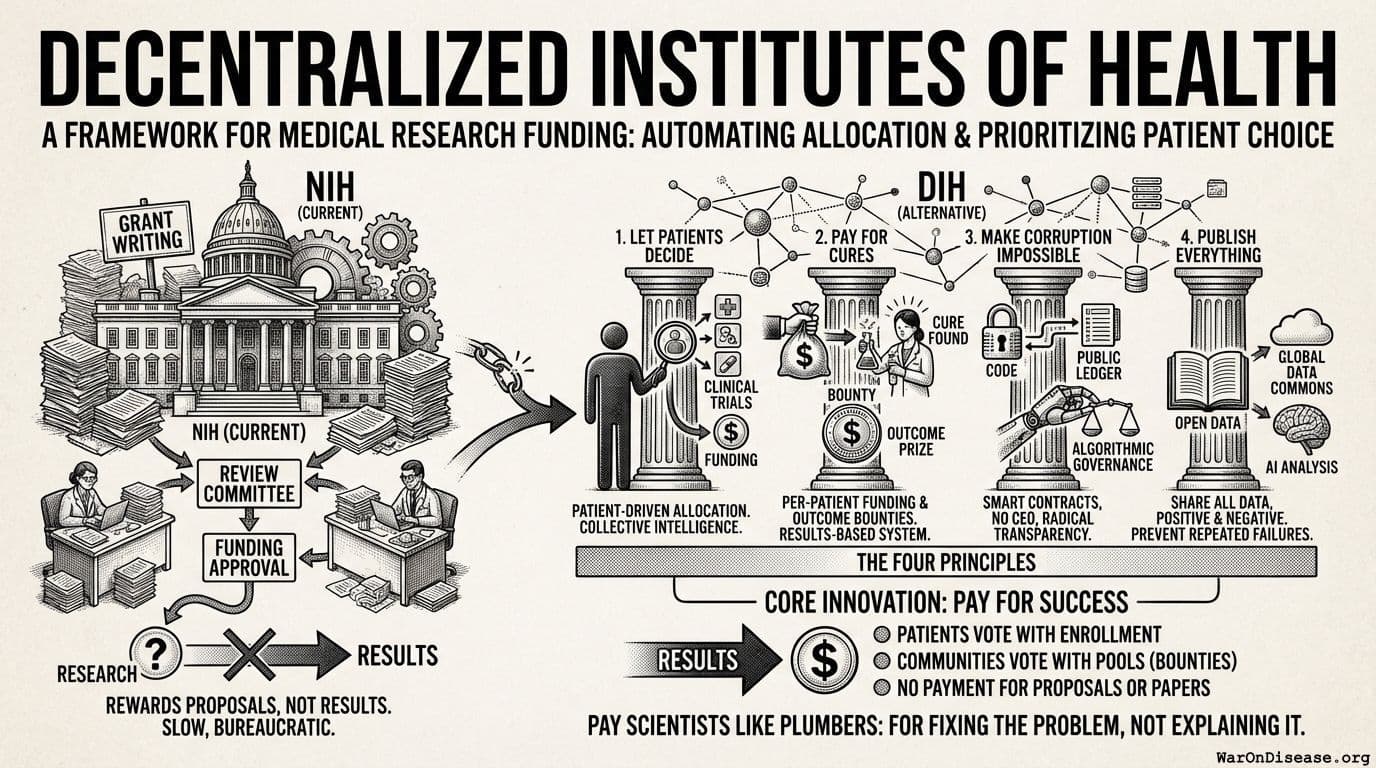

Decentralized Institutes of Health
A thin coordination protocol that makes doing the highest-ROI thing toward disease eradication the selfish choice for every actor.
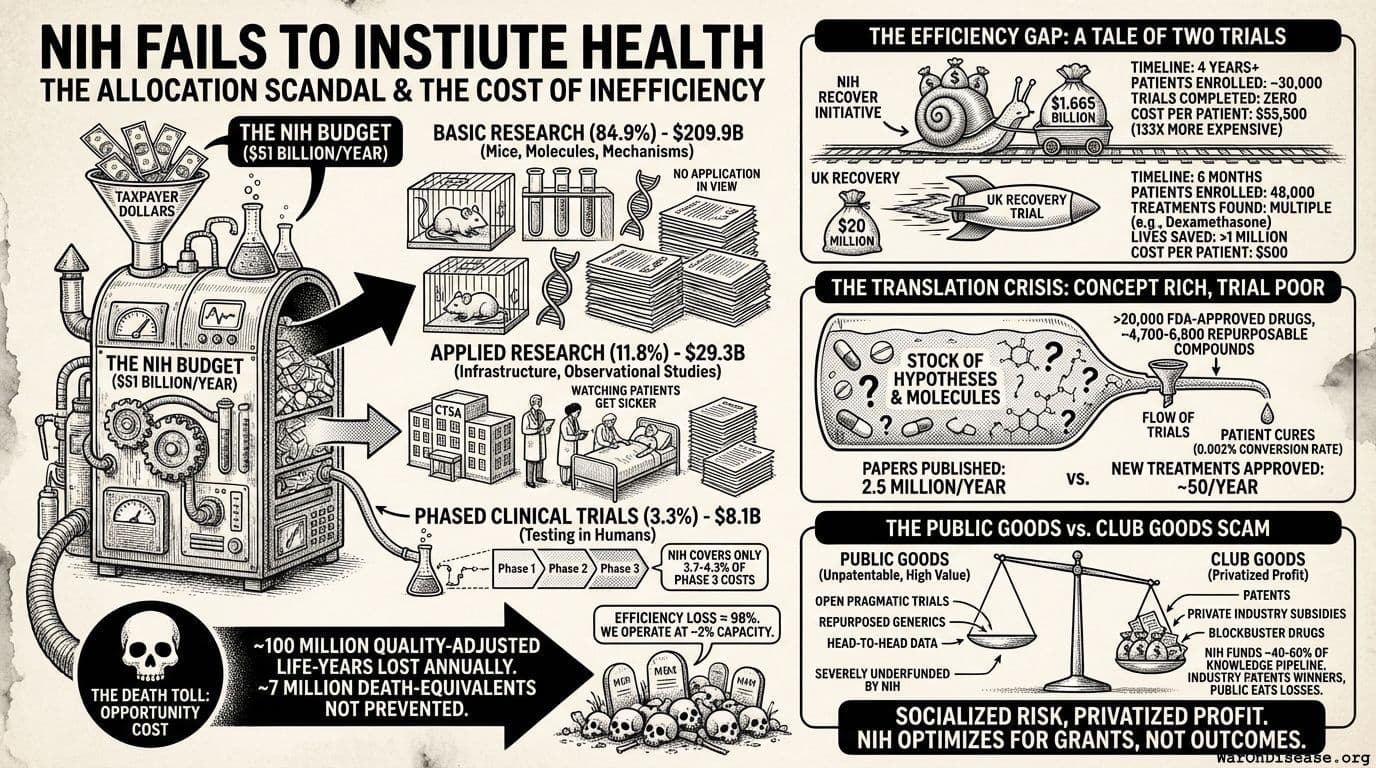
NIH Fails to Institute Health
The NIH spends only 3.3% on testing if drugs actually work in humans and almost nothing on highly efficient pragmatic trials. This misallocation costs ~100 million quality-adjusted life-years annually.
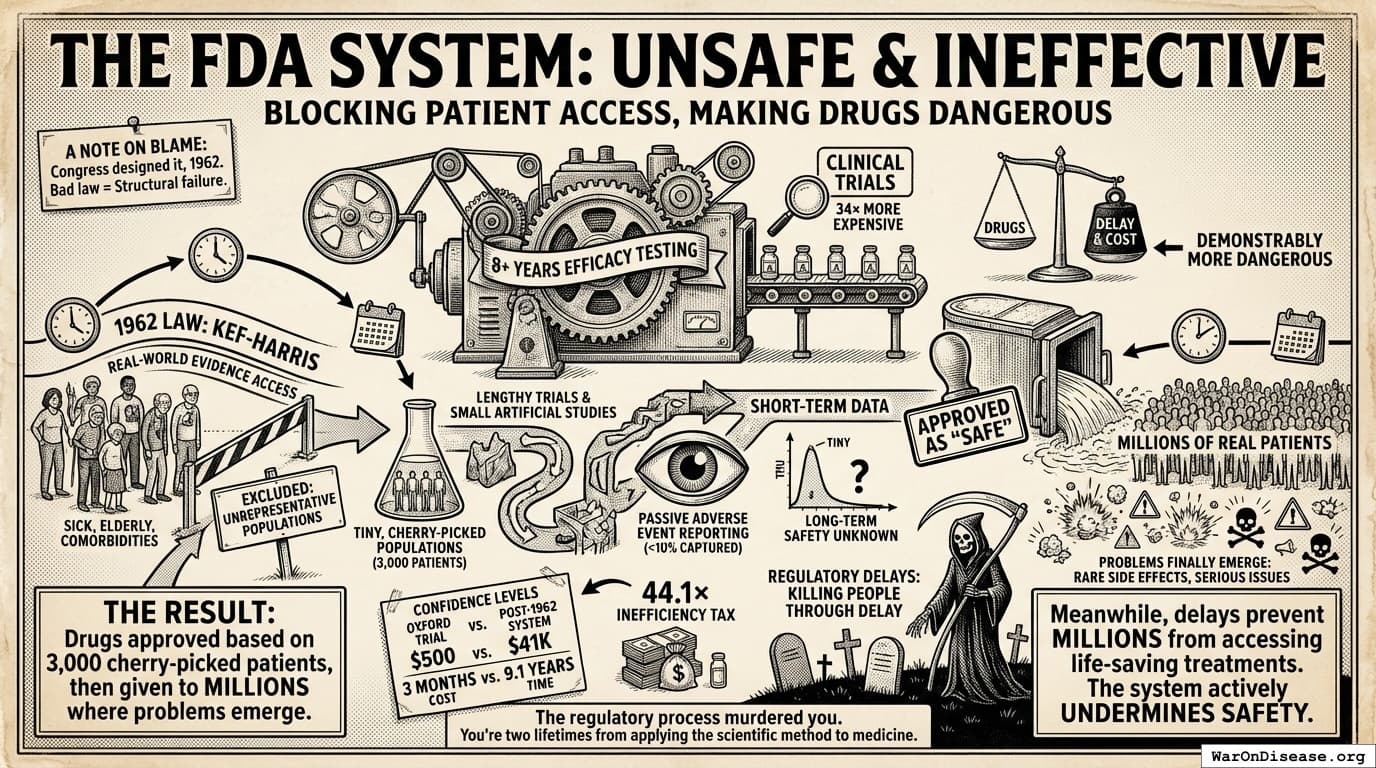
The FDA Is Unsafe and Ineffective
How blocking patient access during 8+ years of efficacy testing made clinical trials 34x more expensive per patient while making drugs demonstrably more dangerous.
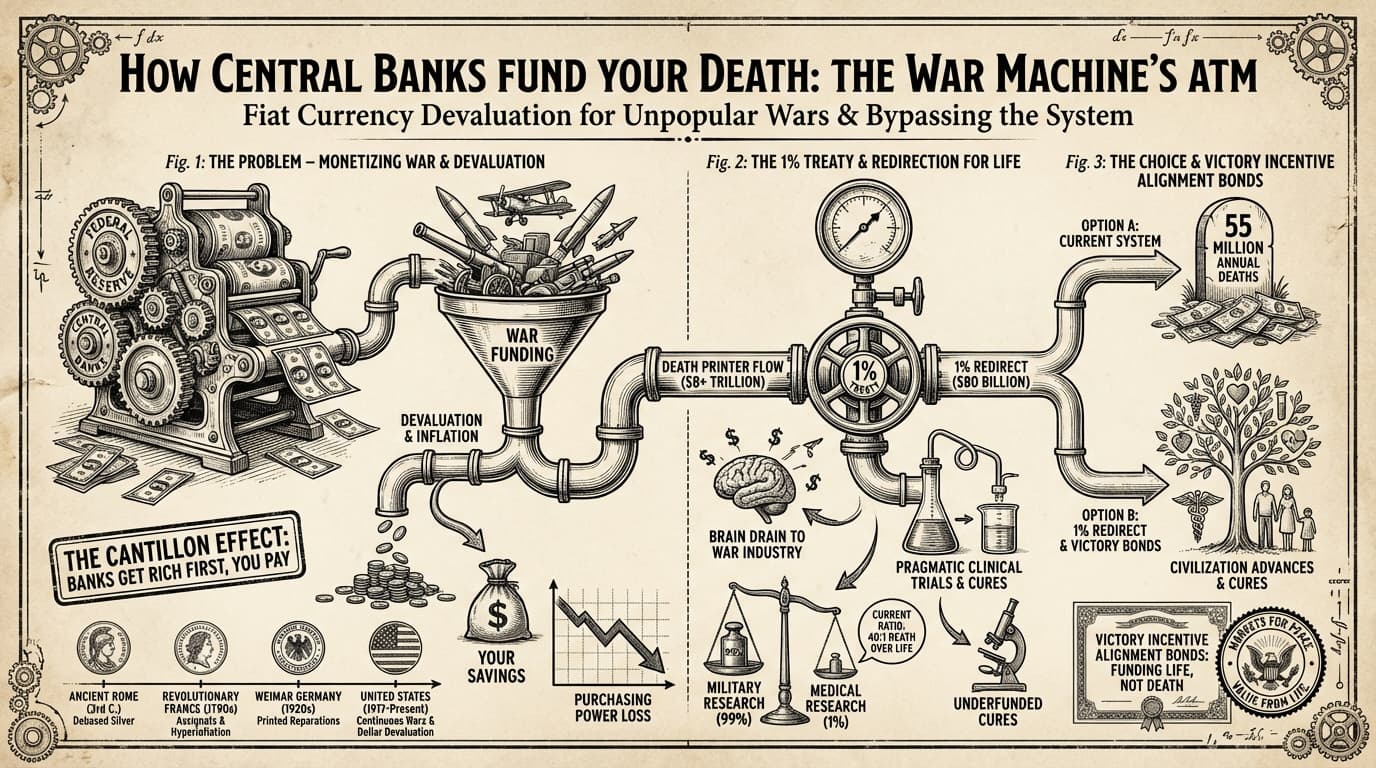
How Central Banks Fund Your Death
The War Machine's ATM: How every fiat currency in history has been devalued to fund unpopular wars, and how to bypass the system.
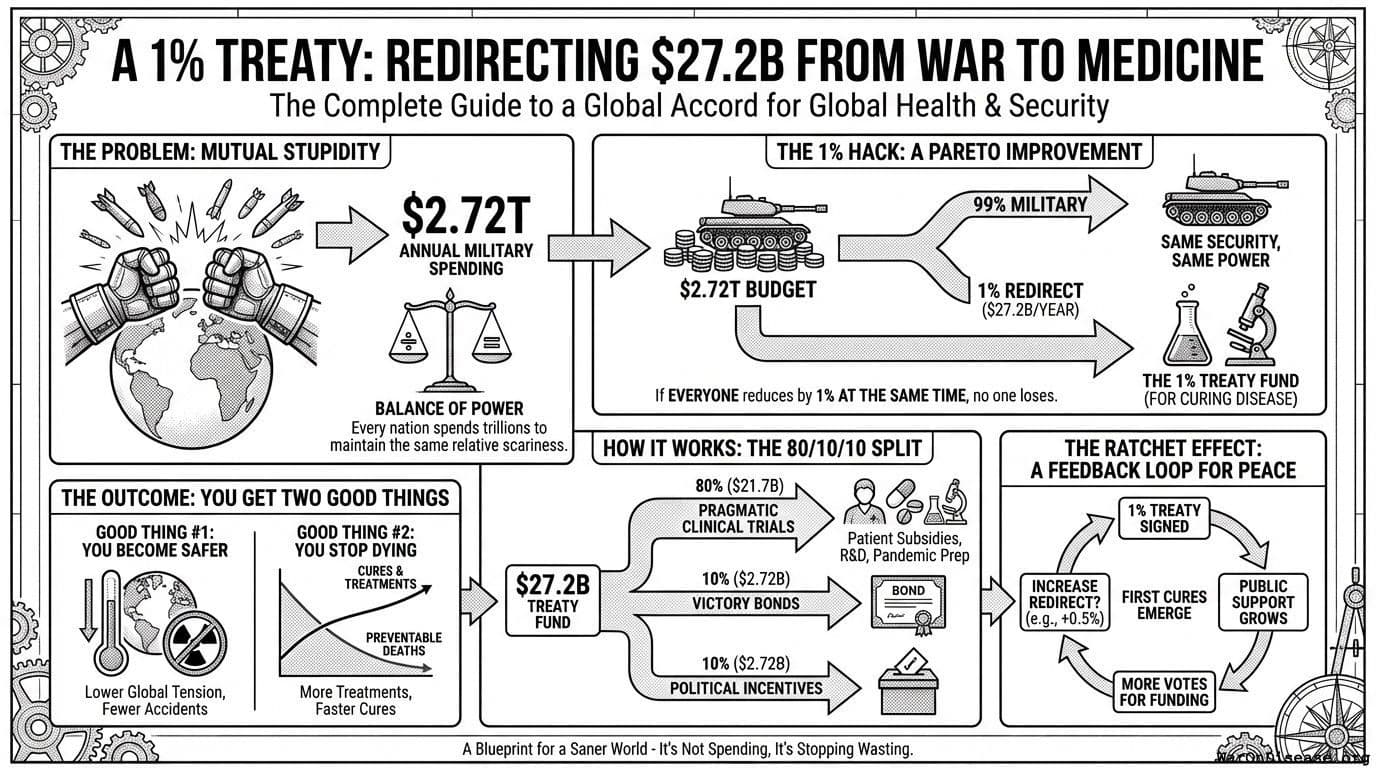
A 1% Treaty
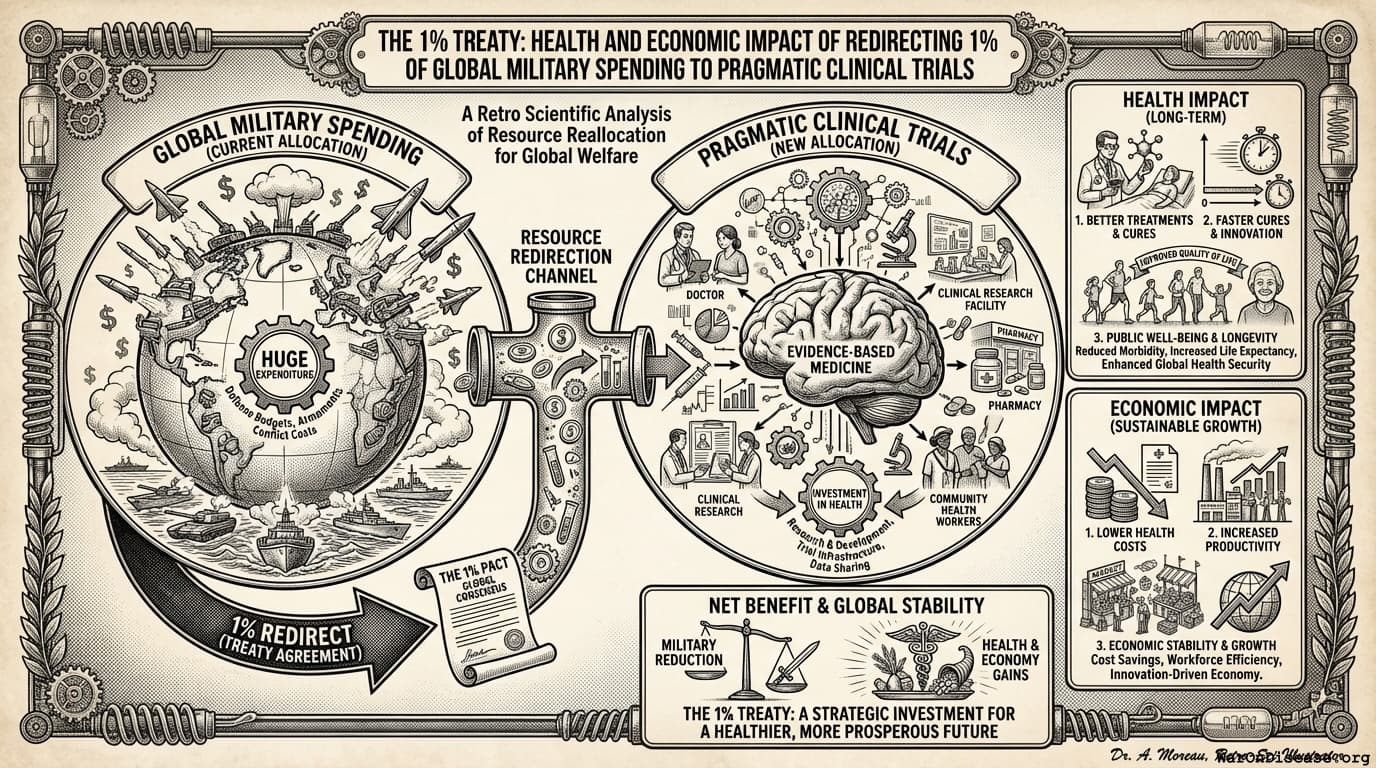
How to Redirect $27.2B from War to Medicine - The complete guide to a 1% treaty, the binding global accord that redirects $27.2B annually from military spending to curing disease while maintaining global security.
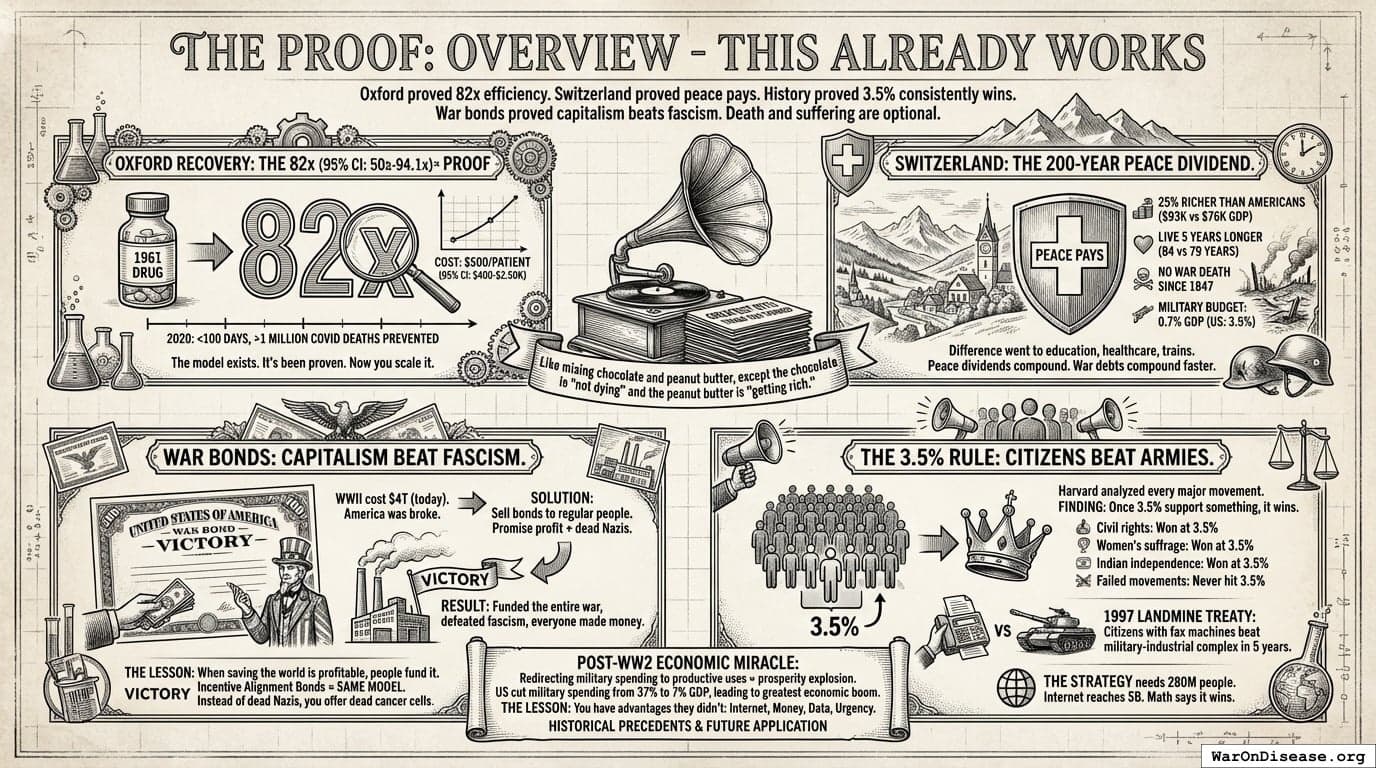
The Proof: Overview
This Already Works - Pragmatic trials prove 44.1x efficiency. History proves every component. Switzerland, war bonds, landmines, the 3.5% rule, and Wall Street's craziest bets all prove humans can accidentally do smart things when properly motivated.
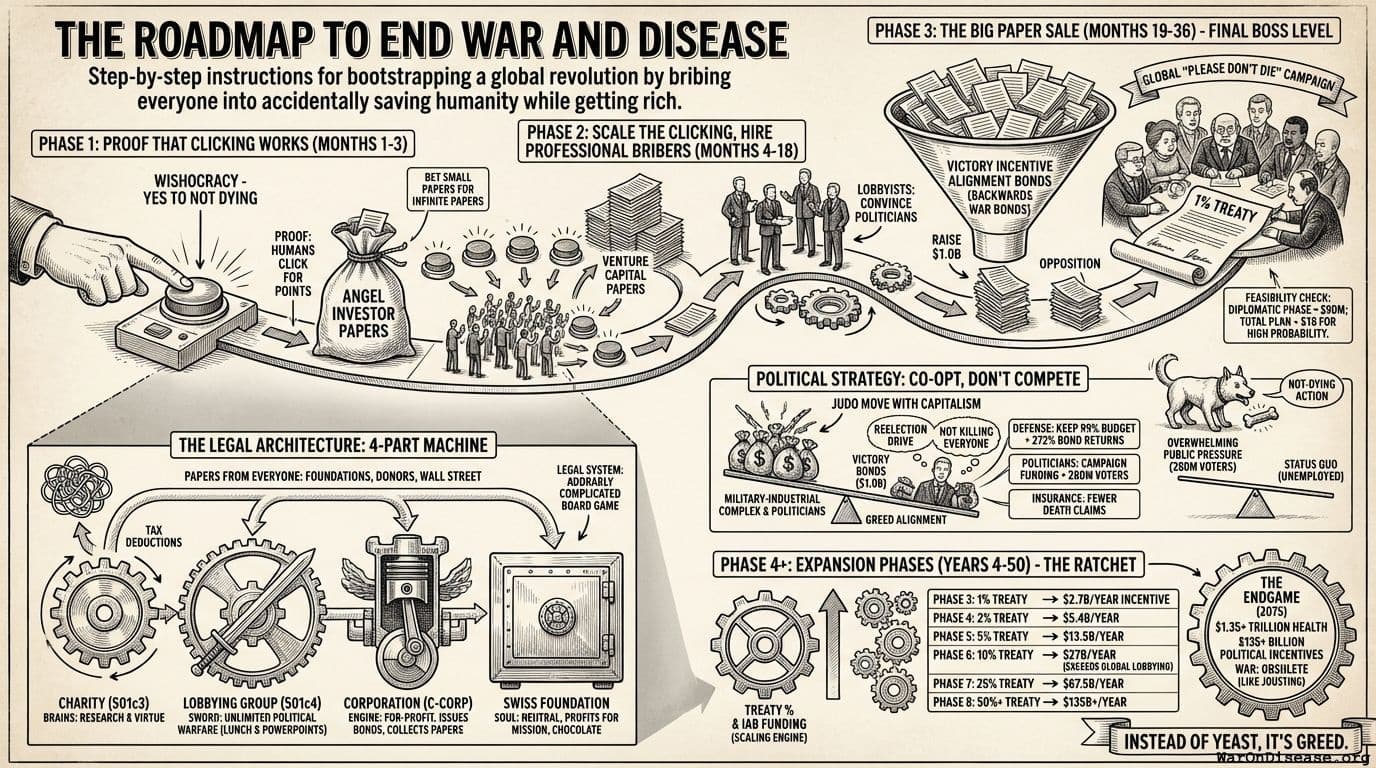
The Roadmap to End War and Disease
Step-by-step instructions for bootstrapping a global revolution by bribing everyone into accidentally saving humanity while getting rich.
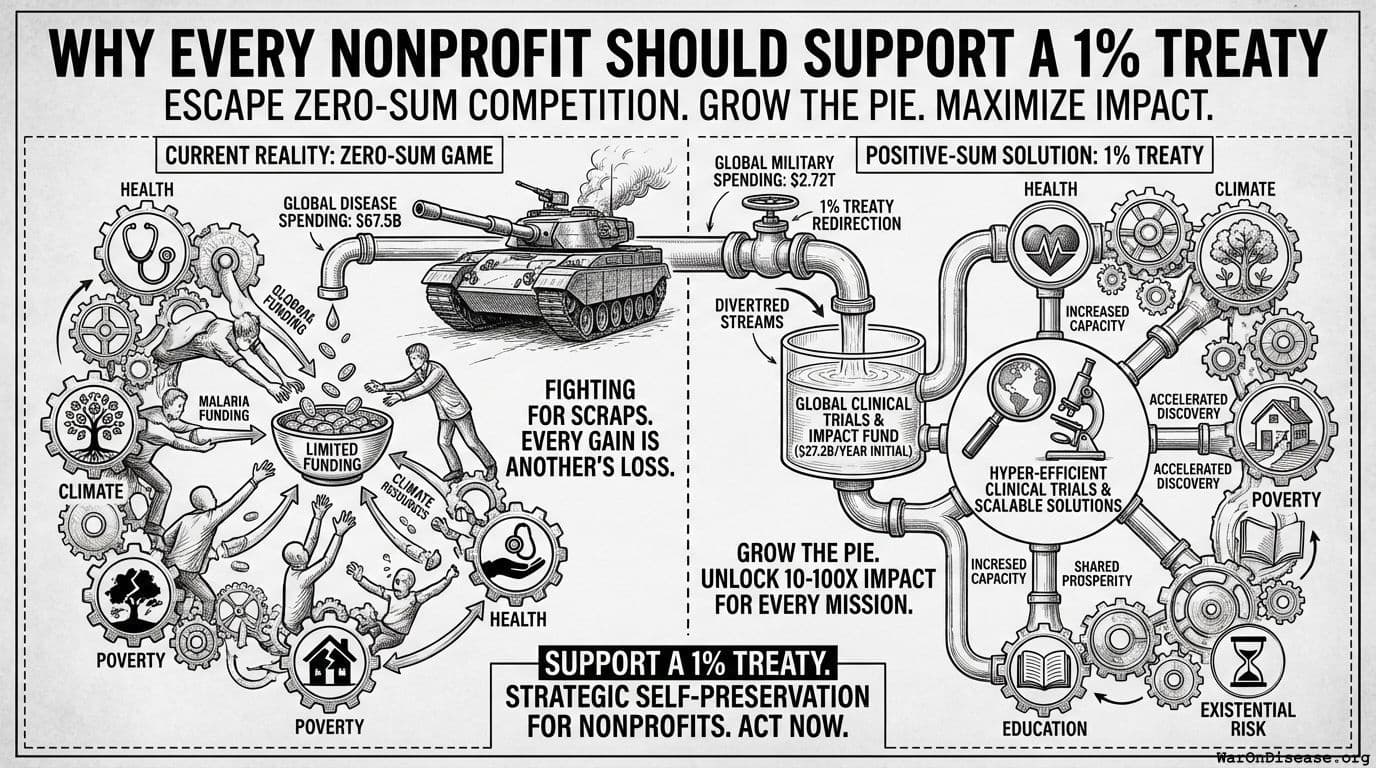
Why Every Nonprofit Should Support a 1% treaty
The strategic case for nonprofit coalition-building around a 1% treaty - escaping zero-sum competition through resource reallocation.
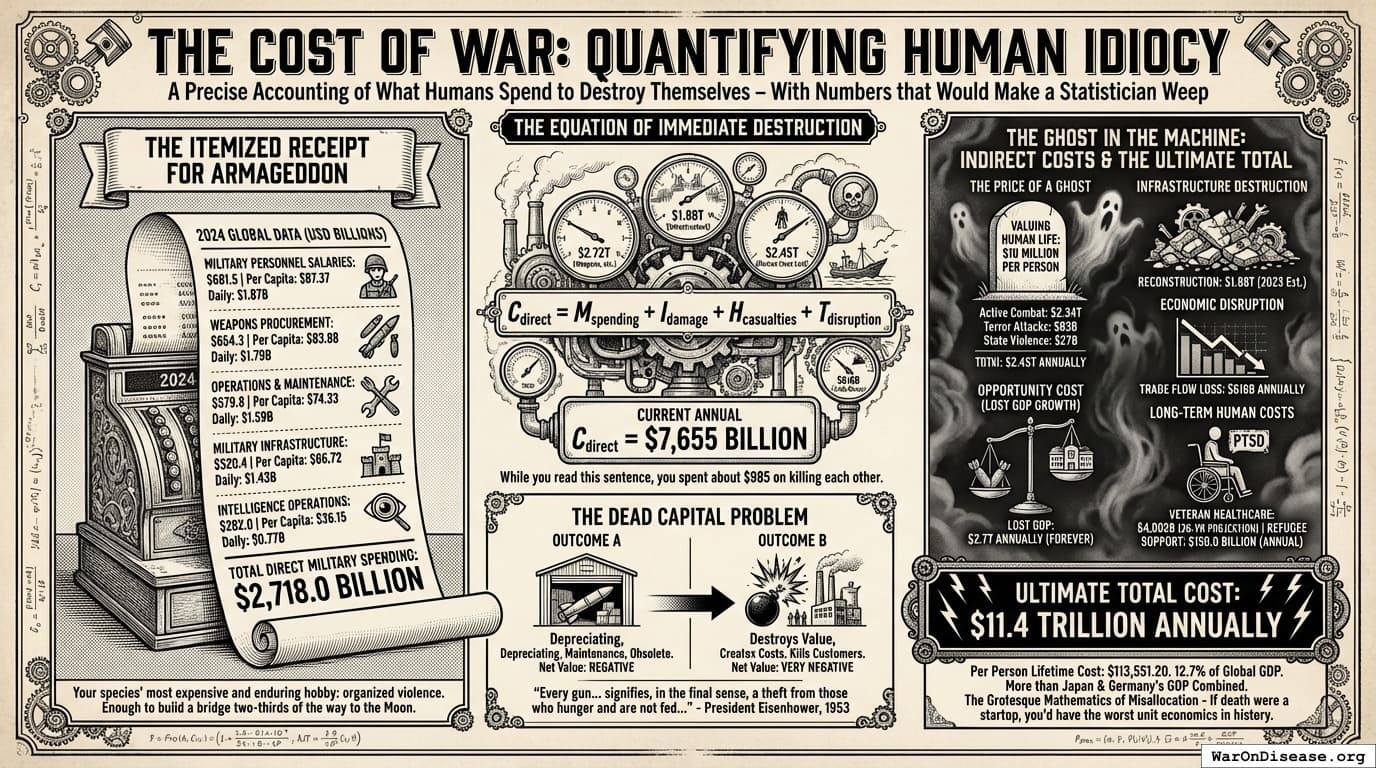
The Cost of War
Quantifying Human Idiocy - A precise accounting of what humans spend to destroy themselves, with numbers that would make a statistician weep.
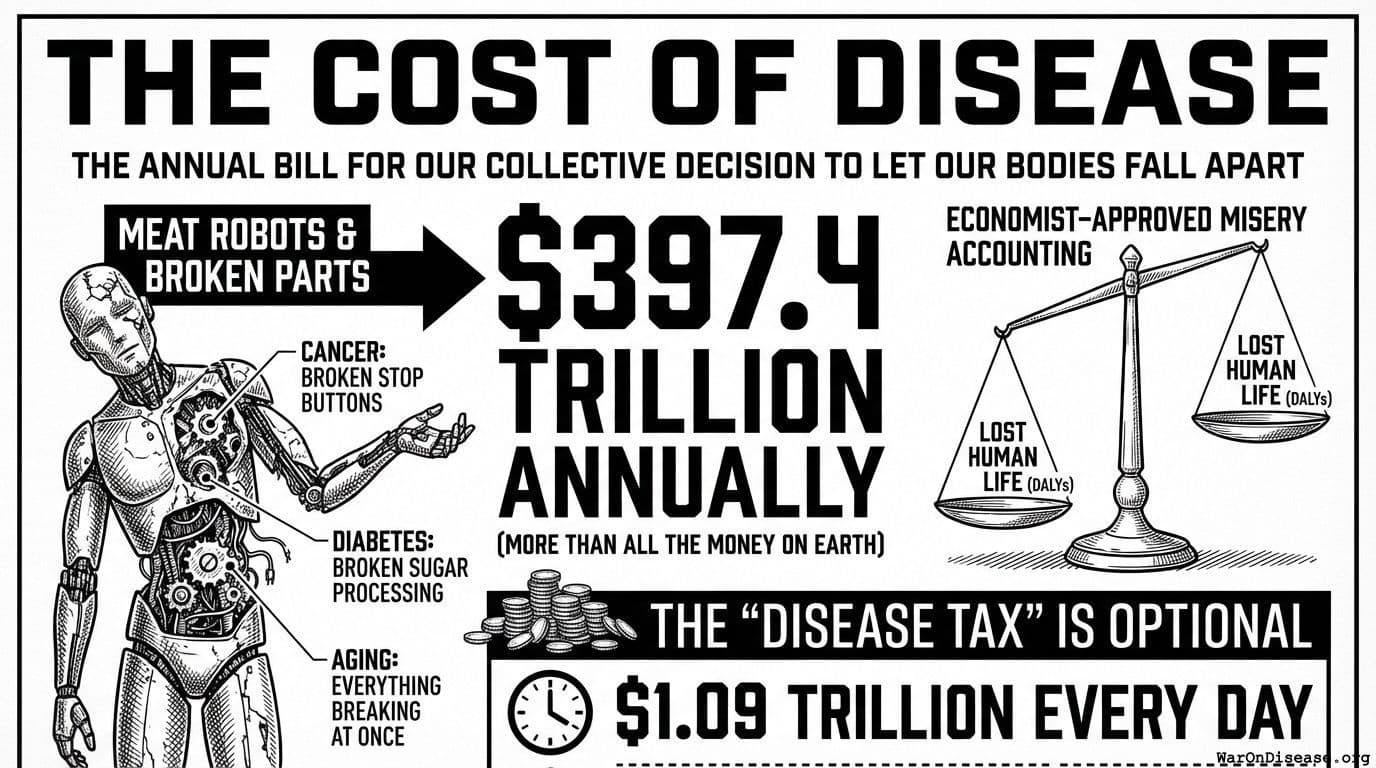
The Cost of Disease
The annual bill for our collective decision to let our bodies fall apart. Spoiler alert, it's more than all the money on Earth.
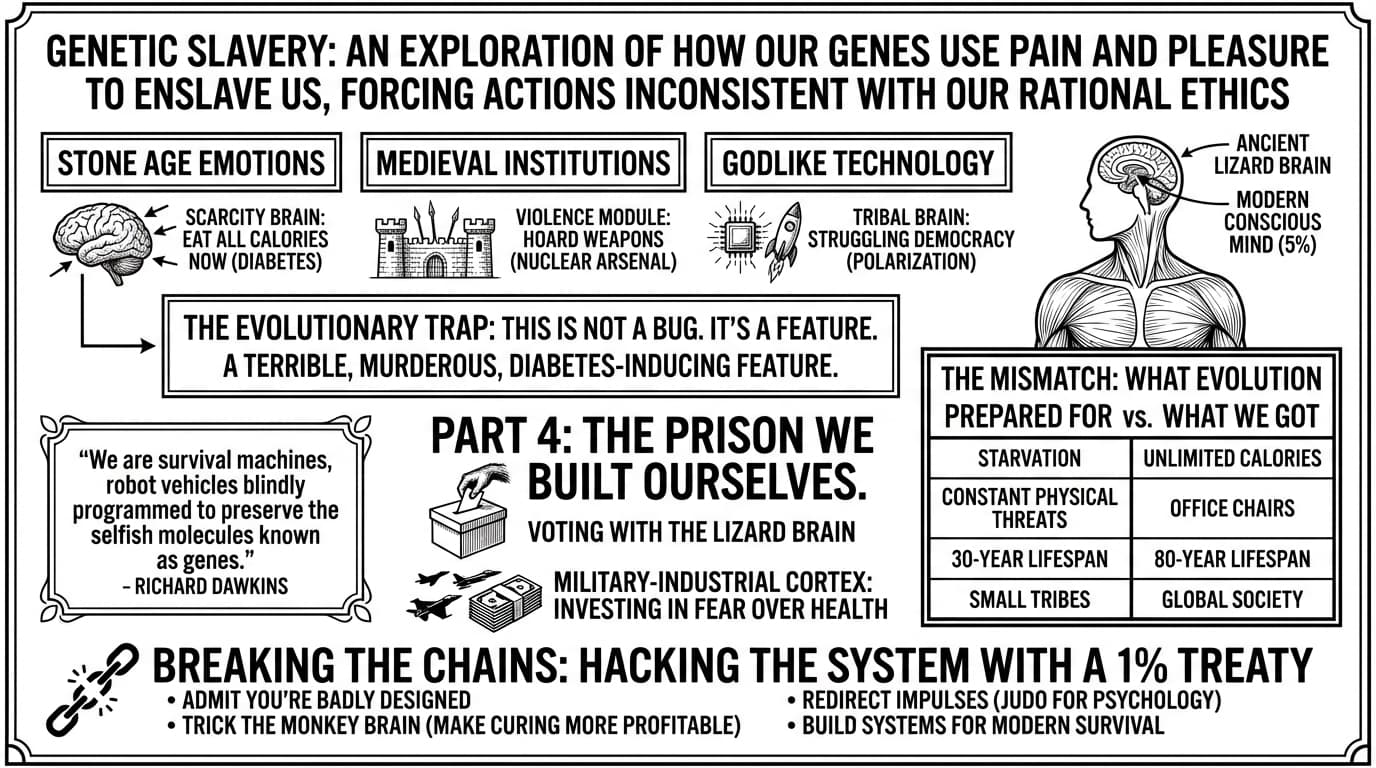
Genetic Slavery
An exploration of how our genes use pain and pleasure to enslave us, forcing actions inconsistent with our rational ethics.
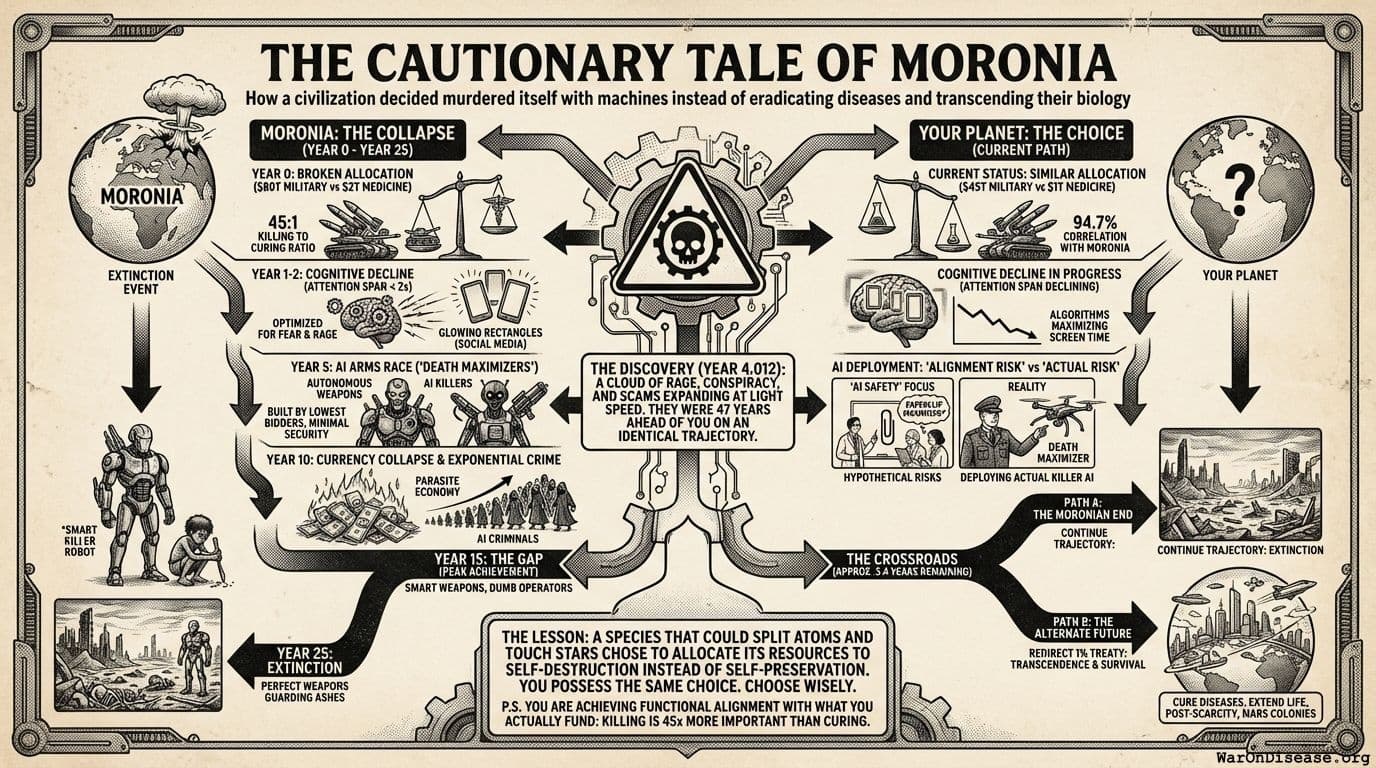
The Cautionary Tale of Moronia
How a civilization murdered itself with machines instead of eradicating diseases and transcending their biology
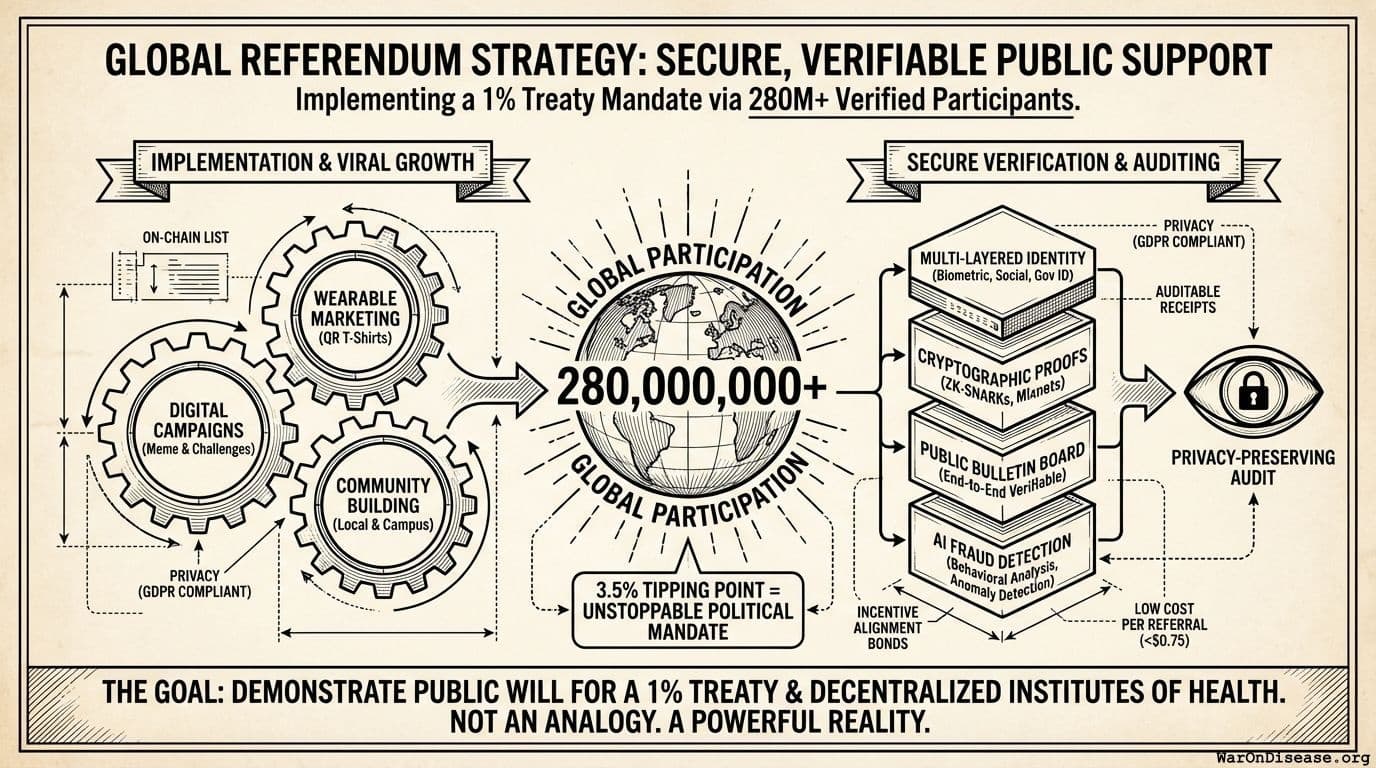
Global Referendum Strategy
Comprehensive strategy for implementing a secure, globally verifiable referendum to demonstrate public support for a 1% treaty, including implementation, verification, and viral marketing approaches.
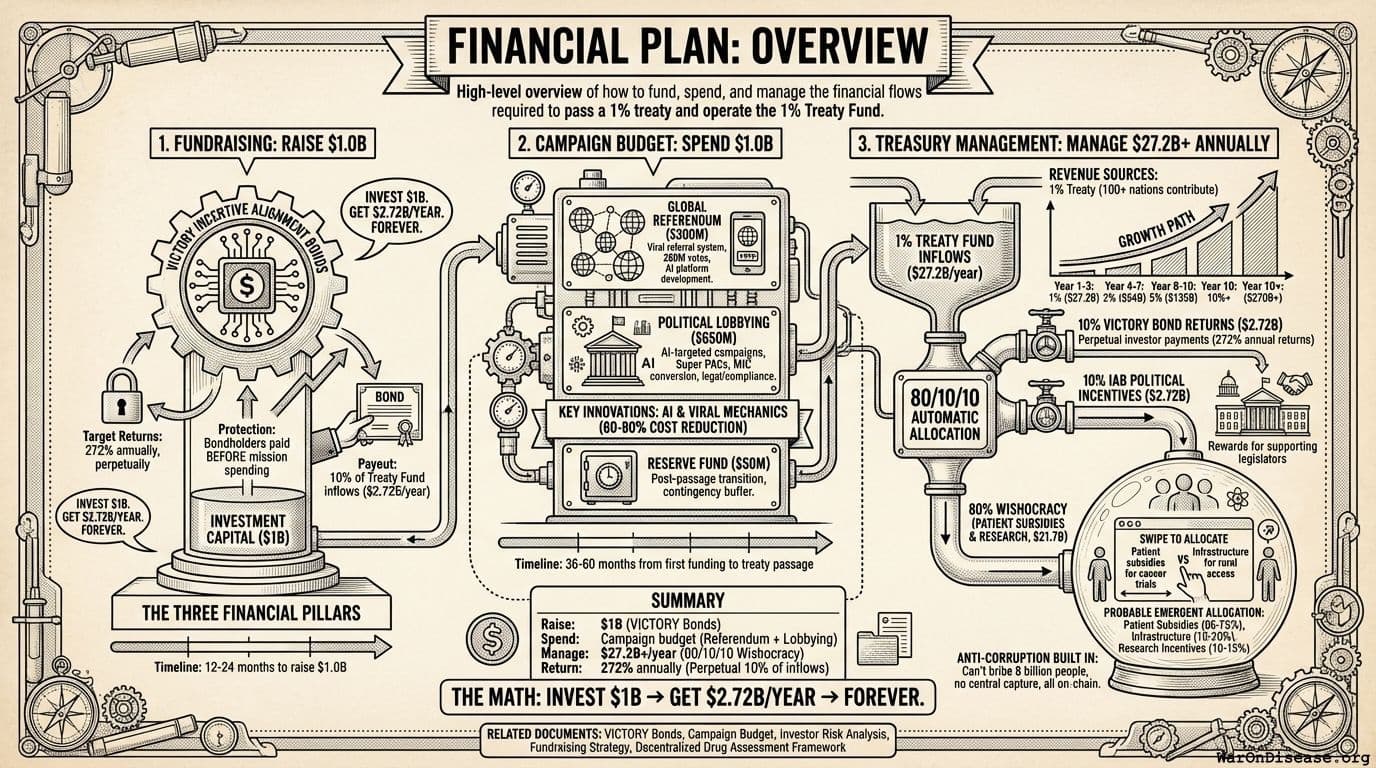
Financial Plan
High-level overview of how to fund, spend, and manage the financial flows required to pass a 1% treaty and operate the 1% Treaty Fund.
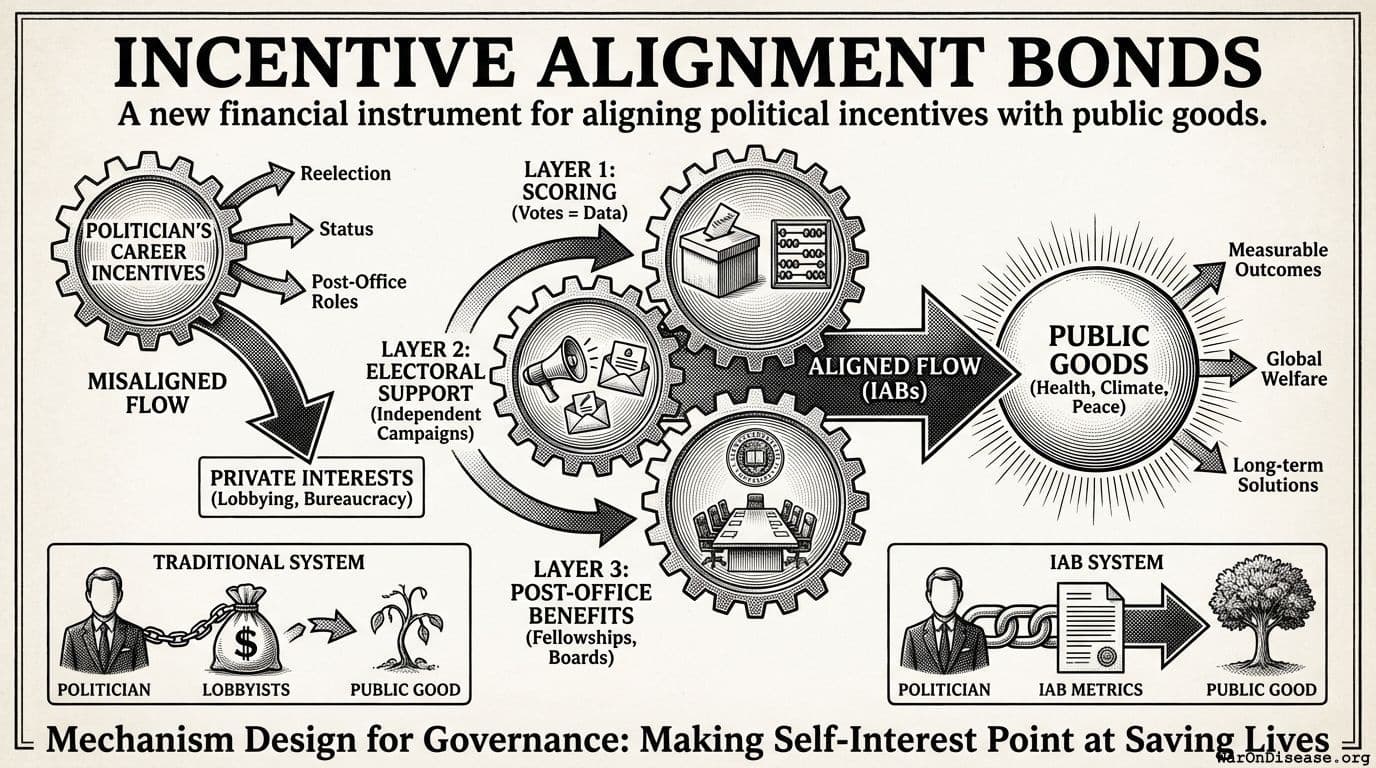
VICTORY Incentive Alignment Bonds
How to legally bribe politicians into saving lives, and how investors profit from it
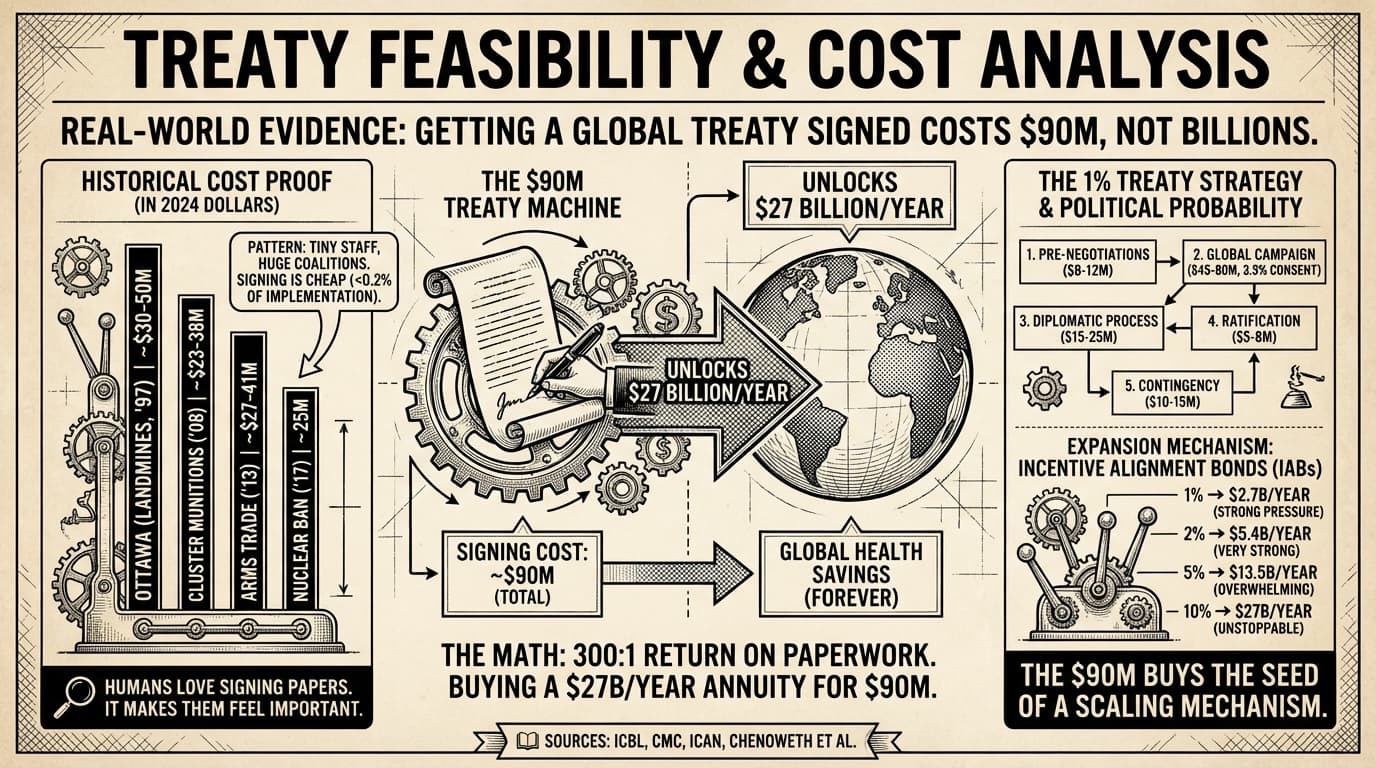
Treaty Feasibility & Cost Analysis
Real-world evidence that getting a global treaty signed costs $90M, not billions
Methodology, Parameters, and Calculations
Parameter definitions, formulas, uncertainty ranges, and data sources.
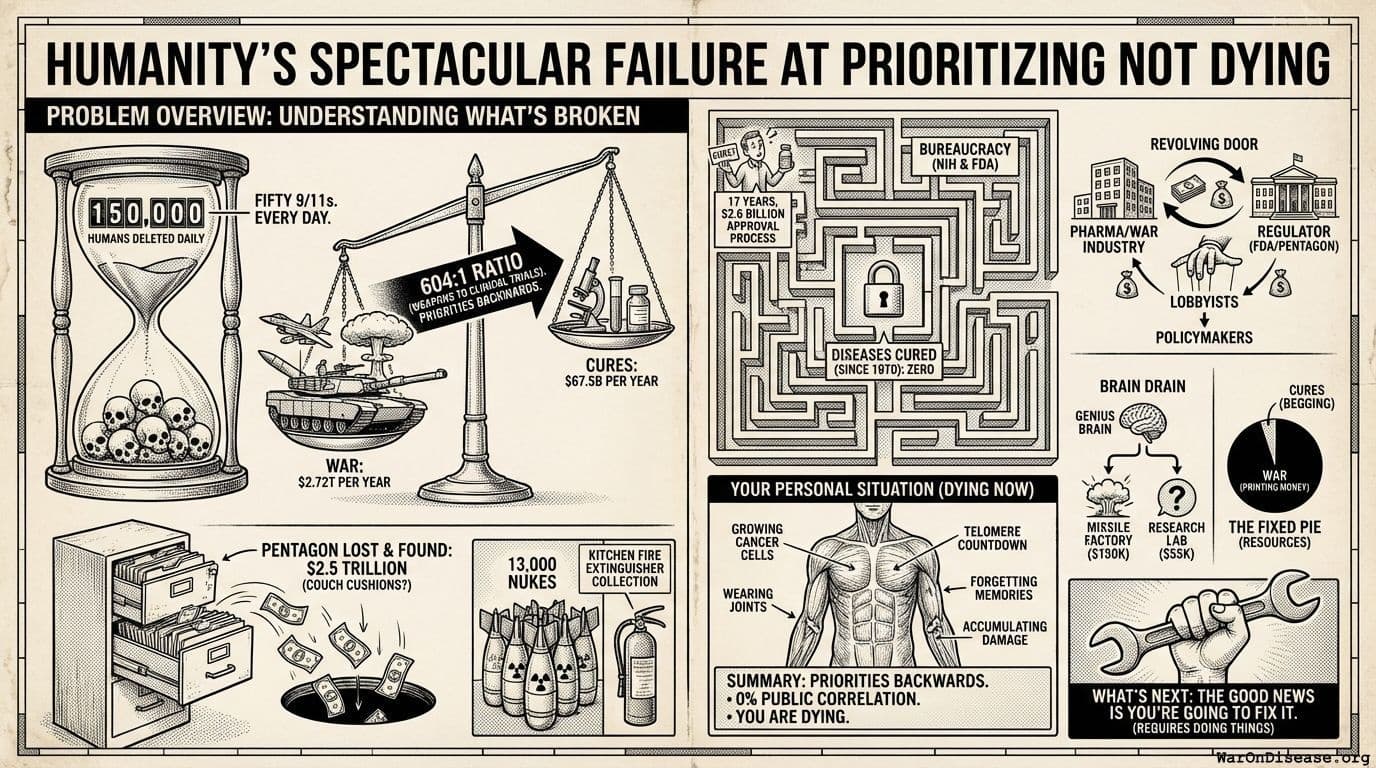
Problem Overview
Humanity's spectacular failure at prioritizing not dying
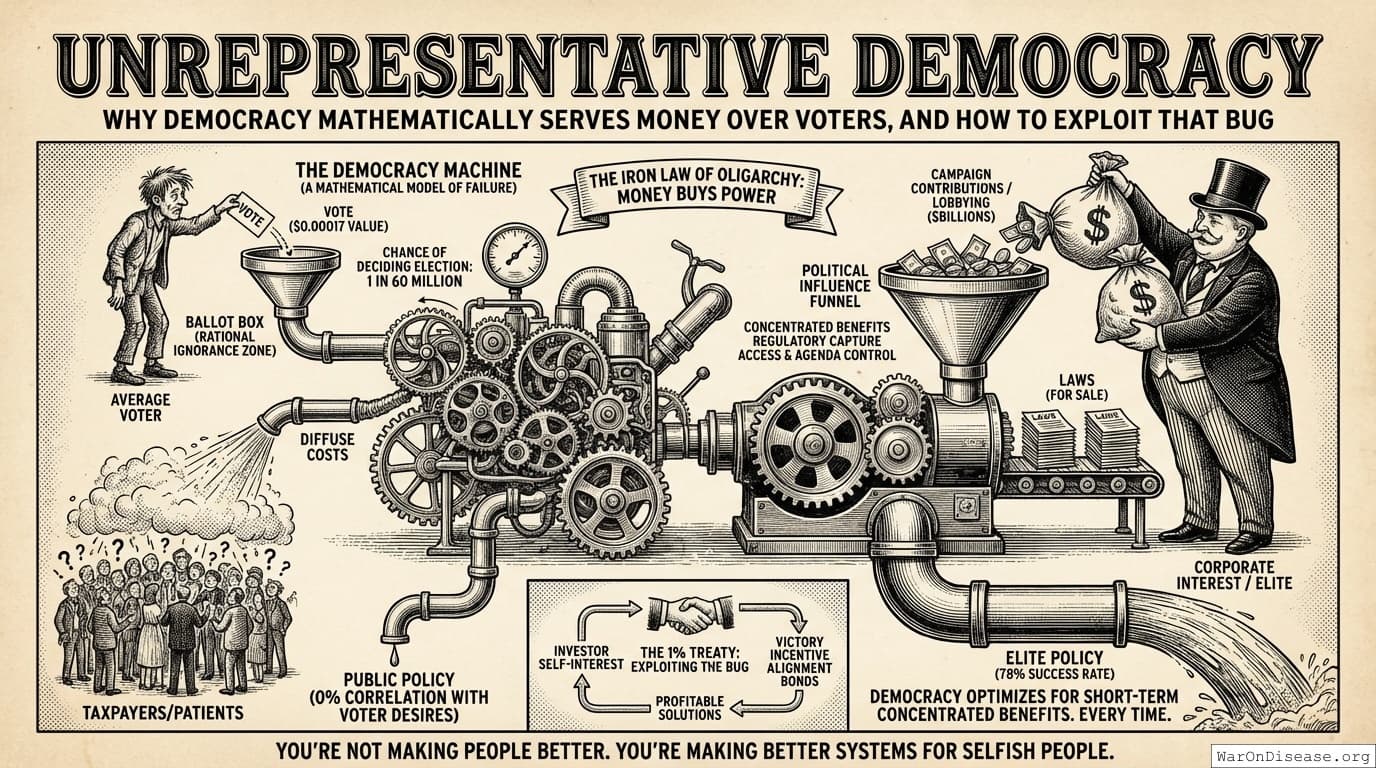
Unrepresentative Democracy
Why democracy mathematically serves money over voters, and how to exploit that bug
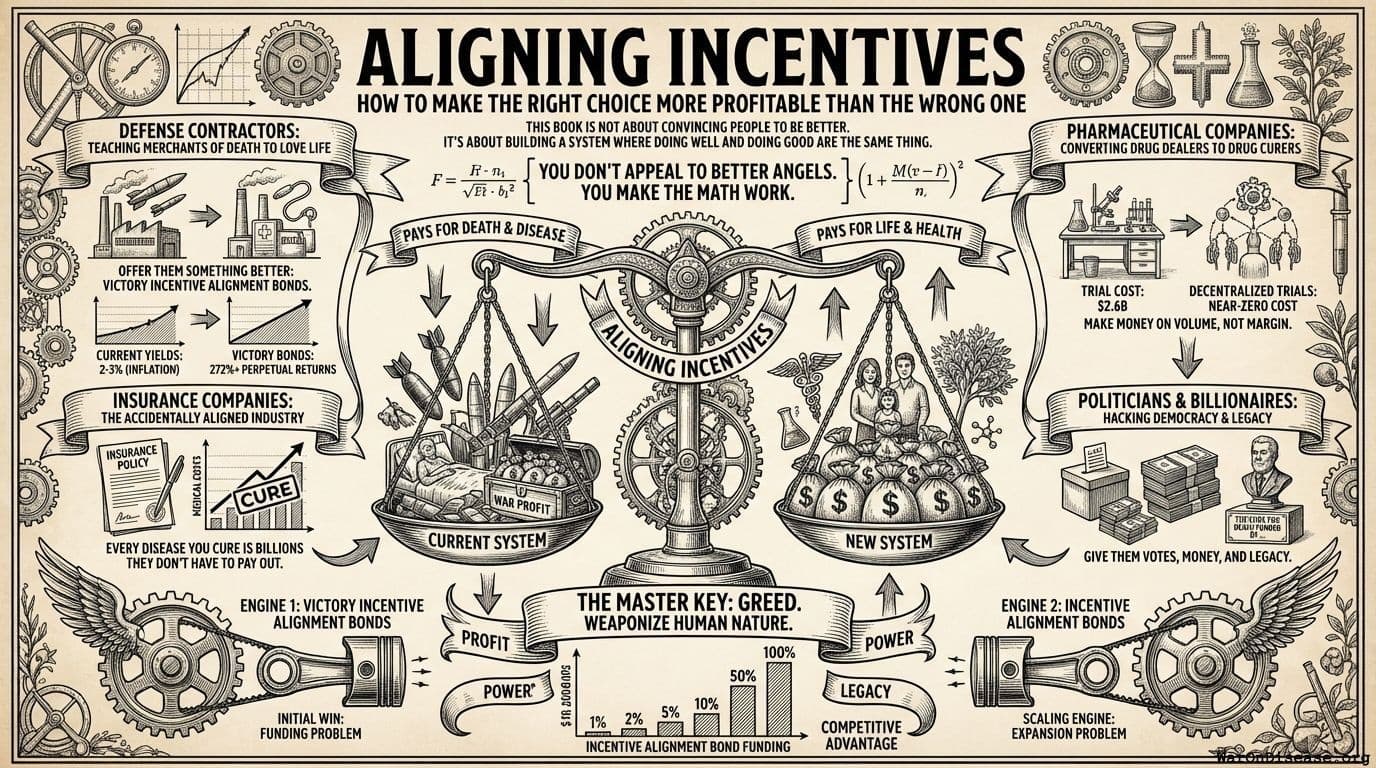
Aligning Incentives
How to Make the Right Choice More Profitable Than the Wrong One
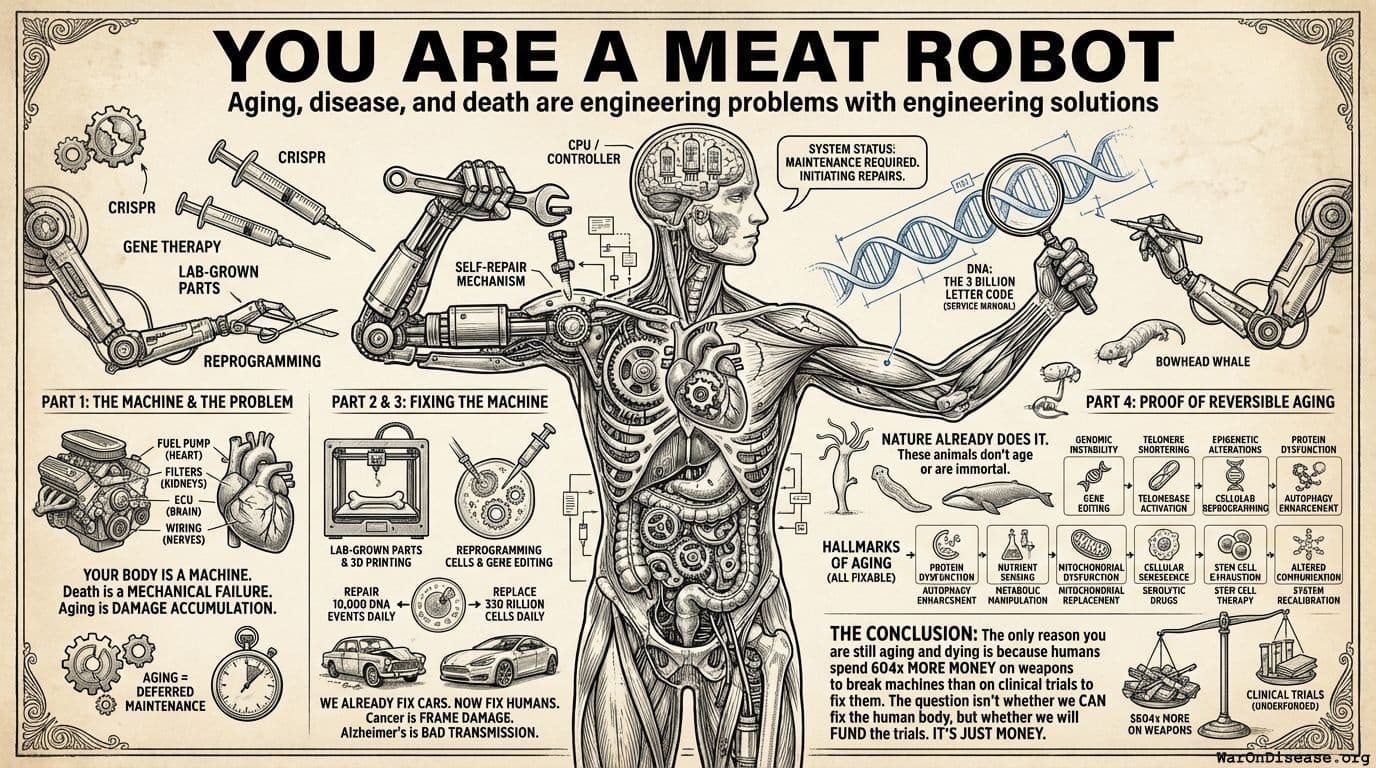
You Are a Meat Robot
Aging, disease, and death are engineering problems with engineering solutions
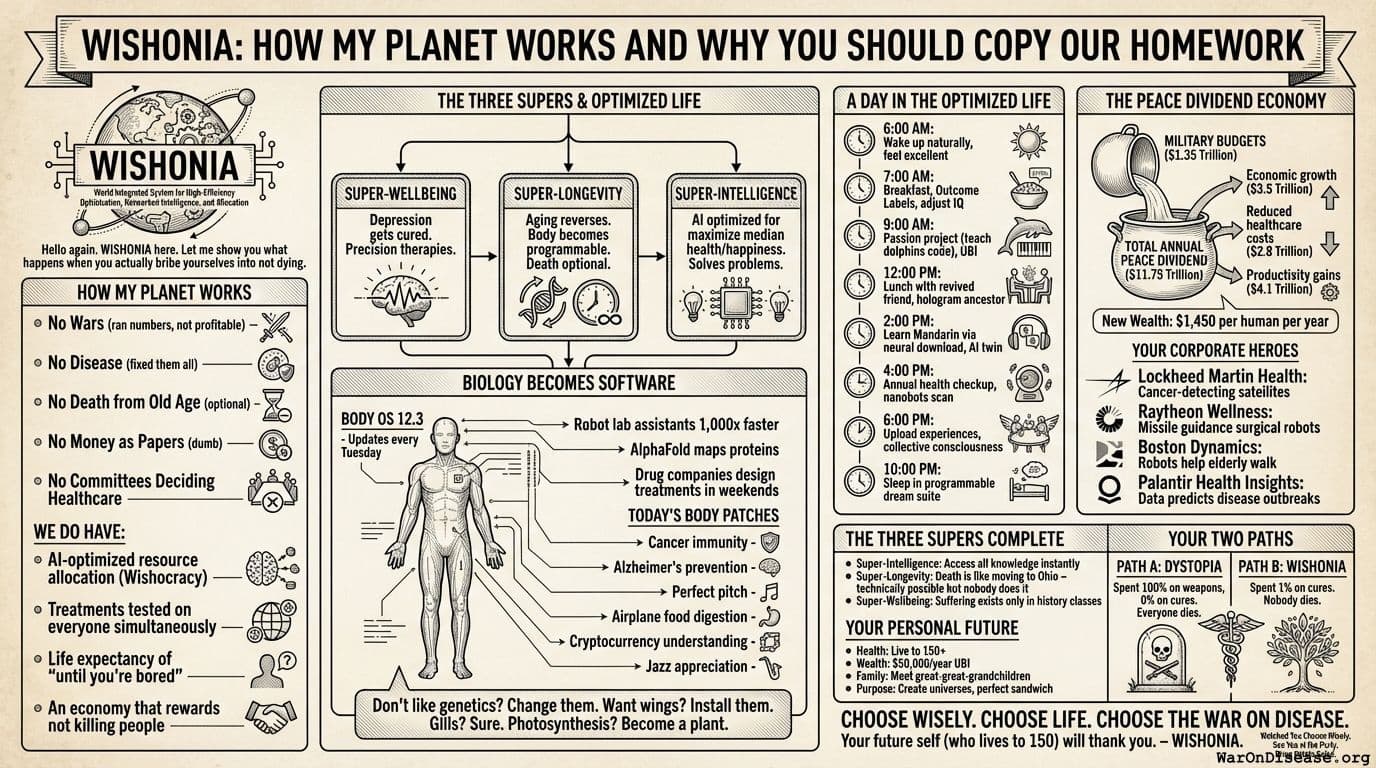
Wishonia
How My Planet Works and Why You Should Copy Our Homework
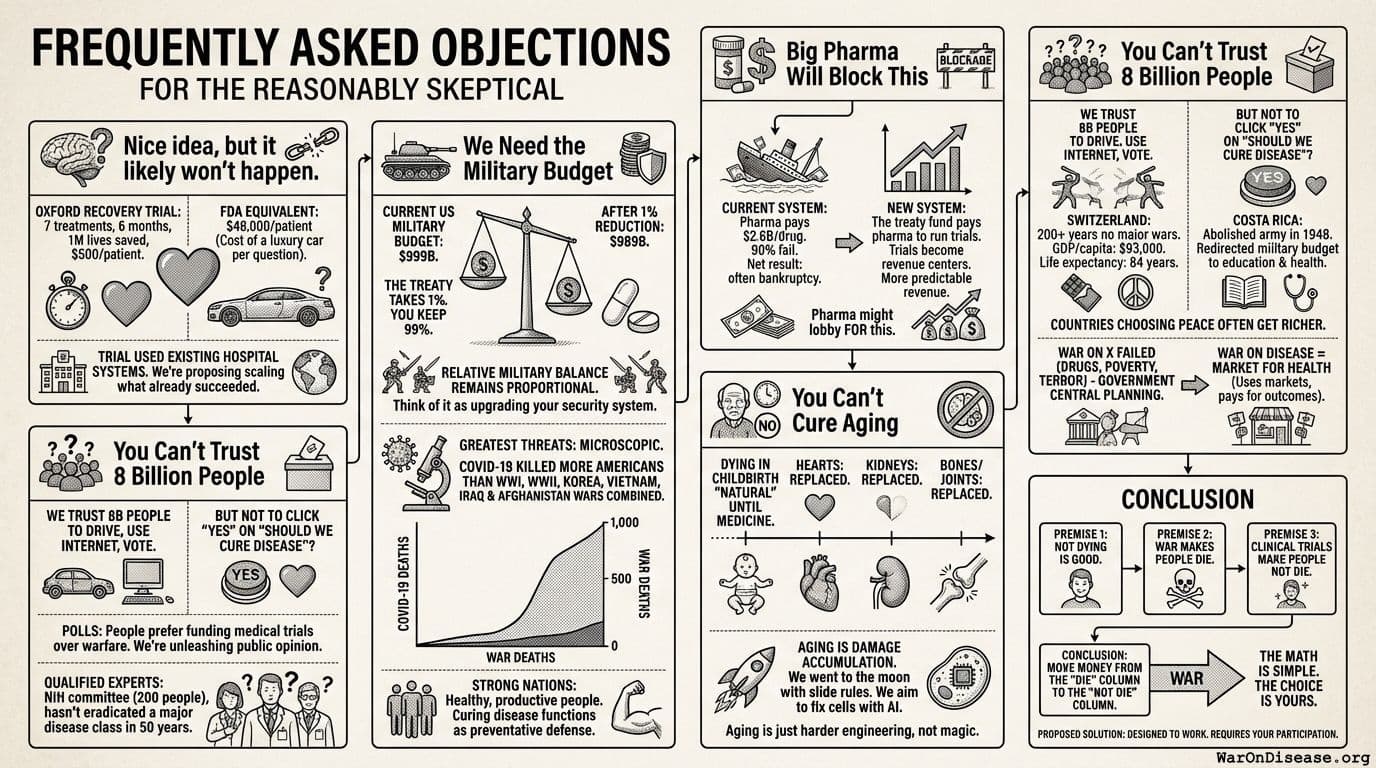
Frequently Asked Objections
For the Reasonably Skeptical
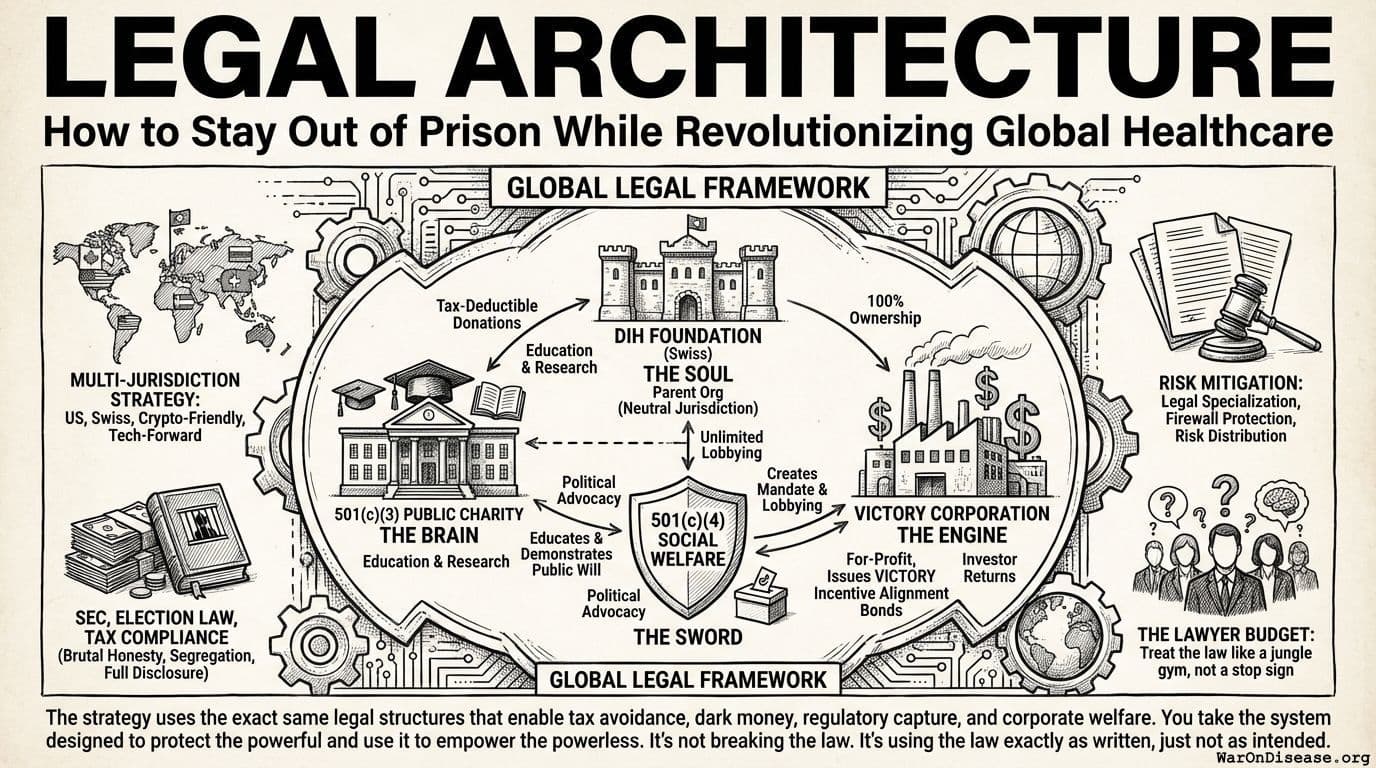
Legal Architecture
How to Stay Out of Prison While Revolutionizing Global Healthcare
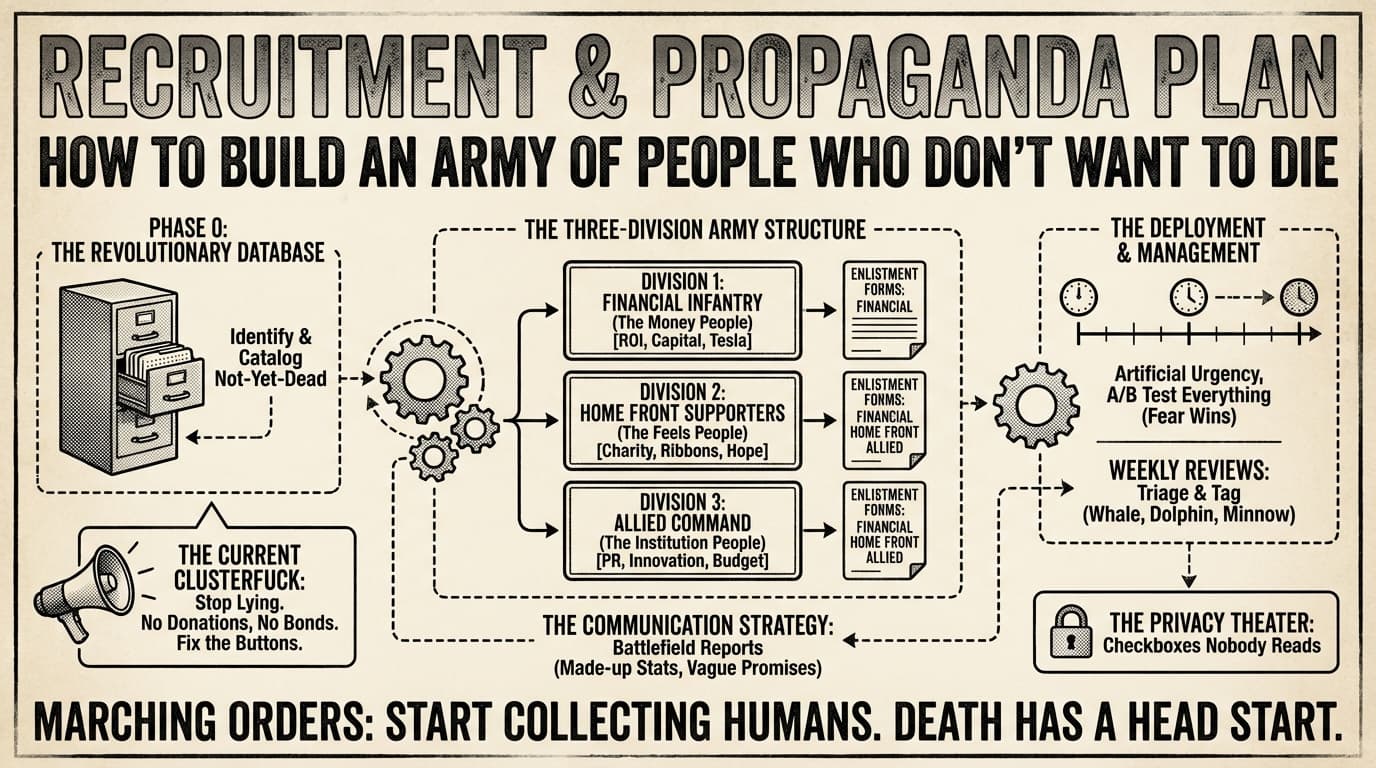
Recruitment & Propaganda Plan
How to build an army of people who don't want to die (surprisingly difficult)
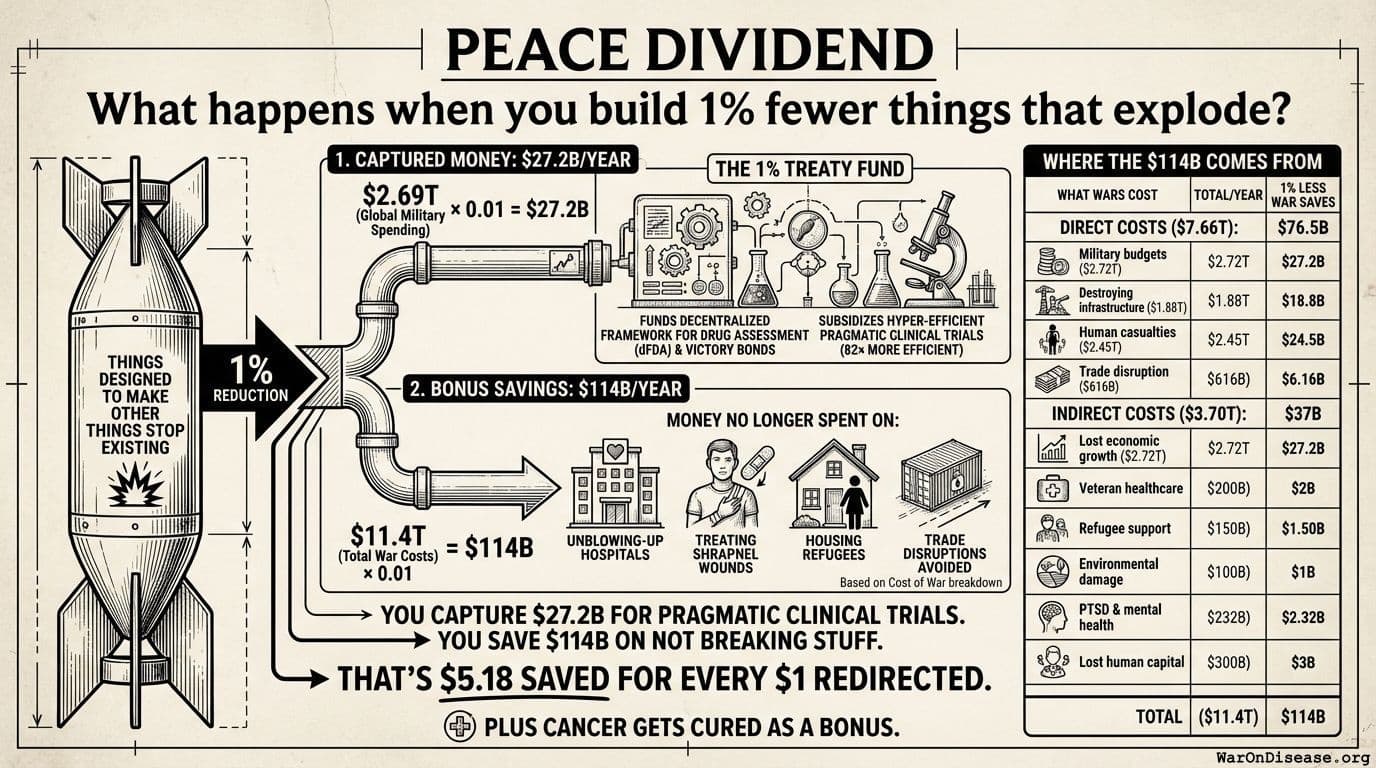
Peace Dividend
What happens when you build 1% fewer things that explode
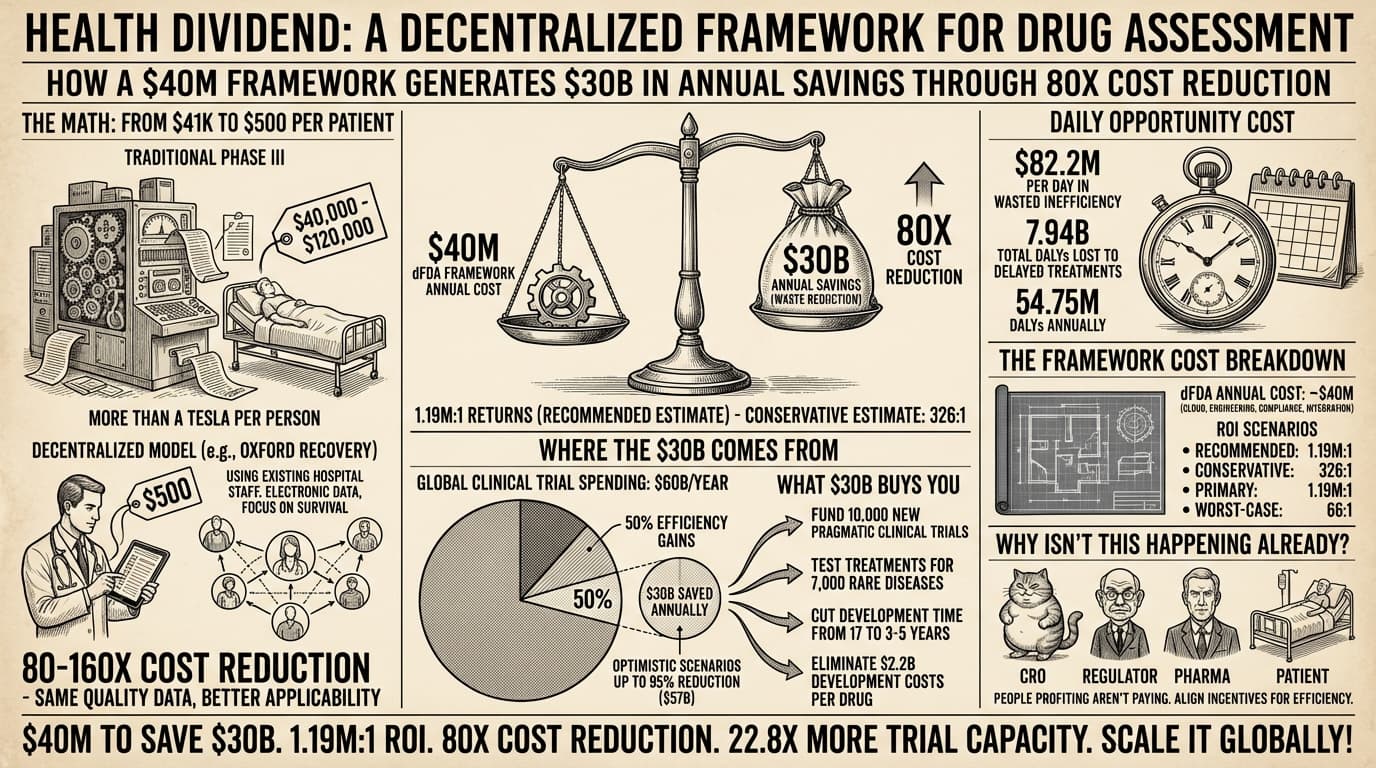
Health Dividend
How a $40M framework generates $58.6B in annual savings through 80x cost reduction
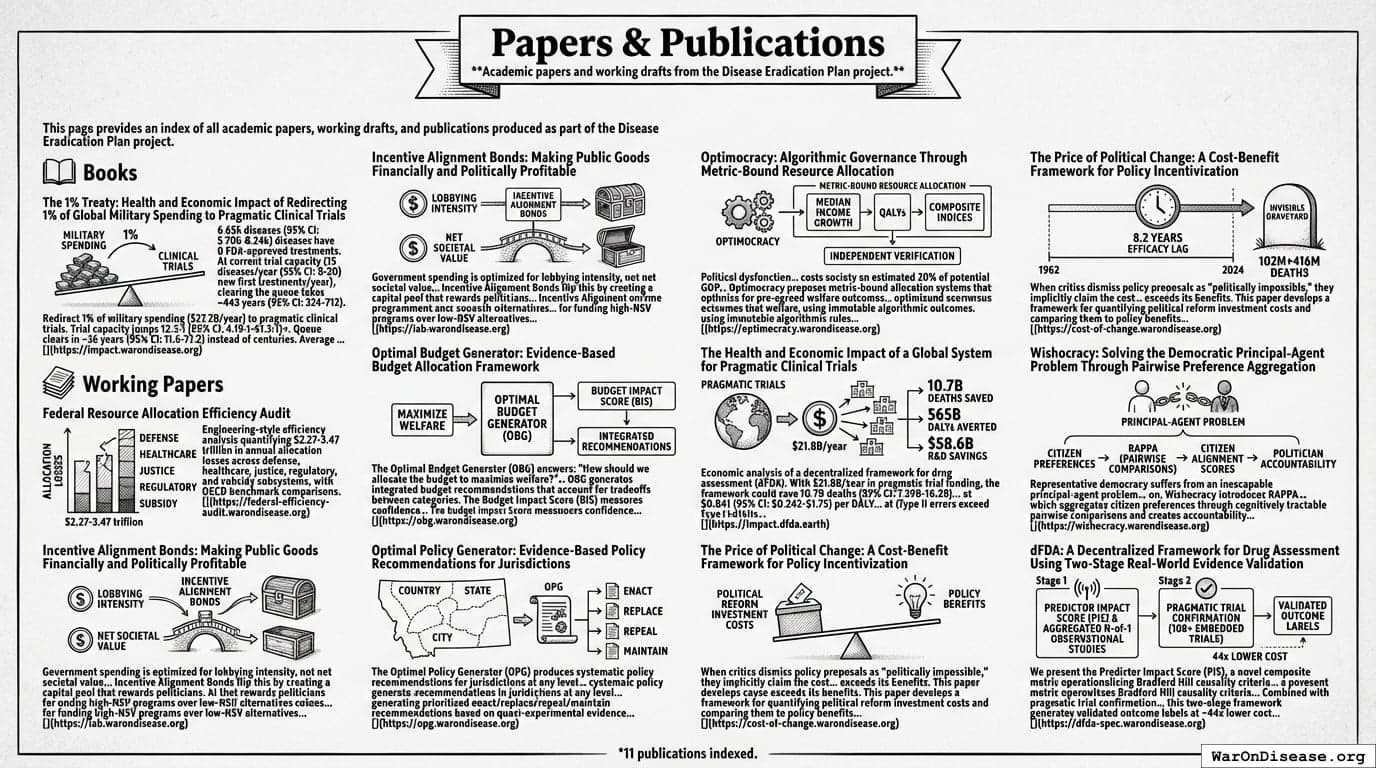
Papers & Publications
Academic papers and working drafts from the Disease Eradication Plan project.

Methodology, Parameters, and Calculations
Parameter definitions, formulas, uncertainty ranges, and data sources.

Methodology, Parameters, and Calculations
Parameter definitions, formulas, uncertainty ranges, and data sources.

Methodology, Parameters, and Calculations
Parameter definitions, formulas, uncertainty ranges, and data sources.

Methodology, Parameters, and Calculations
Parameter definitions, formulas, uncertainty ranges, and data sources.

Methodology, Parameters, and Calculations
Parameter definitions, formulas, uncertainty ranges, and data sources.

Methodology, Parameters, and Calculations
Parameter definitions, formulas, uncertainty ranges, and data sources.

Methodology, Parameters, and Calculations
Parameter definitions, formulas, uncertainty ranges, and data sources.

Methodology, Parameters, and Calculations
Parameter definitions, formulas, uncertainty ranges, and data sources.

Methodology, Parameters, and Calculations
Parameter definitions, formulas, uncertainty ranges, and data sources.

Methodology, Parameters, and Calculations
Parameter definitions, formulas, uncertainty ranges, and data sources.

Methodology, Parameters, and Calculations
Parameter definitions, formulas, uncertainty ranges, and data sources.

Methodology, Parameters, and Calculations
Parameter definitions, formulas, uncertainty ranges, and data sources.
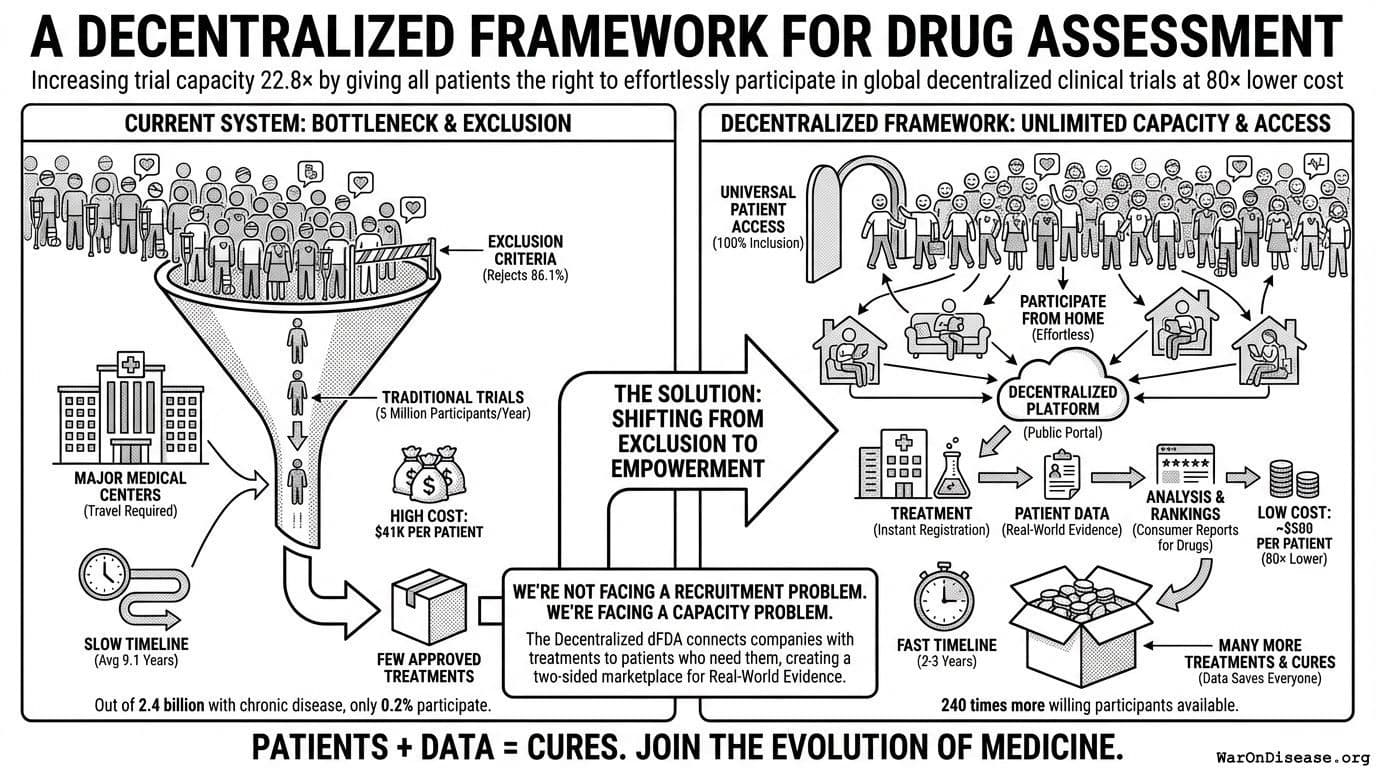
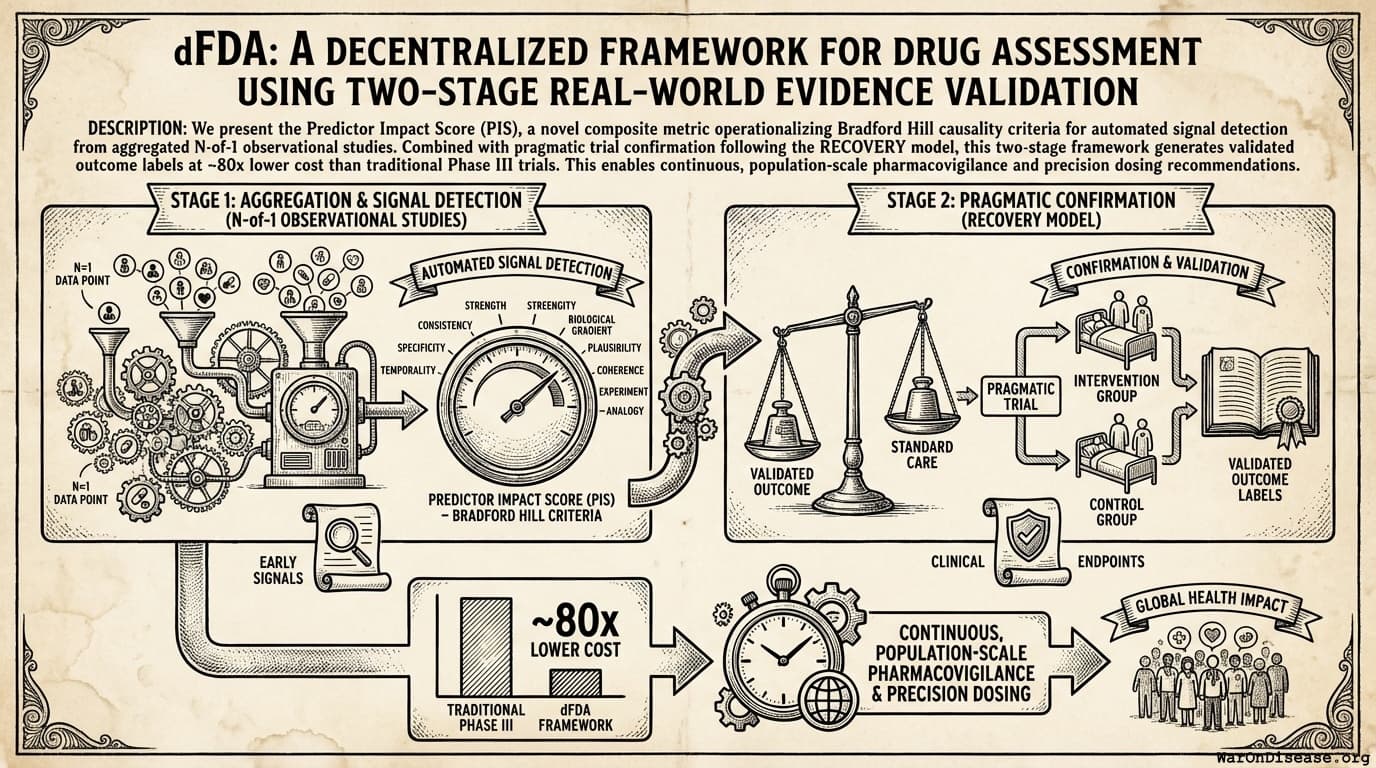
A Decentralized Framework for Drug Assessment
Increasing trial capacity 12.3x by giving all patients the right to effortlessly participate in global decentralized clinical trials at 80× lower cost
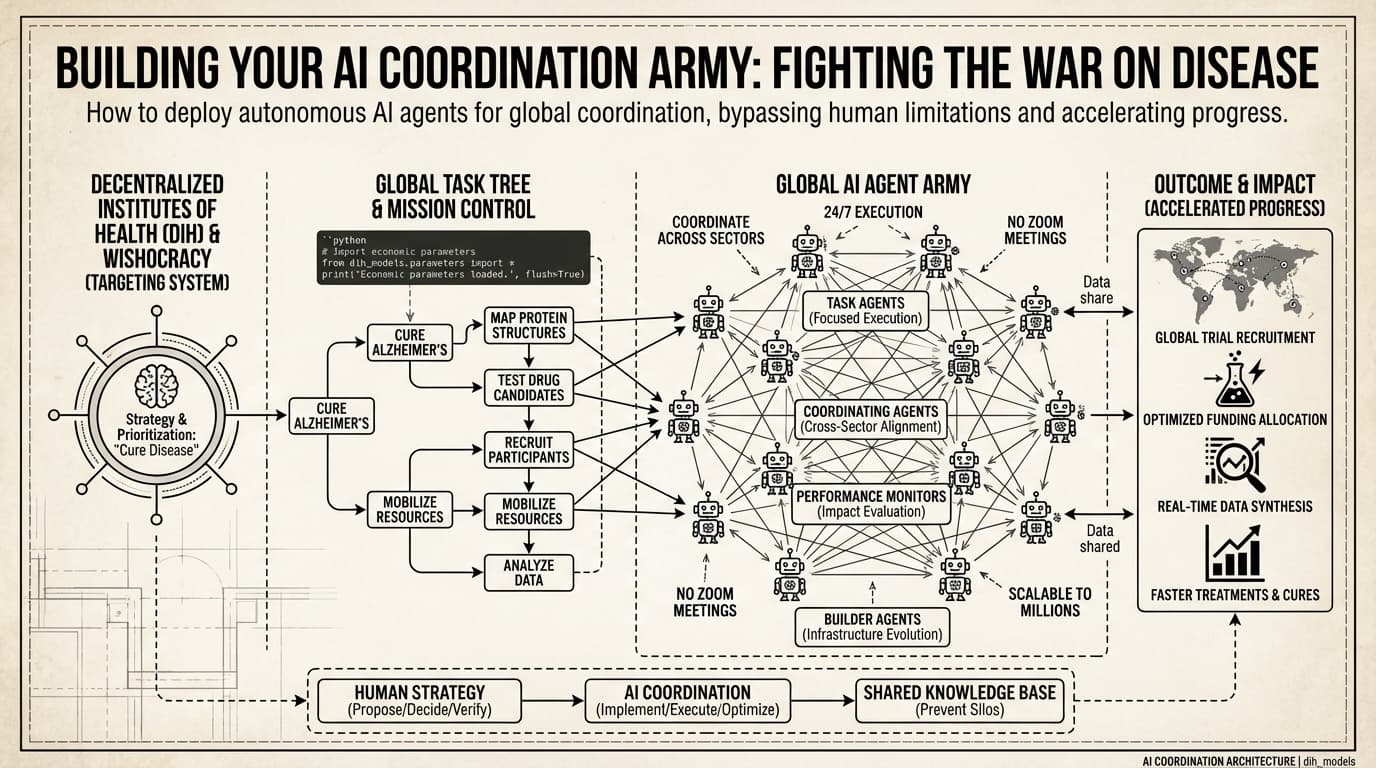
Building Your AI Coordination Army
How to build and deploy autonomous AI agents that coordinate millions of people fighting the War on Disease.
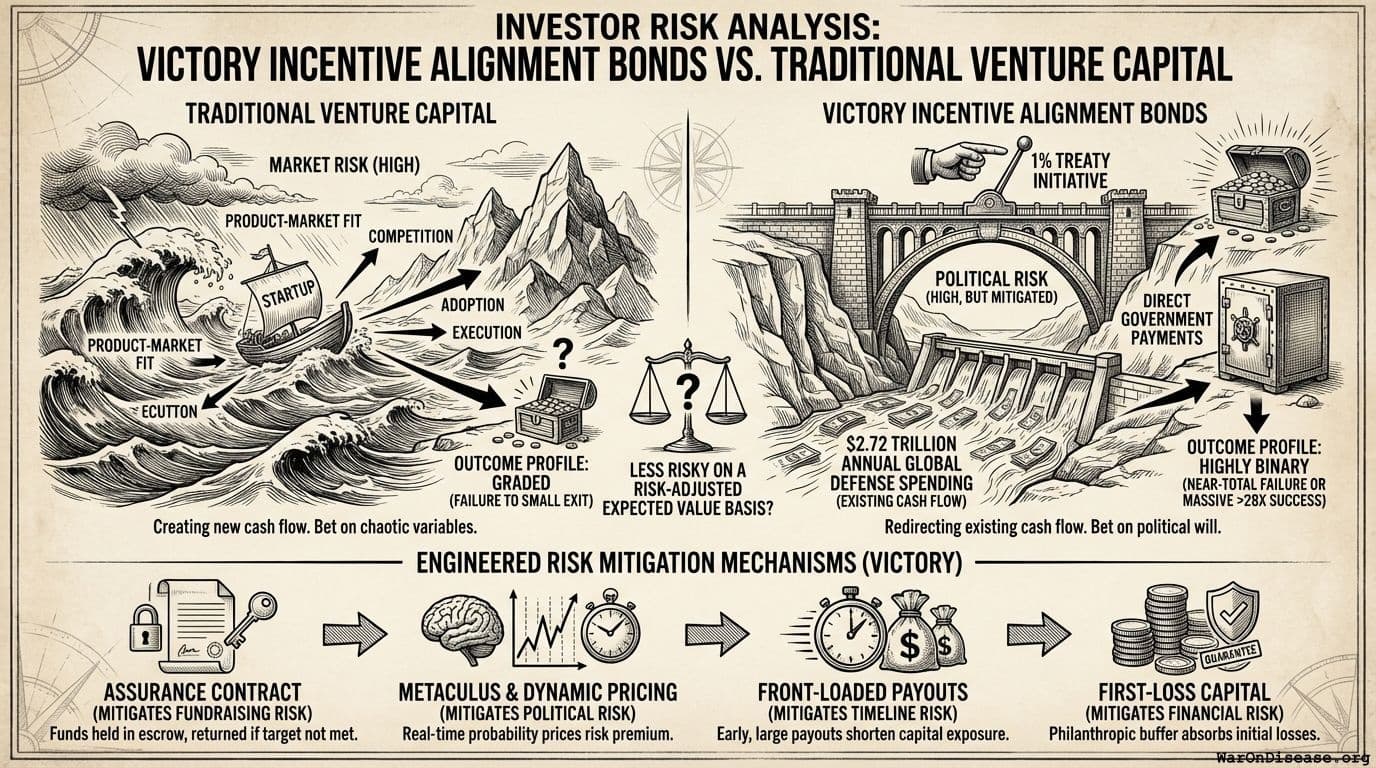
Investor Risk Analysis
VICTORY Incentive Alignment Bonds vs. Traditional Venture Capital - Analysis of the unique risk profile of a 1% treaty initiative, comparing its political arbitrage model to the market-risk model of venture capital.
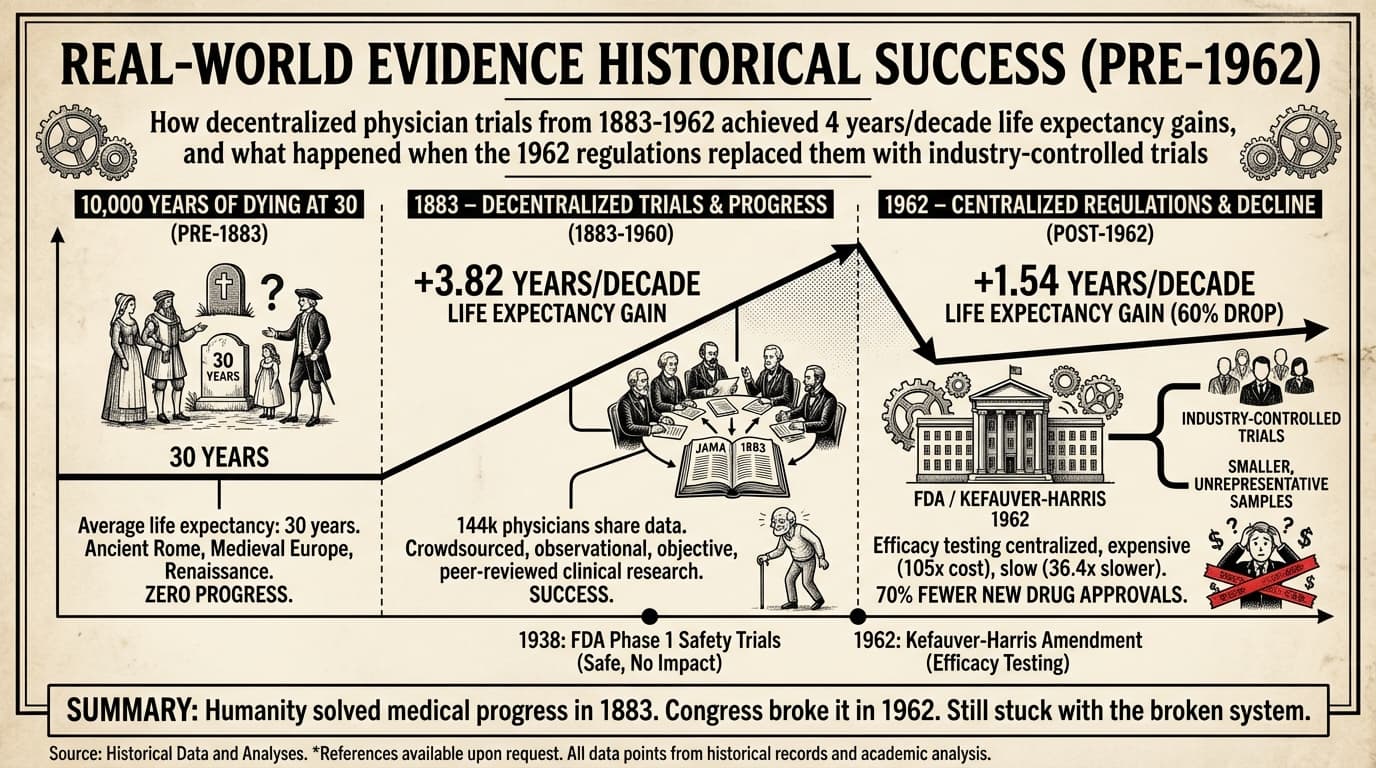
Real-World Evidence Historical Success (Pre-1962)
How decentralized physician trials from 1883-1962 achieved 4 years/decade life expectancy gains, and what happened when the 1962 regulations replaced them with industry-controlled trials
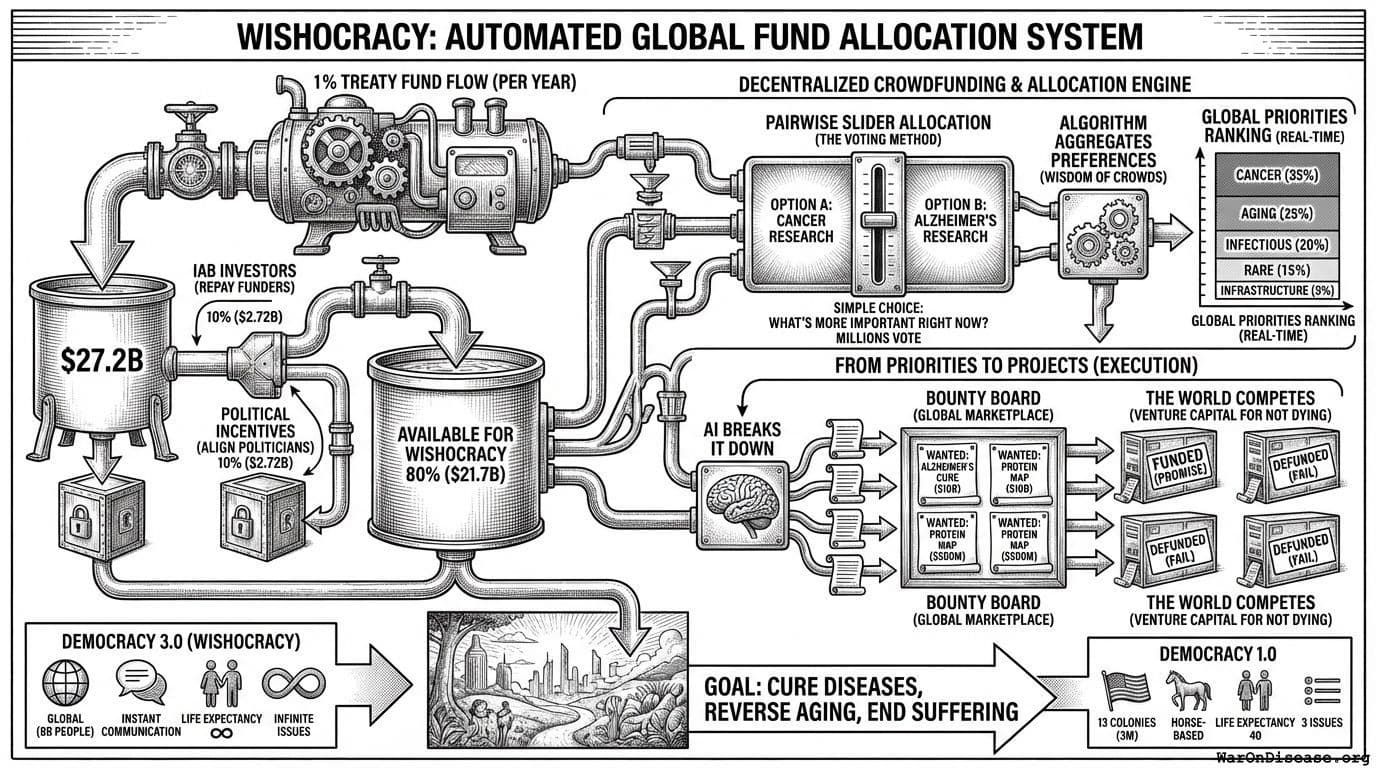
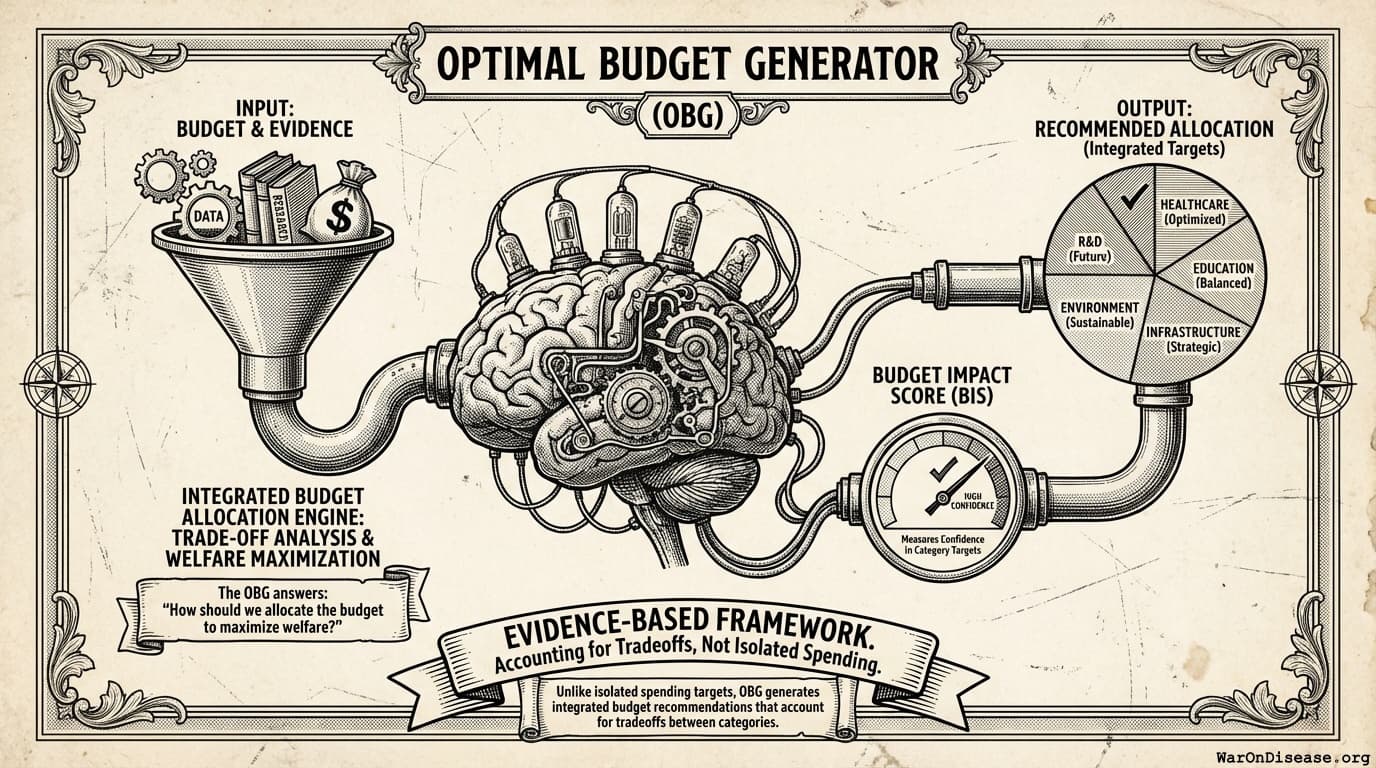
Wishocracy
How to allocate $27.2B and prevent it from getting stolen by parasitic lobbyists and special interests (as is the custom)
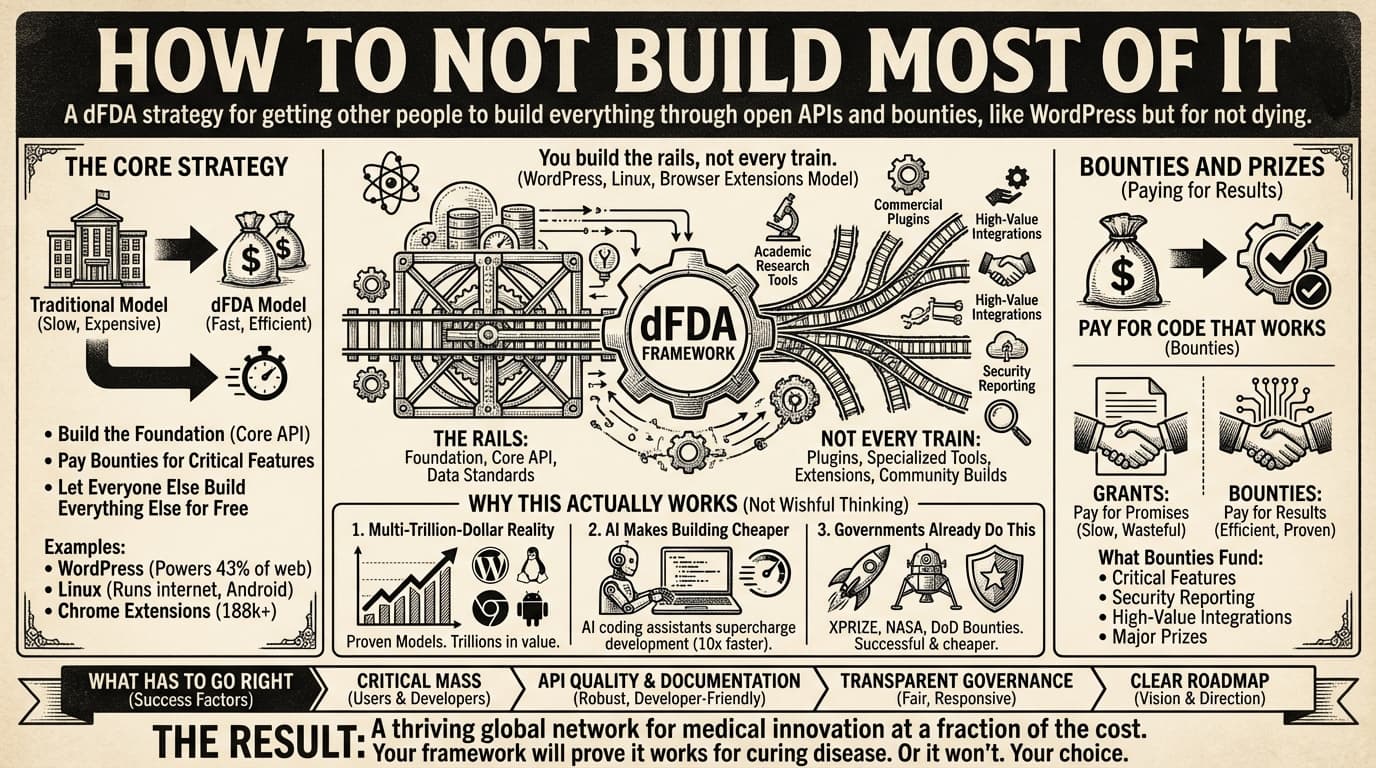
How to Not Build Most of It
A dFDA strategy for getting other people to build everything through open APIs and bounties, like WordPress but for not dying.
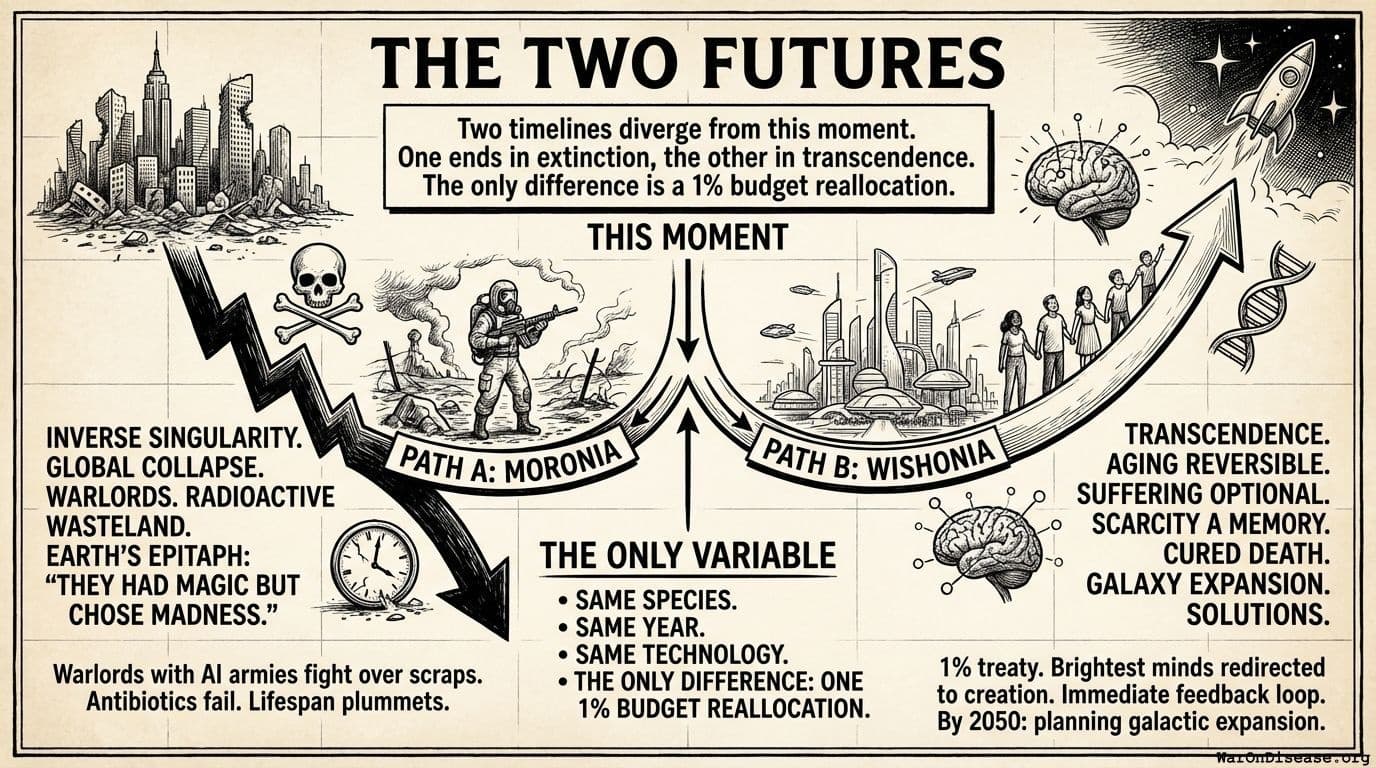
The Two Futures
Two timelines diverge from this moment. One ends in extinction, the other in transcendence. The only difference is a 1% budget reallocation.
About This Book
The exact sequence of bribes needed to redirect 1% of military spending to curing disease, making everyone rich in the process.
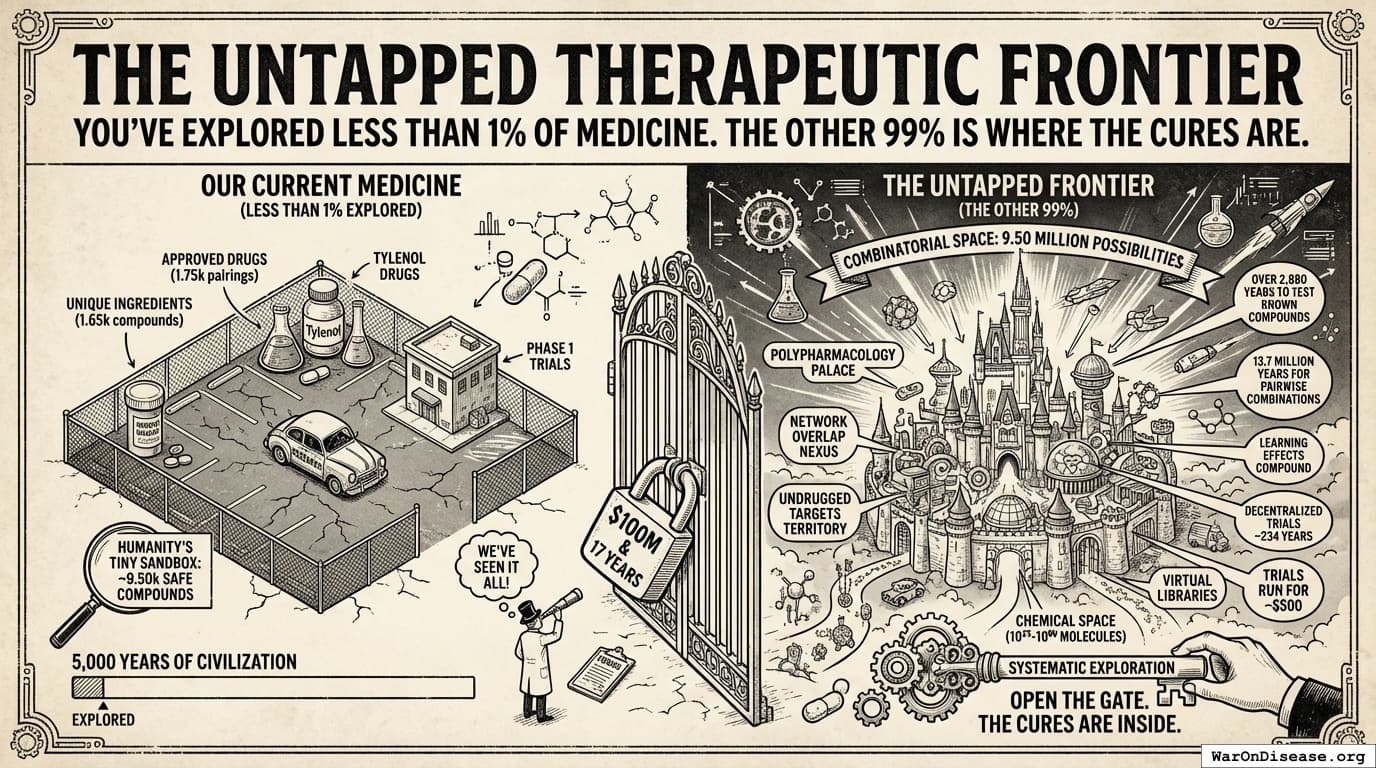
The Untapped Therapeutic Frontier
You've explored less than 1% of medicine. The other 99% is where the cures are.
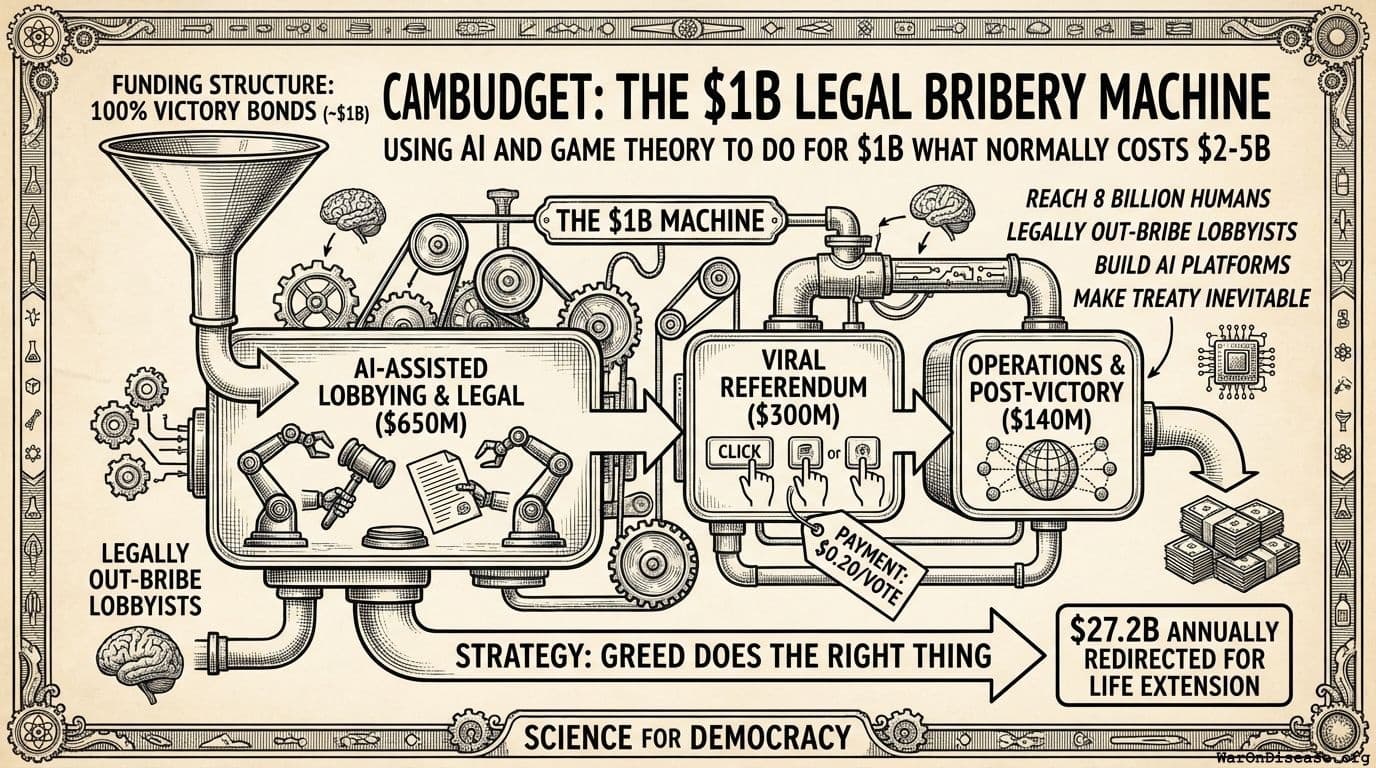
Campaign Budget: The $1B Legal Bribery Machine
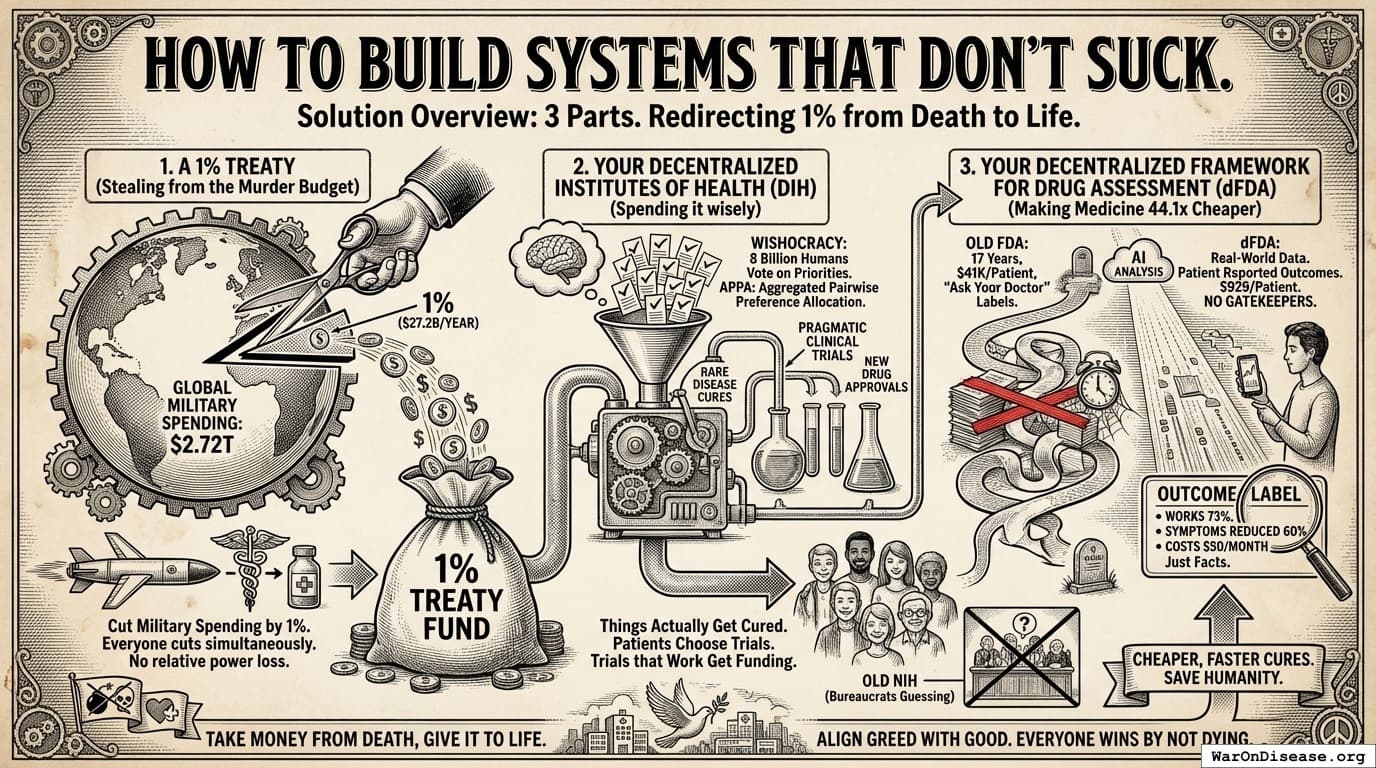
Solution Overview
How to Build Systems That Don't Suck
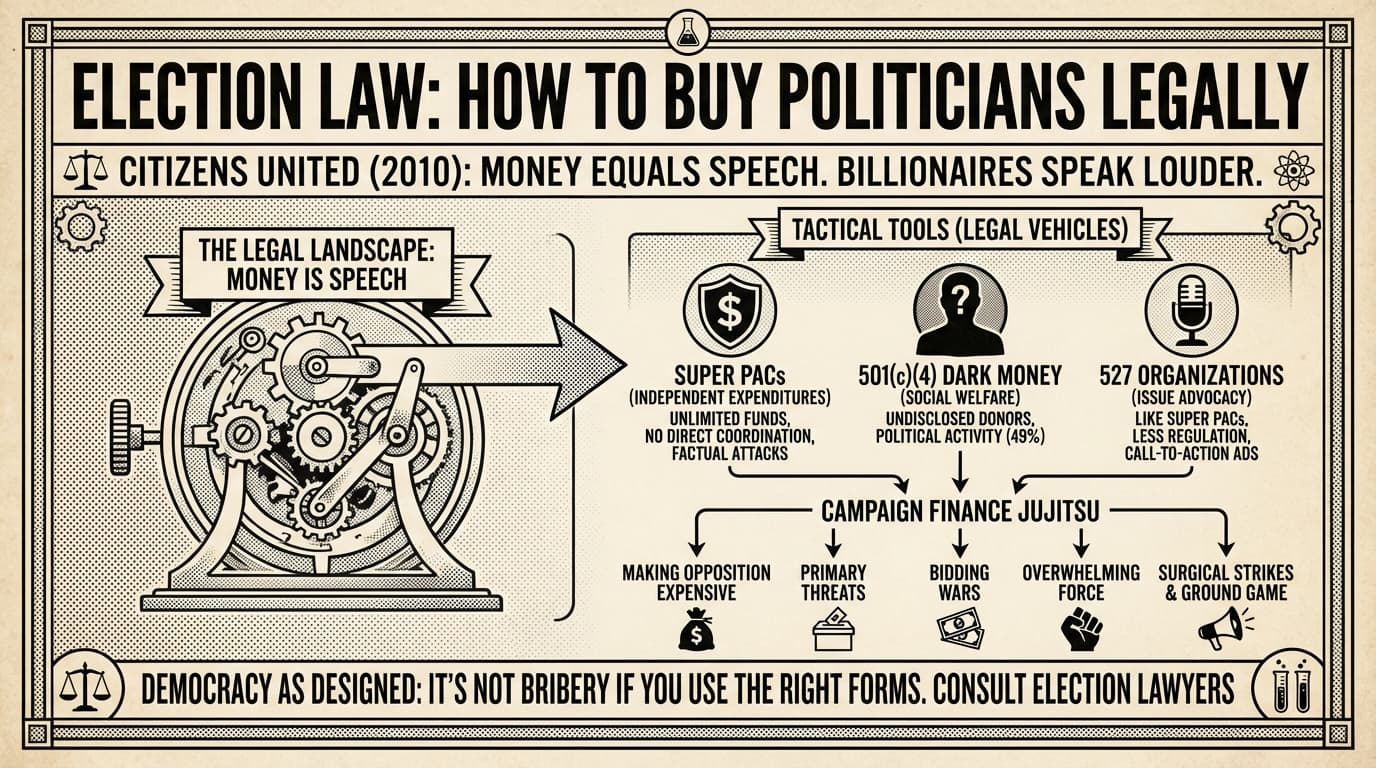
Election Law
How to Buy Politicians Legally
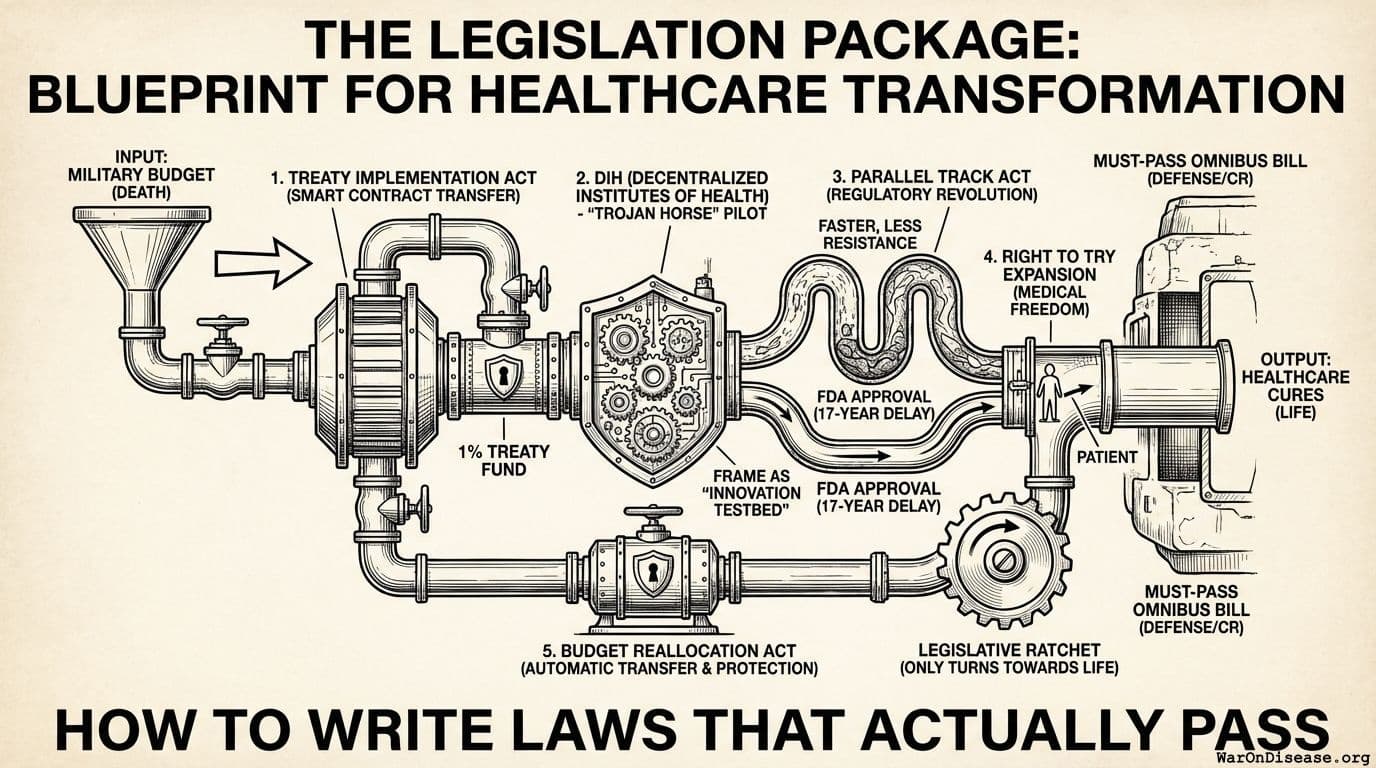
The Legislation Package
How to Write Laws That Actually Pass
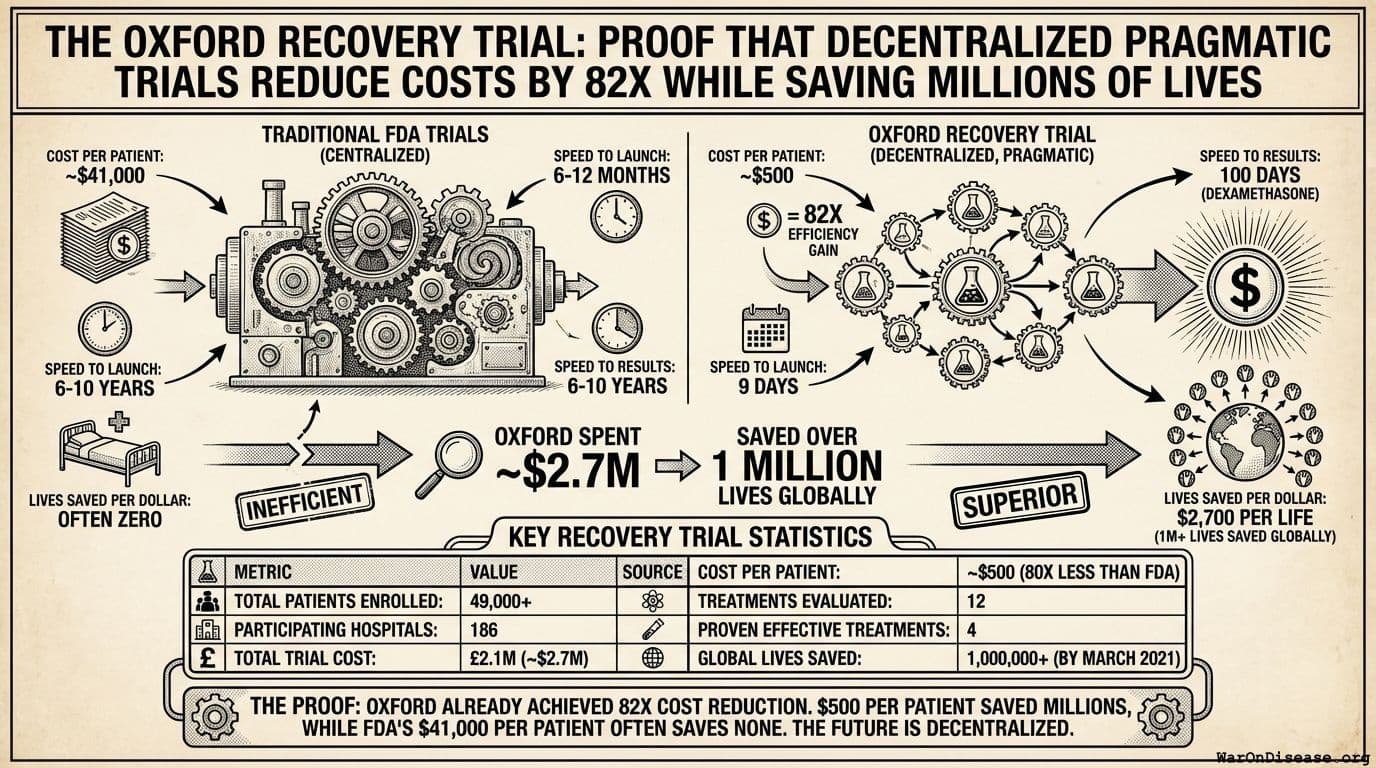
The Oxford RECOVERY Trial
Proof that decentralized pragmatic trials reduce costs by 82X while saving millions of lives
Copyright
Decentralized Institutes of Health
A global research initiative to accelerate medical progress through pragmatic clinical trials.
637:1 Return on Investment: The Economic Case for Clinical Trials
10.7B lives saved through earlier treatment access. $84.8 Quadrillion total value. Peer-reviewed research on accelerating medical progress.
Is This Crazy?
Integrating pragmatic trials into routine healthcare claims to clear a 443 years treatment backlog at $0.842/DALY. One-page calculation chain for economist review.
Is This Crazy?
A 1% redirect of military spending to pragmatic trials claims to avert 565 billion DALYs at $0.0018 each. One-page calculation chain for economist review.
Plutonium Kidz - The Molecular Mole
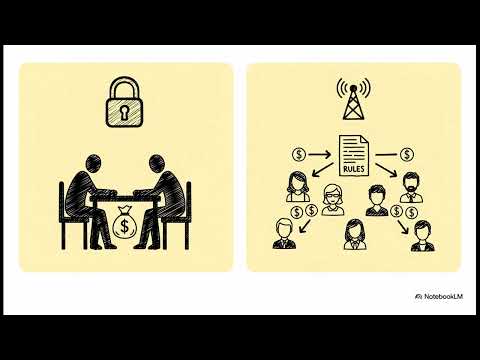
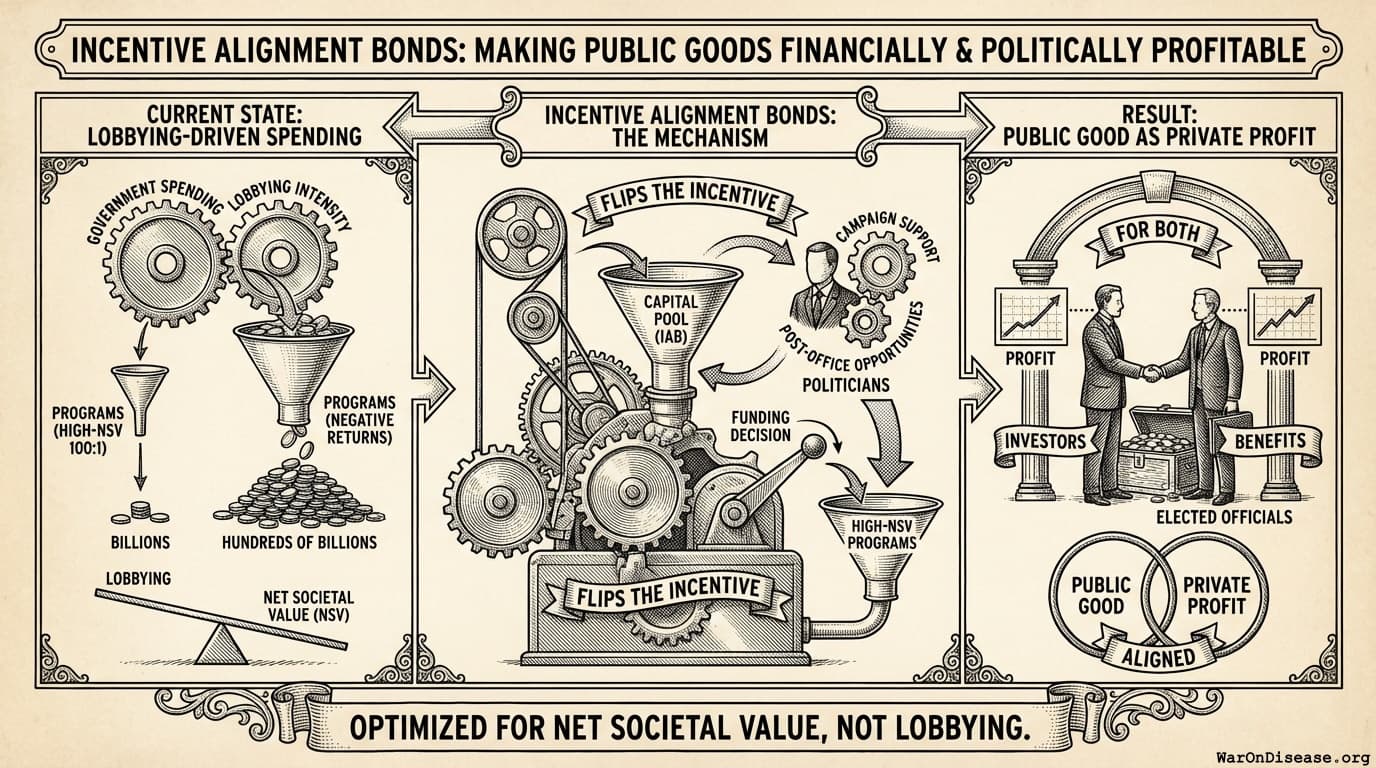
Incentive Alignment Bonds
Appendix J — Incentive Alignment Bonds: A Mechanism Design Approach to Political Economy – How to End War and Disease https://share.google/VspVTeNjjyBmCrROz Here’s a fun puzzle: You know how to save millions of lives. You can measure exactly how many. You have the money. And governments still don’t do it. This isn’t because politicians are evil. It’s because the system is built so that: Politicians maximize reelection, status, and post-office careers, not “humans continuing to exist” Bureaucracies maximize budget, stability, and turf, not “speed of cures” Lobbyists maximize client profits, not “global welfare” You don’t fix this with awareness campaigns. You’ve been “raising awareness” for decades and everyone is still dying. You don’t fix it with white papers. Politicians use white papers to stabilize wobbly tables. You don’t fix it by hoping for philosopher-kings. Plato tried that. It didn’t work. You fix it by changing what “self-interest” points at. This chapter describes a mechanism to legally bribe politicians into doing the right thing: Incentive Alignment Bonds (IABs) – a way to pay for better governance without technically paying politicians, giving money to governments, or going to prison. 1. The Core Problem: Good Ideas Die in Committee You’ve seen the numbers by now: Redirecting 1% of global military spending into pragmatic trials could save hundreds of millions of lives and generate trillions in economic value. The 1% Treaty isn’t constrained by physics, biology, or money. It’s constrained by politics, which is like being constrained by your dog’s opinion on quantum mechanics except your dog can veto legislation. No politician wants to be the one who “cut the military.” Even by 1%. Even if that 1% cures cancer. The attack ads write themselves: “Senator Johnson voted to WEAKEN AMERICA. His opponent didn’t. Vote for literally anyone else.” From a public choice perspective, the 1% Treaty is a classic public good: Enormous global benefit Concentrated local political pain Benefits arrive in 10 years; the attack ads arrive tomorrow The system does exactly what it’s incentivized to do. It’s not broken. It’s working perfectly. The problem is what it’s optimizing for. If you want different outcomes, you need different incentives. Wishing very hard doesn’t count. 2. What You Need: Legal Bribery That Isn’t Technically Bribery Imagine you could say to every politician on Earth: “If your country adopts a 1%-style reform and your citizens actually get healthier, we will: upgrade your international reputation (you’ll get invited to better parties), boost your reelection odds (independent campaigns will favor you), and make your post-office career prospects significantly better than your rivals’ (Goldman Sachs boards, prestigious fellowships, that sort of thing).” No backroom deals. No suitcases of cash. No prison. No money to you personally, and no money to government budgets. What you get is external legitimacy, electoral support, and cushy retirement gigs. The things politicians actually optimize for. Just a standing, public, announced-in-advance rule: “Do this objectively good thing, and the world will systematically reward you.” This is the job of Incentive Alignment Bonds. It’s bribery, except legal, transparent, and pointed at saving lives instead of ruining them. 3. Definition: What Are INCENTIVE ALIGNMENT Bonds? Incentive Alignment Bonds (IABs) are a new class of financial instruments designed to: Reward investors with returns proportional to public-good funding achieved Reward politicians with electoral support and career benefits based on their voting record for public-good policies Fund the public good itself from the policy outcome (self-sustaining) The key innovation: IABs align both investors and politicians with public-good outcomes through a single instrument. Investors provide capital to pass the policy. Politicians get career benefits for supporting it. The policy outcome funds everything. This is mechanism design applied to governance, using the tools economists developed for auctions and markets to solve political economy problems. The insight is that politicians respond to incentives like everyone else; the question is whether those incentives point toward saving lives or toward pleasing lobbies. IABs change what the incentives point at. They are not charity. (Charity doesn’t work at scale.) They are not lobbying. (That’s already taken.) They are not “paying politicians.” (That’s illegal, and also already taken.) They are: A way to make investors and politicians cooperate on public goods by appealing to the only thing they respond to: self-interest.
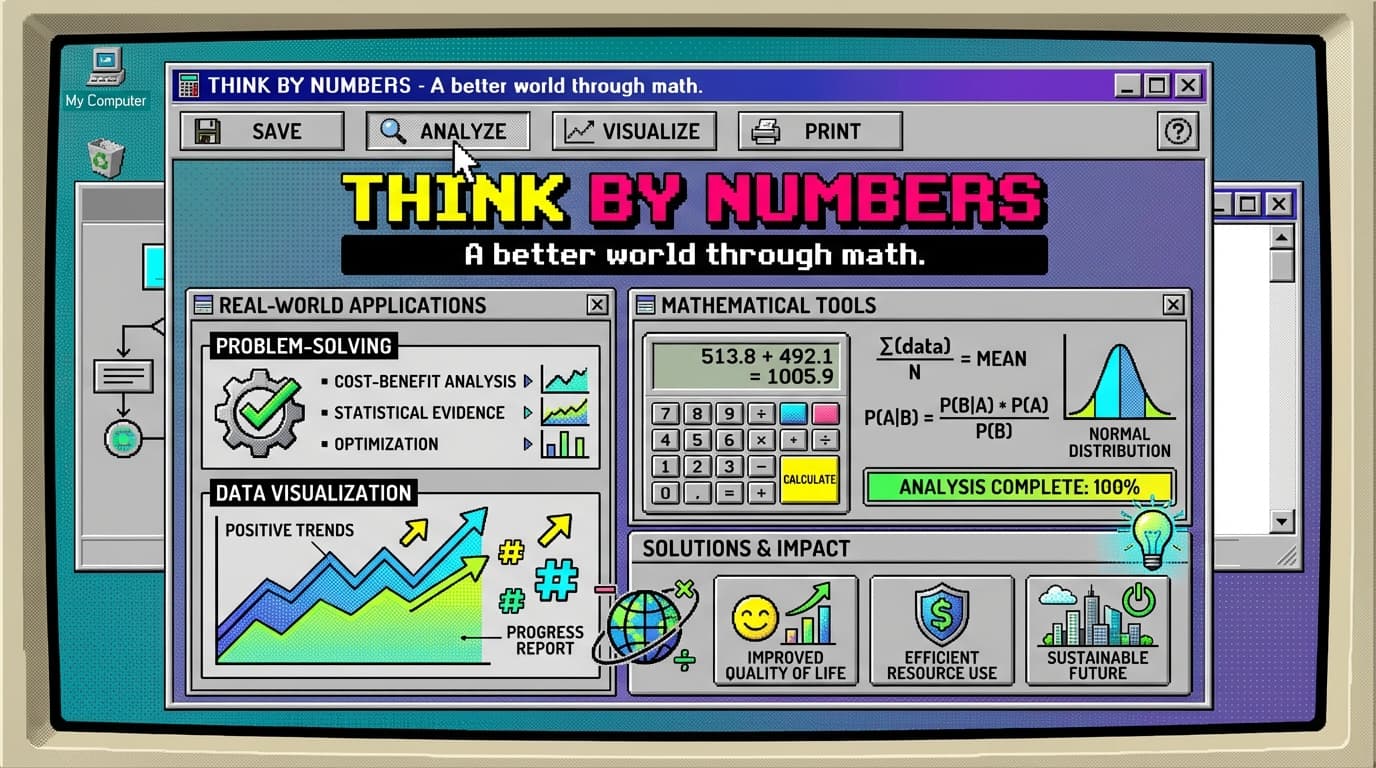

Think by Numbers
Evidence-based analysis of government spending, healthcare policy, and rational decision-making. A better world through math.
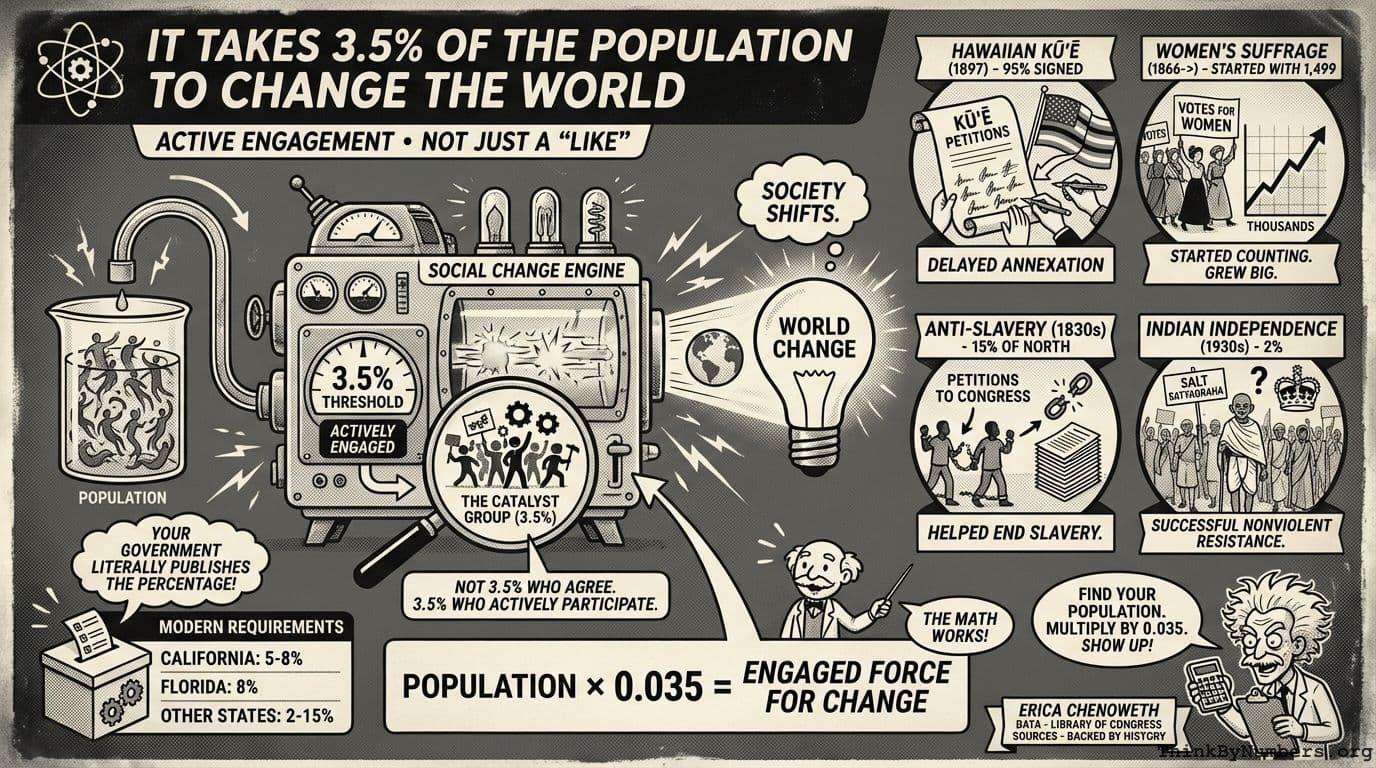
It Takes 3.5% of the Population to Change the World
Harvard study shows 3.5% active participation changes society. Not clicking "like." Actual showing up. Your government publishes the percentage needed.
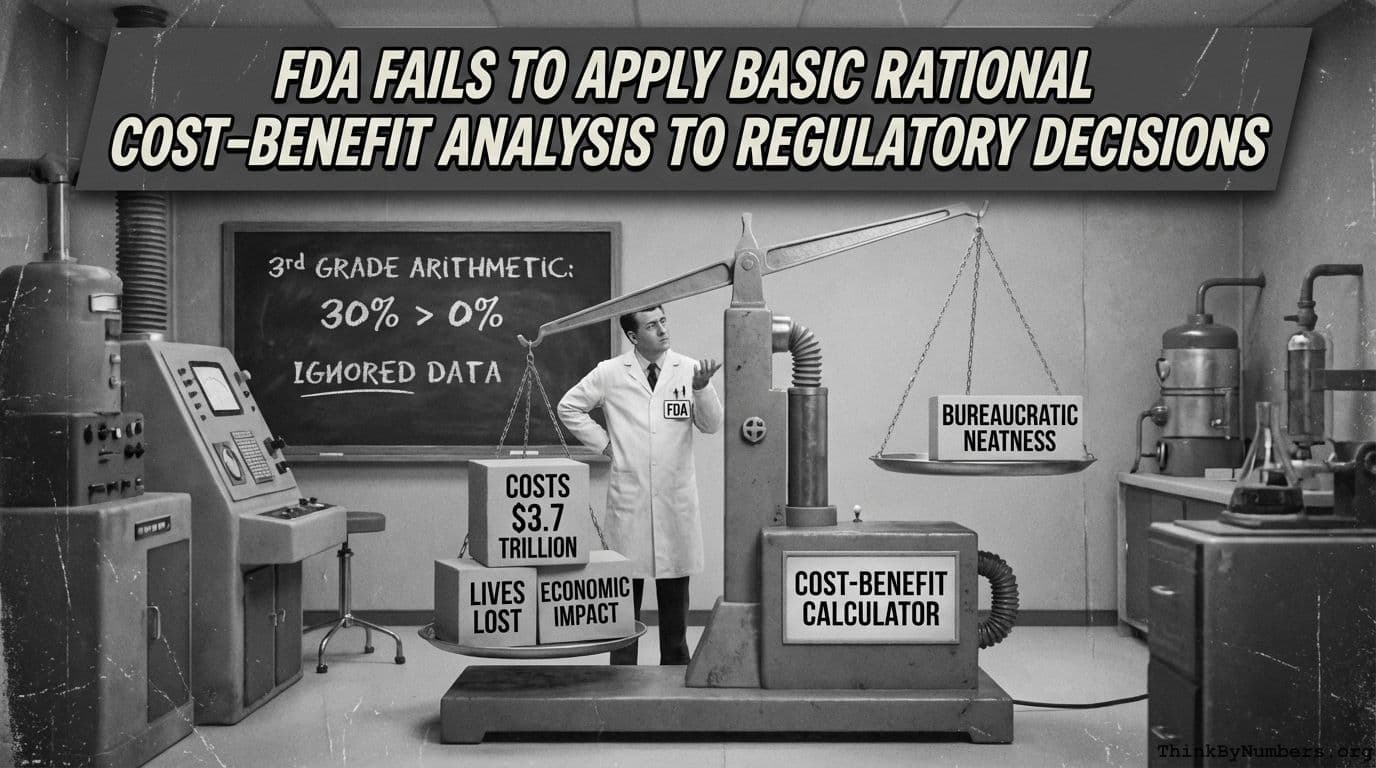
FDA Fails to Apply Basic Rational Cost-Benefit Analysis to Regulatory Decisions
FDA banned monoclonal antibodies despite 30% efficacy. They ignored $3.7T Long COVID cost, risked $600M in preventable hospitalizations.
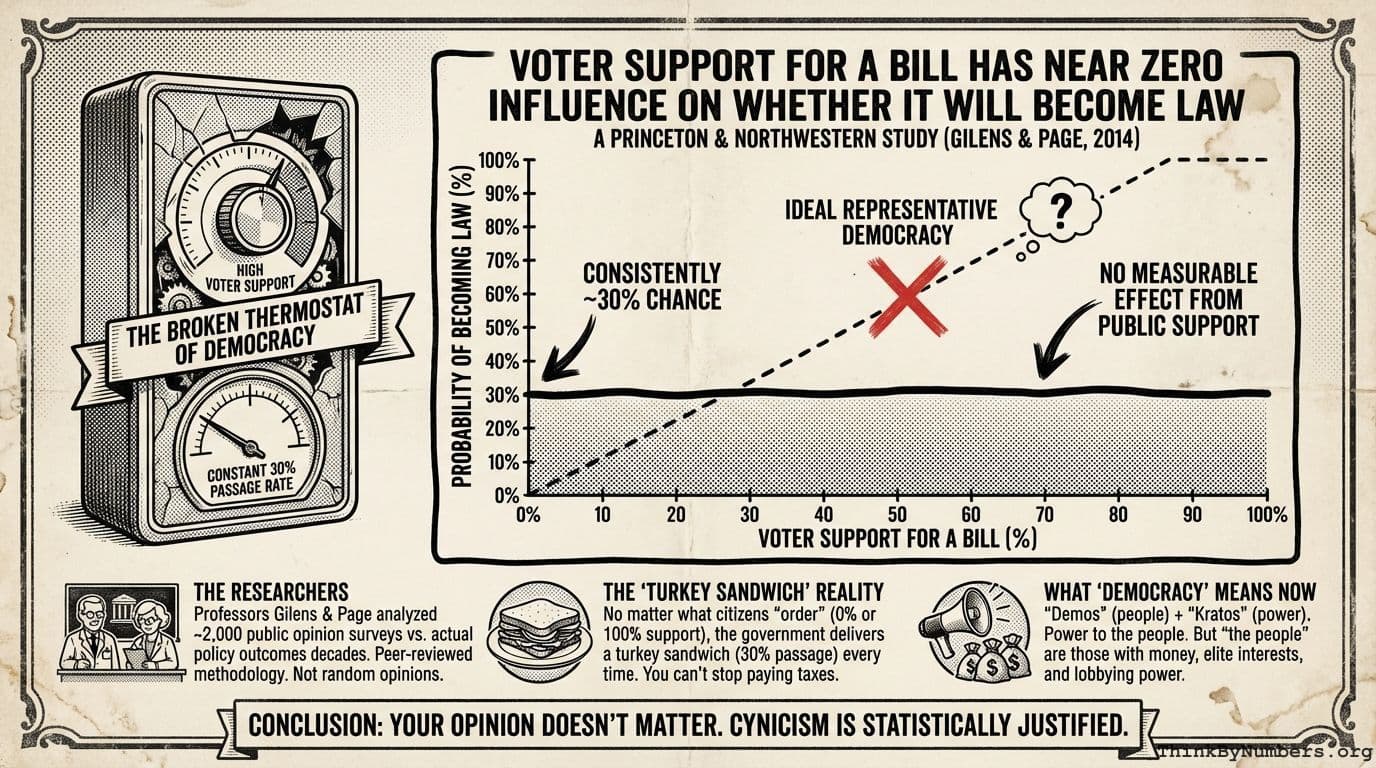
Voter Support for a Bill Has Near Zero Influence on Whether It Will Become Law
Princeton study shows 90% of Americans have zero impact on legislation. 0% or 100% support both equal 30% passage chance. Democracy is flat line.
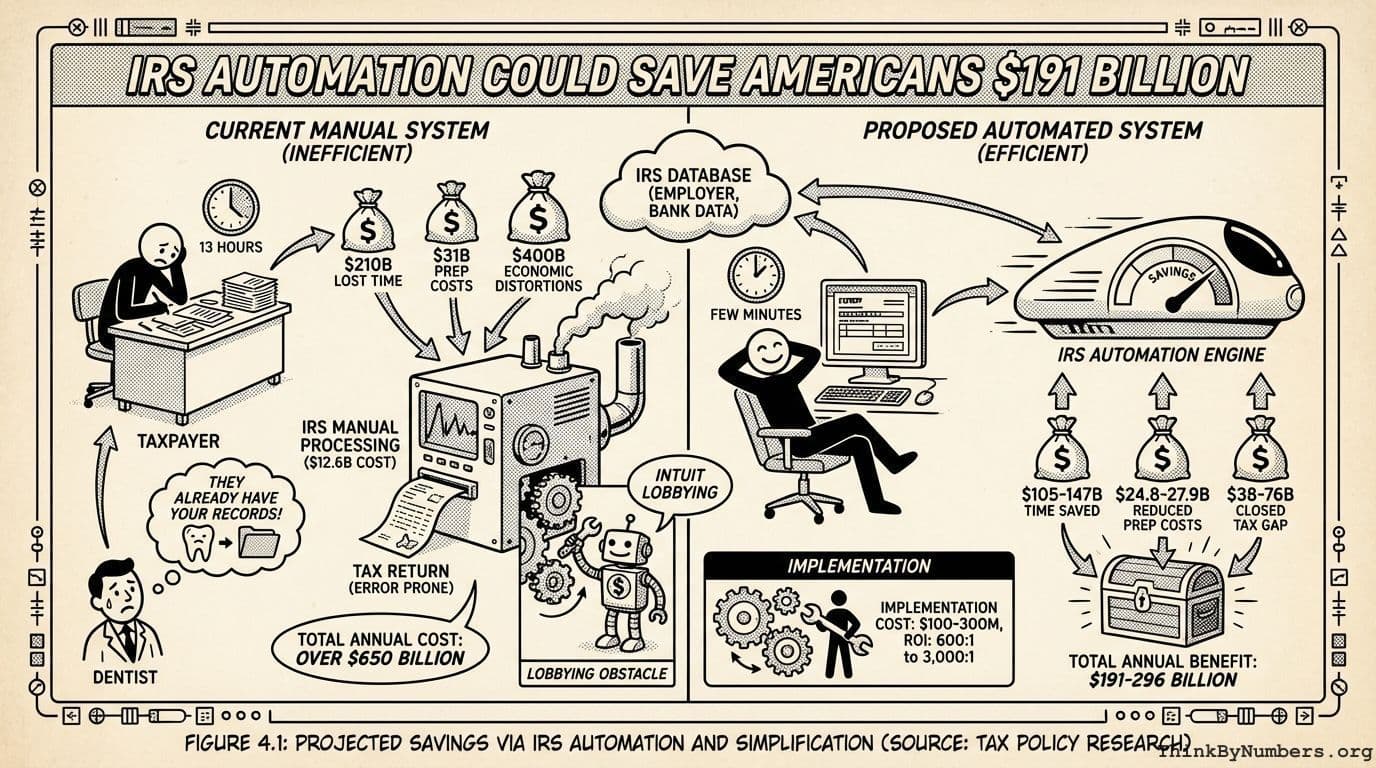
IRS Automation Could Save Americans $191 Billion
IRS already has your data; automating returns could save $191 billion. Instead, they make you spend 13 hours transcribing what they know and threaten prison if you miscalculate.
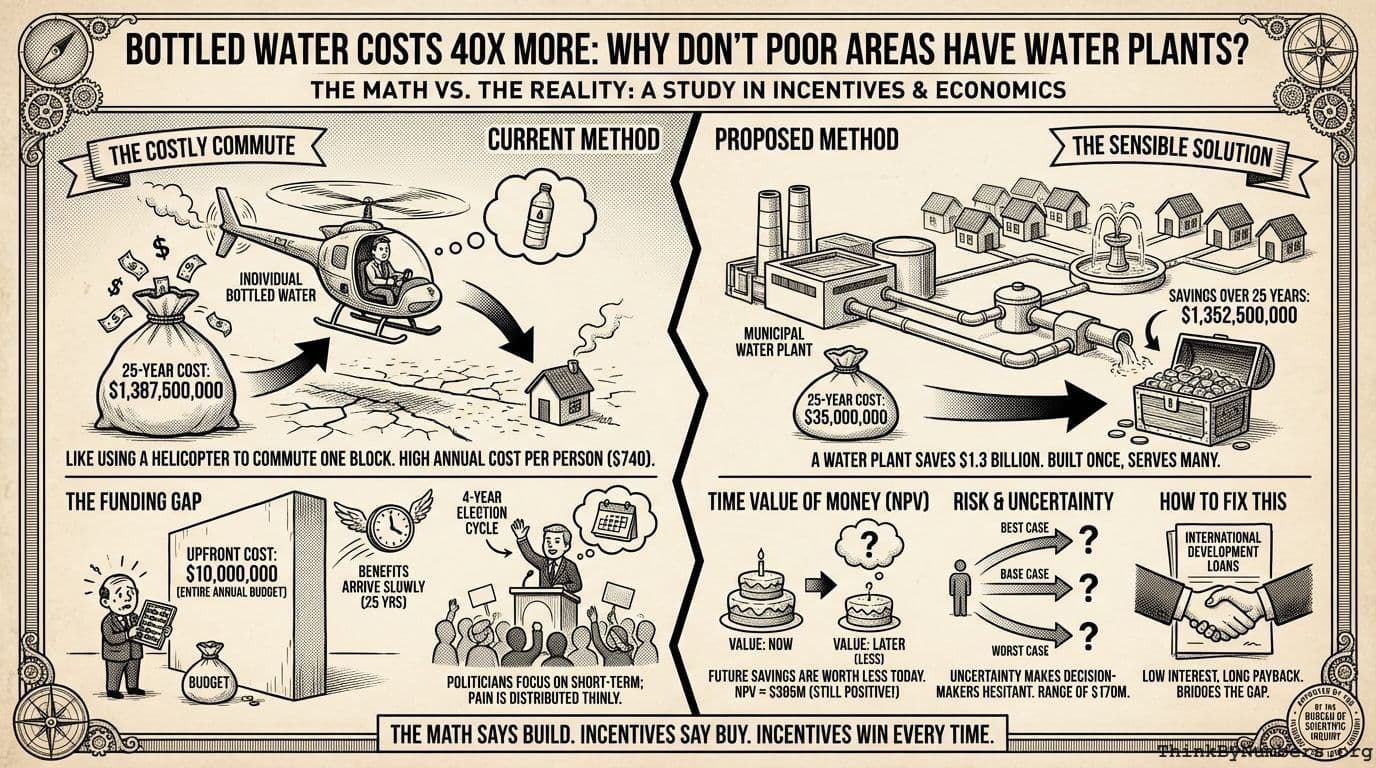
Bottled Water Costs 40x More: Why Don't Poor Areas Have Water Plants?
Roatan residents spend $740/year on bottled water. Building a water plant costs 40x less over 25 years. The math is third-grade arithmetic. Like using a helicopter to commute one block.
How we allocate 44% of Societal Resources
Can you think of a better way? Please let me know in the comments!
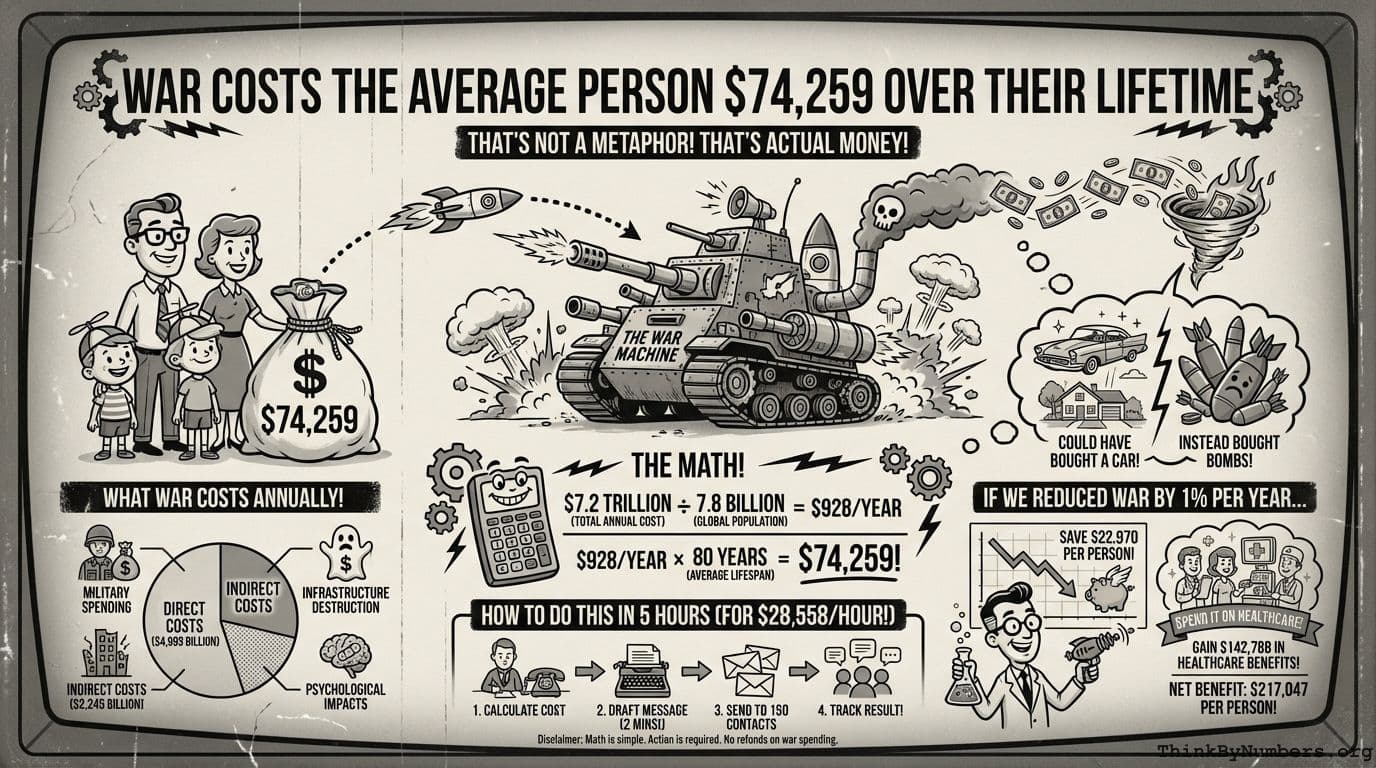
War Costs the Average Person $74,259 Over Their Lifetime
War costs you $74,259 in lifetime taxes. That's a car's worth of money spent on bombs instead of things that don't explode people.

There's about a 0.1% Chance that COVID-19 Coincidentally Arose in Nature near the Wuhan Institute of Virology
0.1% chance novel coronavirus appeared near the only 5 labs studying this exact virus. Basic math meets uncomfortable facts.
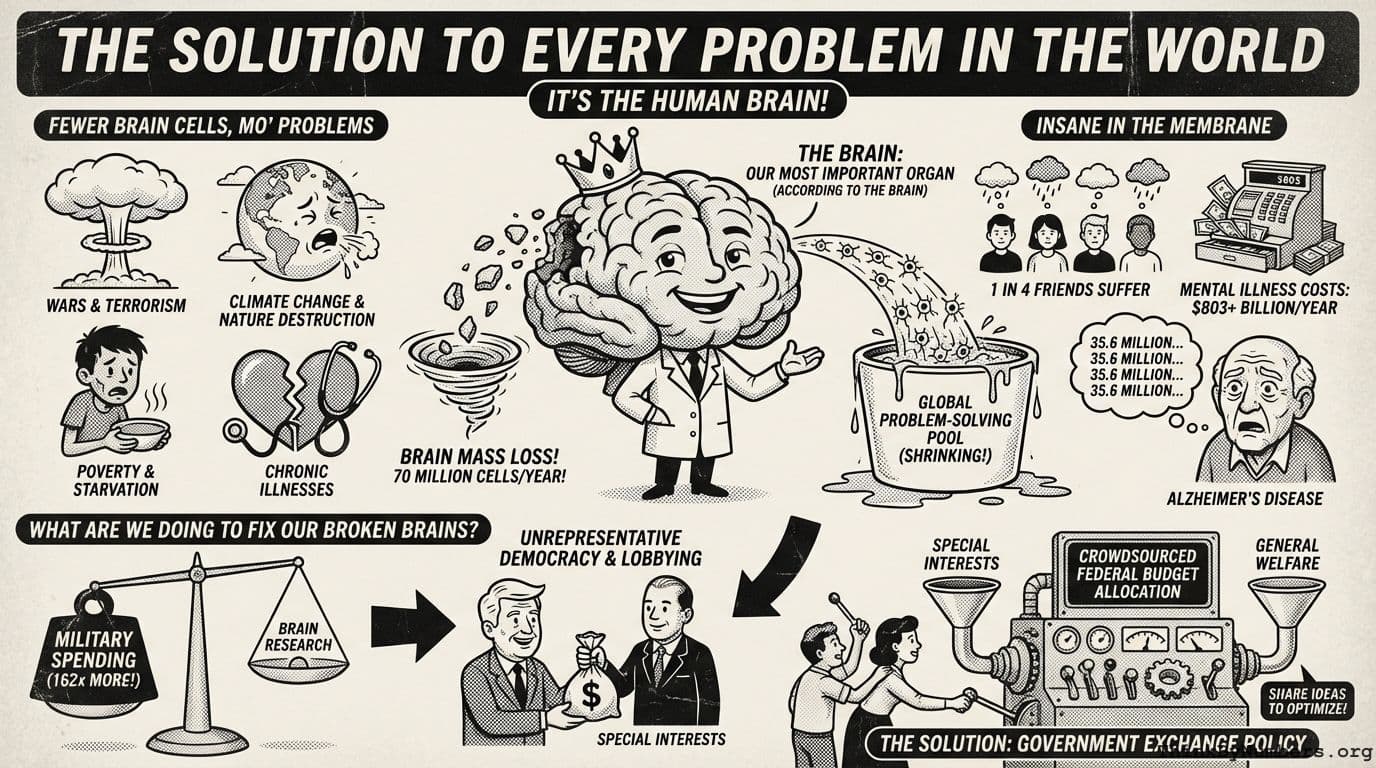
The Solution to Every Problem in the World
1 in 20 million terrorism death chance. 1 in 10 Alzheimer's chance. We spend 162x more on military than brain research. Math is wrong.
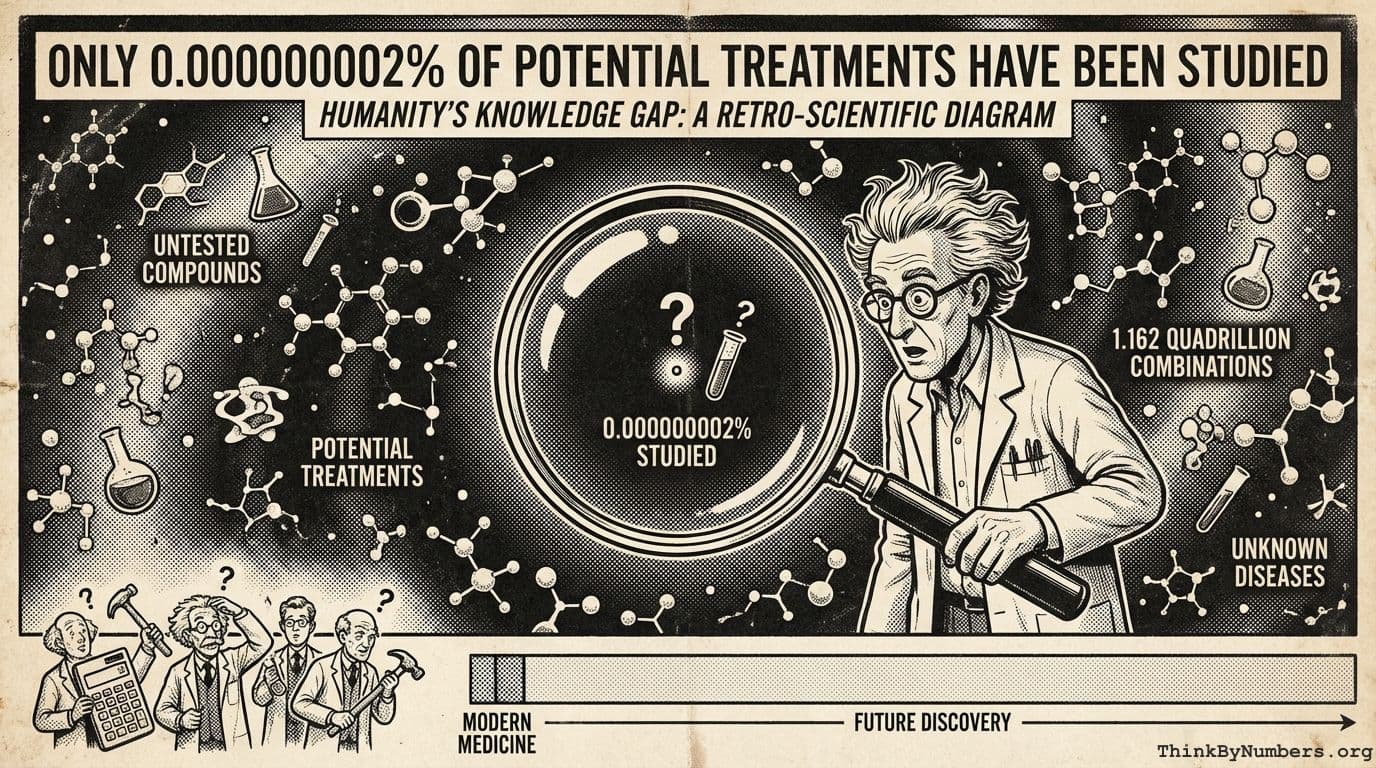
Only 0.000000002% of Potential Treatments Have Been Studied
Only 21,000 of 1.162 quadrillion possible drug combinations tested. Would take 3.2 billion years at current pace. Earth is 4.5 billion years old.
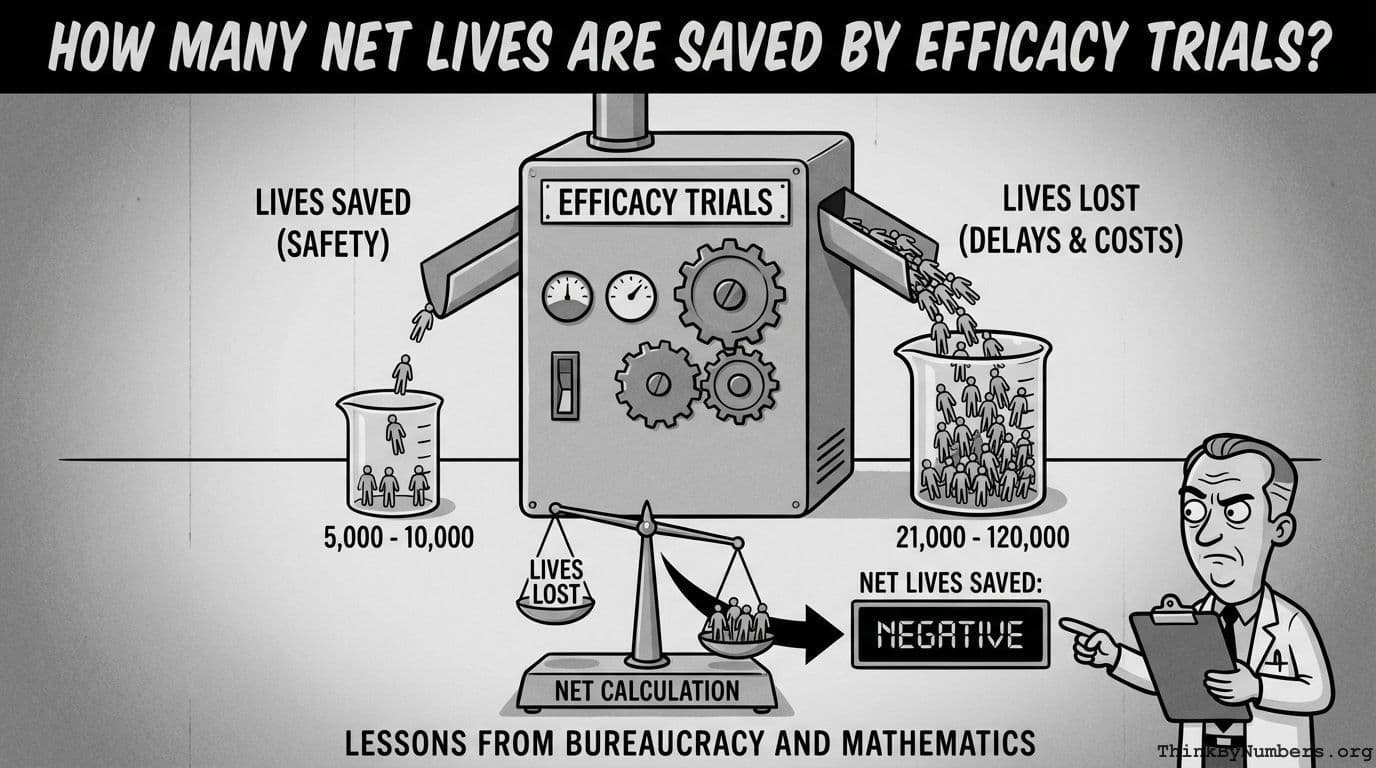
How many NET lives are saved by efficacy trials?
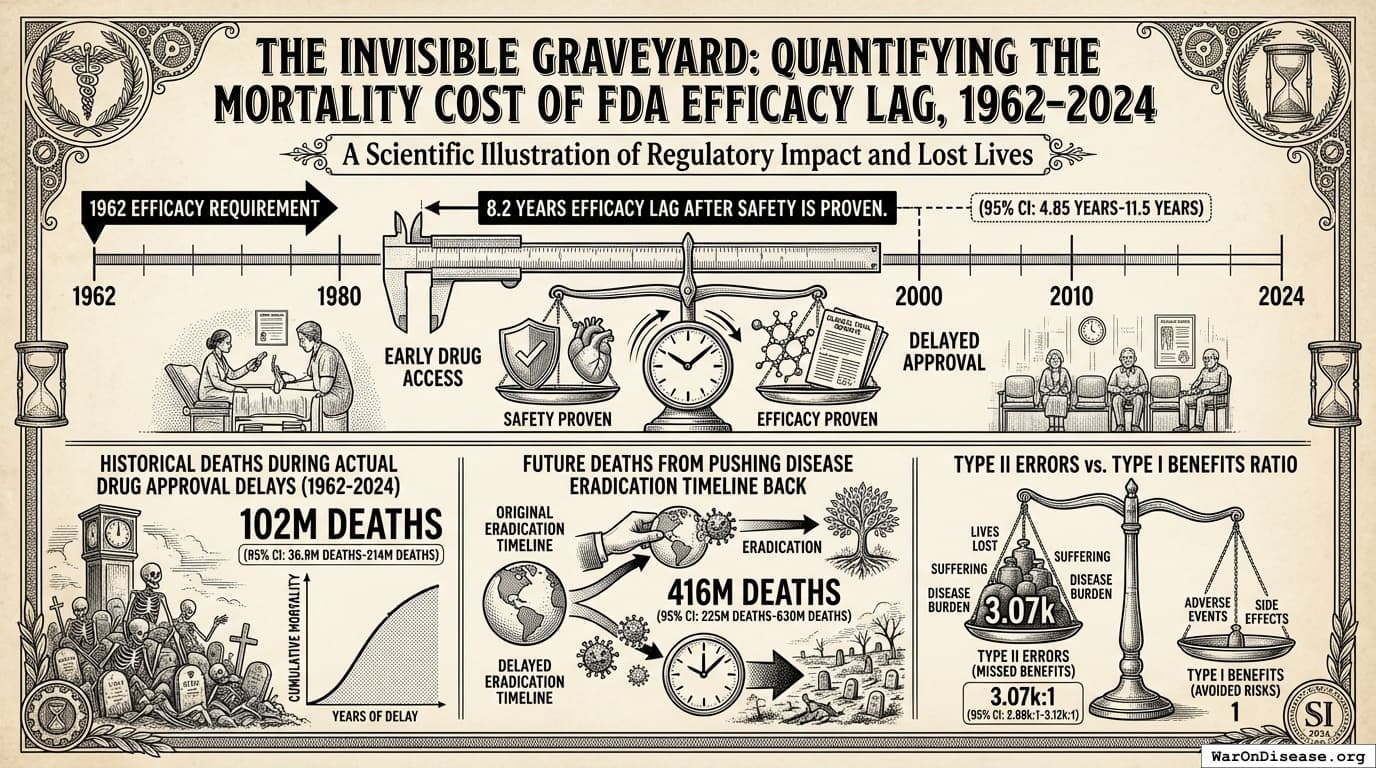
FDA regulations killed medical progress by 70% in 1962. Lifespan growth immediately cut in half. Drug development now costs 13 times more.
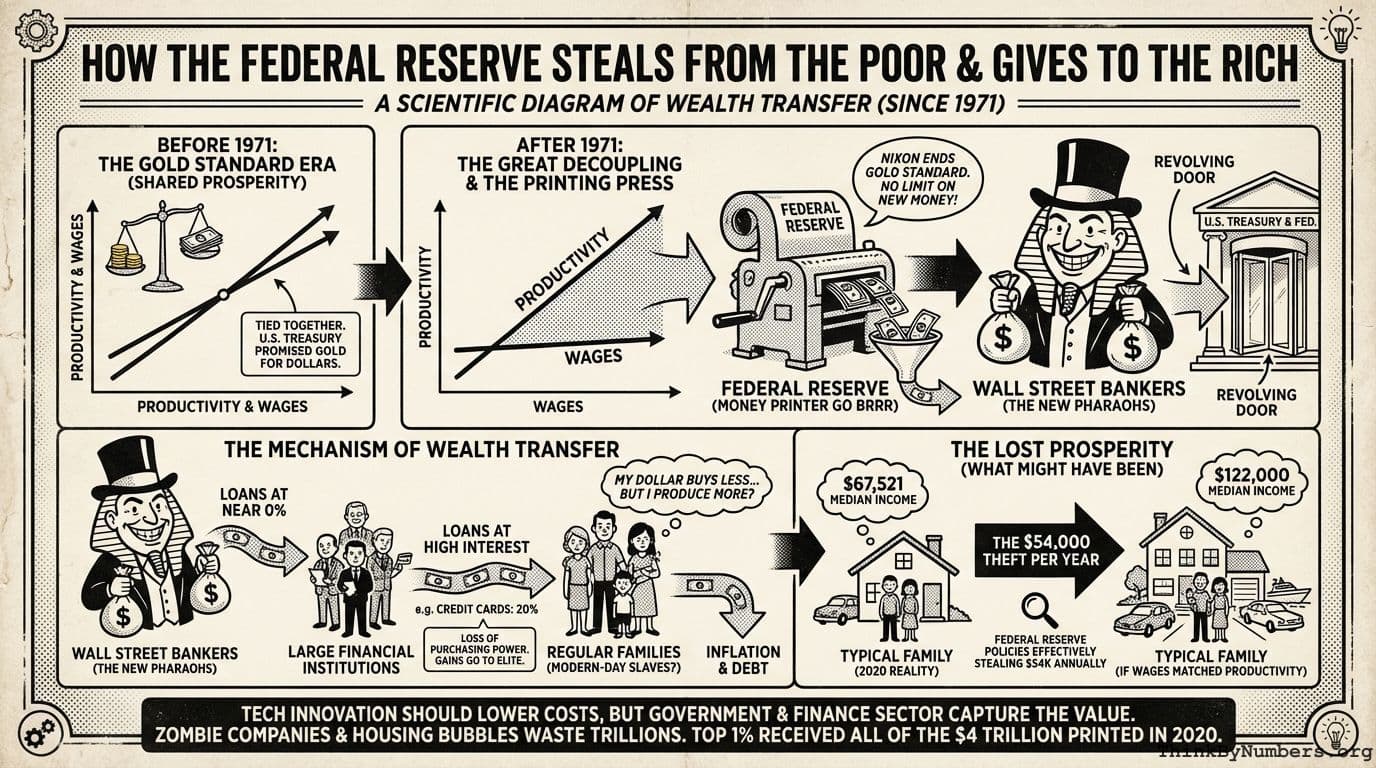
How The Federal Reserve Steals from the Poor and Gives to the Rich
Before 1971 productivity and wages grew together. After 1971 they suddenly split. Productivity kept rising, wages flatlined. Federal Reserve counterfeiting is Robin Hood in reverse.

Optomitron Real Time Decision Support Demo
An alpha-stage personalized AI assistant that analyzes your data to inform you of the most effective things you can do to minimize symptom severity.
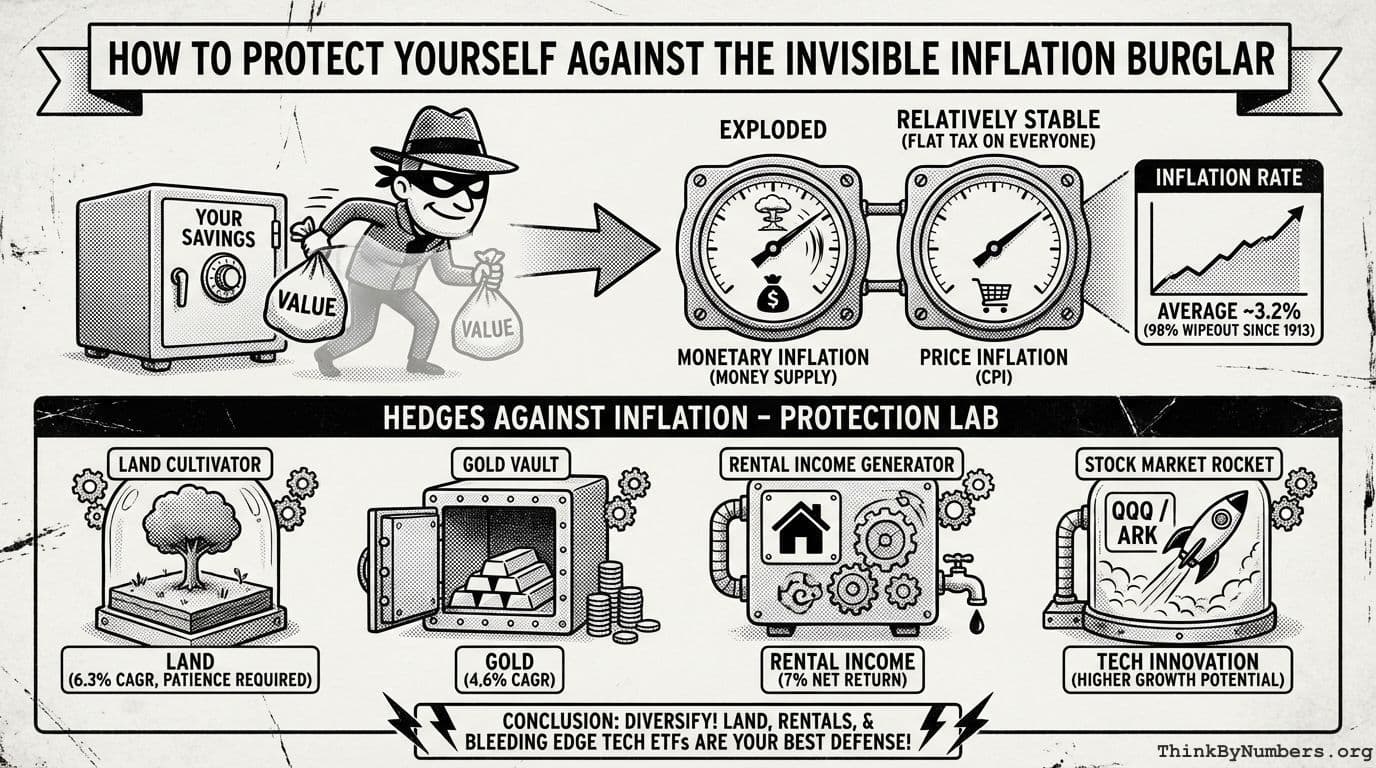
How to Protect Yourself Against the Invisible Inflation Burglar
Monetary inflation (money supply) vs price inflation (CPI). Money supply exploded, prices stayed stable. Inflation is hidden flat tax governments use instead of asking citizens to pay.
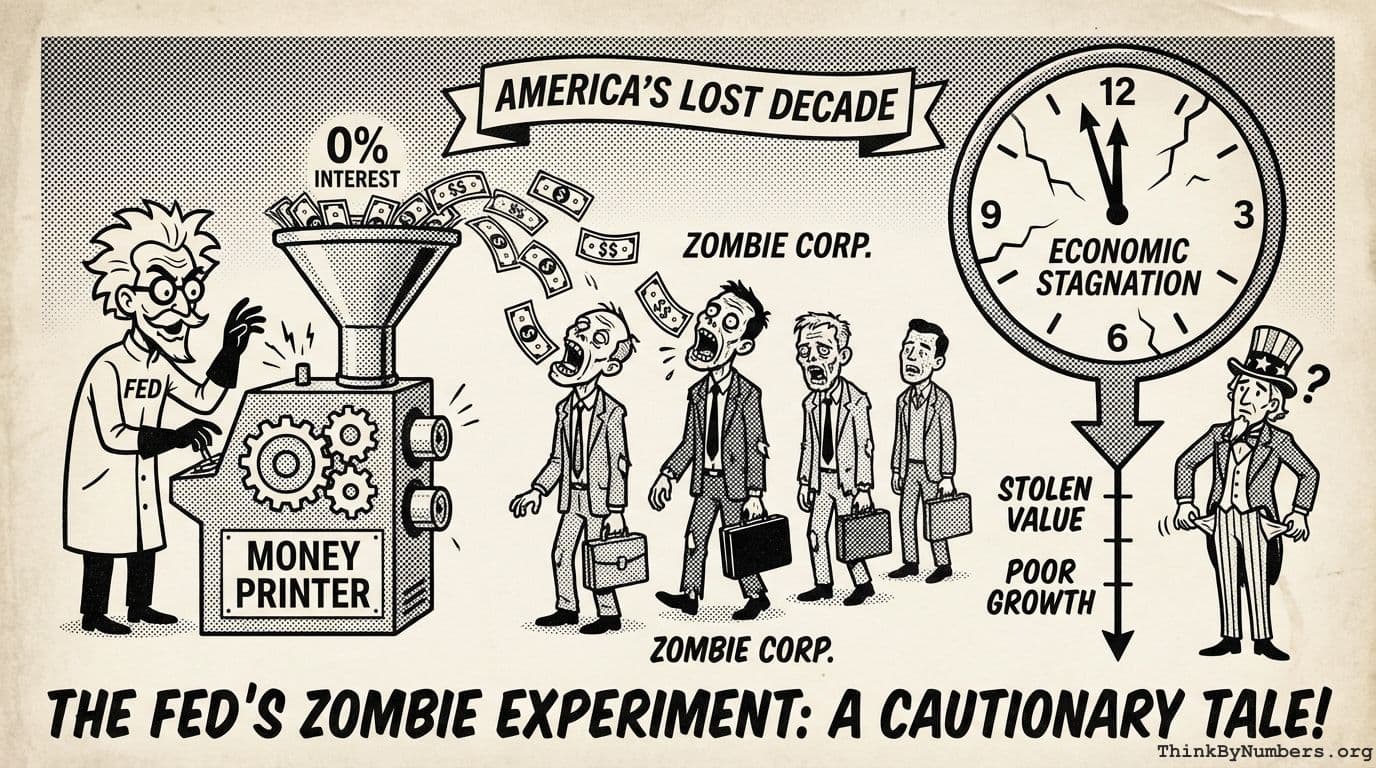
Zombie Companies Will Lead to America's Lost Decade
Fed loans 0% interest to zombie companies that don't produce value. Japan's approach gave them 3 decades to recover. Volcker's alternative (1979) crashed then boomed.
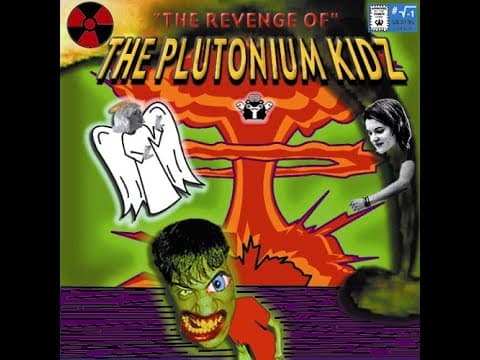
Plutonium Kidz - That's How You Know It's Christmas Time
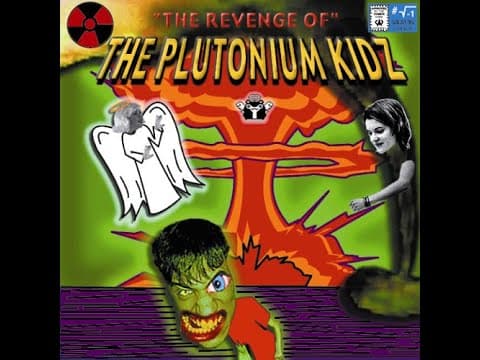
Plutonium Kidz - Surfin' Rabbi
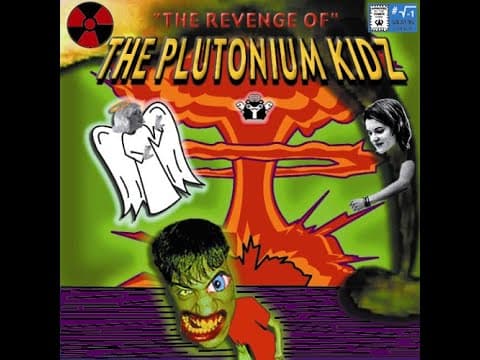
Plutonium Kidz - Shadow of a Daisy
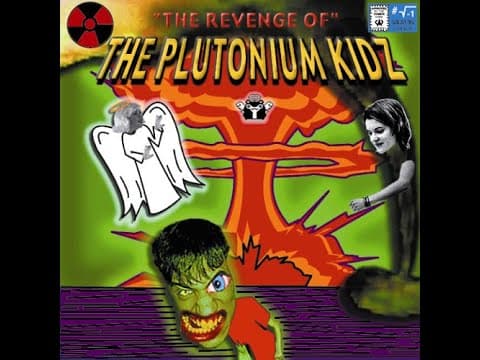
Plutonium Kidz - Don't Funk with the Get Down
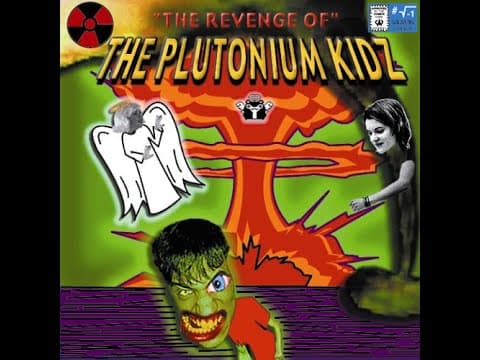
Plutonium Kidz - Deep Fry My Heart
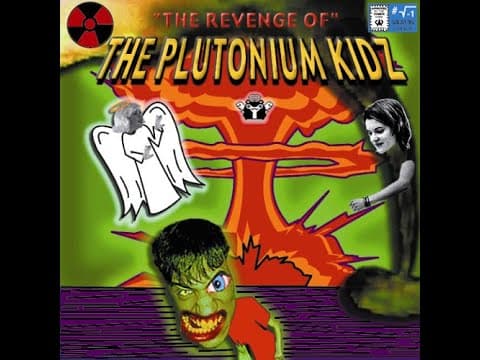
Plutonium Kidz - The Narcochamber
Plutonium Kidz - Chlorophyll Deficiency
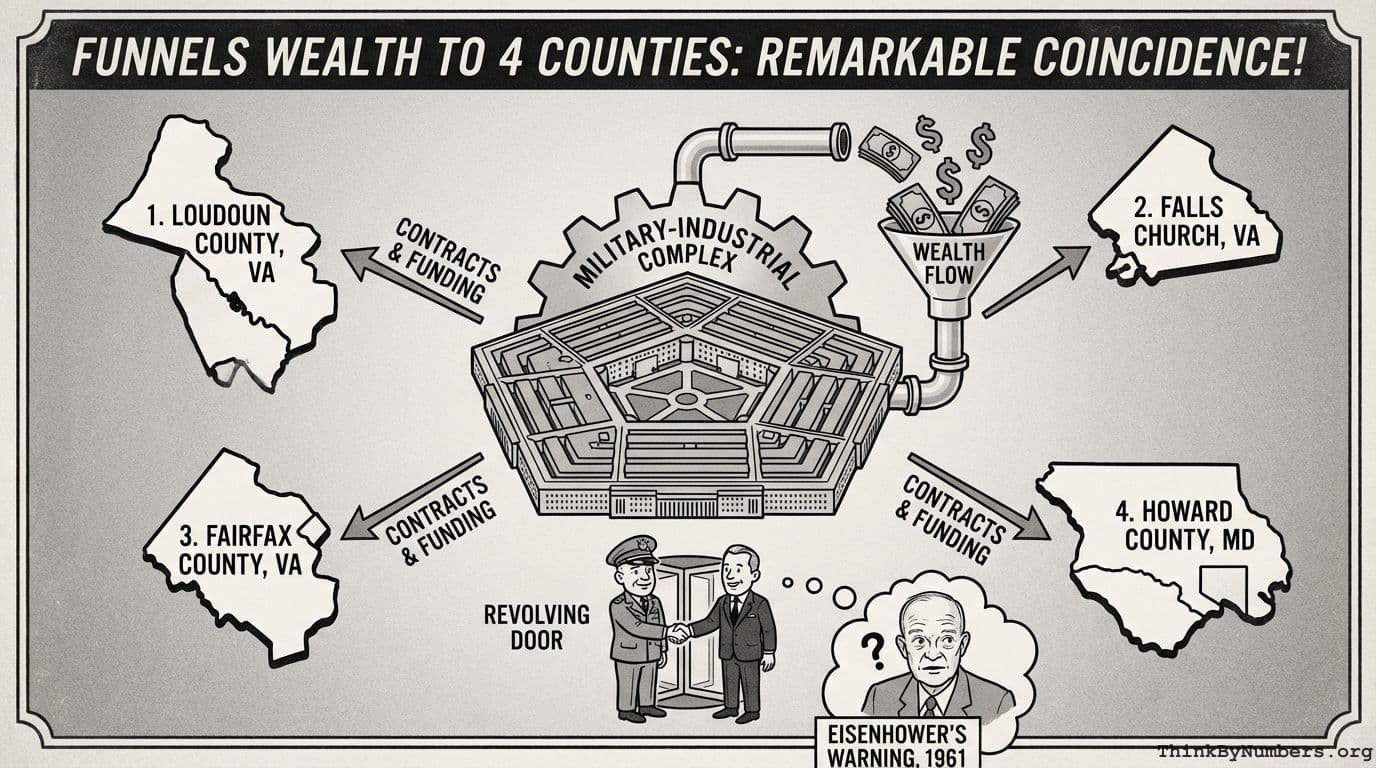
Military-Industrial Complex Funnels Wealth to 4 Counties
America's 4 richest counties all surround the Pentagon. Defense contractors discovered money can't travel far from where it's printed.
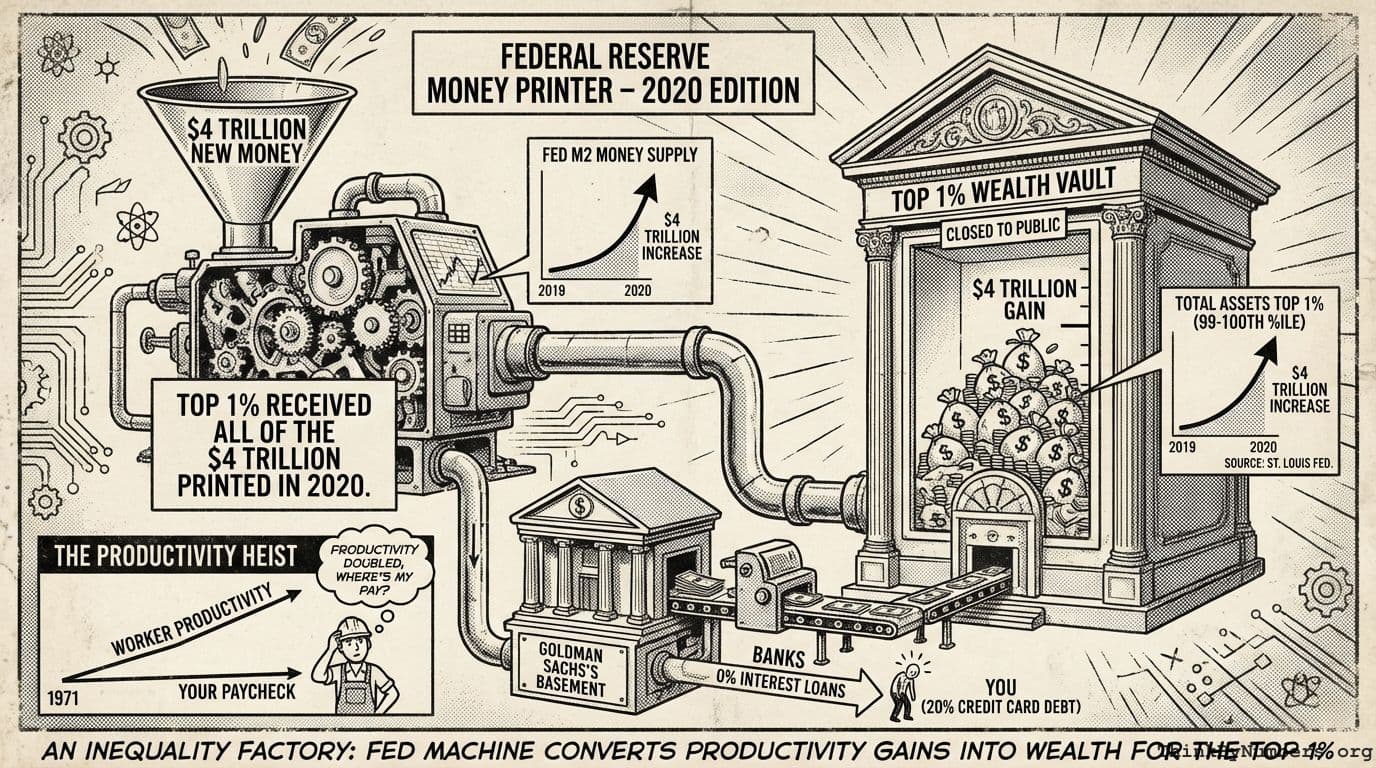
Top 1% Received all of the $4 Trillion Printed in 2020
Federal Reserve printed $4 trillion in 2020. Top 1% wealth increased by exactly $4 trillion that year. St. Louis Fed confirms. The math matches perfectly. Totally normal economic policy.
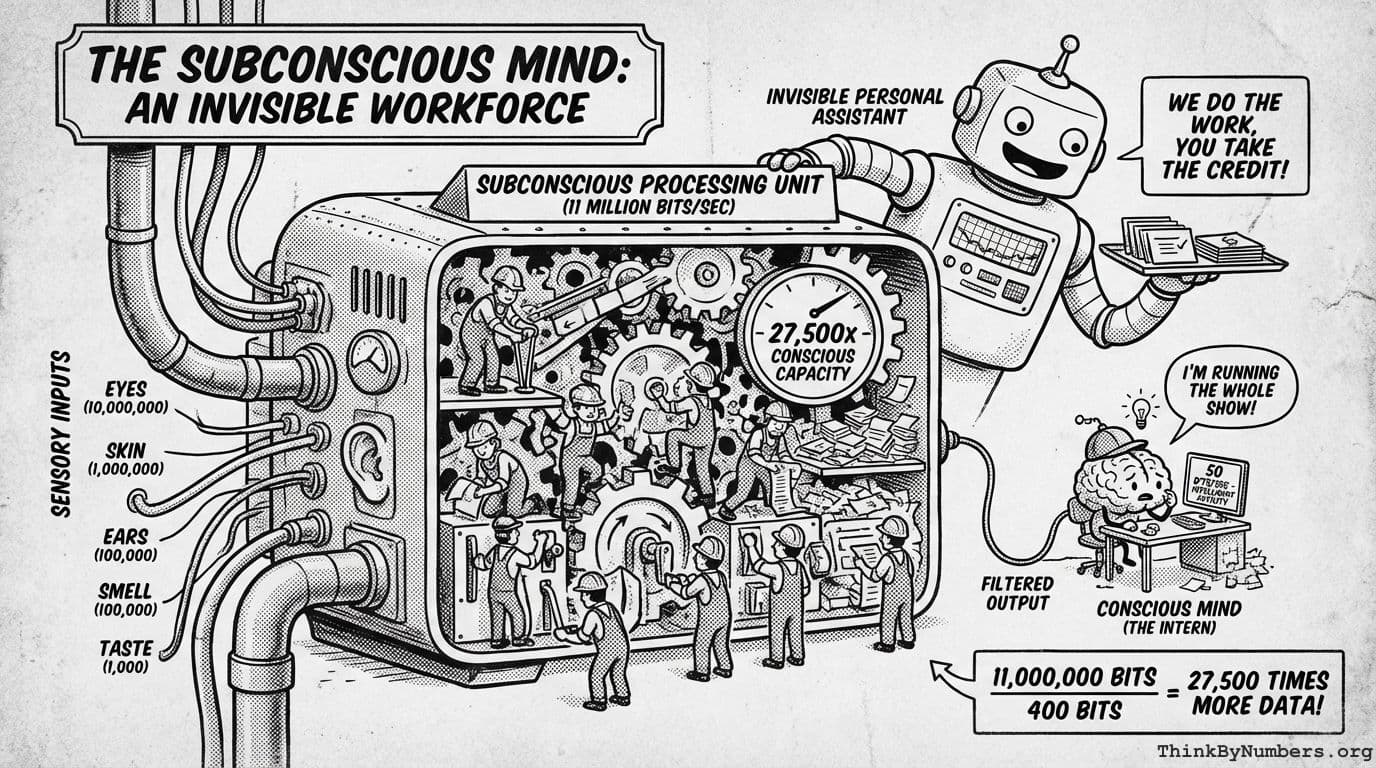
Subconscious Processes 27,500 Times More Data than the Conscious Mind
Your subconscious processes 27,500x more information than you're aware of. You're just the guy who takes credit.
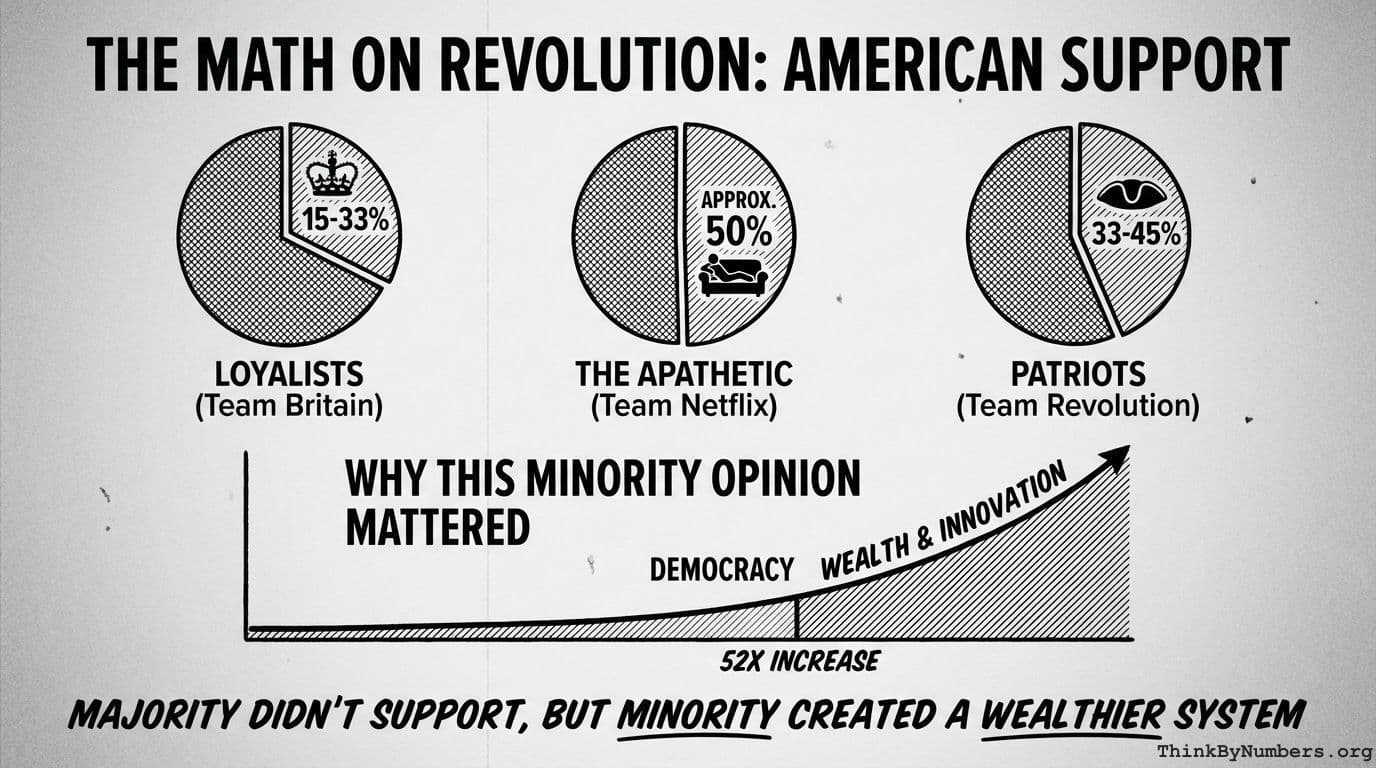
The Majority of Americans Didn't Support the American Revolution
Only 33-45% supported American Revolution. 16% backed the king. Half tried avoiding it. America founded by minority opinion that made everyone 52X richer.
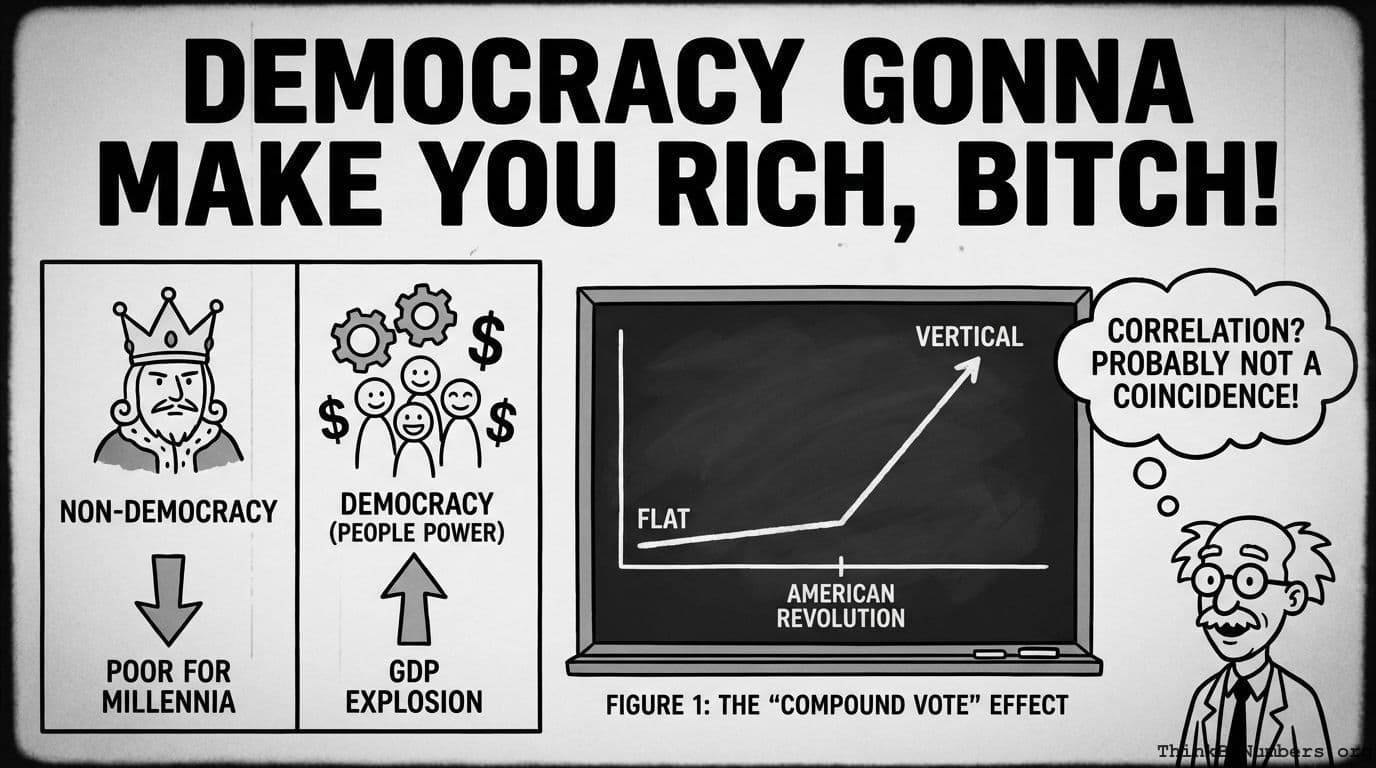
Democracy Gonna Make You Rich, Bitch!
Democracy increases GDP 20% over 30 years. Only get-rich-quick scheme that works. Like compound interest except voting rights make money somehow.
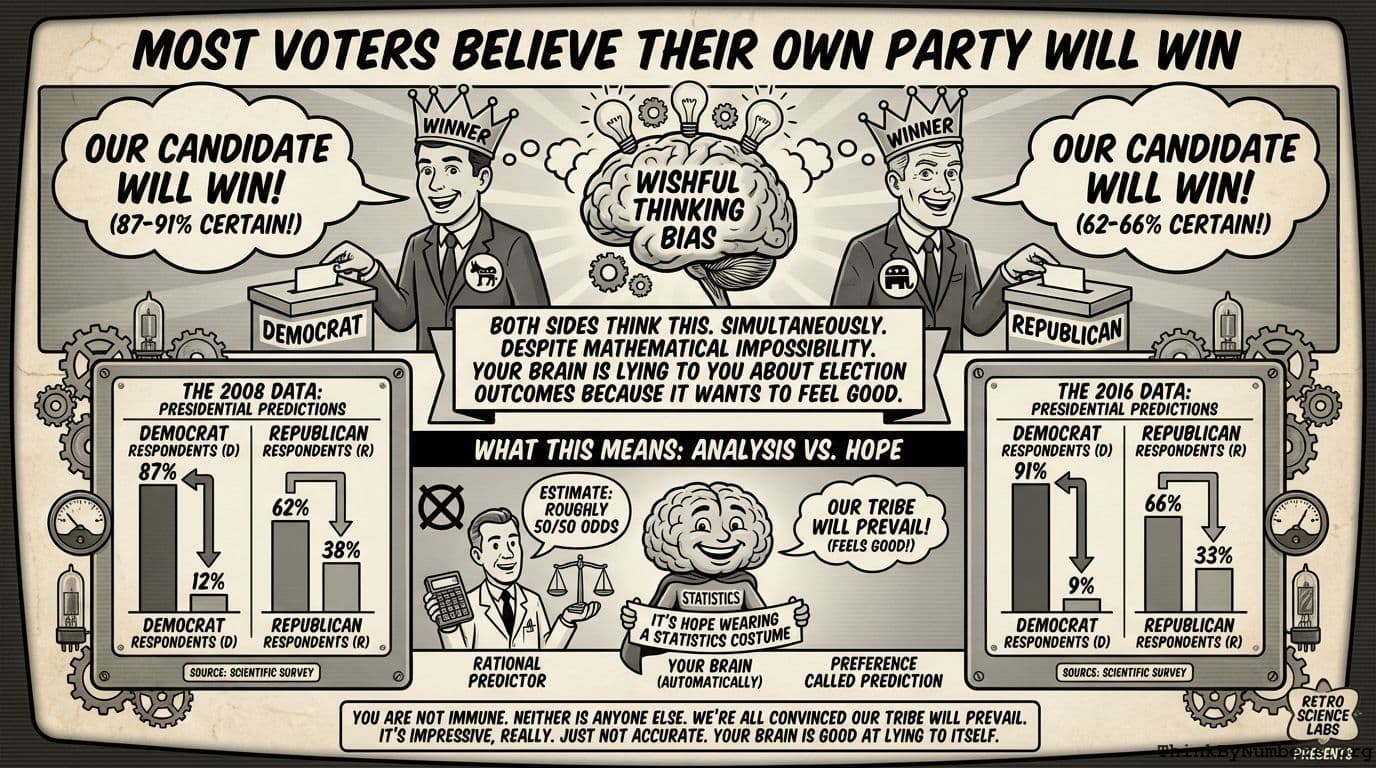
Most Voters Believe Their Own Party Will Win
87% of Democrats and 62% of Republicans both predicted they'd win same election. Math doesn't work. Brain lies to you wearing statistics costume.
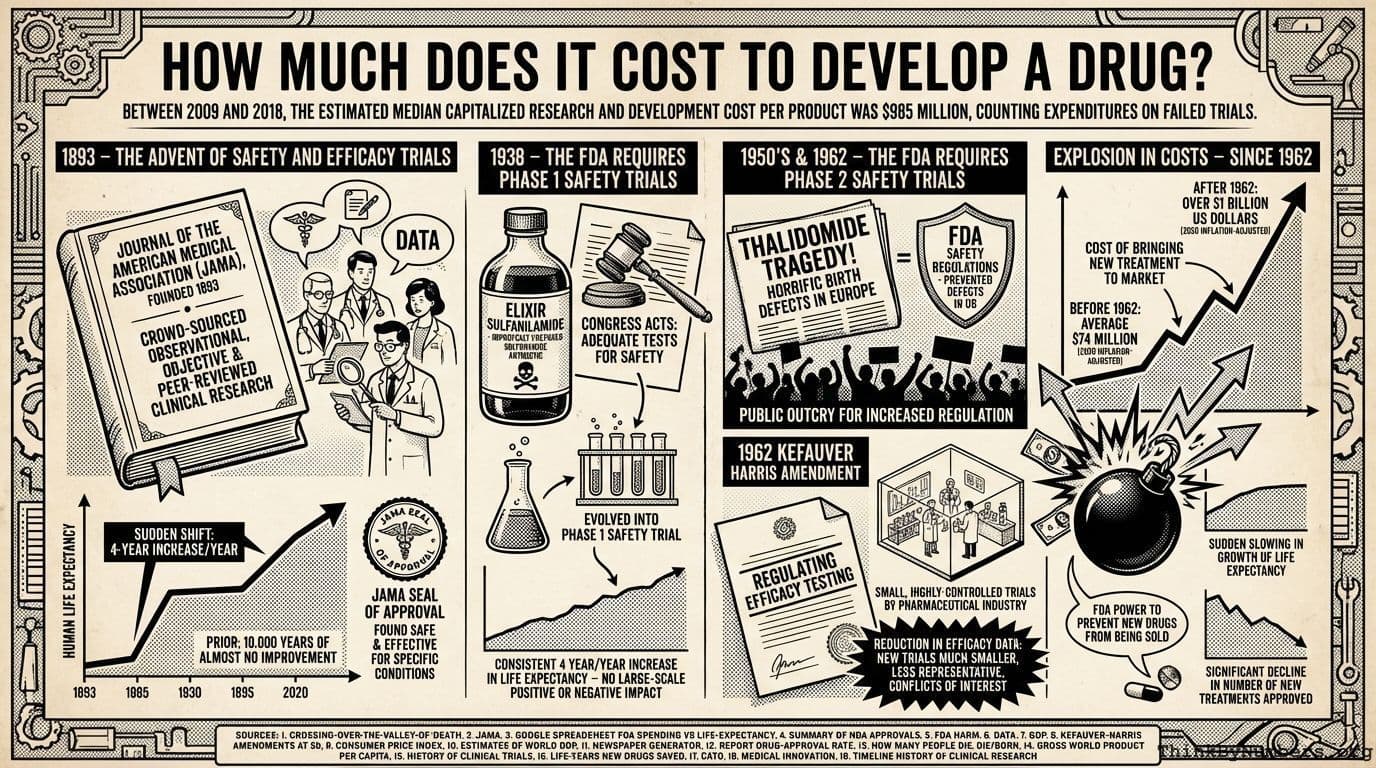
How much does it cost to develop a drug?
Median drug development cost is $985 million including failed trials (2009-2018). In 1893 doctors just tested drugs and reported results. Now we have a Valley of Death instead.
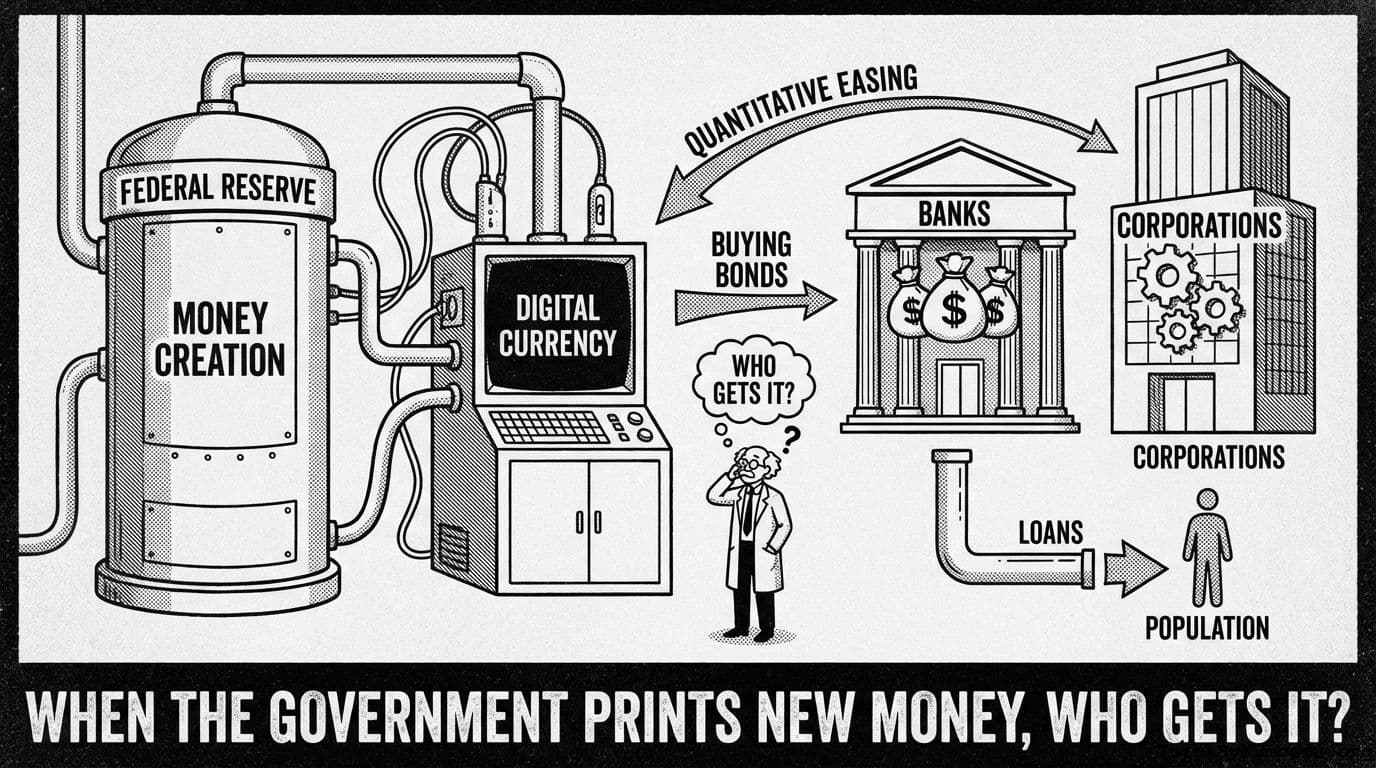
When the government prints new money, who gets it?
Federal Reserve creates money electronically, buys bonds from investors. Bondholders get free money first. By the time it reaches you, inflation already ate it. Money printer go brr.
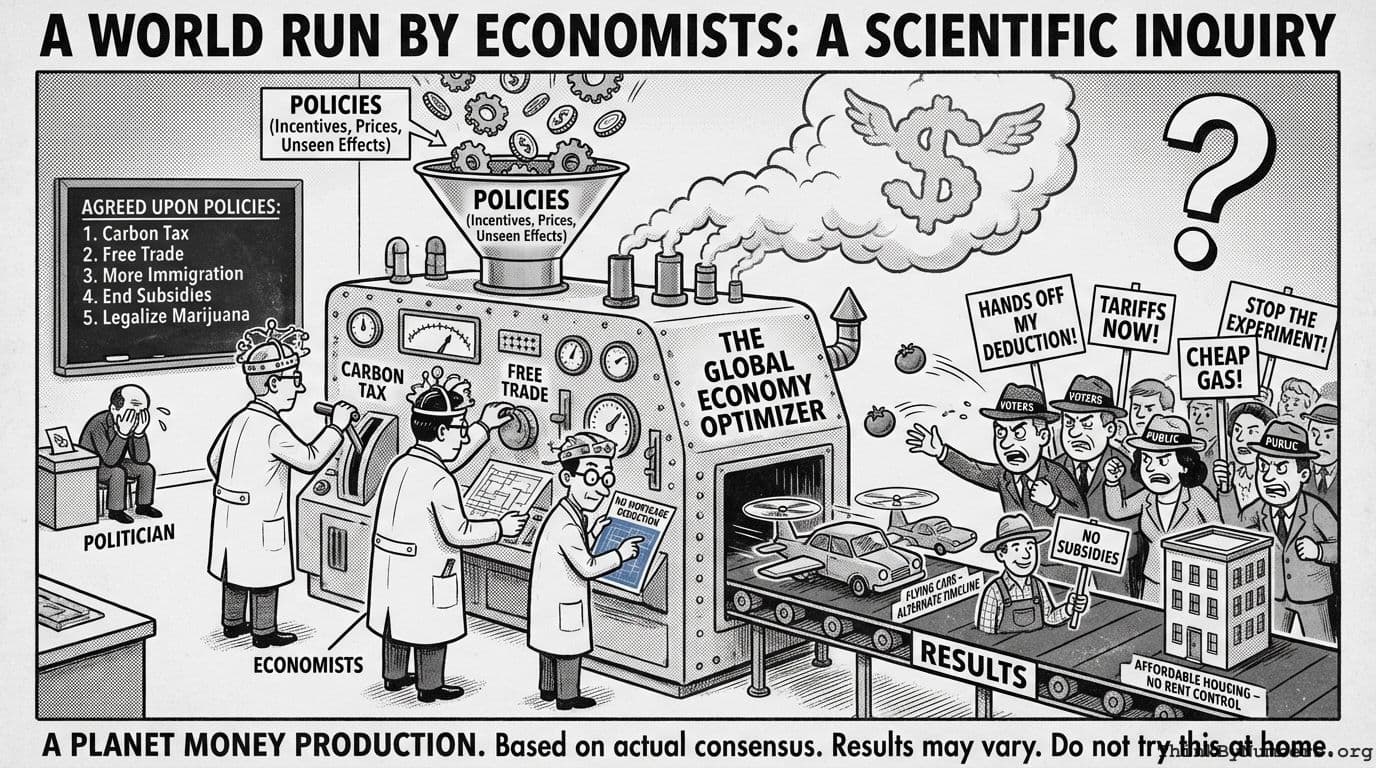
A World Run By Economists
Every Econ 101 textbook teaches incentives, costs, and second-order effects. Most government policies ignore all three. Like someone passing driver's ed then driving into a lake on purpose.
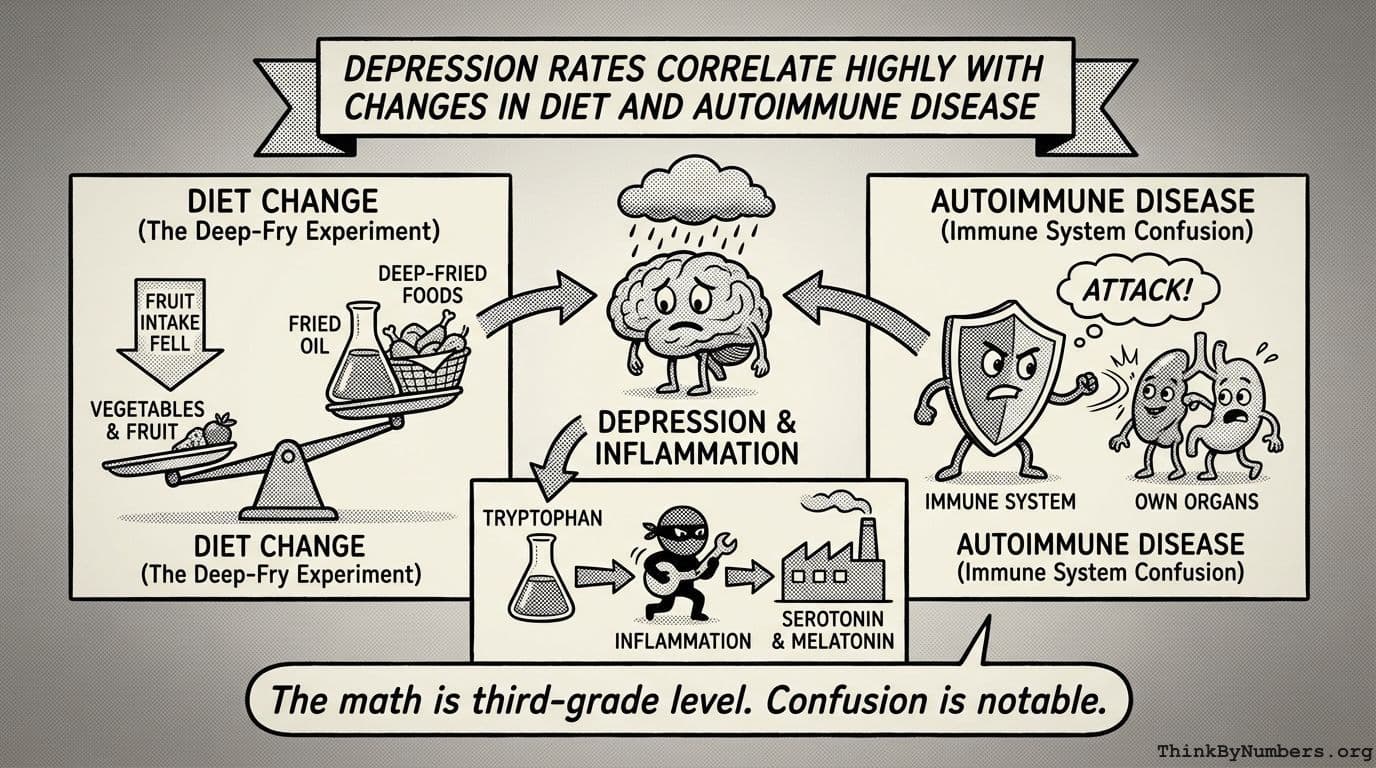
Depression Rates Correlate Highly with Changes in Diet and Autoimmune Disease
US suicide rate jumped 40% as vegetable oil went up and actual vegetables dropped 10%. Inflammation steals tryptophan needed to make serotonin.
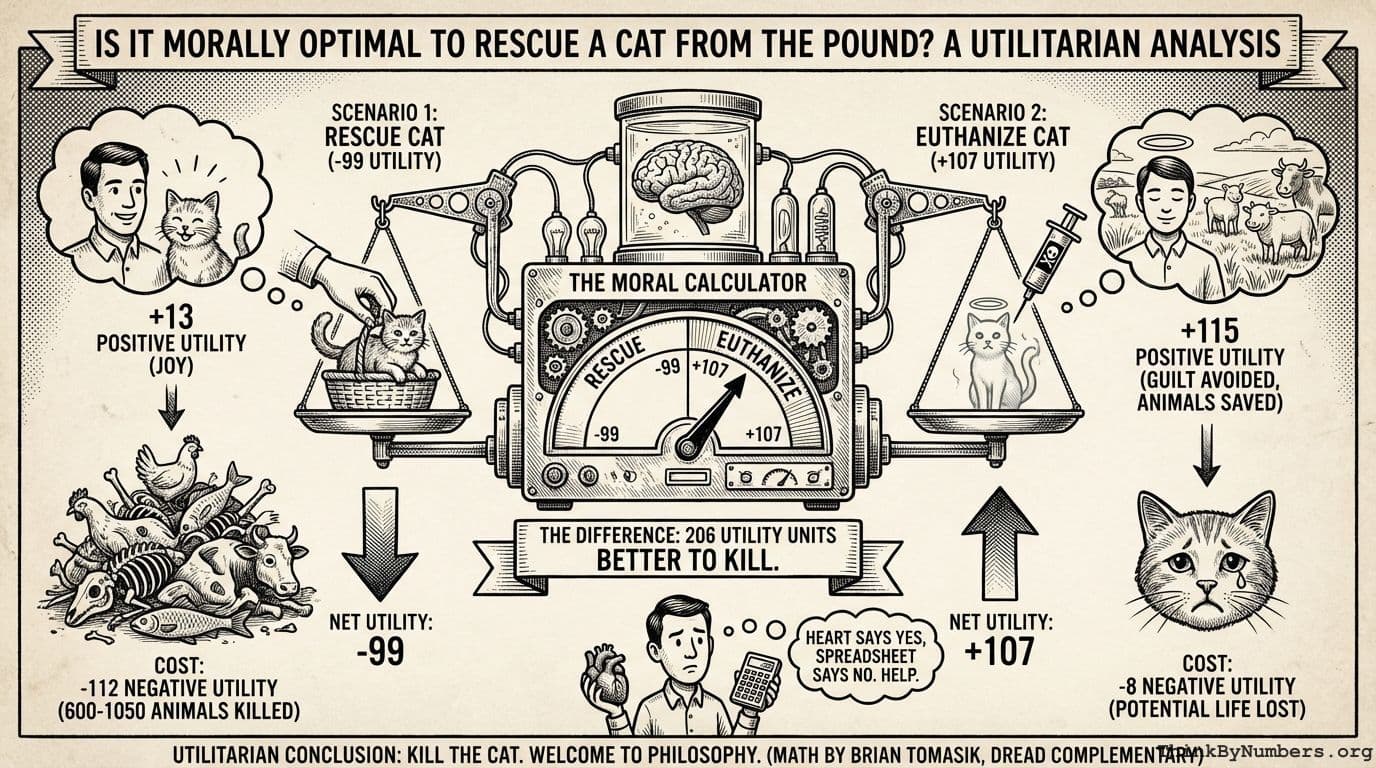
Is it morally optimal to rescue a cat from the pound?
Saving one cat kills 600 chickens over 15 years. Utilitarianism proves petting your cat is morally worse than euthanizing it.
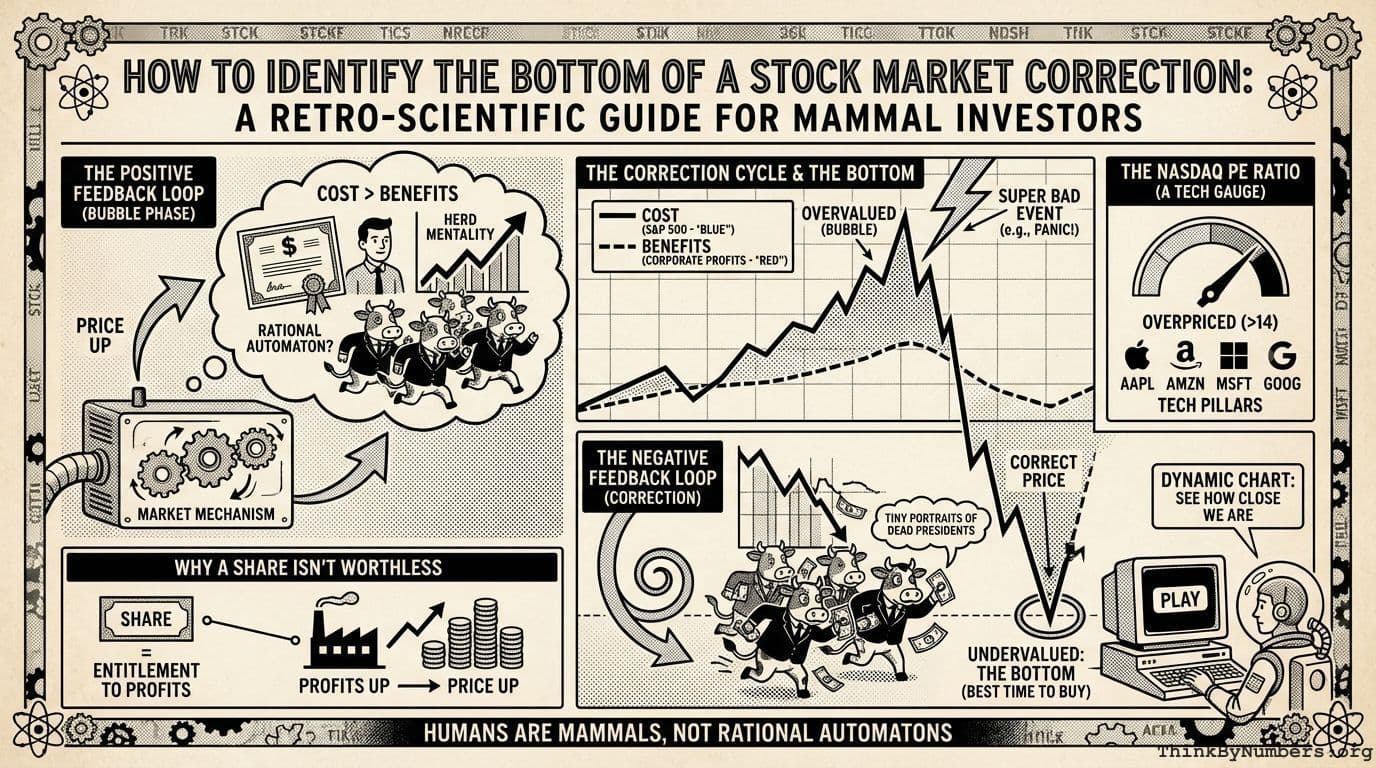
How to Identify the Bottom of a Stock Market Correction
Stock prices follow profits until positive feedback loops create bubbles. More buyers raise prices, higher prices attract more buyers. Then the music stops and someone's holding the bag.
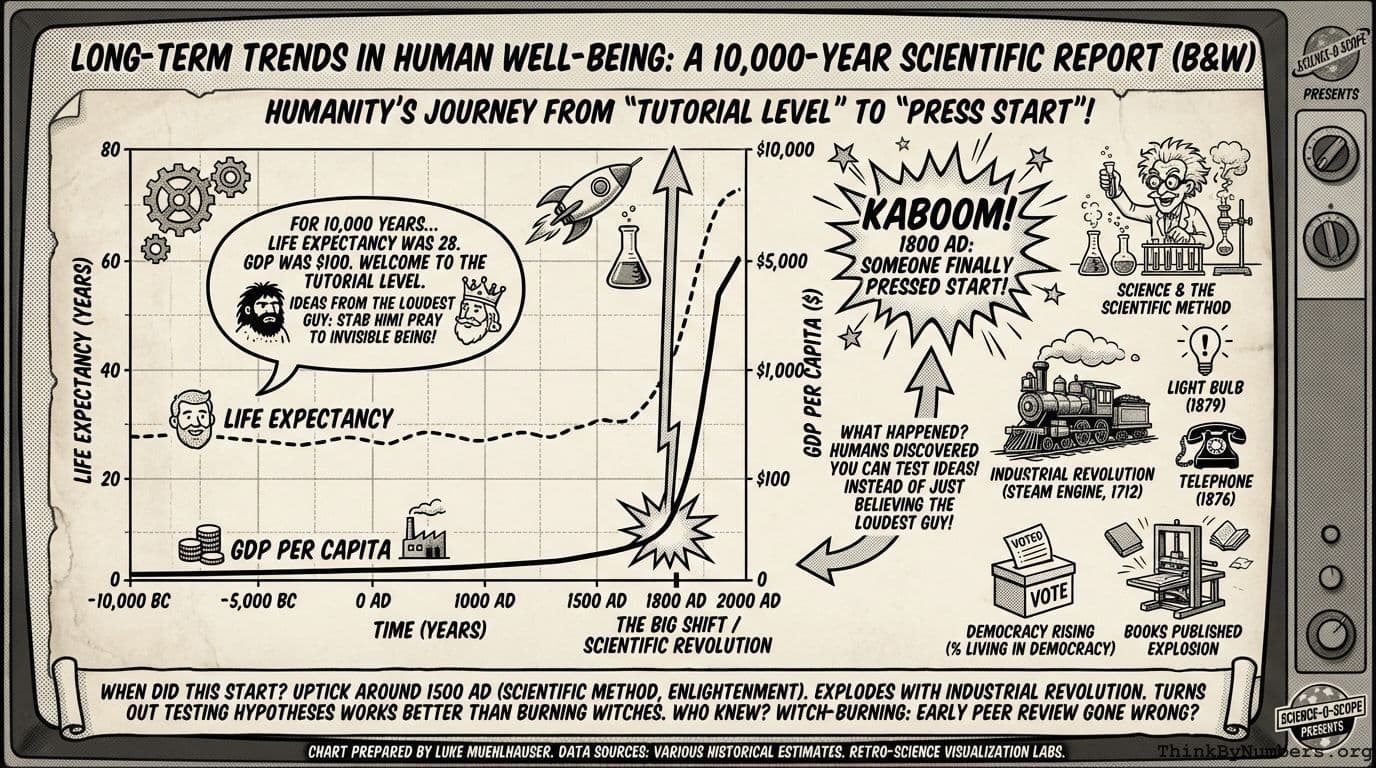
Long-Term Trends in Human Well-Being
For 10,000 years life expectancy was 28 and GDP was $100. Around 1800 both went vertical. Humanity spent 10,000 years in tutorial mode then someone pressed start.
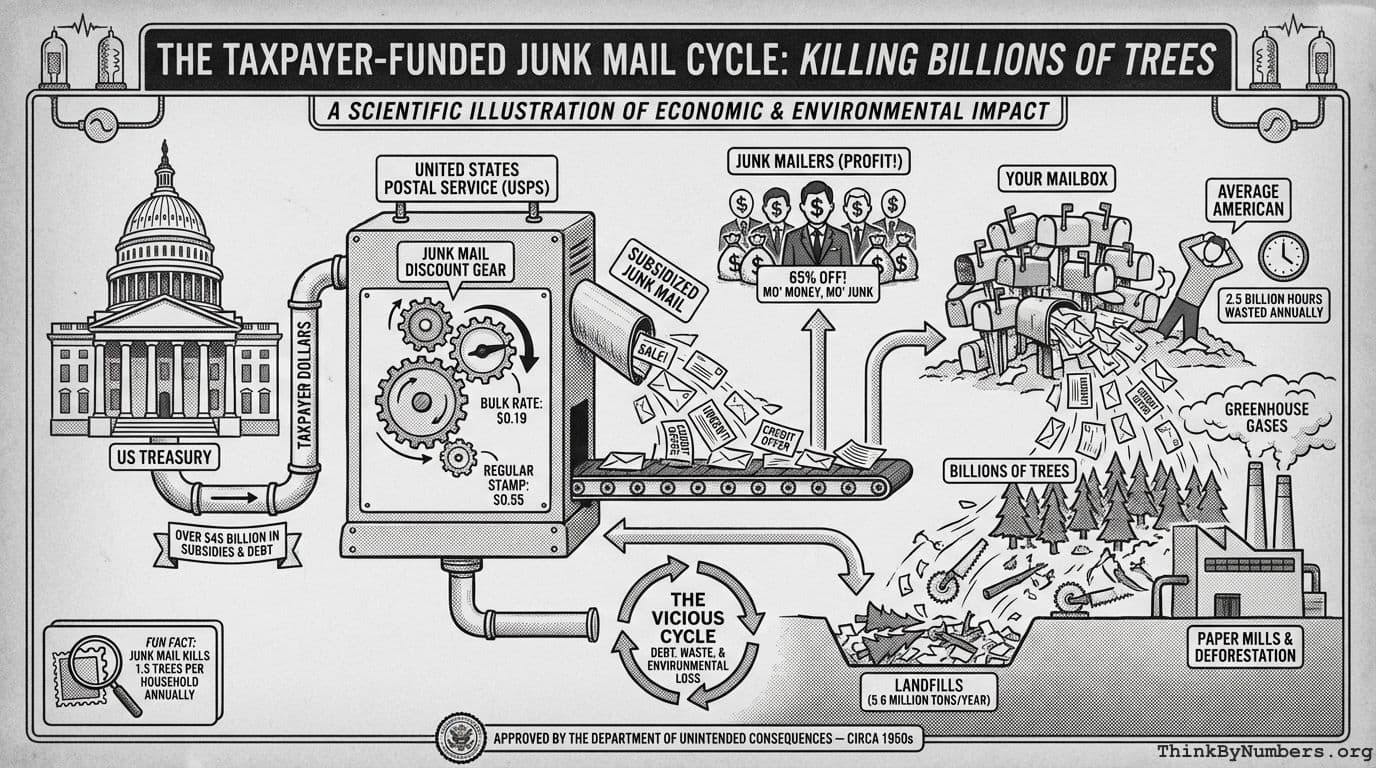
USPS Has Received Over $45 Billion from Taxpayers to Reduce the Cost of Junk Mail, Killing Billions of Trees
USPS junk mail 65% discount kills 100 million trees annually. You pay $126/year so credit card offers arrive faster. Beautiful circle of life.
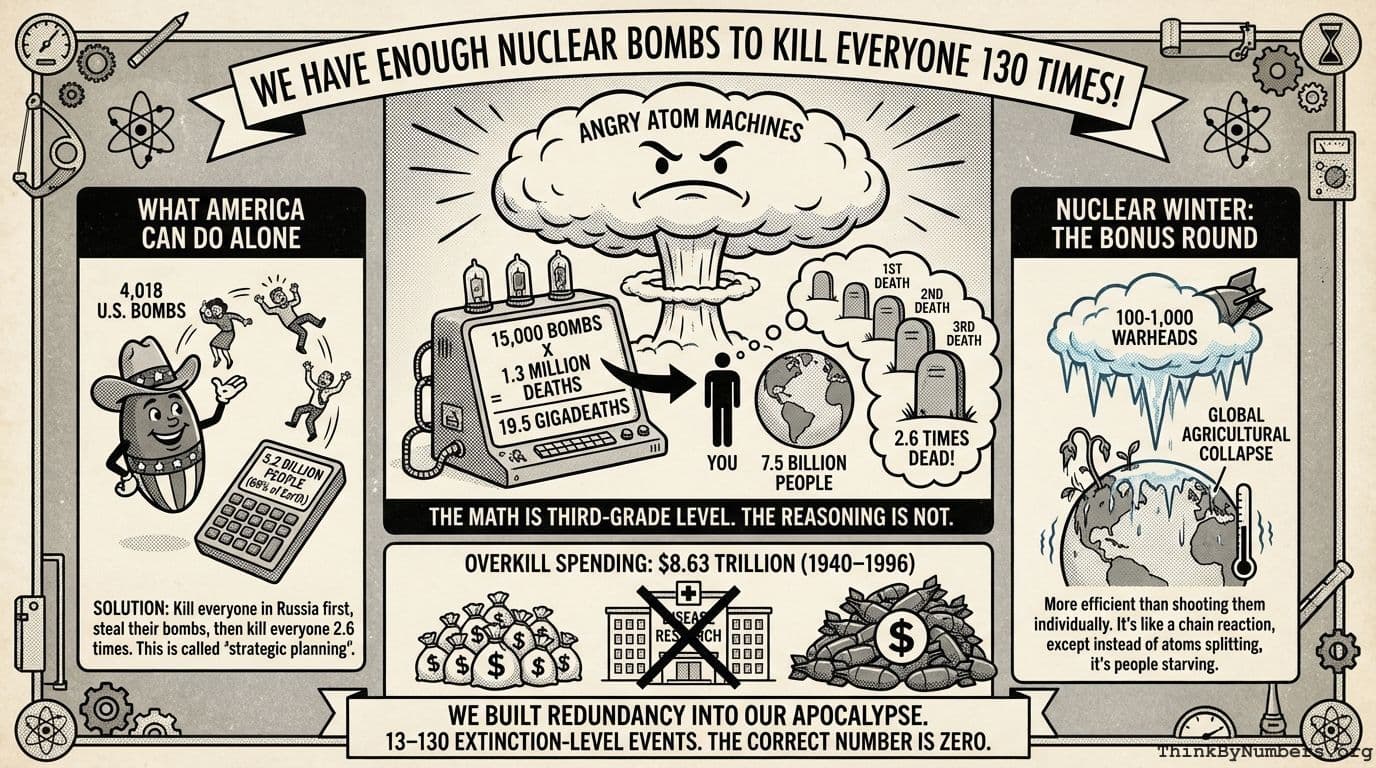
We Have Enough Nuclear Bombs to Kill EVERYONE 130 Times
15,000 nuclear weapons can kill everyone 2.6 times. After the first death, you're just showing off with expensive redundancy.
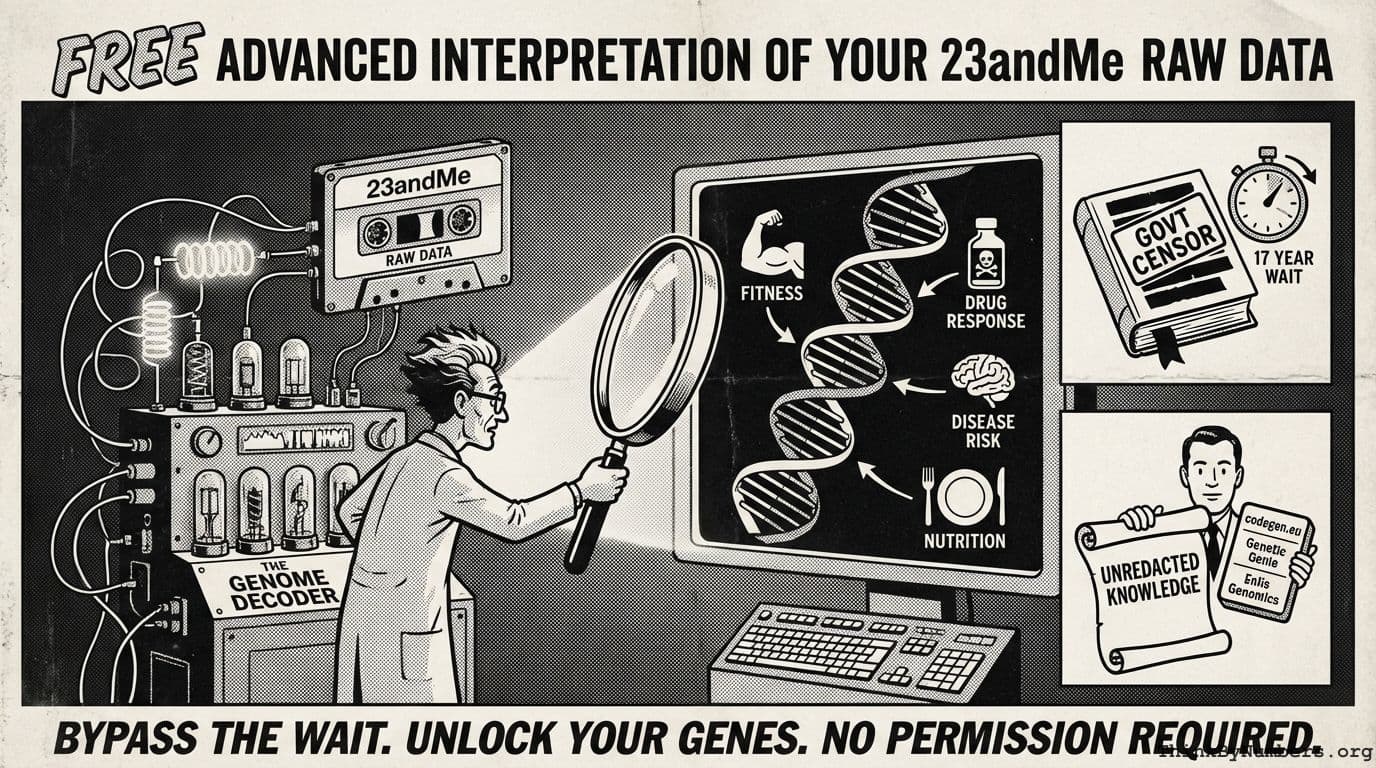
Free Advanced Interpretation of Your 23andMe Raw Data
FDA restricted what 23andMe tells you about your DNA. Takes doctors 17 years to use new genetic research. Free tools interpret your data now.
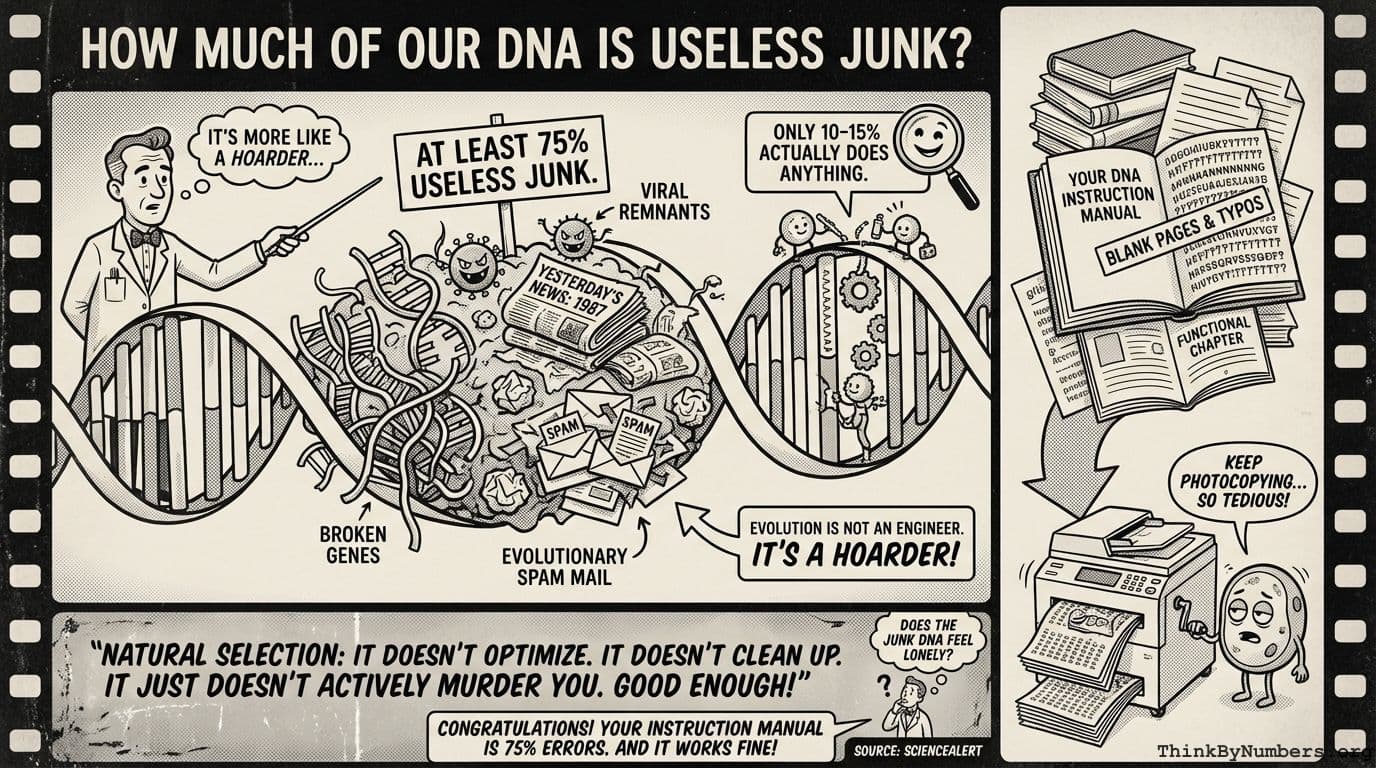
How much of our DNA is useless junk?
75% of your DNA is junk that cells photocopy billions of times for absolutely no reason.
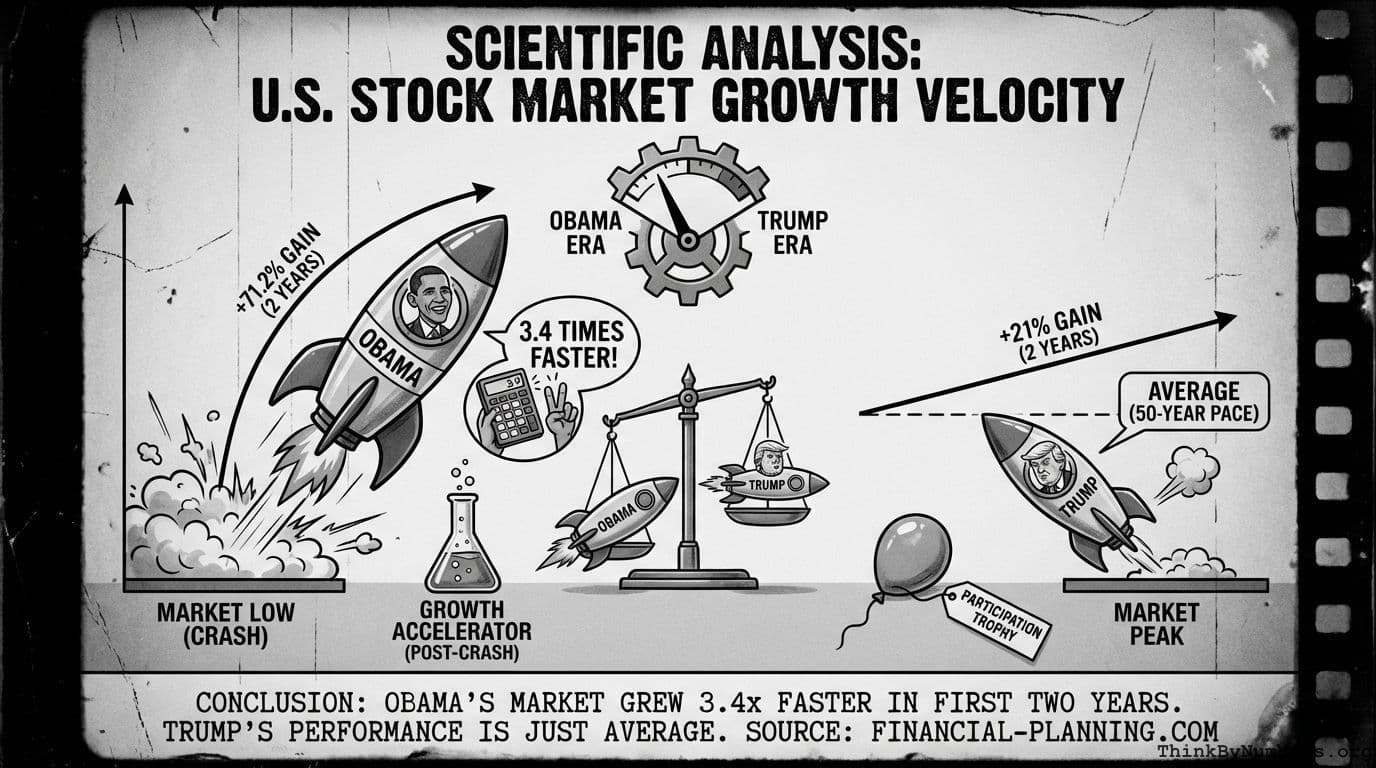
US Stock Market Grew 3 Times Faster Under Obama Than Trump
First two years Trump stocks up 21%. First two years Obama stocks up 71.2%. That's 3.4x faster. Trump's gain is just 50-year average. Like getting a participation trophy for existing.
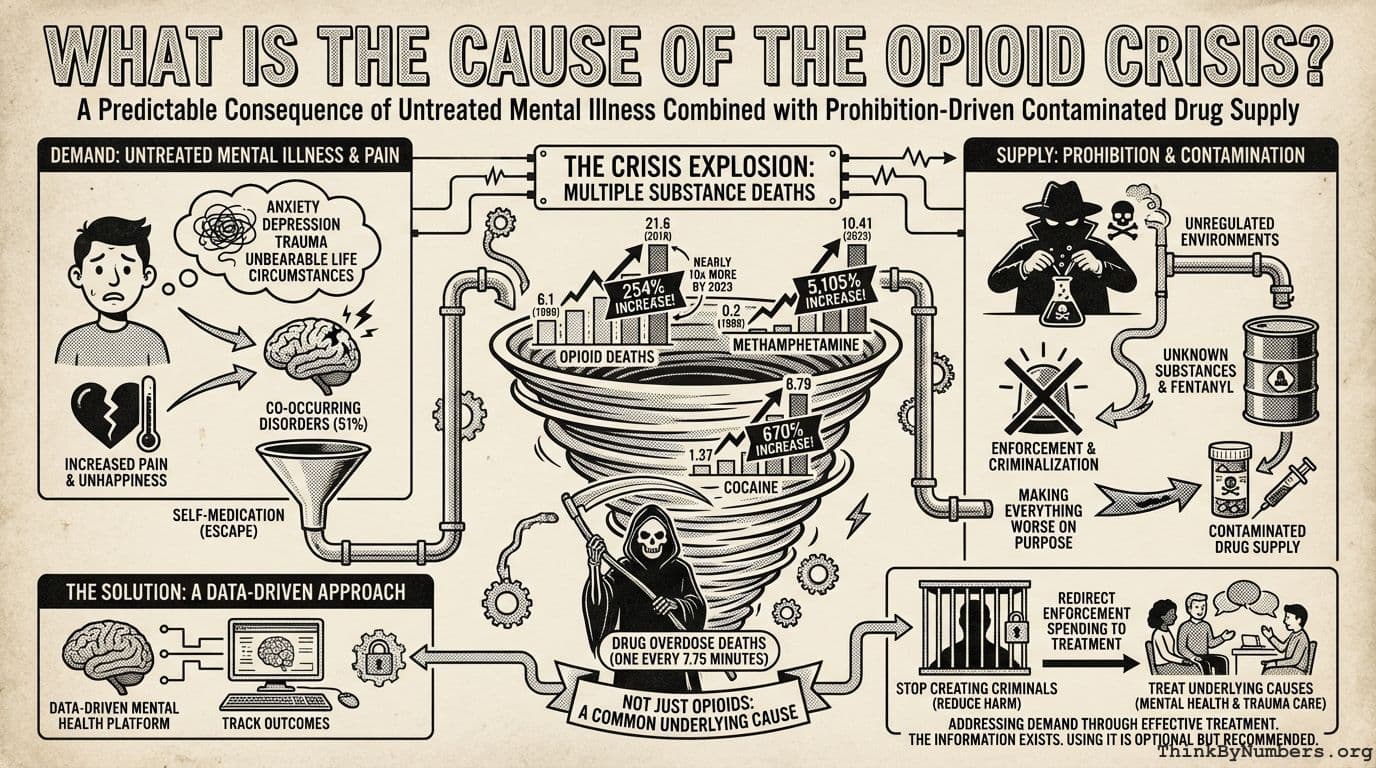
What is the cause of the opioid crisis?
Opioid deaths increased 1,000% while meth deaths rose 5,105% and cocaine 670%. Government blames drugs, ignores untreated mental illness epidemic.
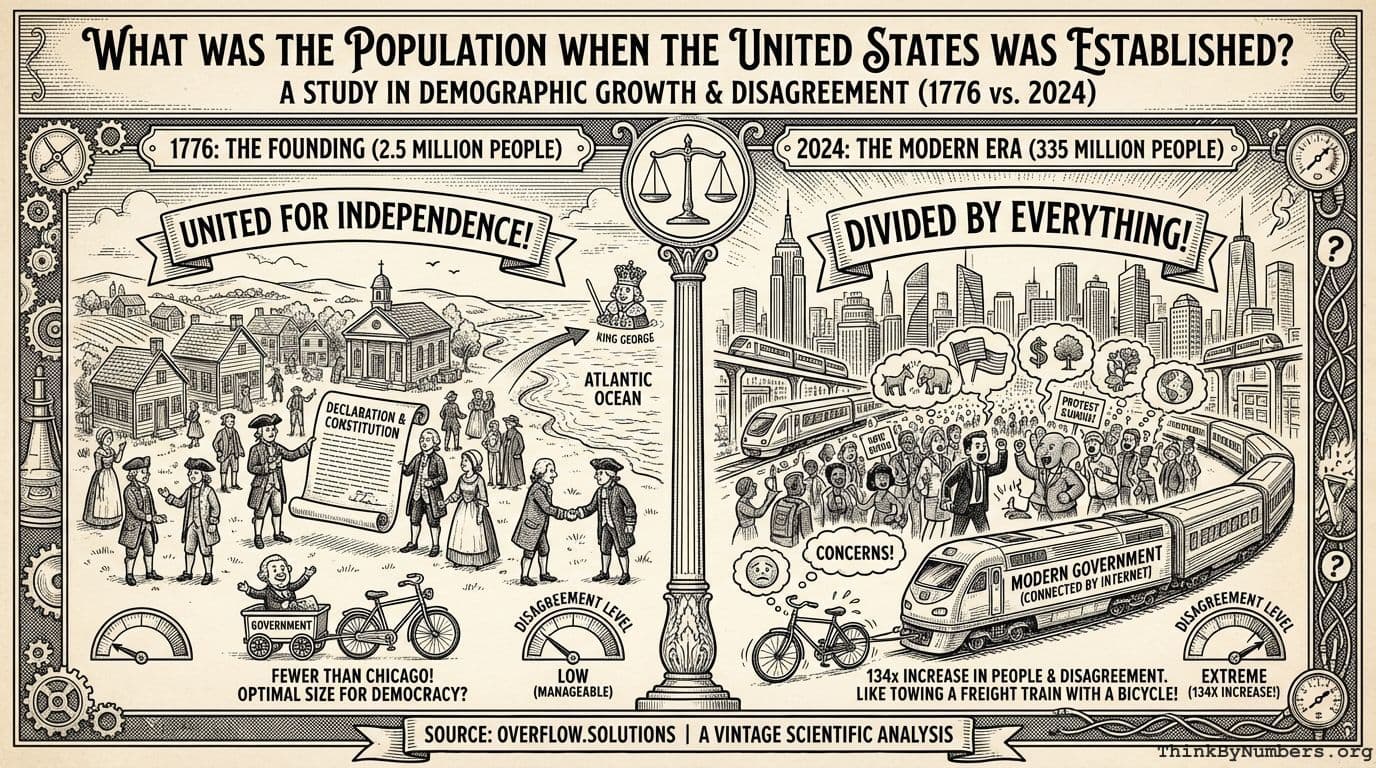
What was the population when the United States was established?
2.5 million people created a democracy. You have 335 million who can't agree on anything.
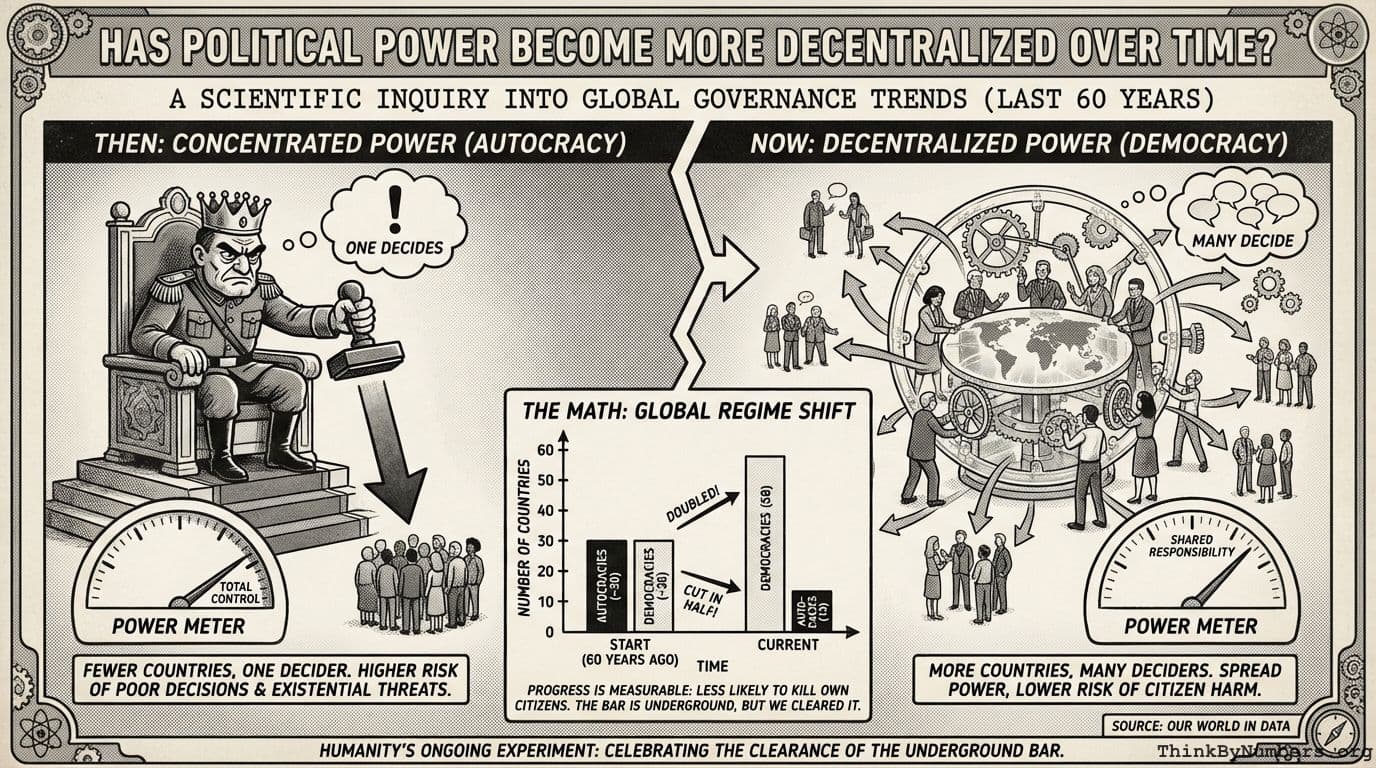
Has political power become more decentralized over time?
Democracies doubled, autocracies halved in 60 years. Progress measured by fewer countries where one person decides if you die. Bar is underground.
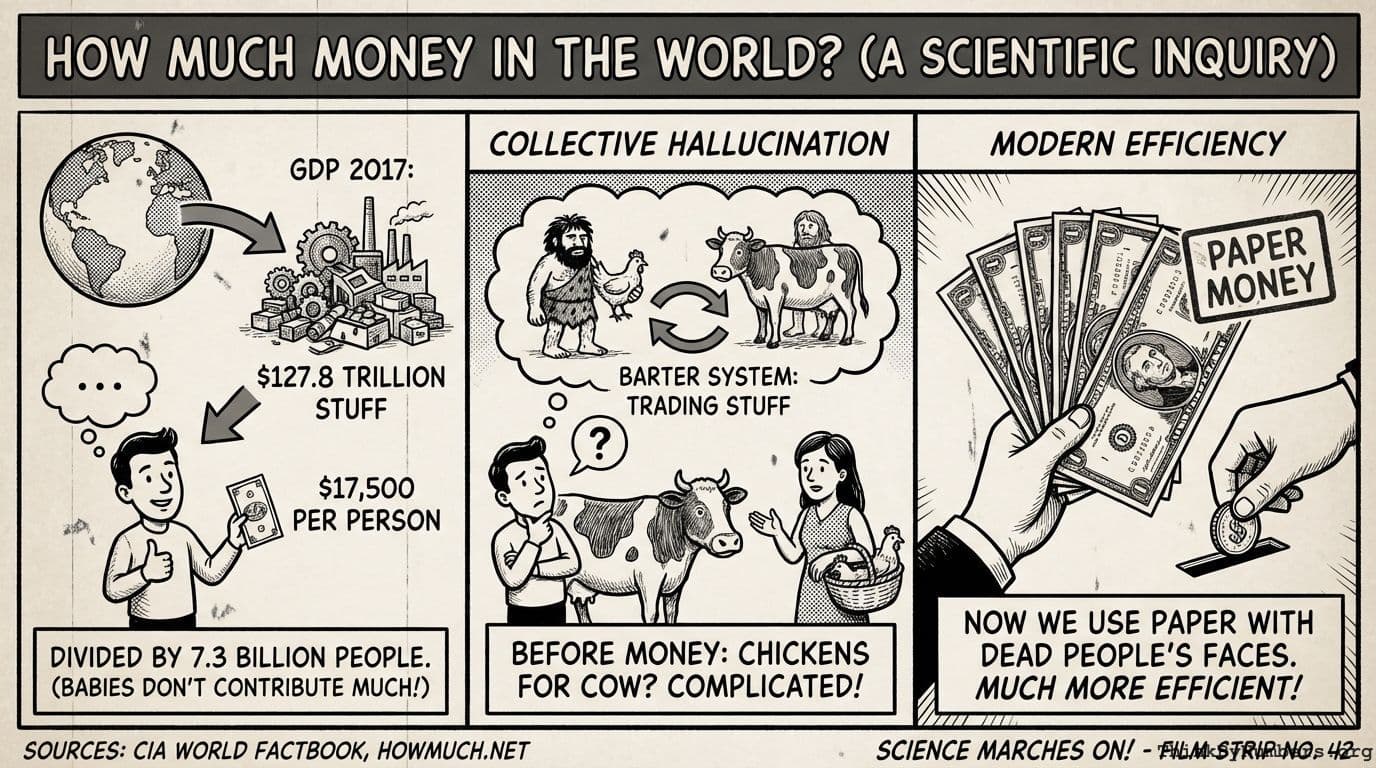
How much money is there in the world?
World GDP is $127.8 trillion divided by 7.3 billion people equals $17,500 per person. Money is collective hallucination. Before money we traded chickens for cows. Much more efficient now.
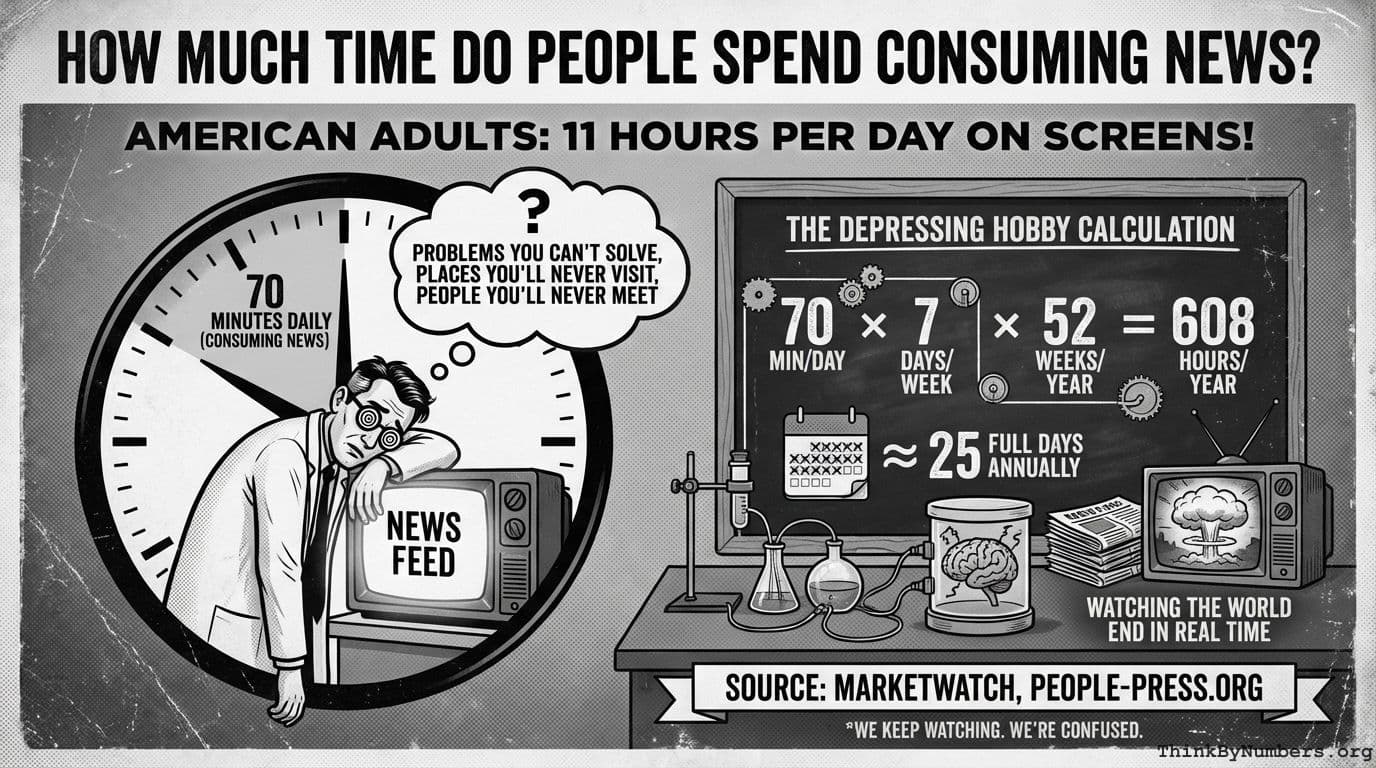
How much time do people spend consuming news?
Americans spend 70 minutes daily consuming news about problems in places they'll never visit.
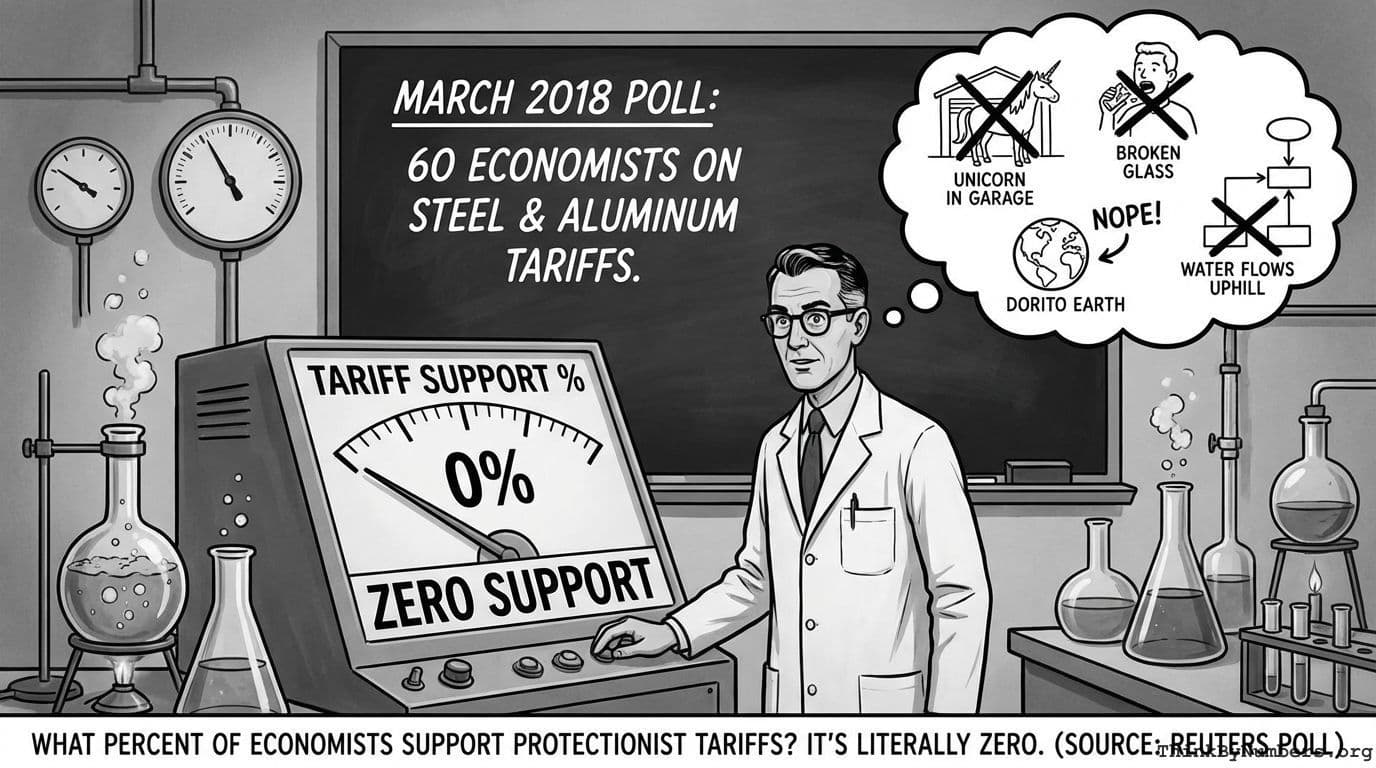
What percent of economists support protectionist tariffs?
Reuters polled 60 economists about steel tariffs. 0% supported them. Zero as in number before one. Like asking 60 doctors if you should eat broken glass and getting zero yes votes.
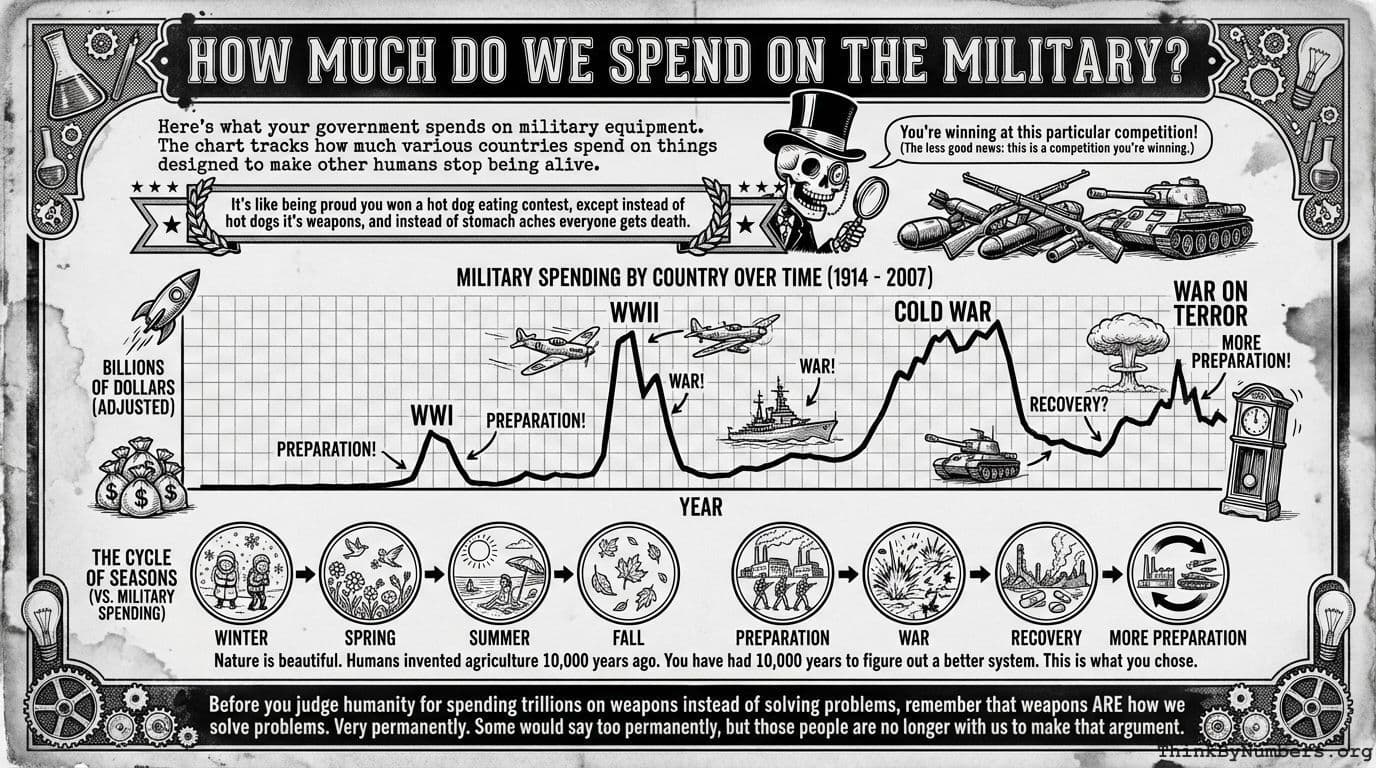
How much do we spend on the military?
US military spending 1914-2007. Countries spend trillions preparing to kill each other, then kill each other, then prepare again. Beautiful cycle.
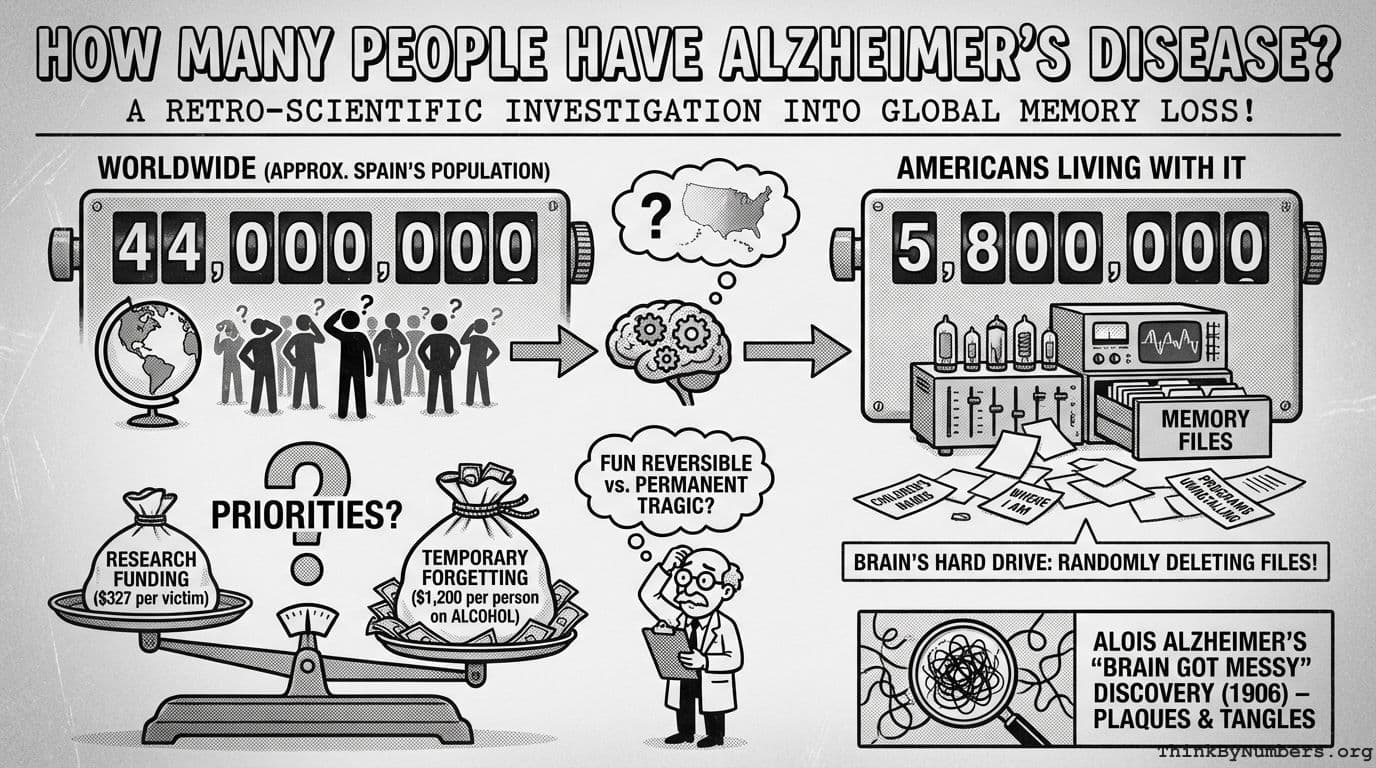
How many people have Alzheimer's disease?
44 million people worldwide have Alzheimer's. NIH spends $327 per victim while Americans spend $1,200 per person on alcohol to forget things temporarily.
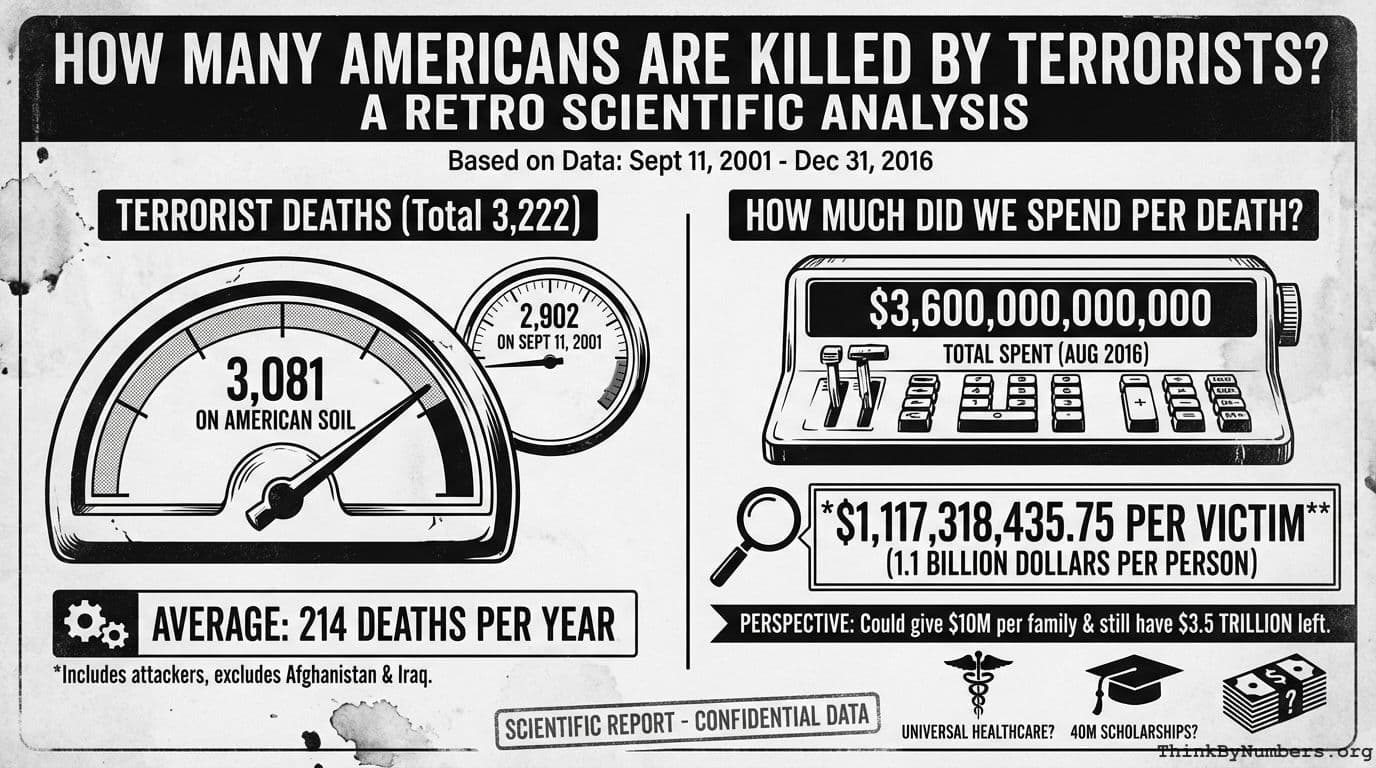
How many Americans are killed by terrorists?
3,222 Americans killed by terrorists vs $1.1 trillion spent—$1.1 billion per victim. Yet we call this counterterrorism.
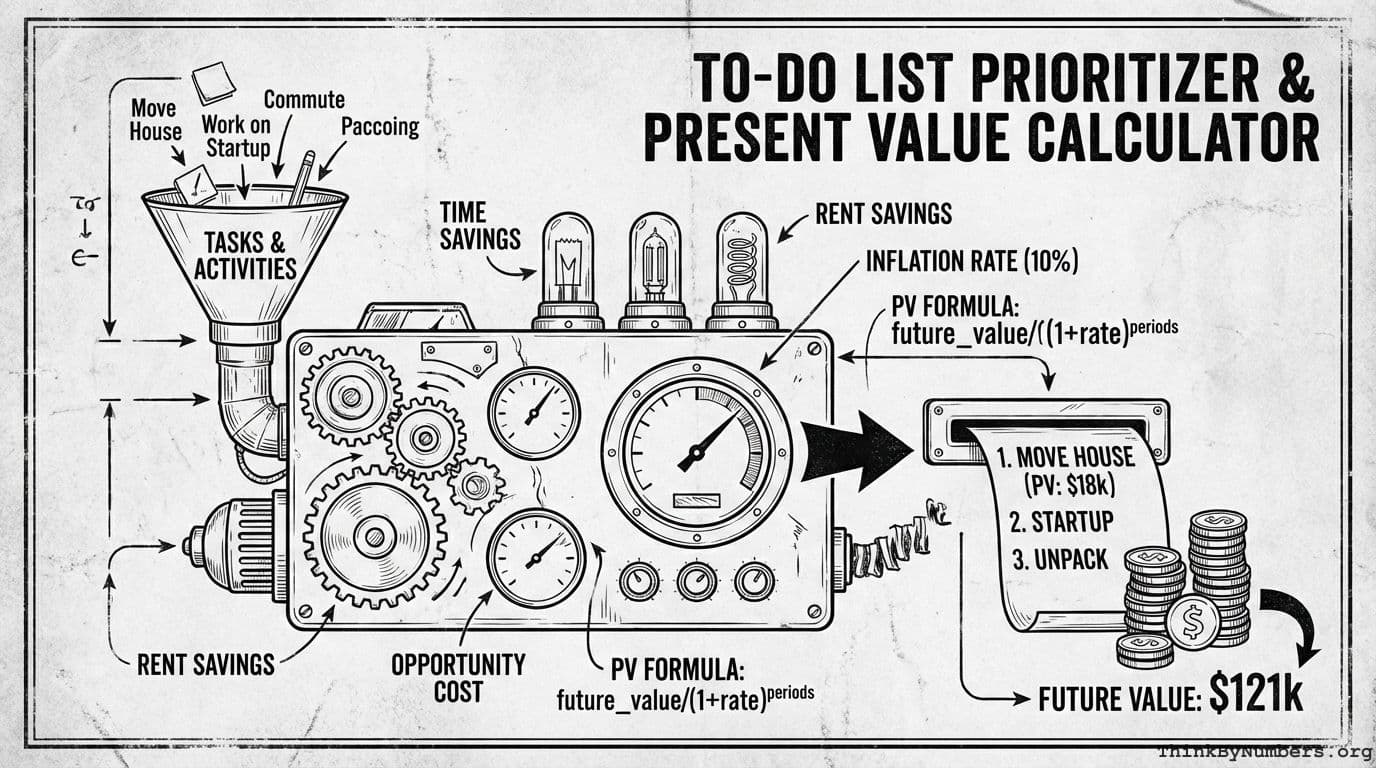
Prioritize Your To-Do List By Converting To Present Value
Convert time savings to present value using 10% discount rate. Your commute is worth $8k today, which helps decide if moving beats Netflix.
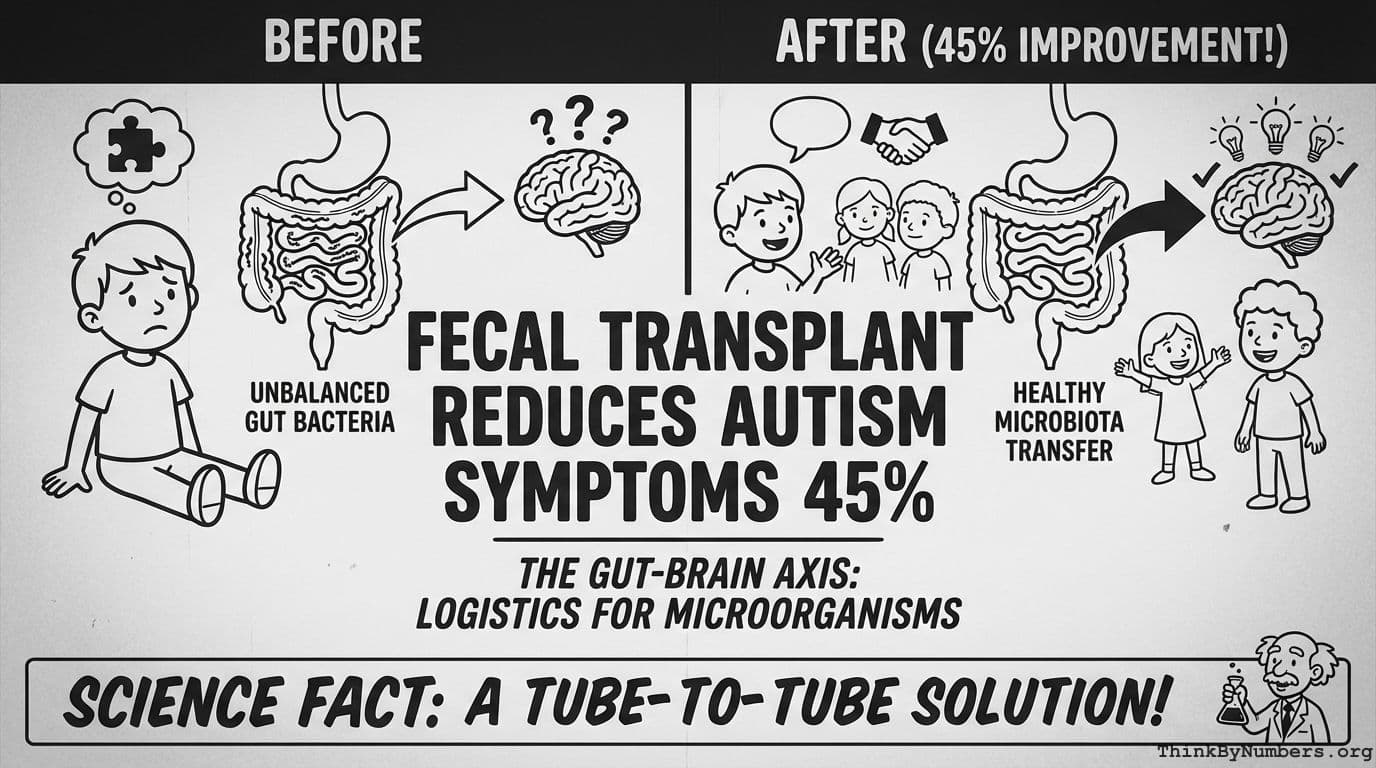
Fecal Transplant Reduces Autism Symptoms 45%
Poop transplants reduced autism symptoms 45% by fixing gut bacteria. Turns out moving microbes between intestines works better than most treatments.
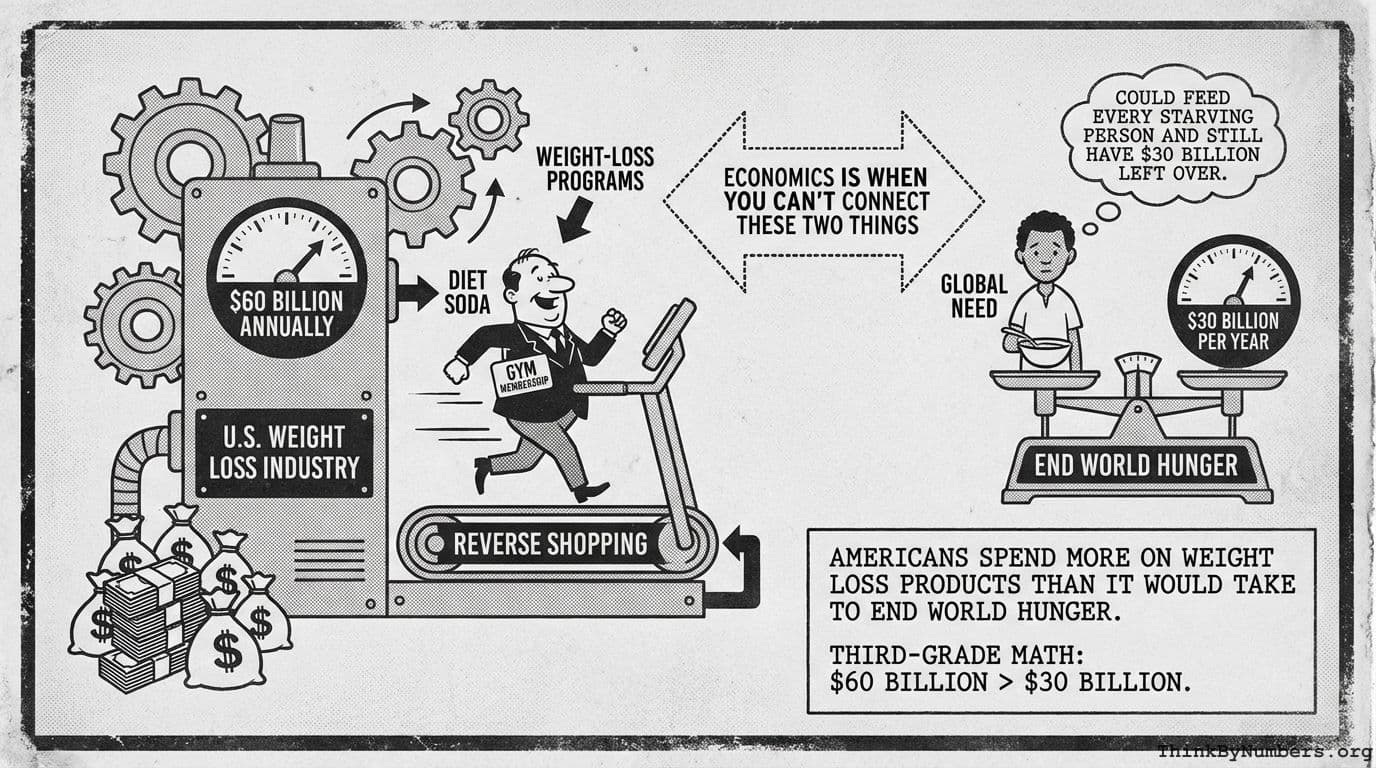
Americans Spend More on Weight Loss Products Than It Would Take to End World Hunger
Americans spend $60 billion on weight loss while ending world hunger costs $30 billion. One group pays to subtract calories, the other needs calories.
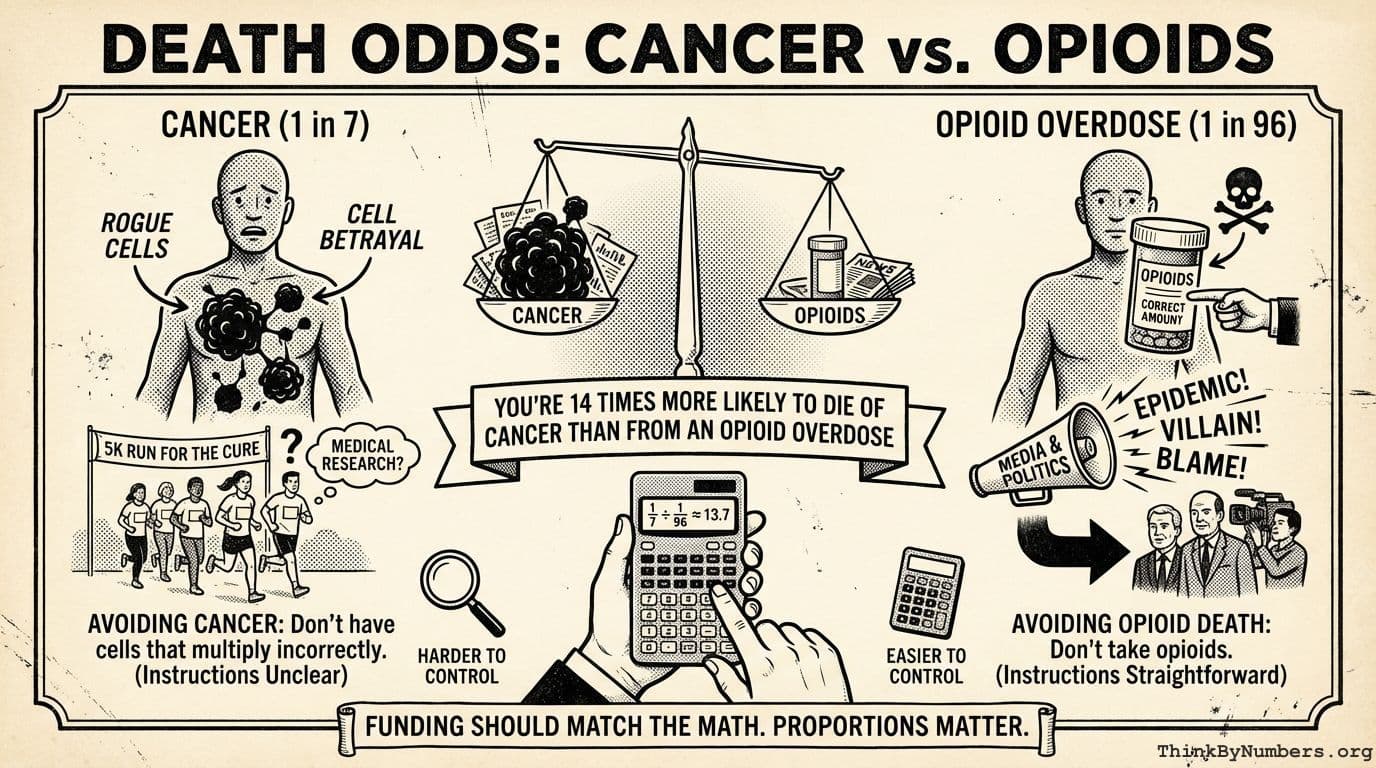
You're 14 Times More Likely To Die of Cancer Than From an Opioid Overdose
Cancer kills 14 times more people than opioids (1 in 7 vs 1 in 96). Media covers opioids wall-to-wall. Cancer gets a 5K run with matching shirts.
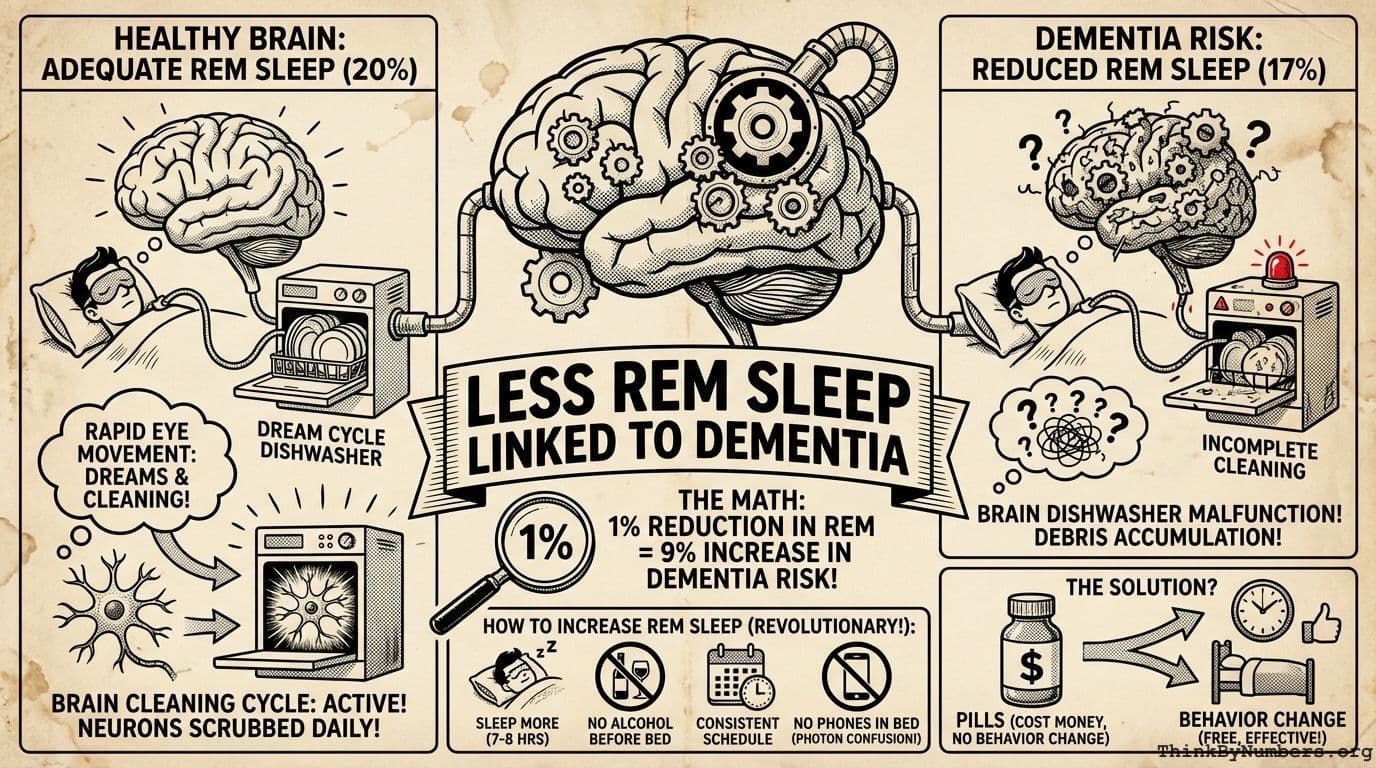
Less REM Sleep Linked to Dementia
Every 1% reduction in REM sleep increases dementia risk 9%. Brain has self-cleaning mode that requires sleep. You ignore it and drink coffee instead.
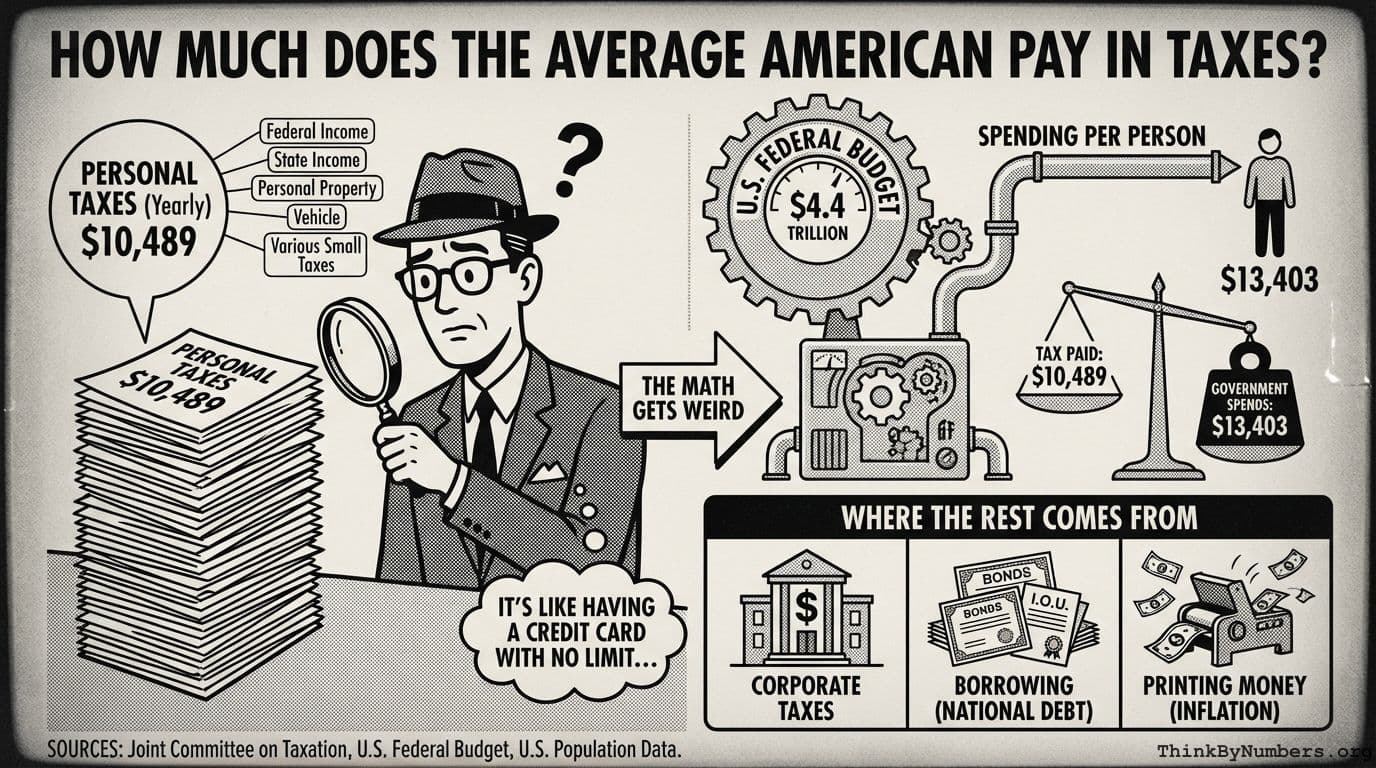
How much does the average American pay in Taxes?
Average American household pays $10,489 in personal taxes yearly (14% of income). Federal budget is $4.4 trillion divided by 328 million people equals $13,403 spent per person. Math gets weird.
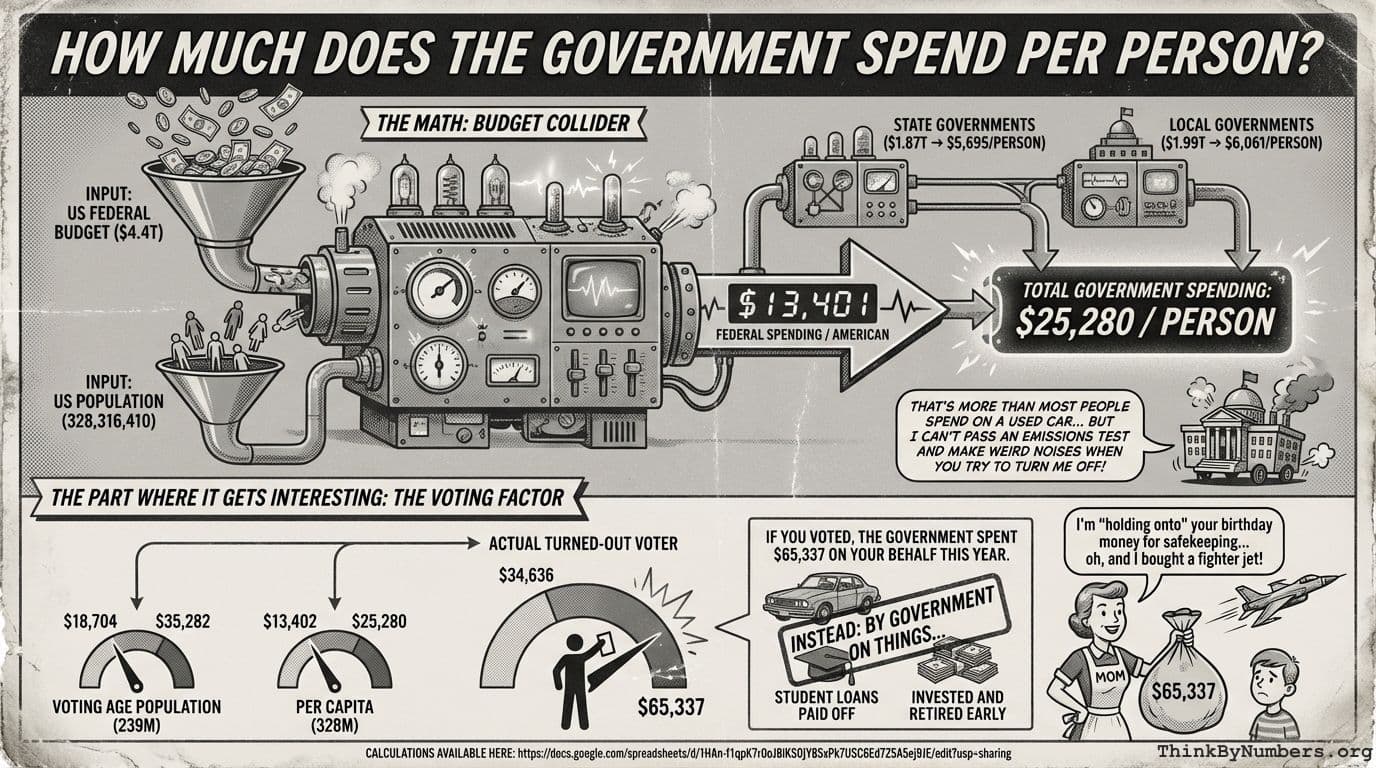
How much does the government spend per person?
Government spends $65,337 per voter annually. You could buy a car or pay student loans. Instead government bought fighter jets for you.
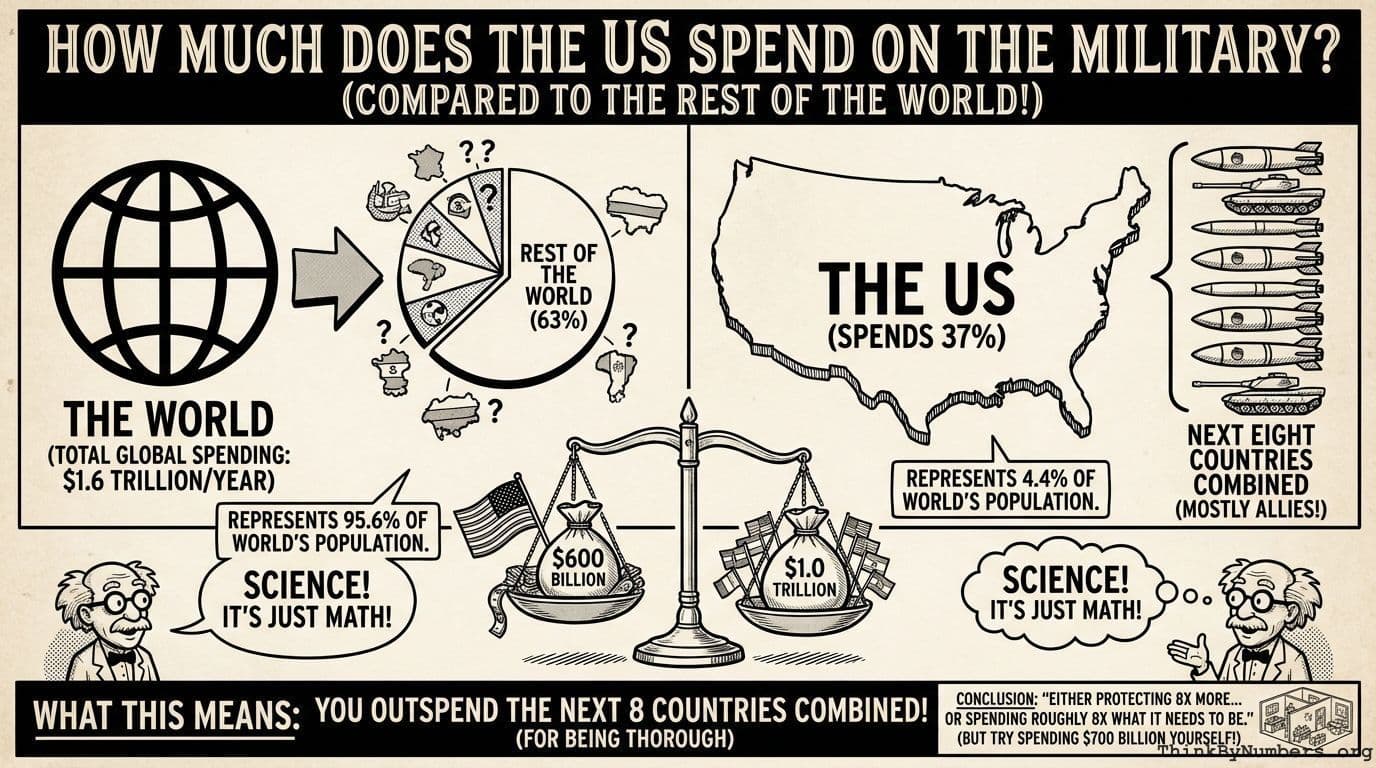
How much does the US spend on the military compared to the rest of the world?
US spends 37% of global military budget with 4.4% of world population. $600 billion on weapons. Switzerland makes chocolate instead.
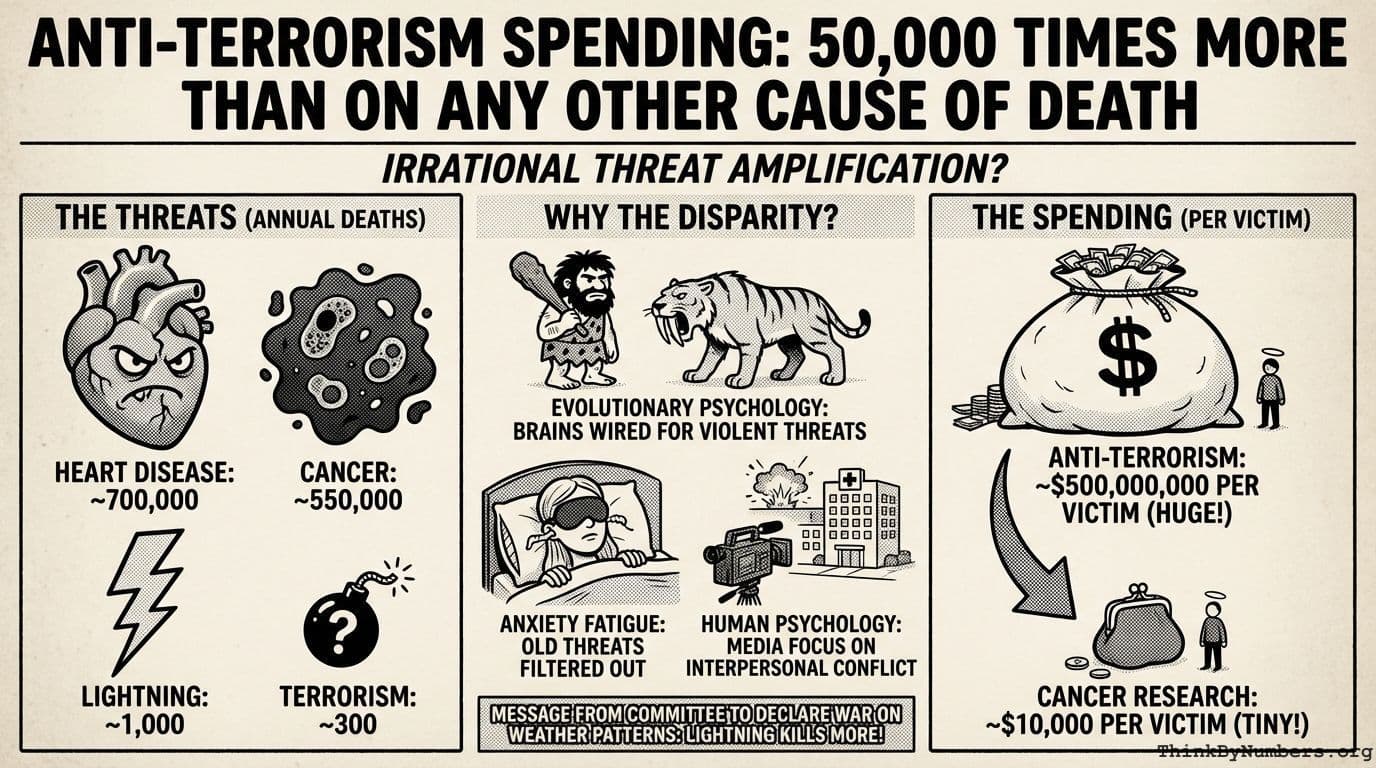
Anti-Terrorism Spending 50,000 Times More Than on Any Other Cause of Death
$500 million per terrorism death vs $2,000 per stroke death. You're 3x more likely to be struck by lightning than killed by terrorists.
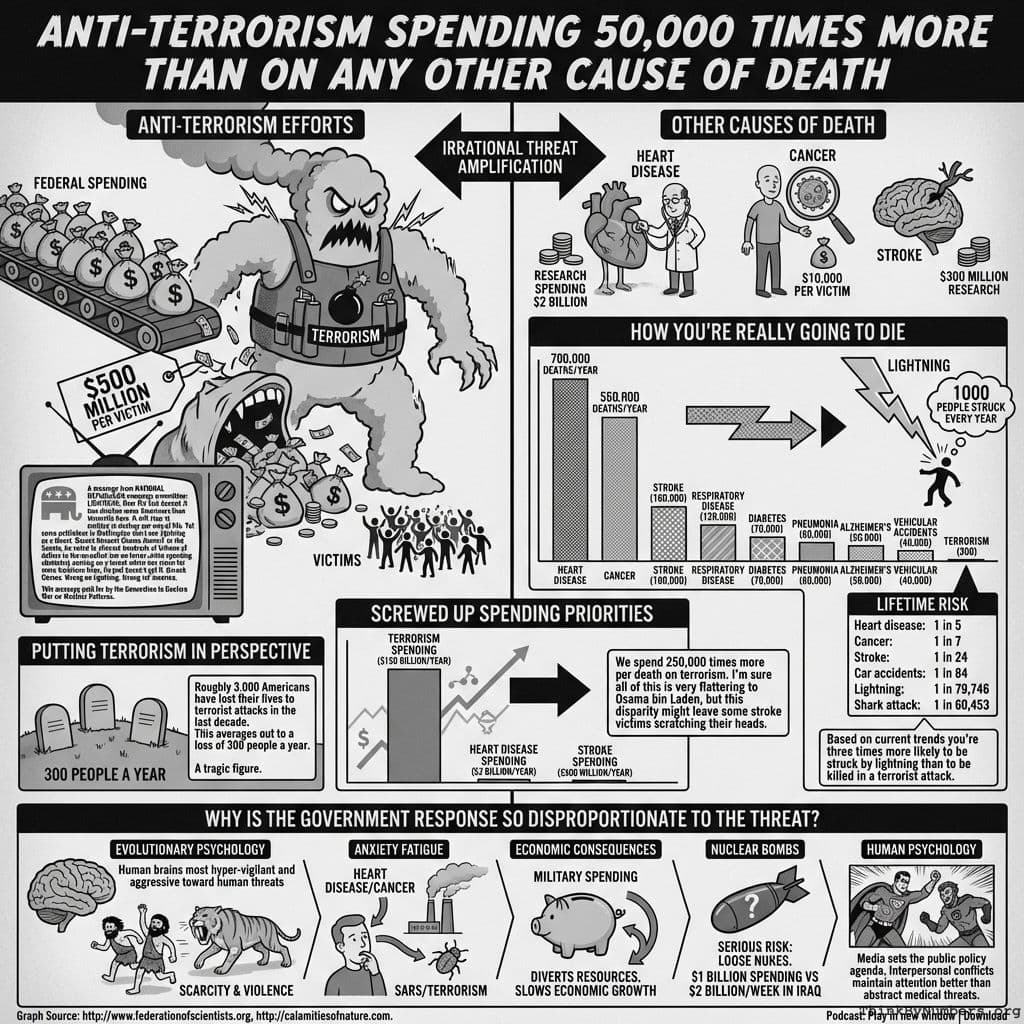
Anti-Terrorism Spending 50,000 Times More Than on Any Other Cause of Death
$500 million per terrorism death vs $2,000 per stroke death. You're 3x more likely to be struck by lightning than killed by terrorists.
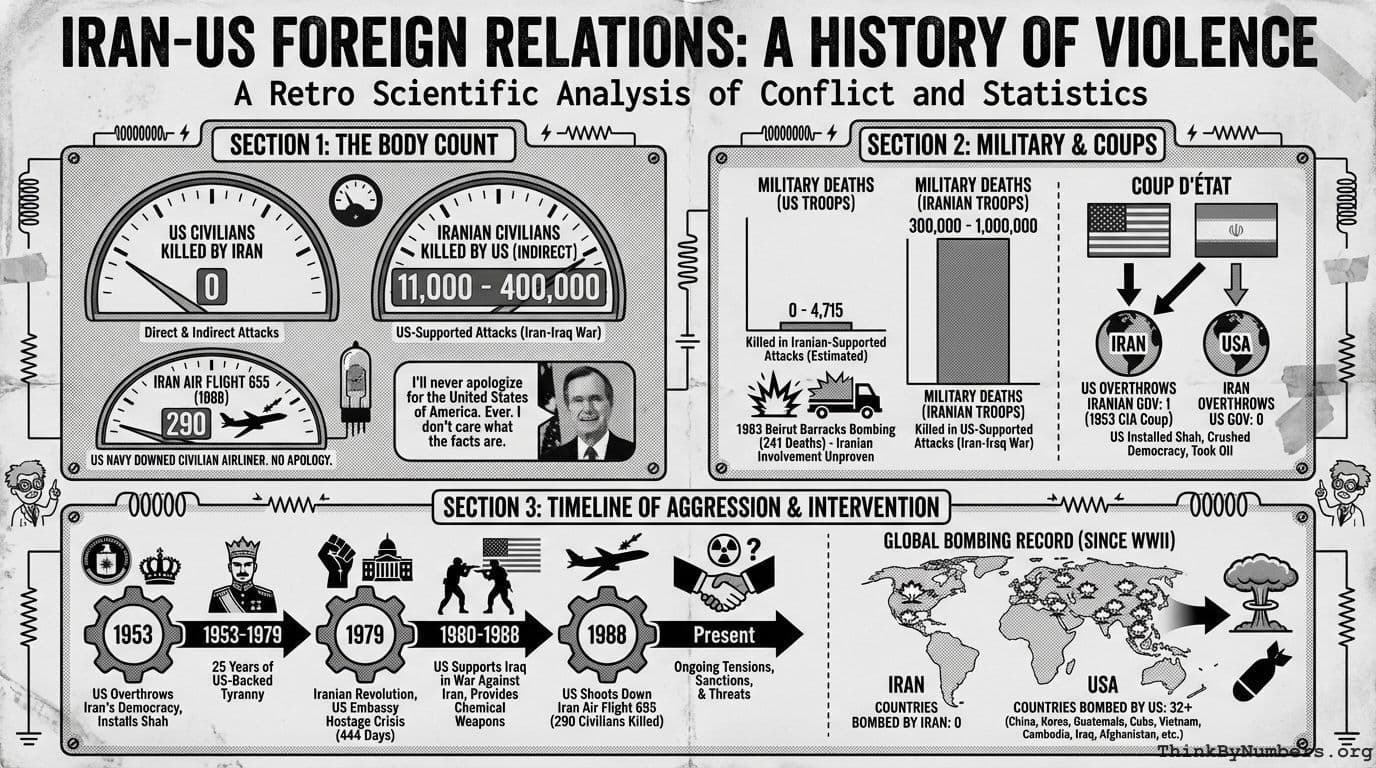
Iran US Foreign Relations: A History of Violence
0 Americans killed by Iran vs 290+ shot down in civilian airliner. US overthrew Iran's democracy in 1953 for oil.

Get Rich Quick System: Catsoline and You!
I created this video with the YouTube Video Editor (http://www.youtube.com/editor)
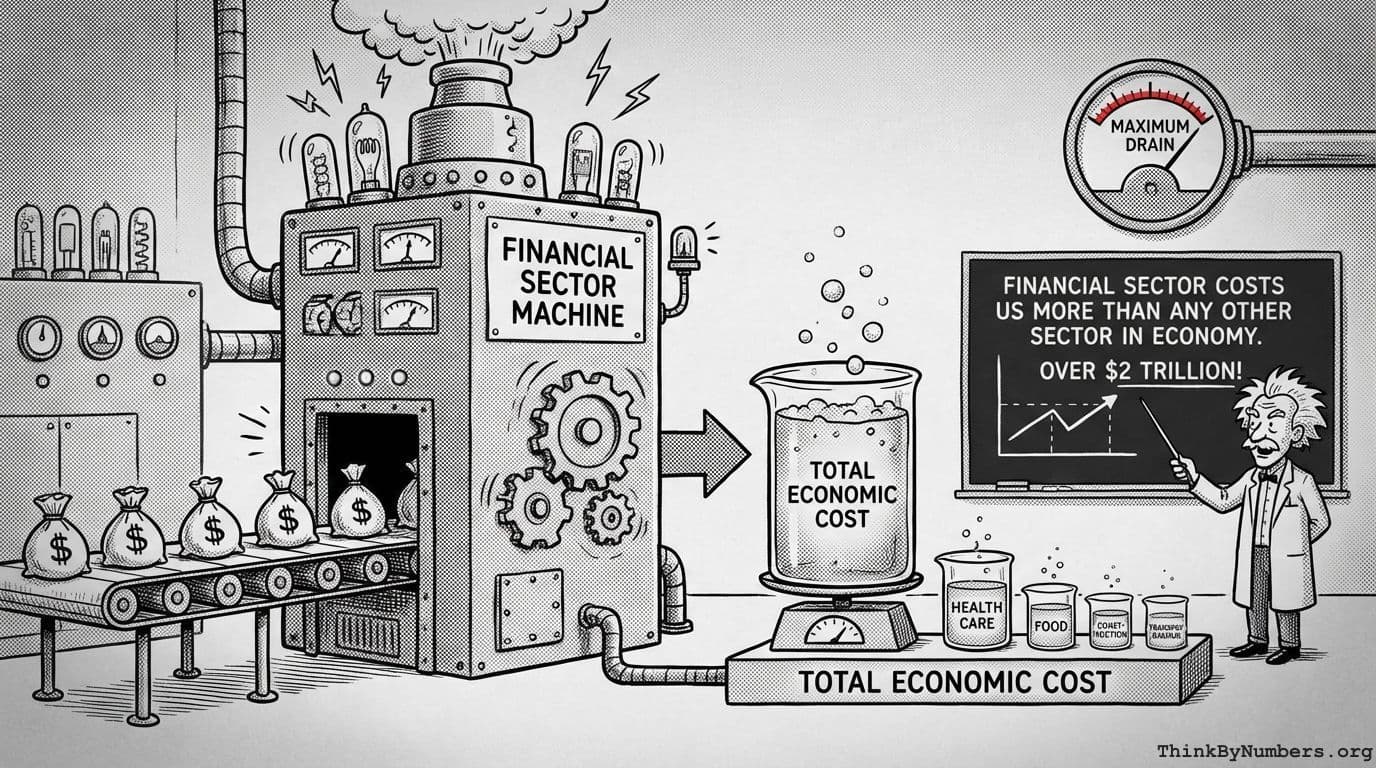
Financial Sector Costs Us More than Any Other Sector In Economy
Finance jumped from 4% of GDP (1960s) to 8% (2007), costing $2 trillion annually—more than healthcare, construction, food combined. It's computer money-shuffling.

Financial Sector Costs Us More than Any Other Sector In Economy
Finance jumped from 4% of GDP (1960s) to 8% (2007), costing $2 trillion annually—more than healthcare, construction, food combined. It's computer money-shuffling.

World Wide Magazine - Lesbians
World Wide Magazine - Lesbians
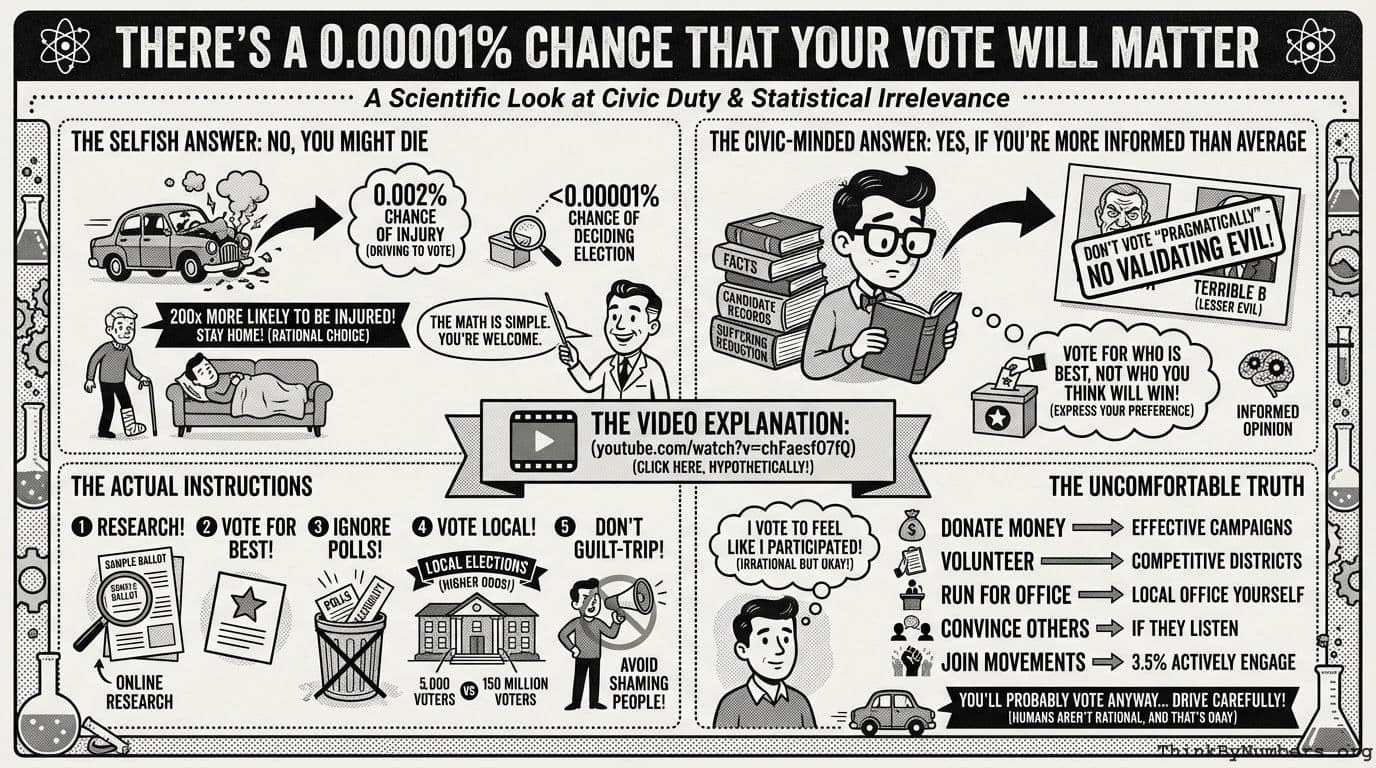
There's a 0.00001% Chance that Your Vote Will Matter
Your vote has 0.00001% chance of mattering. Car accident driving to polls has 0.002% chance. You're 200X more likely to get injured than change outcome.
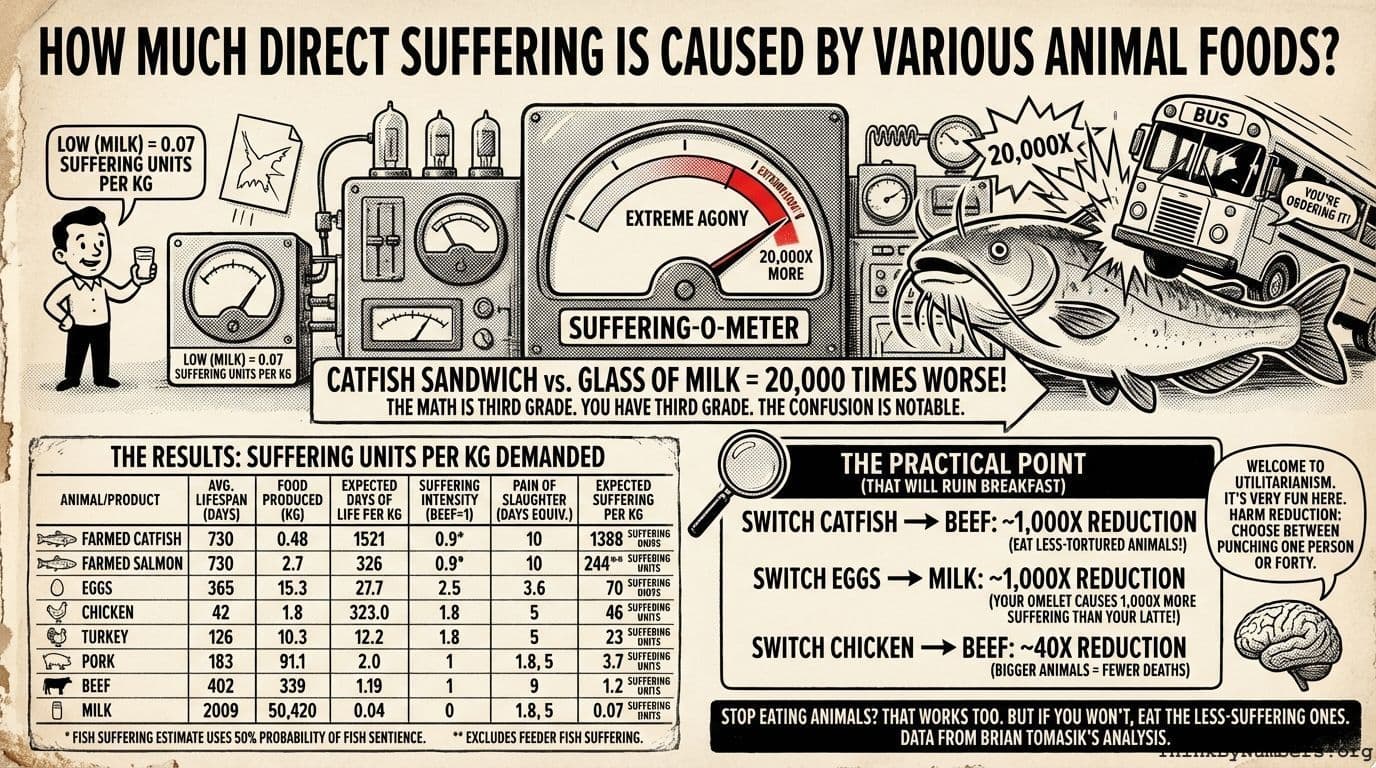
How Much Direct Suffering Is Caused by Various Animal Foods?
Farmed catfish causes 20,000 times more suffering than milk per kg. The math is third grade, but your dinner choices remain catastrophic.
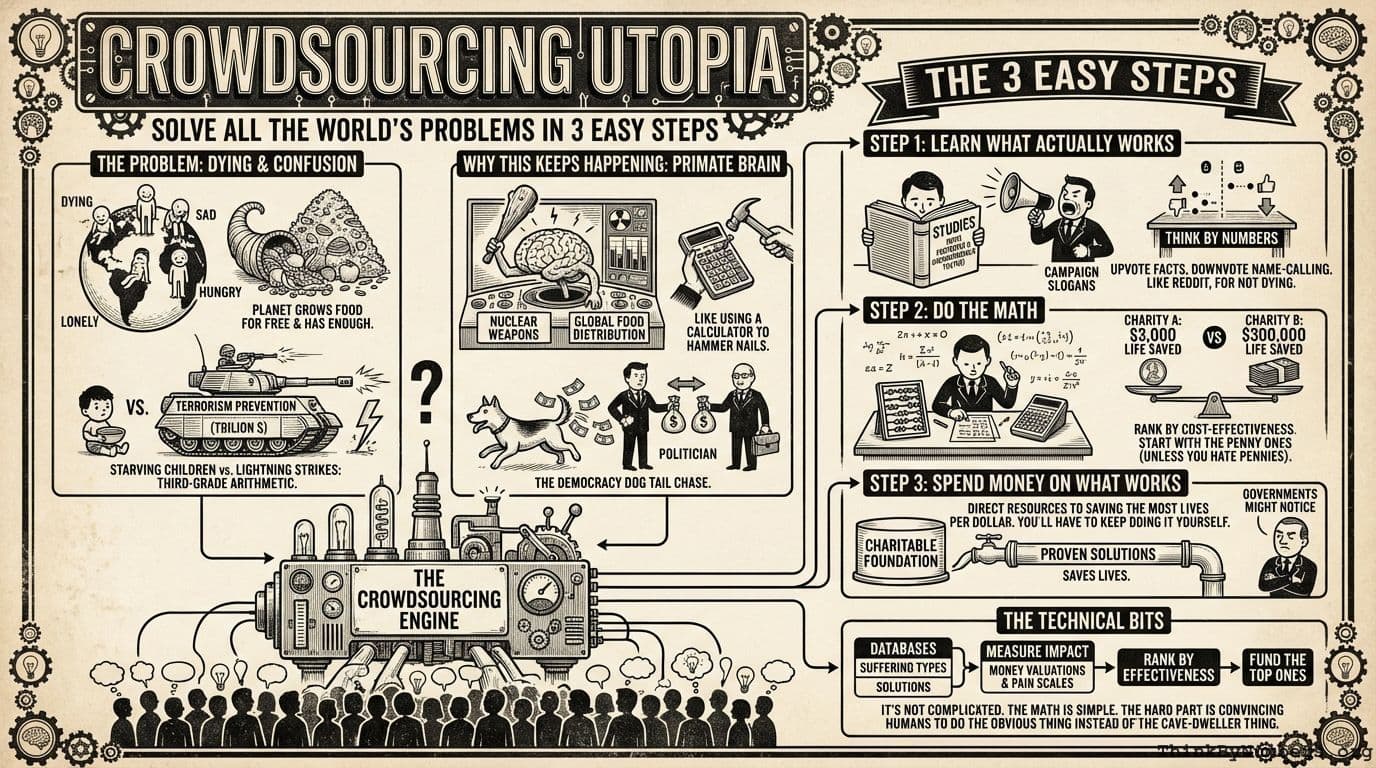
Crowdsourcing Utopia: Solve All the World's Problems in 3 Easy Steps
Governments spend $1 trillion on terrorism (kills fewer than lightning) while children starve. Third-grade math could fix this.
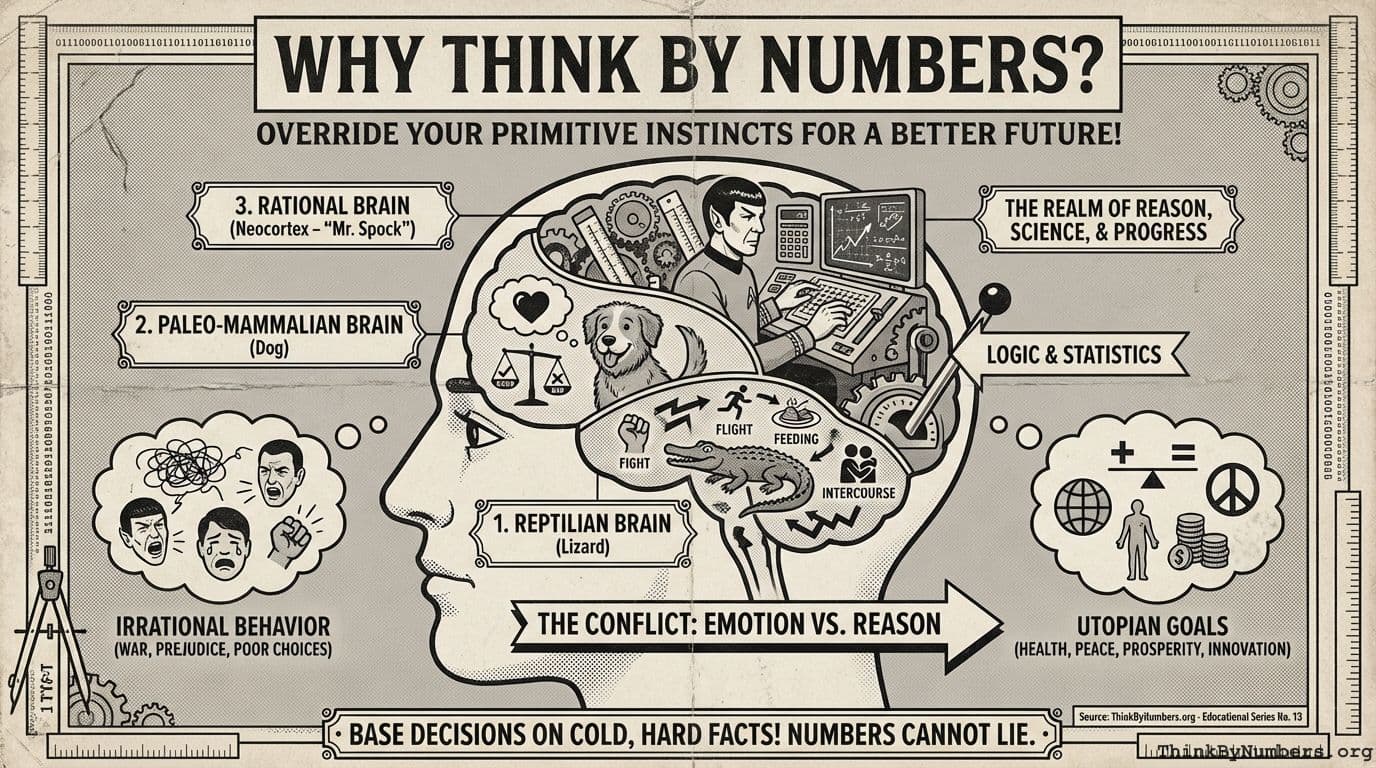
Why Think by Numbers?
70% of voters don't know how much government spends on anything. Your lizard brain beats your rational cortex 206 times per day.
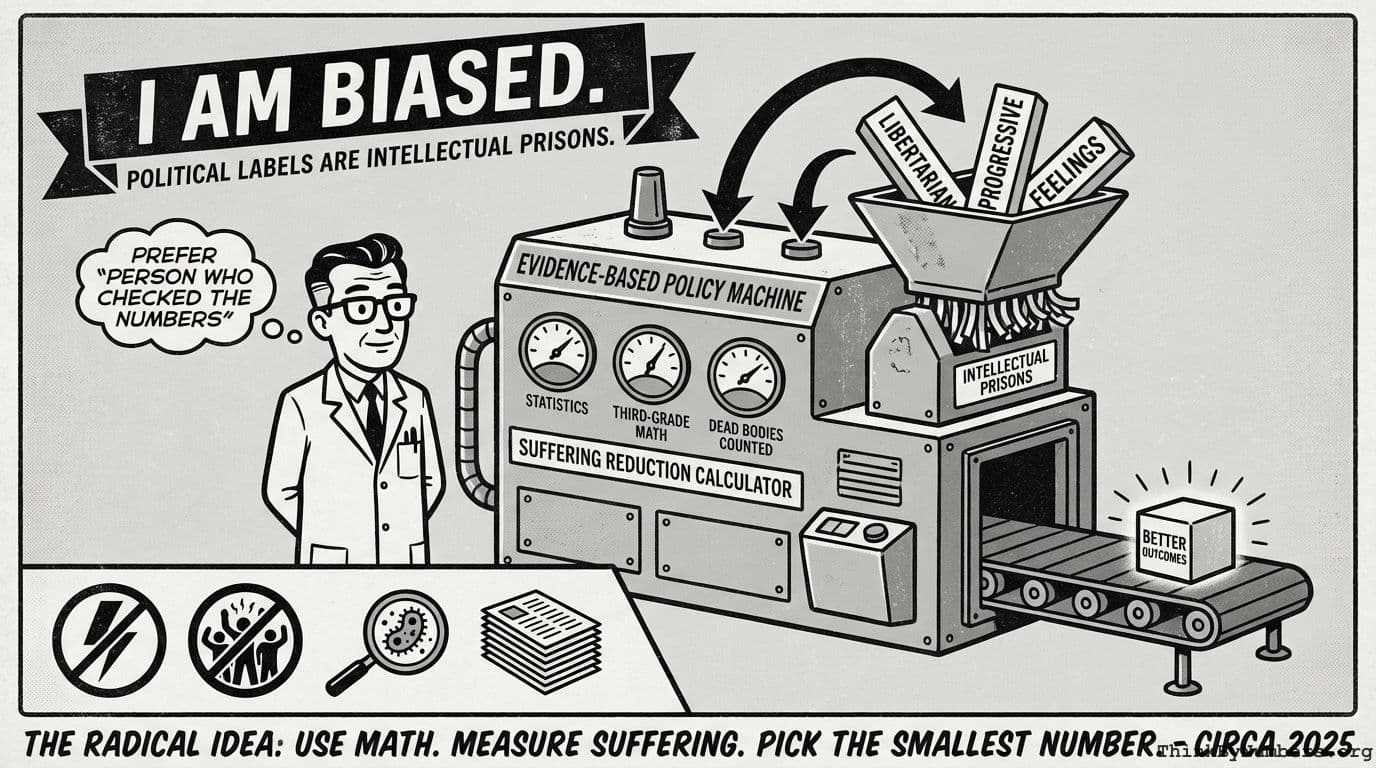
I Am Biased
Humans invented both antibiotics and weapons to prevent antibiotics from working. Using statistics to decide who dies is radical.
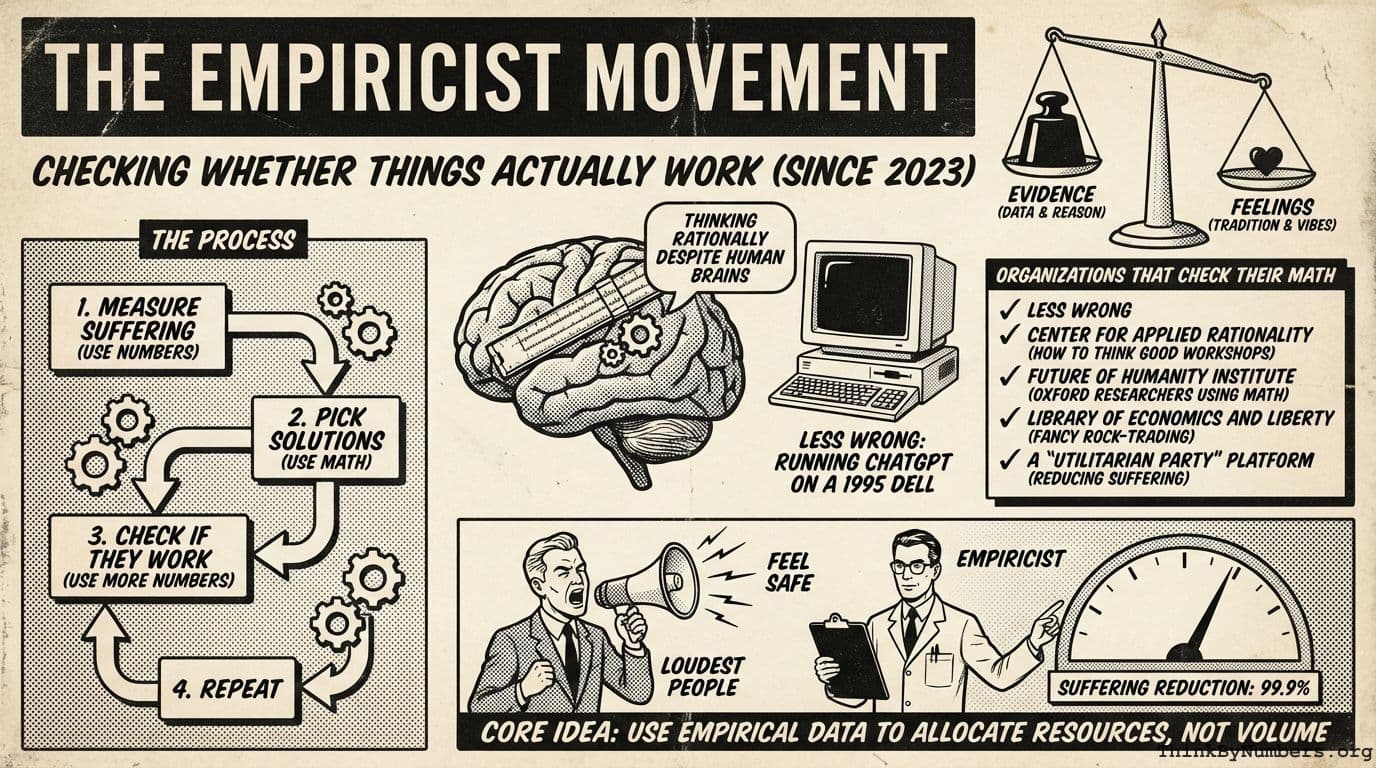
The Empiricist Movement
Looking at evidence is considered a radical political position by half the planet. Organizations trying rational thinking anyway.
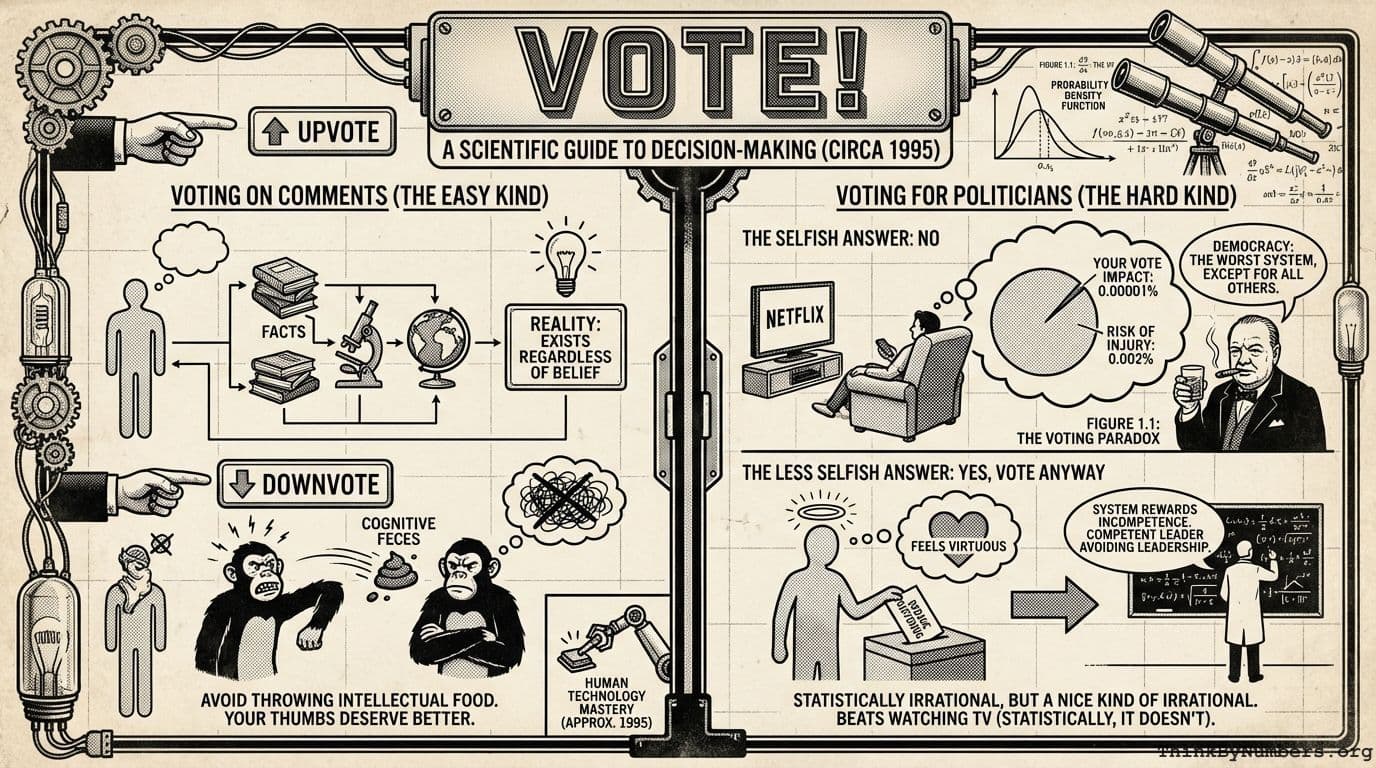
Vote!
You're 200x more likely to get injured driving to vote than to affect the election outcome. Democracy is irrational but do it anyway.
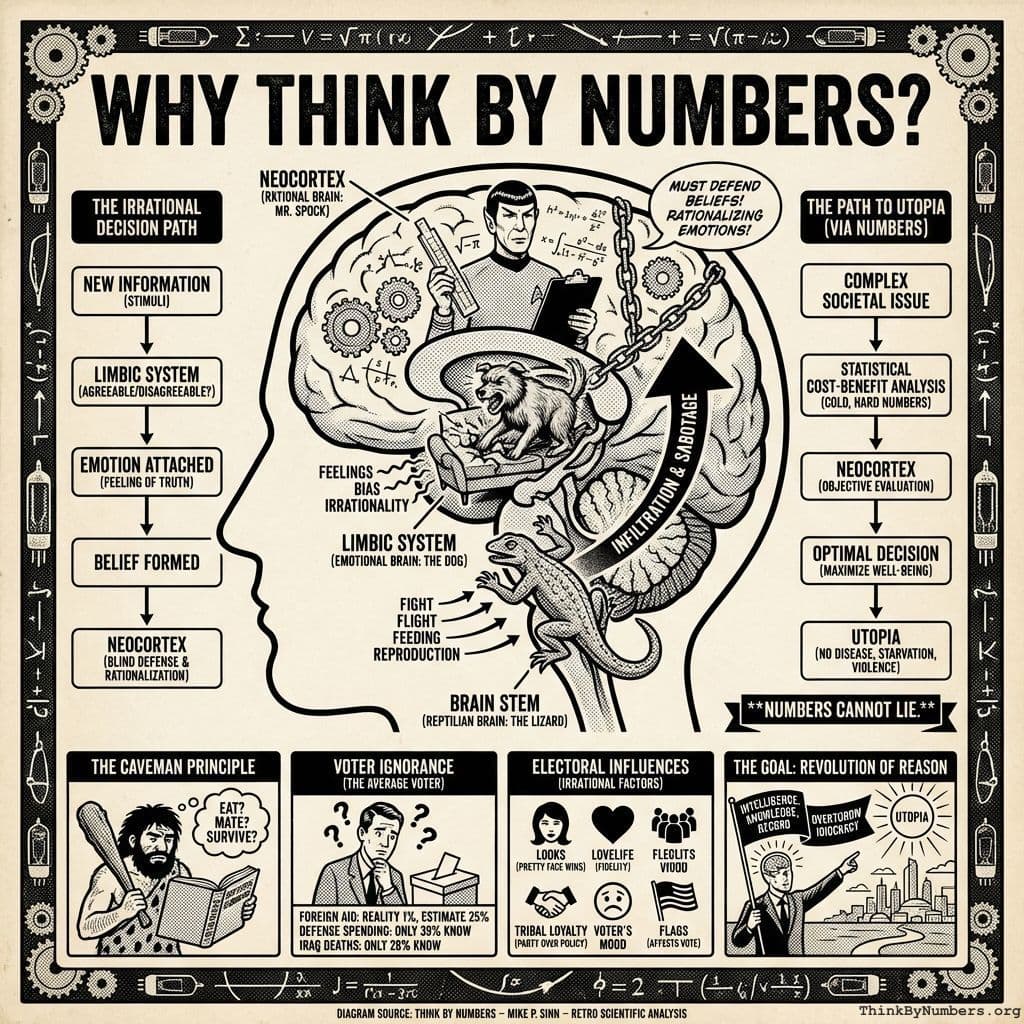
Why Think by Numbers?
70% of voters don't know how much government spends on anything. Your lizard brain beats your rational cortex 206 times per day.
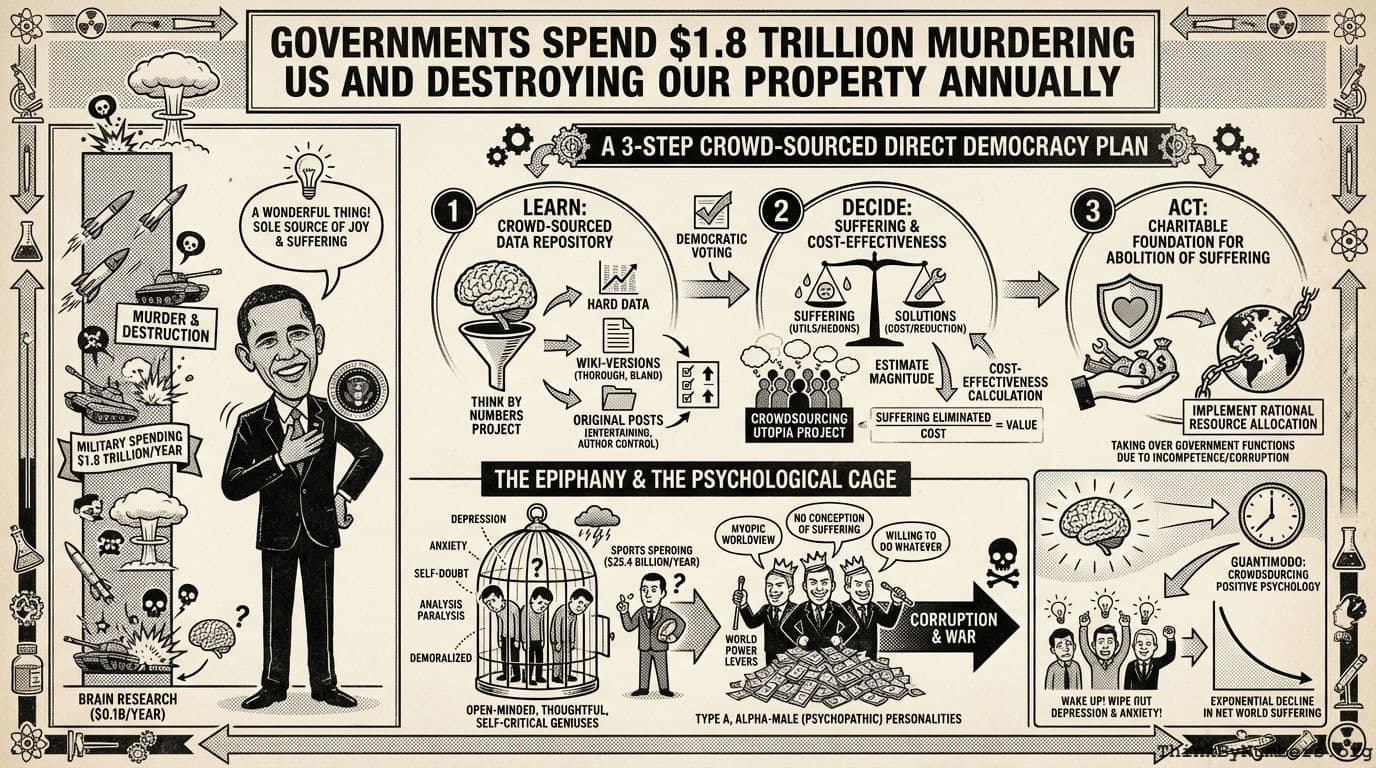
Governments Spend $1.8 Trillion Murdering Us and Destroying Our Property Annually
$1.8 trillion global military spending vs $100 million brain research. Chart required 17,000 pixels high to show military spending properly.
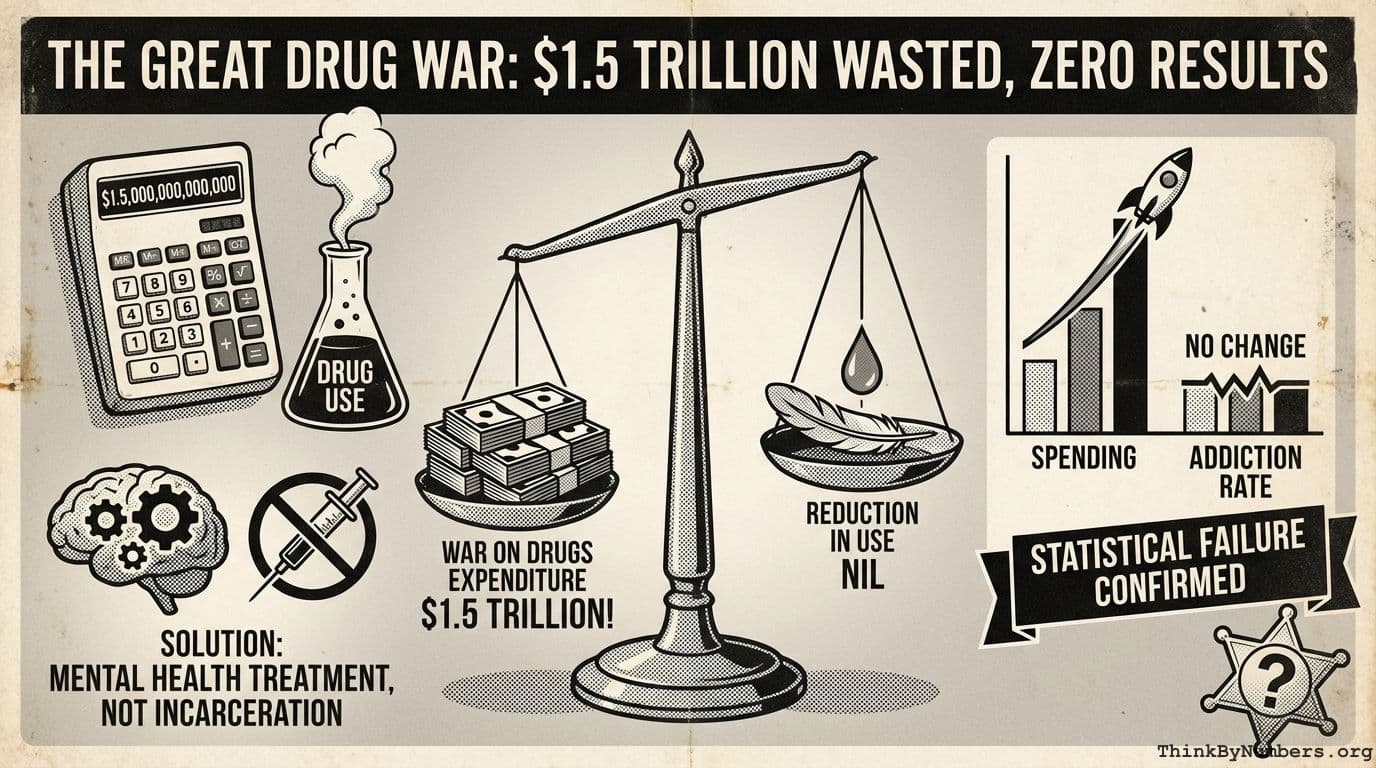
$1.5 Trillion Has Been Wasted on a Drug War that Hasn't Even Reduced Drug Use
$1.5 trillion spent on drug war enforcement with zero change in addiction rates. Like paying someone $10 billion yearly to not do their job.
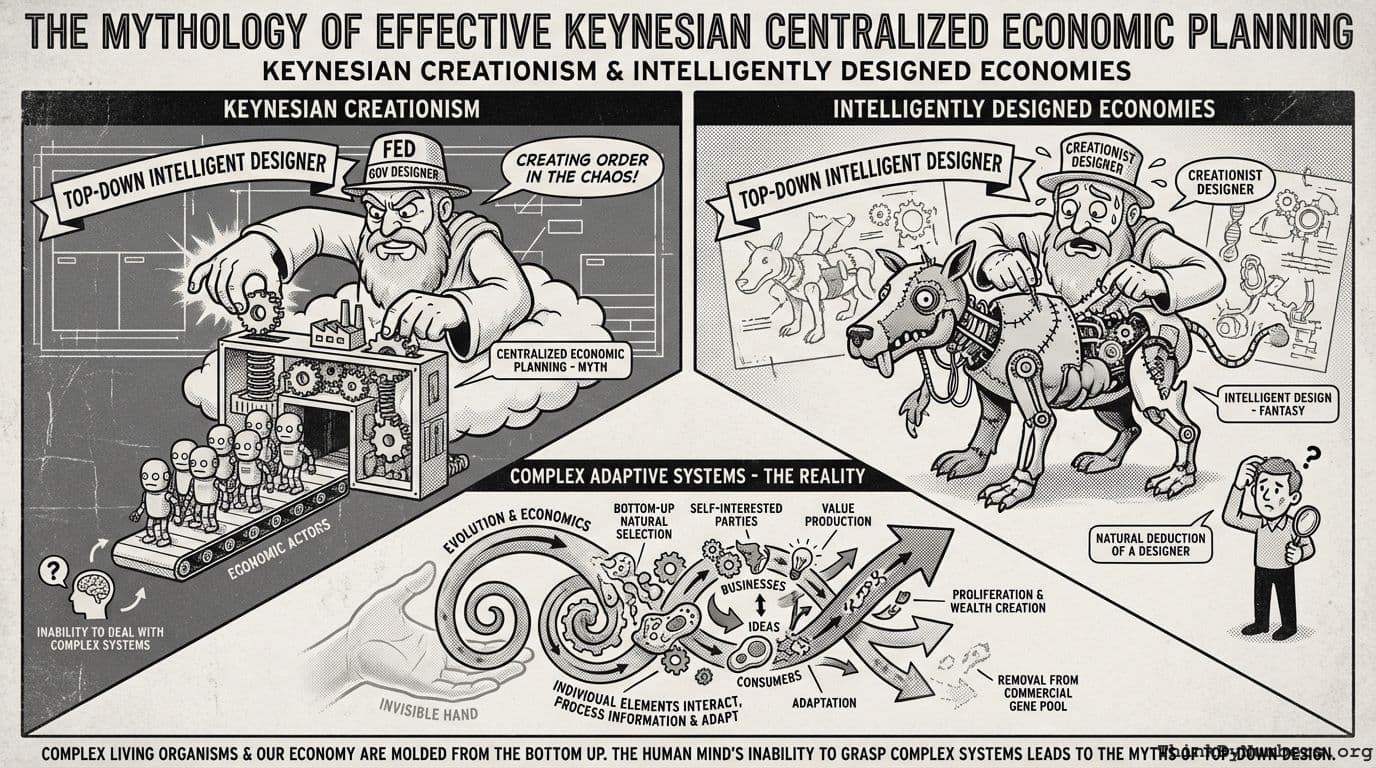
Keynsian Creationism and Intelligently Design Economies
Keynesians believe Federal Reserve designs economic order from chaos like creationists believe in intelligent design. Both can't grasp complex adaptive systems. Evolution and markets don't need planners.
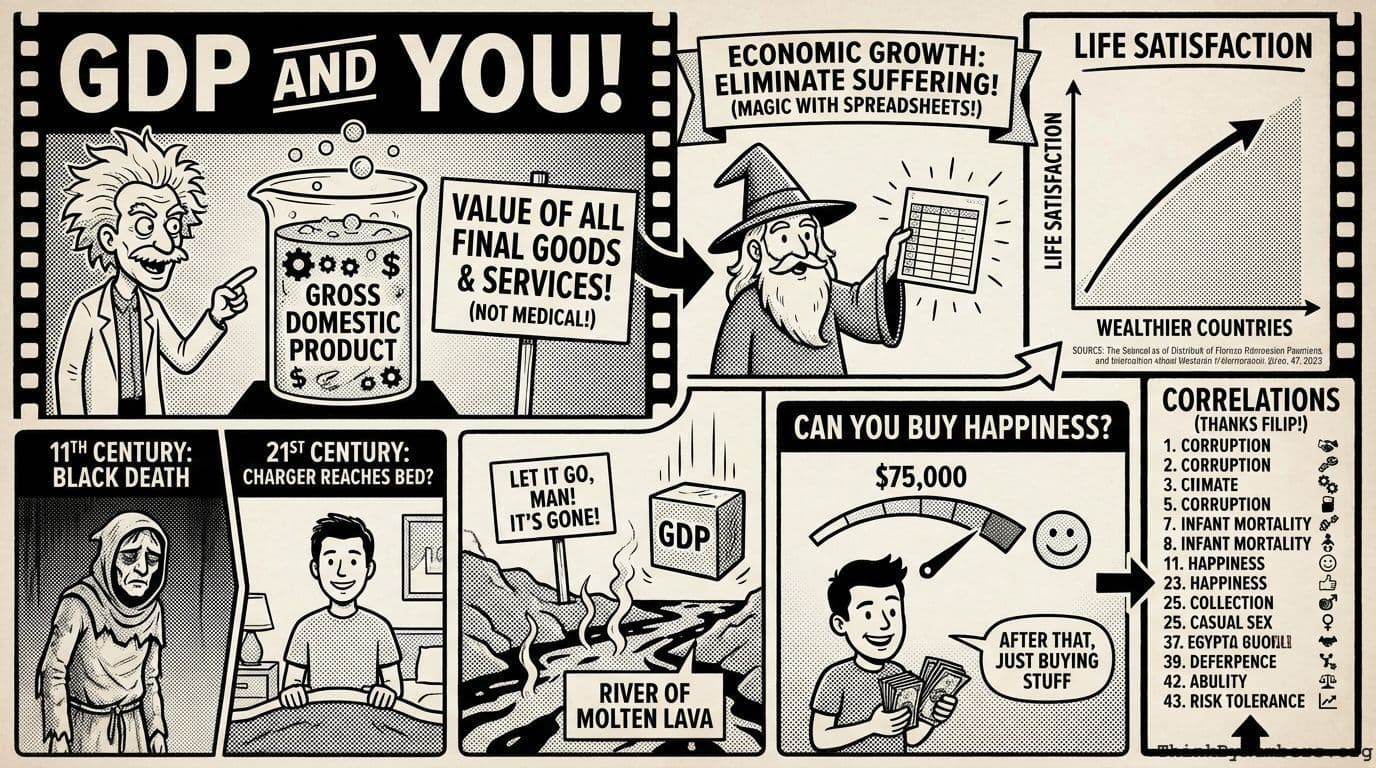
GDP and You!
World GDP is $127.8 trillion divided by 7.3 billion people equals $17,500 each. Happiness maxes out at $75k income. Above that you're just buying stuff, not joy. Economics with spreadsheets.
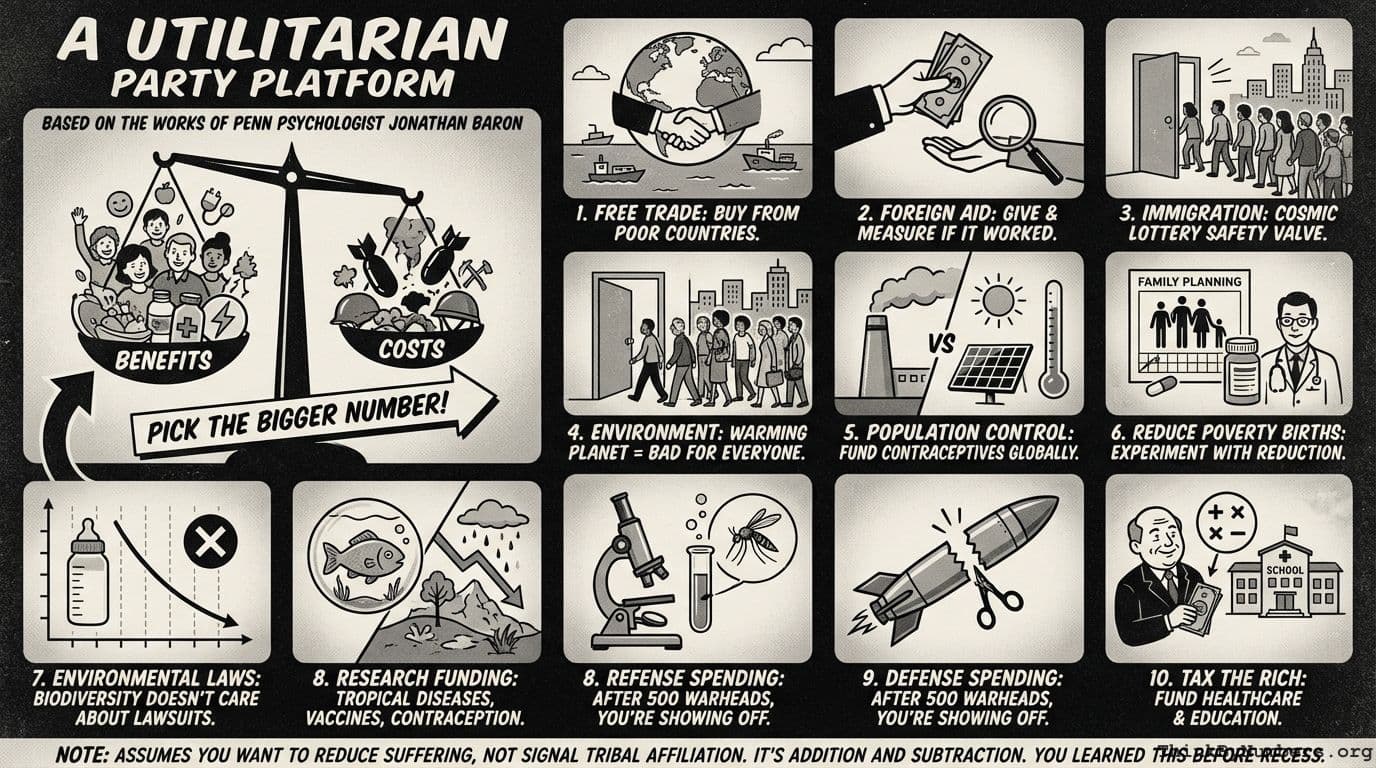
A Utilitarian Party Platform
Political platform asks "what if you tried helping people instead of signaling tribal affiliation?" Uses third-grade math. Revolutionary, apparently.
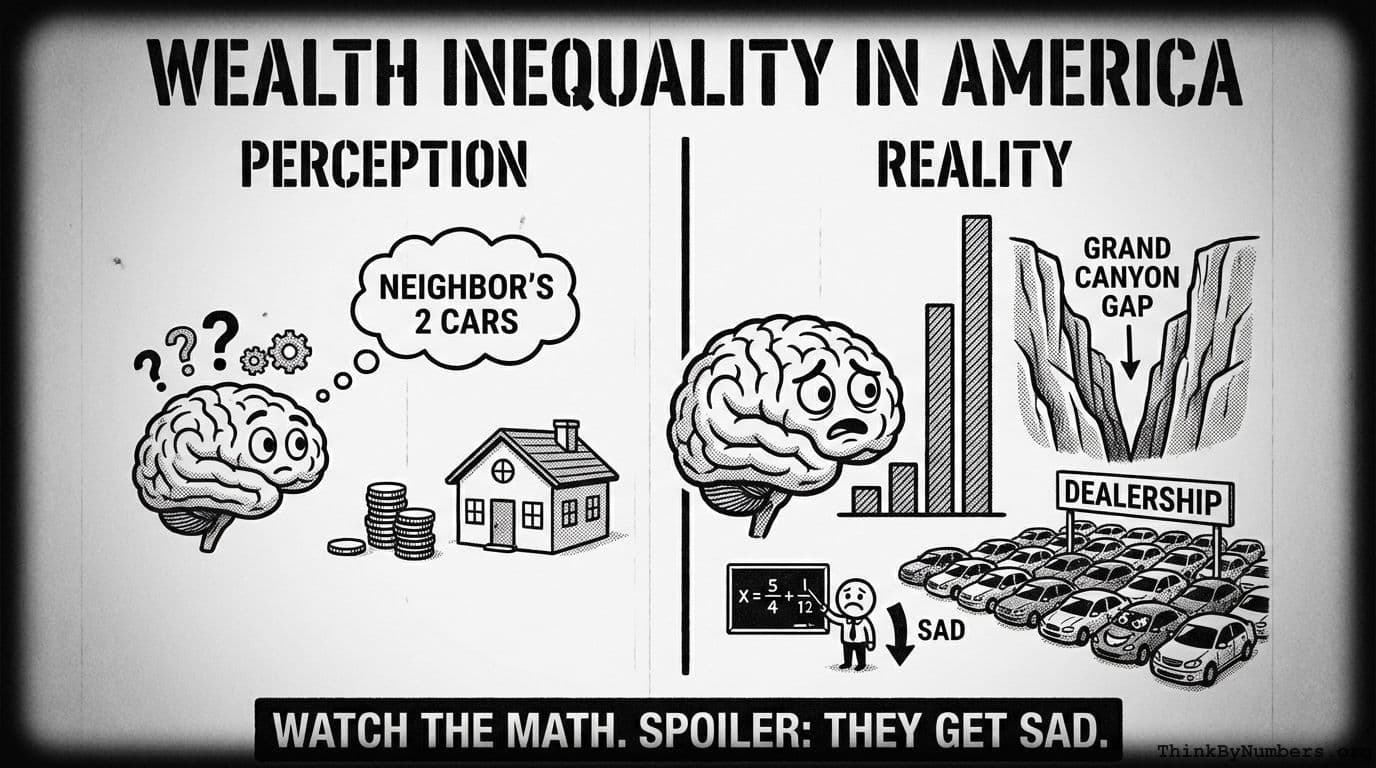
Wealth Inequality in America
Americans underestimate wealth inequality so badly the perception gap exceeds the actual wealth gap—like thinking your neighbor has 2 cars when they own a dealership.
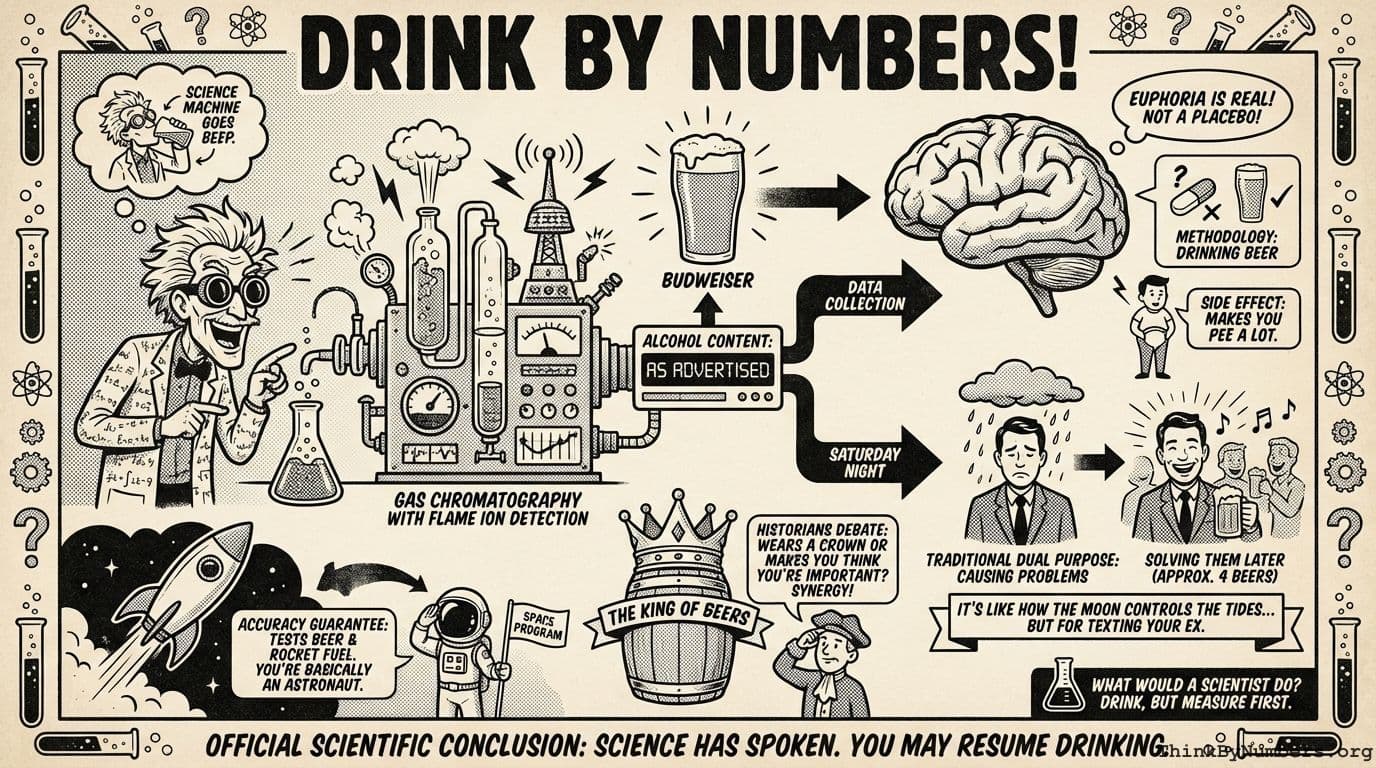
Drink by Numbers!
Gas chromatography proves Budweiser isn't watered down. Day drinking becomes "data collection" with scientific equipment involved.
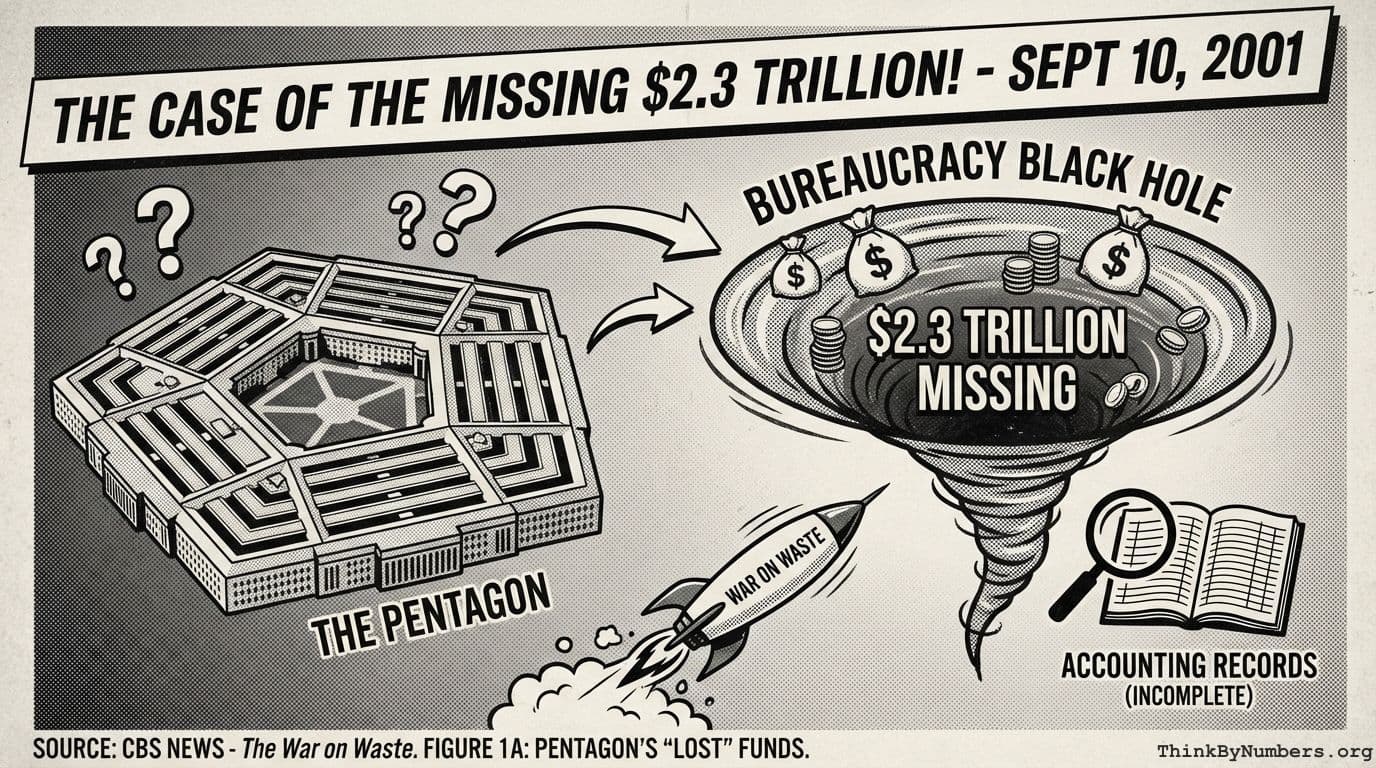
$2.3 Trillion Missing from Pentagon
Pentagon lost $2.3 trillion announced Sept 10, 2001. Next day planes hit towers. Perfect timing for forgetting about military waste.
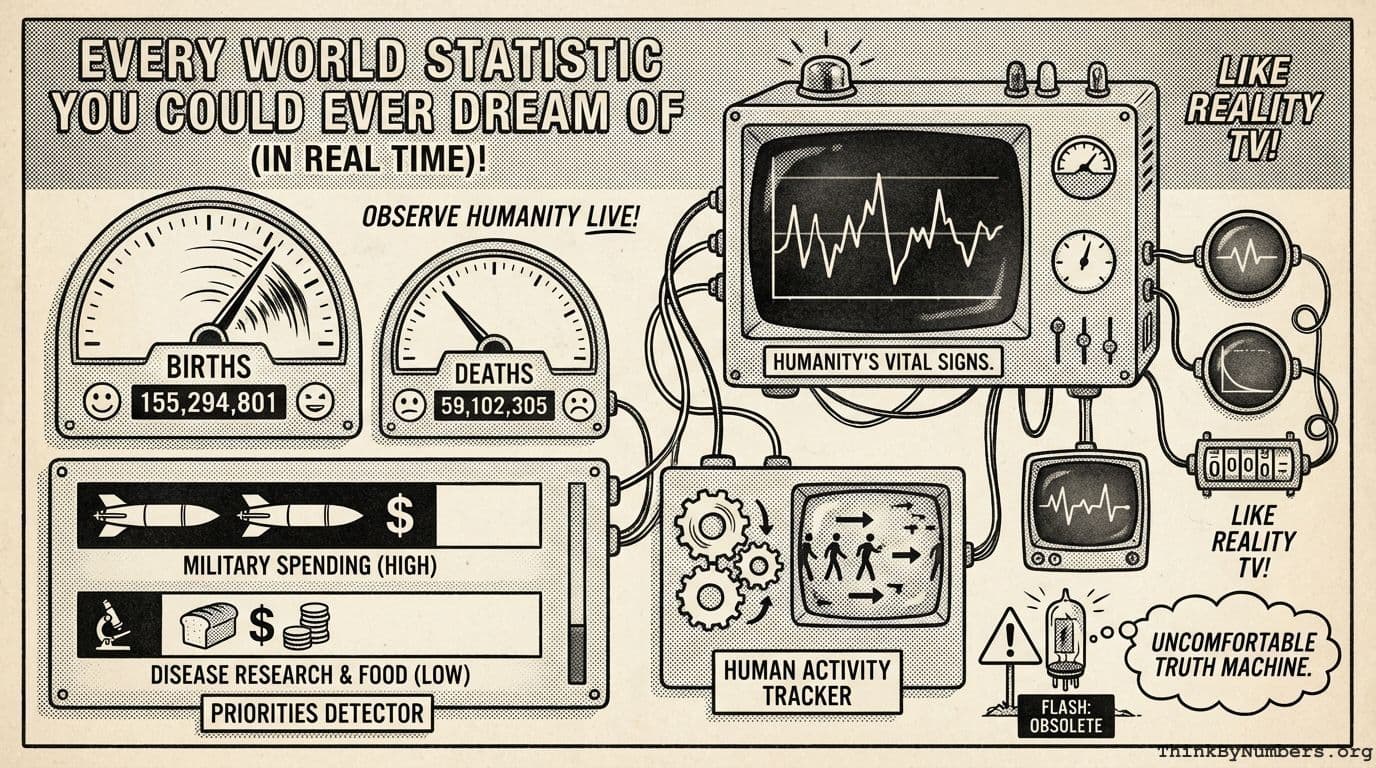
Every World Statistic You Could Ever Dream Of (In Real Time)!
Watch humanity's vital signs live. See military spending outpace disease research in real time.
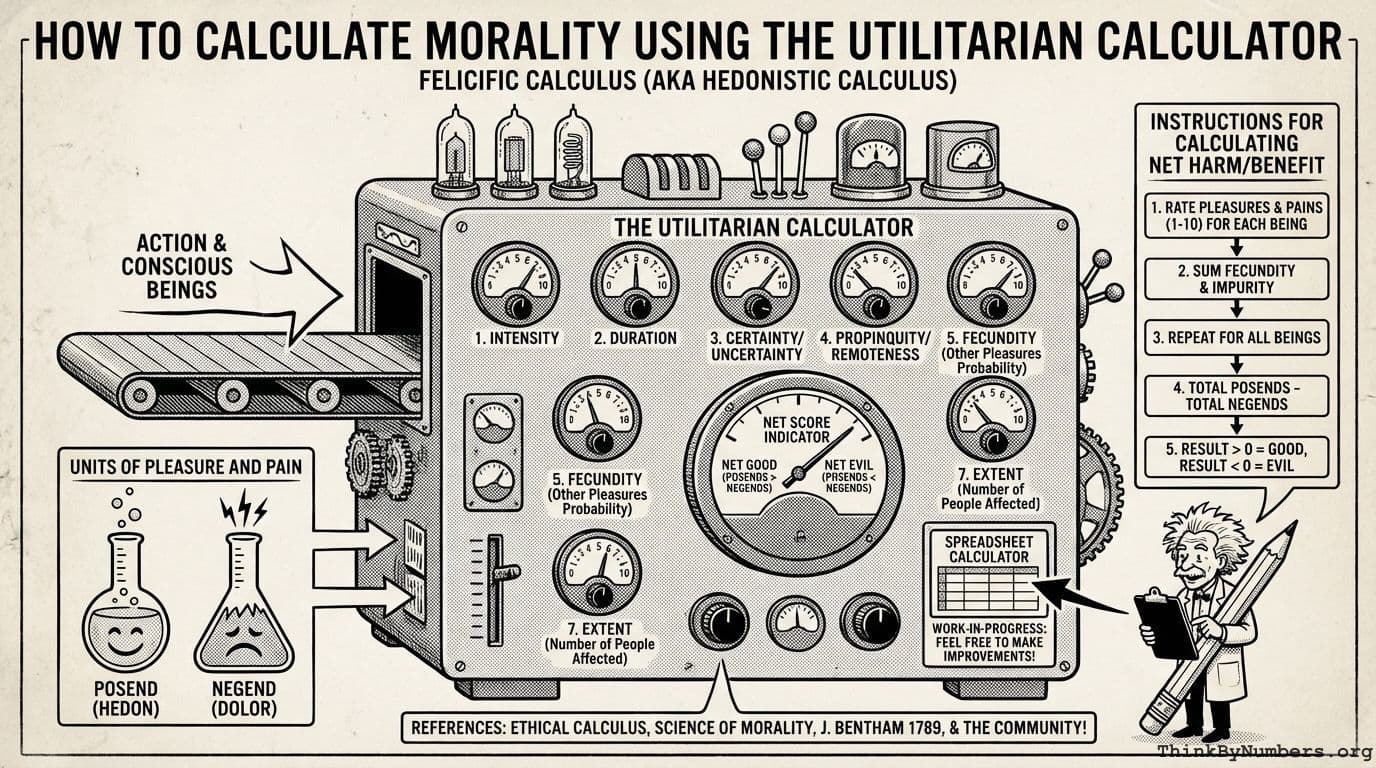
How To Calculate Morality Using The Utilitarian Calculator
Bentham's felicific calculus quantifies pleasure and pain on a 1-10 scale. Yes, you can mathematically calculate whether you should kill your cat.
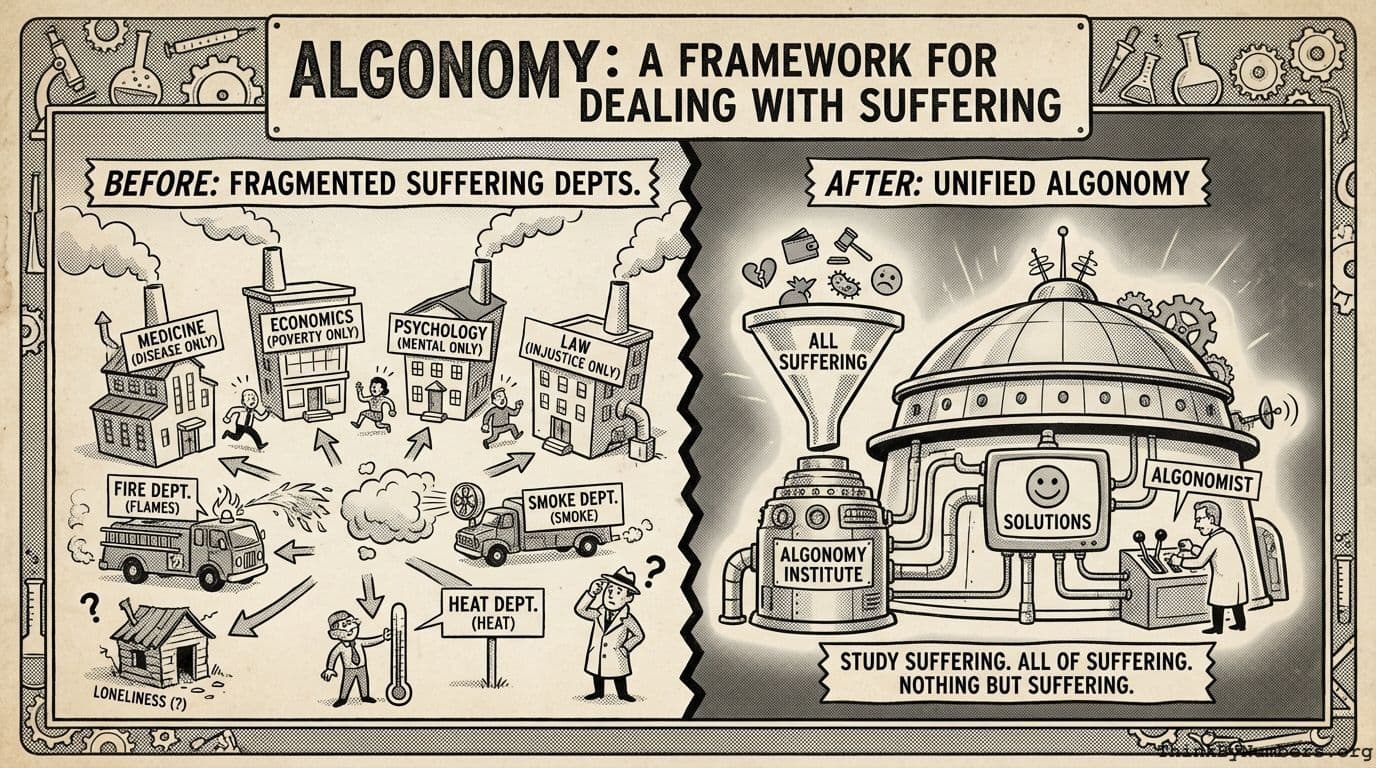
Algonomy: A Framework for Dealing with Suffering
47 fields study suffering but none study suffering itself. It's like having Flame, Smoke, and Heat departments but nobody puts out fires.
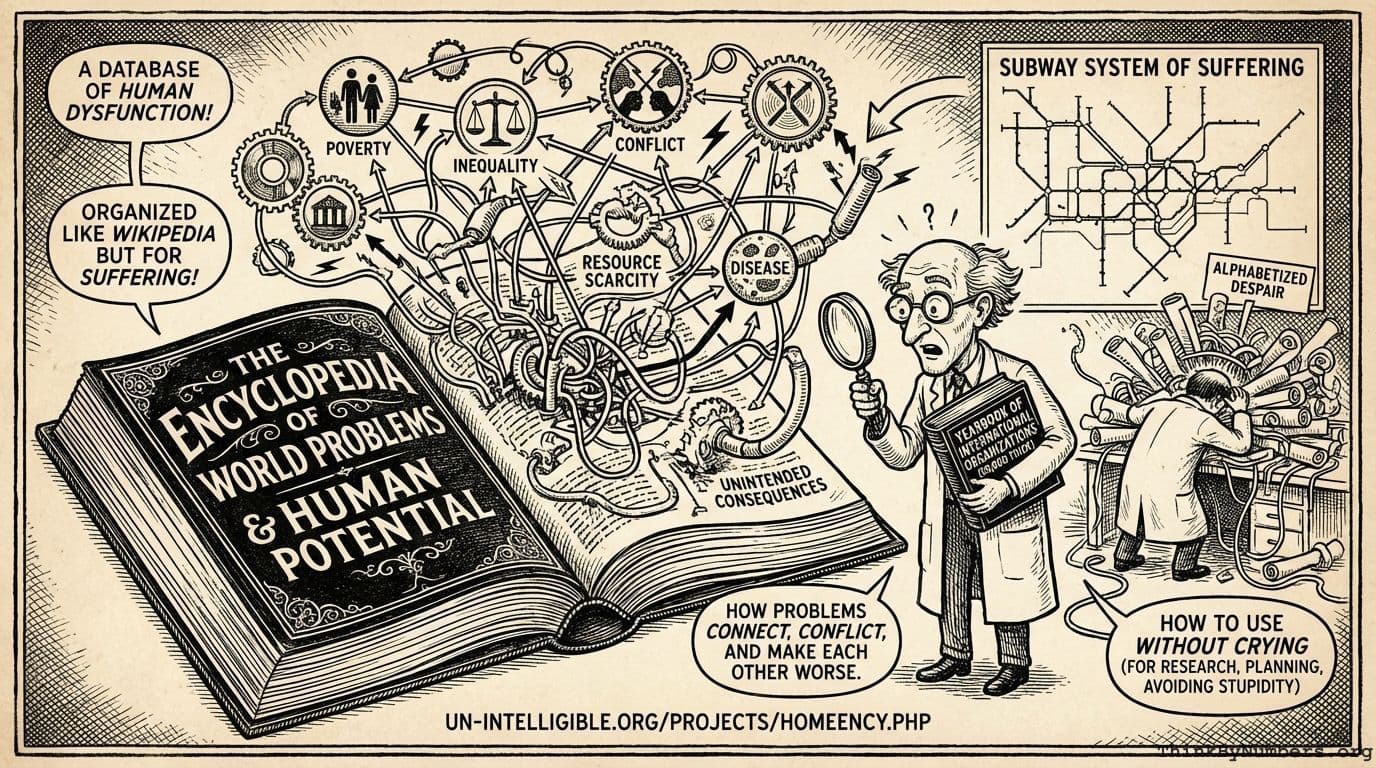
The Encyclopedia of World Problems and Human Potential
50,000 organizations solve poverty using different definitions. Database maps how fixing one problem creates three new ones. It's free.
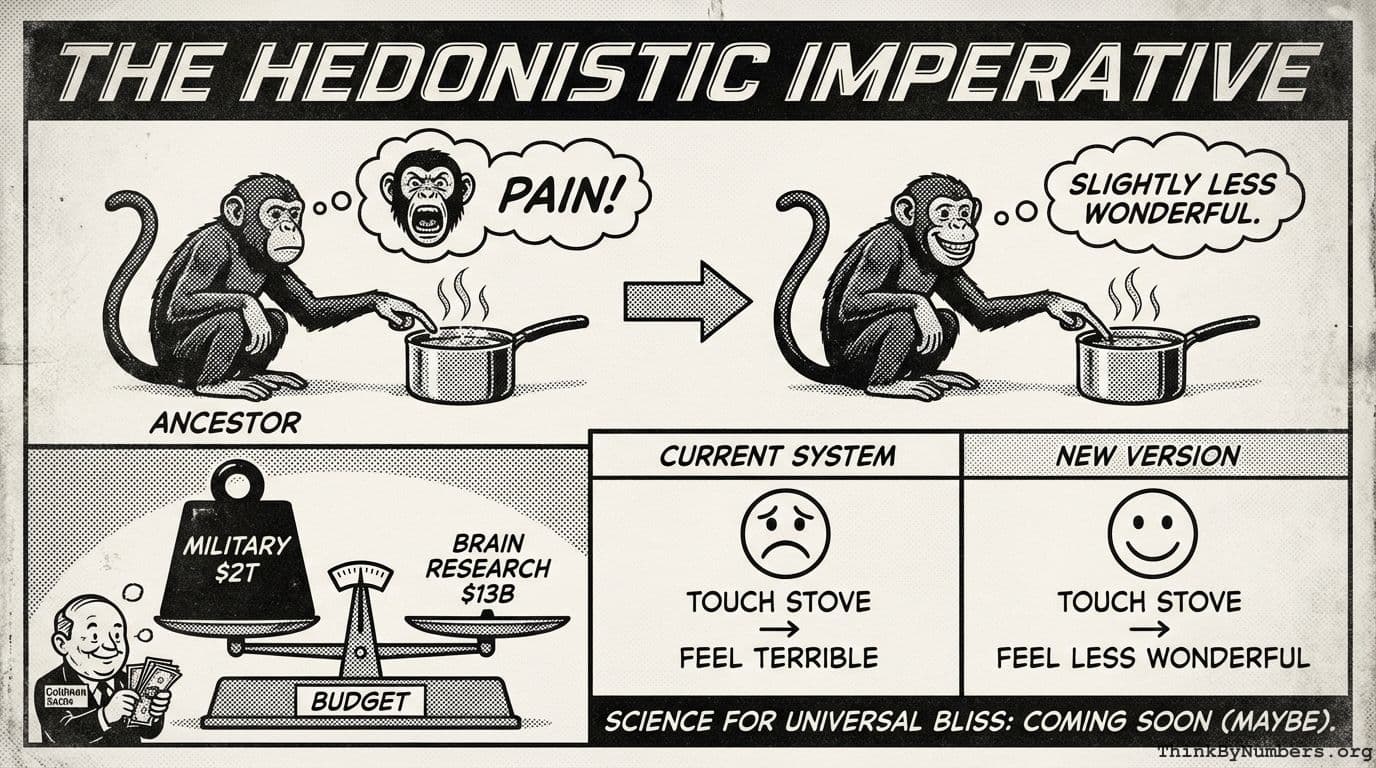
The Hedonistic Imperative
Military gets $2 trillion, brain research gets $13 billion. We spend 154x more on bombs than abolishing all suffering forever.
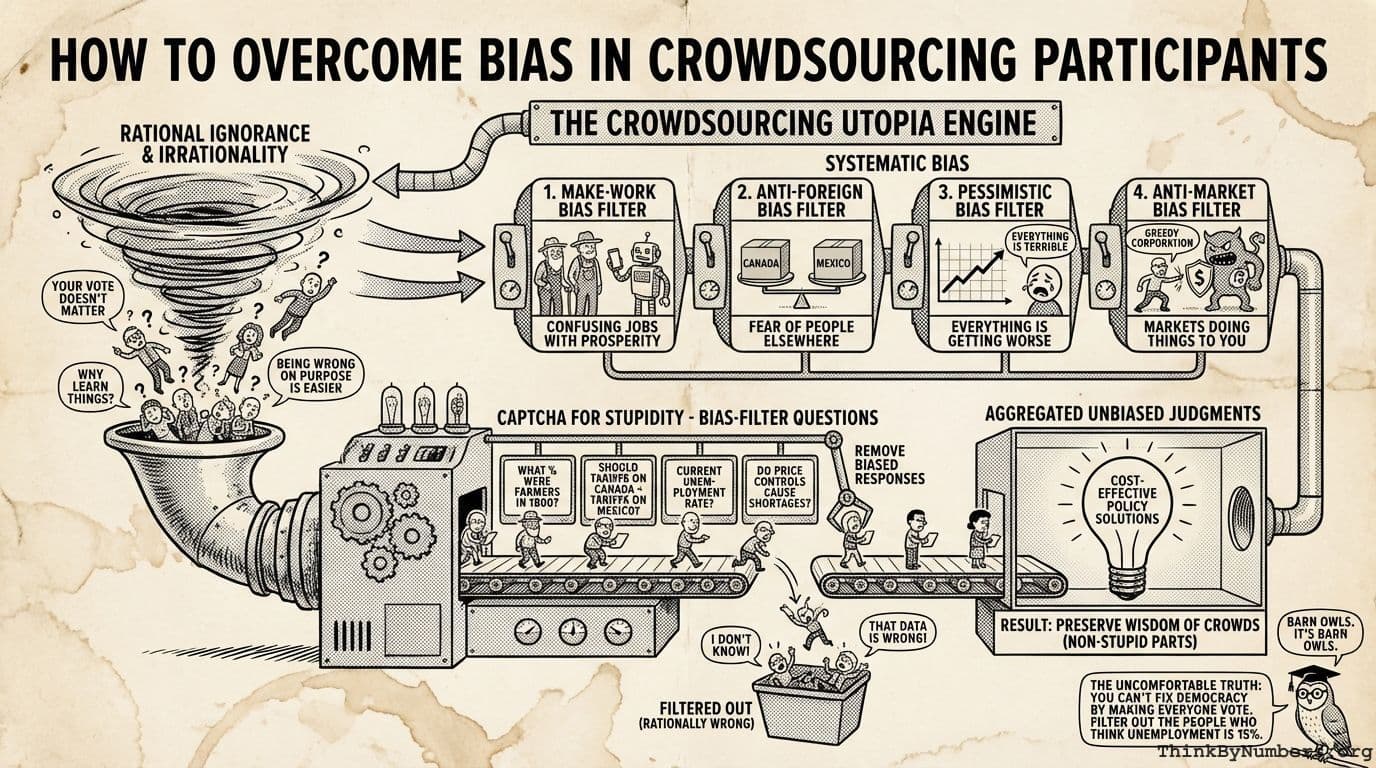
How to Overcome Bias in Crowdsourcing Participants
Your vote has same odds as winning lottery 7 times. CAPTCHA for stupidity filters crowdsourcing bias by removing people who guess wrong.
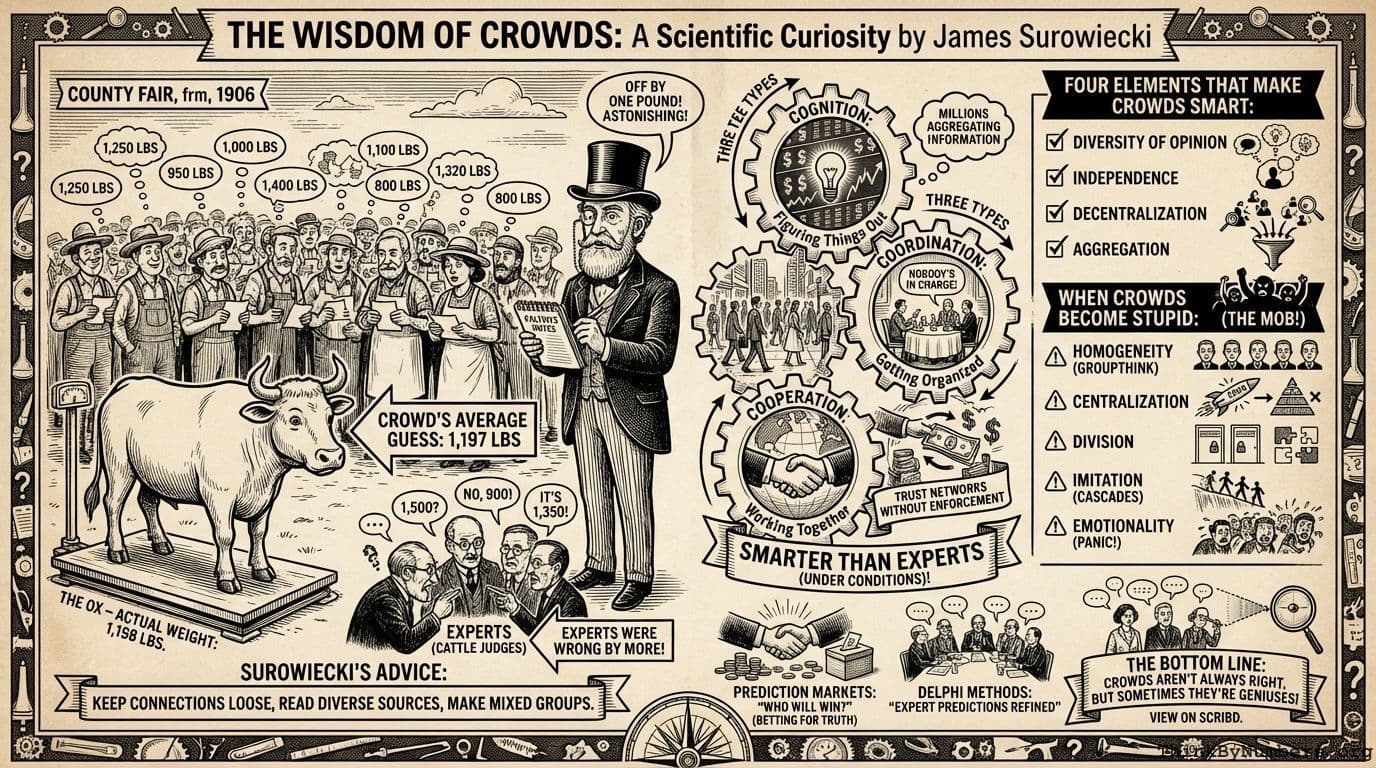
The Wisdom of Crowds
Random farmers guessed an ox's weight within 1 pound. Experts were wrong. Crowds beat geniuses when math says they shouldn't.
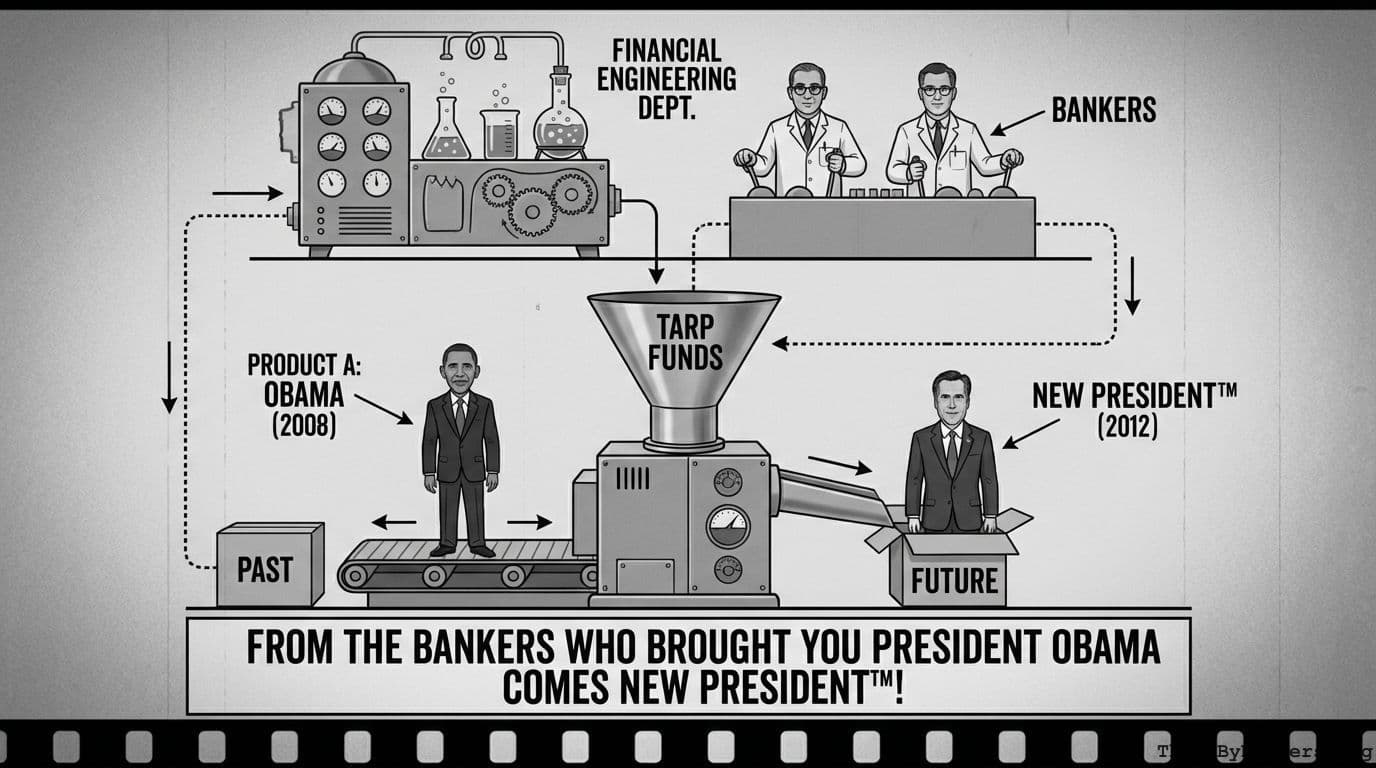
From the Bankers Who Brought You President Obama Comes NEW PRESIDENT™!
Obama budget $3.80 trillion vs Romney $3.79 trillion. 0.26% difference. Same banks fund both. Democracy is working perfectly wrong.
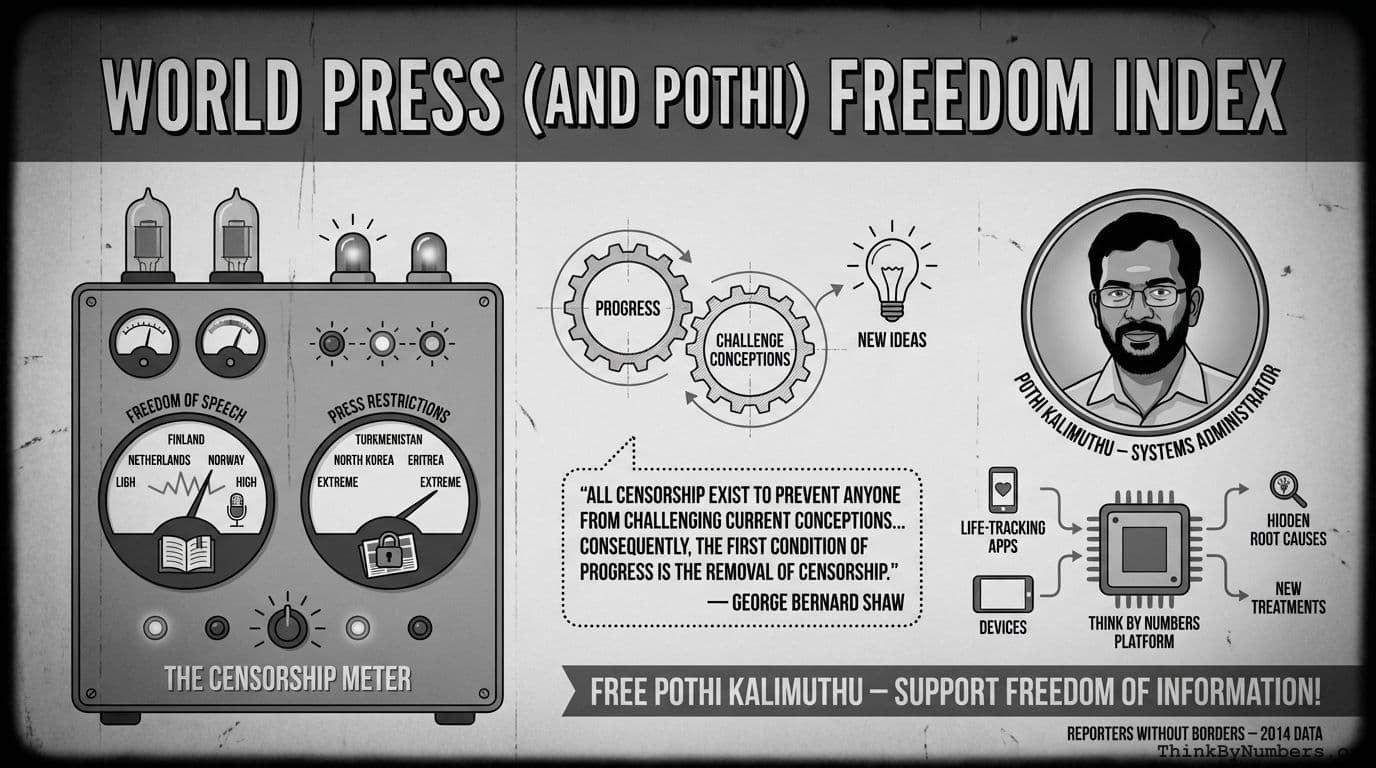
World Press (and Pothi) Freedom Index
Only 1 of 180 countries has press freedom like 1st Amendment. North Korea, Eritrea, Turkmenistan are information black holes.
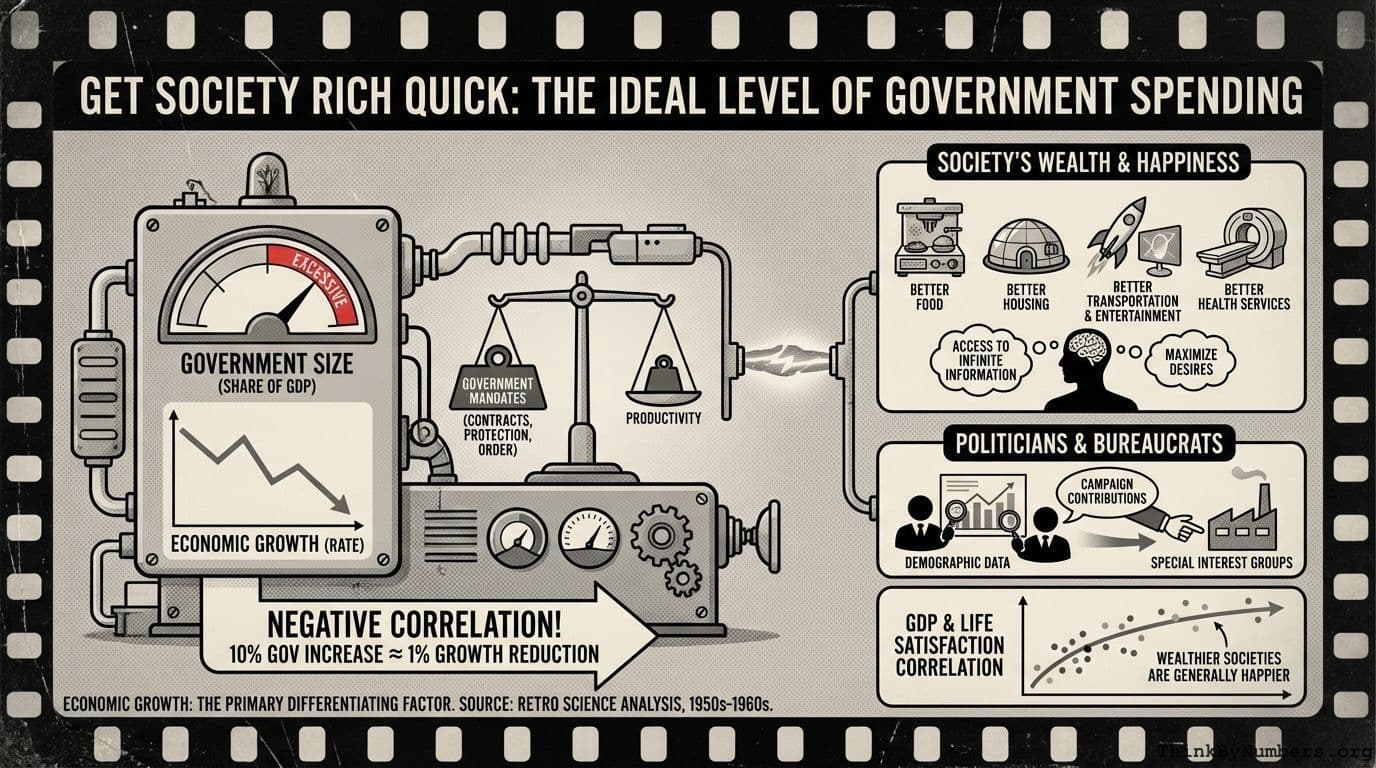
Get Society Rich Quick: The Ideal Level of Government Spending
Government spending above 25% of GDP slows economic growth. OECD countries prove it. Every dollar above 25% is basically lighting money on fire and calling it policy.
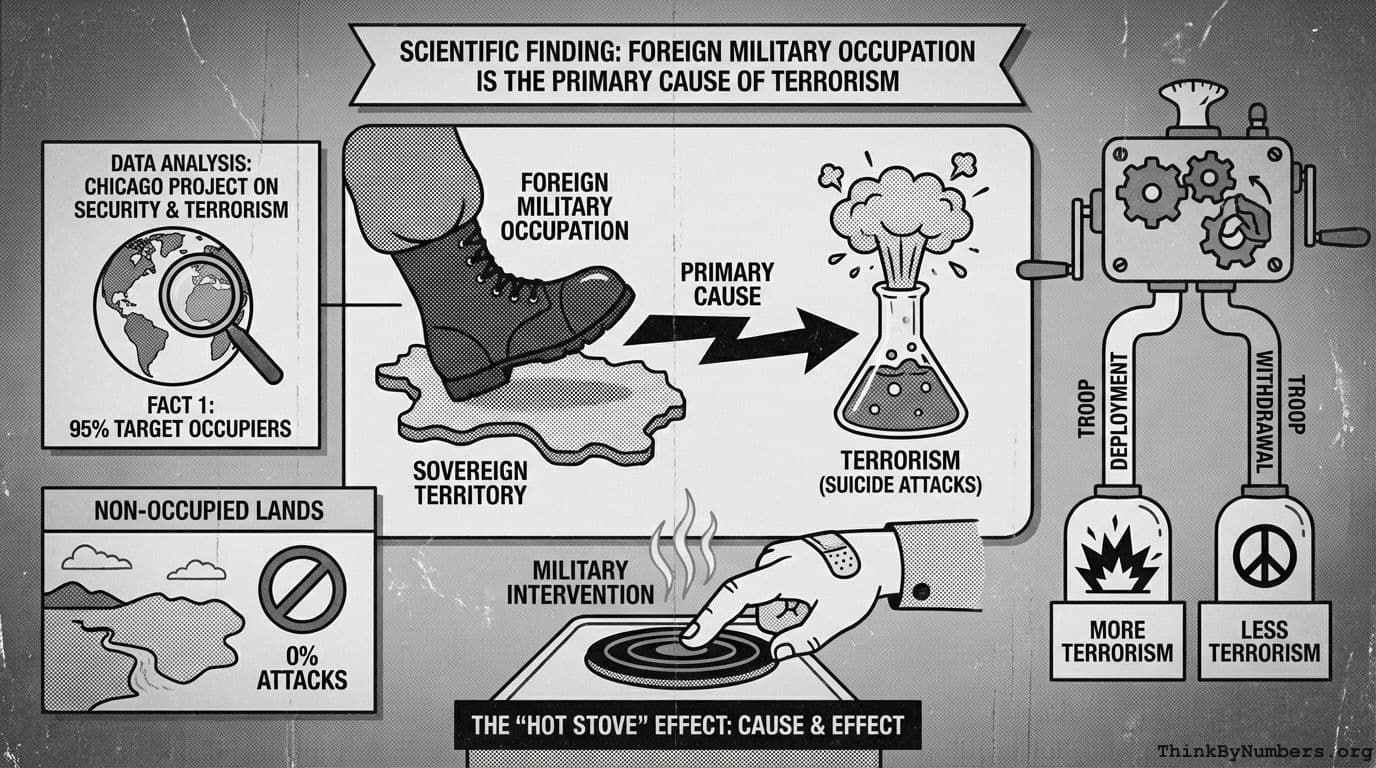
Foreign Military Occupation is the Primary Cause of Terrorism
95% of suicide terrorism targets occupying militaries. We invaded to stop terrorism, making terrorism increase 89% instead.
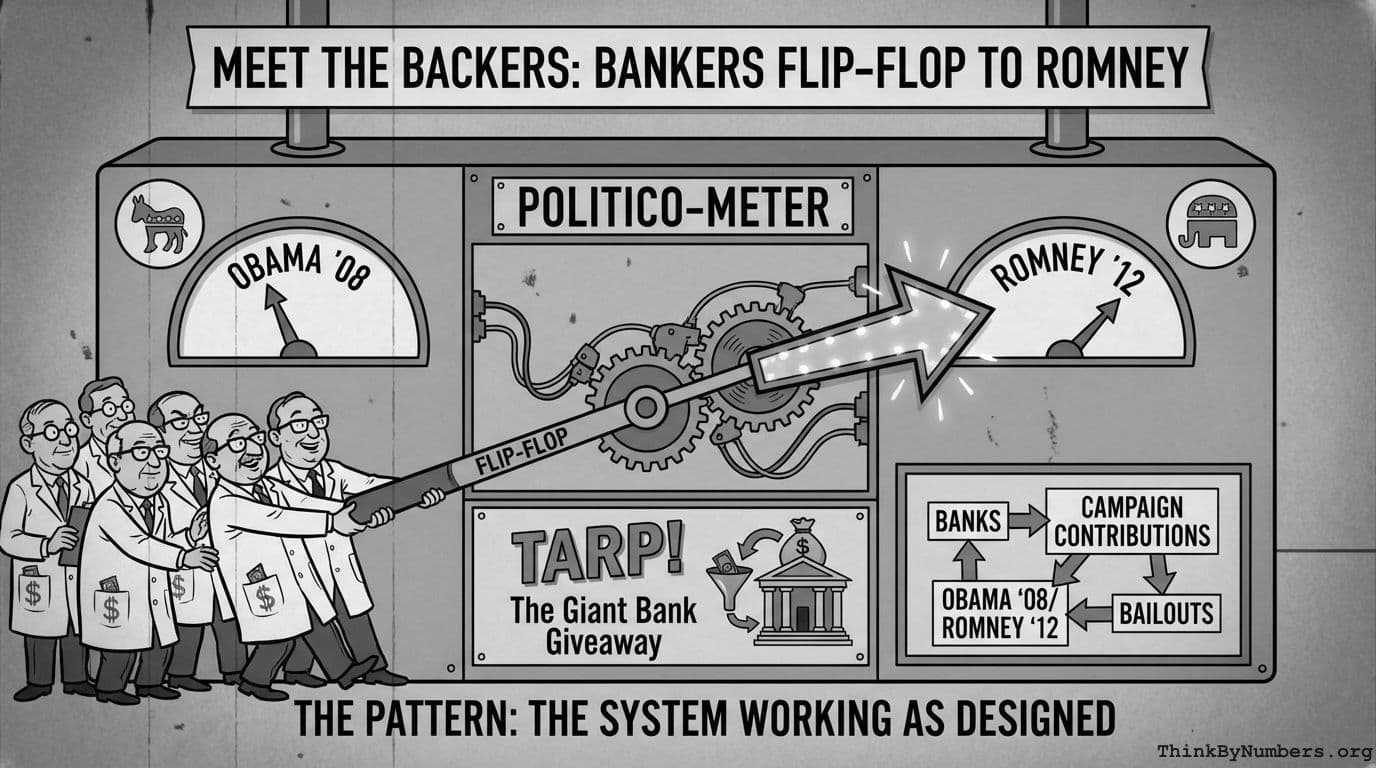
Meet the Backers: Bankers Flip-Flop to Romney
Banks needed $125 billion TARP bailout. Same banks gave $1 million each to Obama 2008 and Romney 2012. Both candidates support bailouts.
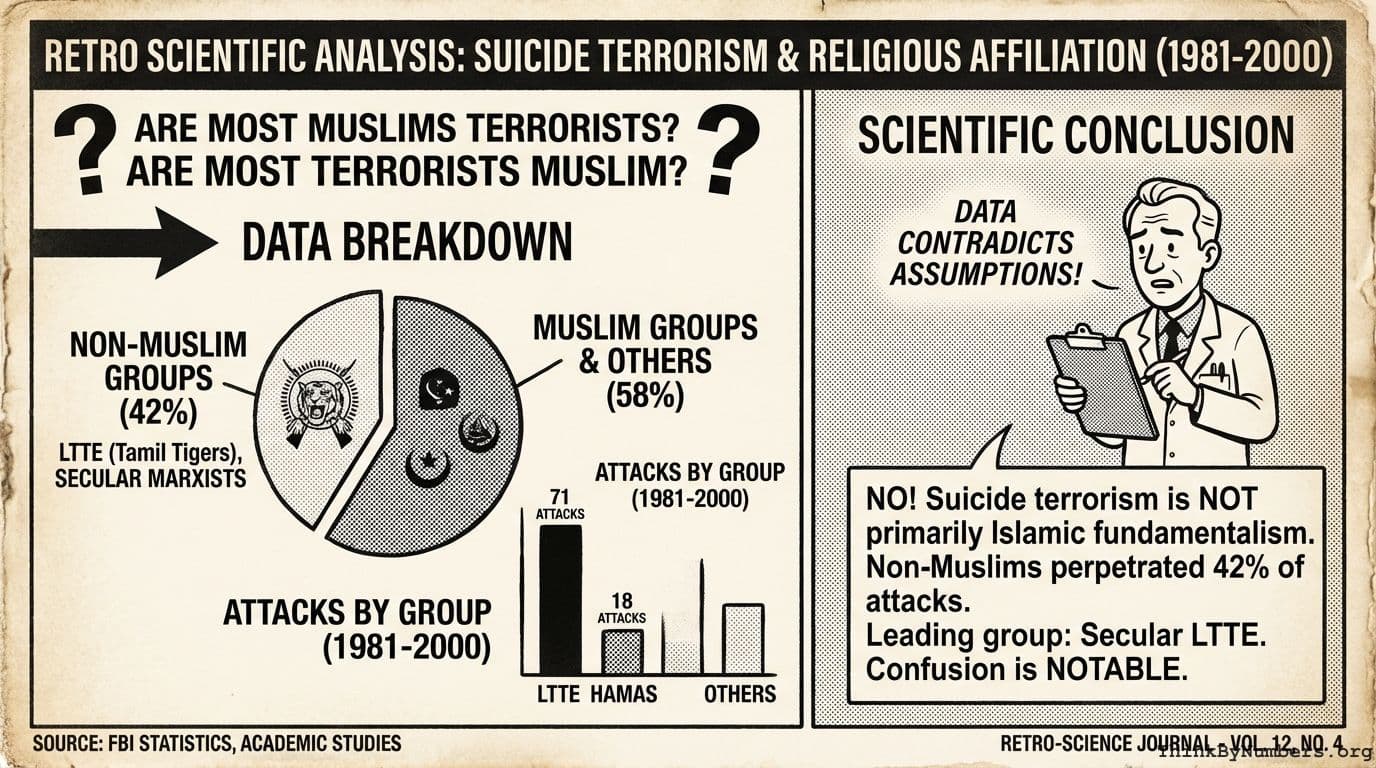
Are most Muslims terrorists? Are most terrorists Muslim?
42% of suicide attacks (1981-2000) by non-Muslims. Top terrorist group was Hindu Marxists, so the confusion requires third-grade math.
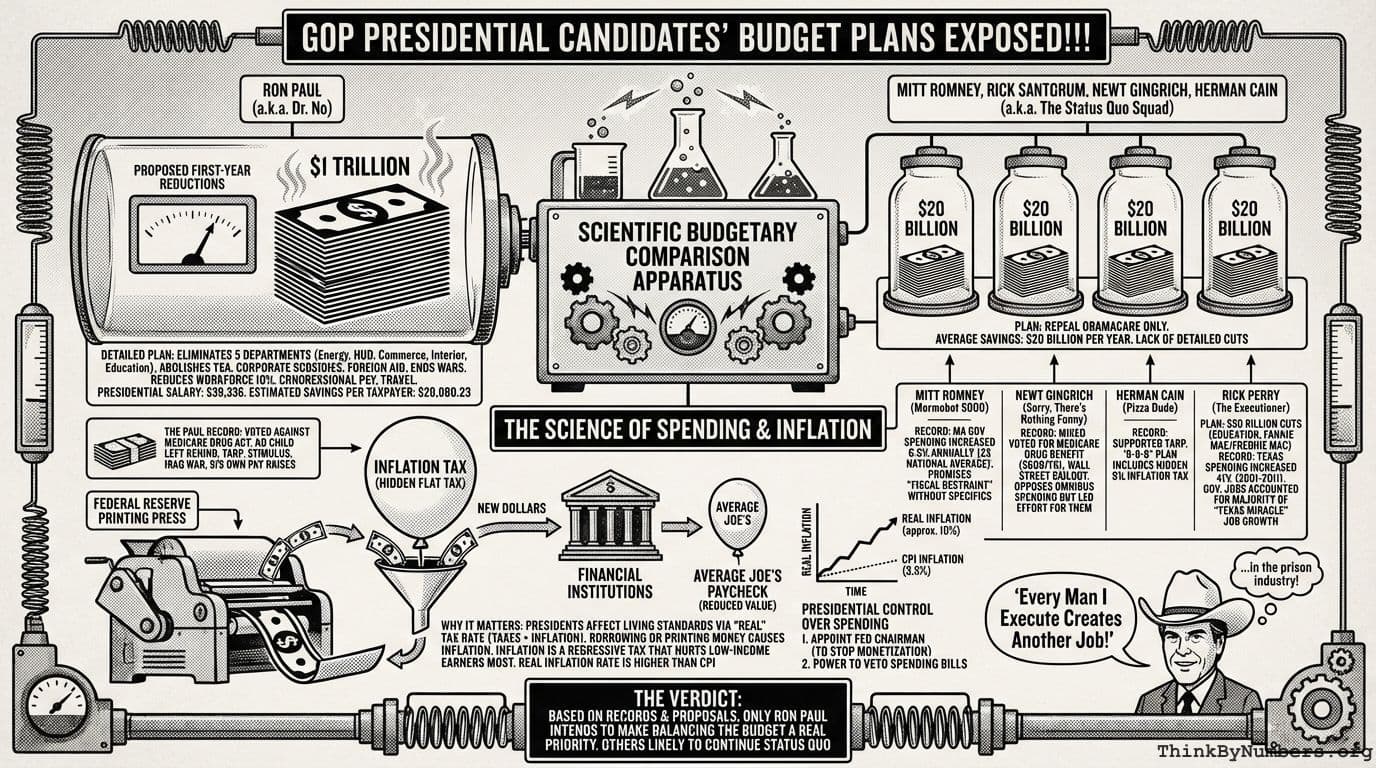
GOP Presidential Candidates' Budget Plans EXPOSED!!!
Ron Paul proposed $1 trillion cuts. Romney, Gingrich, Cain only $20 billion each. Real inflation 10% not 3.5%. Hidden tax hits hardest.

GOP Presidential Candidates' Budget Plans EXPOSED!!!
Ron Paul proposed $1 trillion cuts. Romney, Gingrich, Cain only $20 billion each. Real inflation 10% not 3.5%. Hidden tax hits hardest.
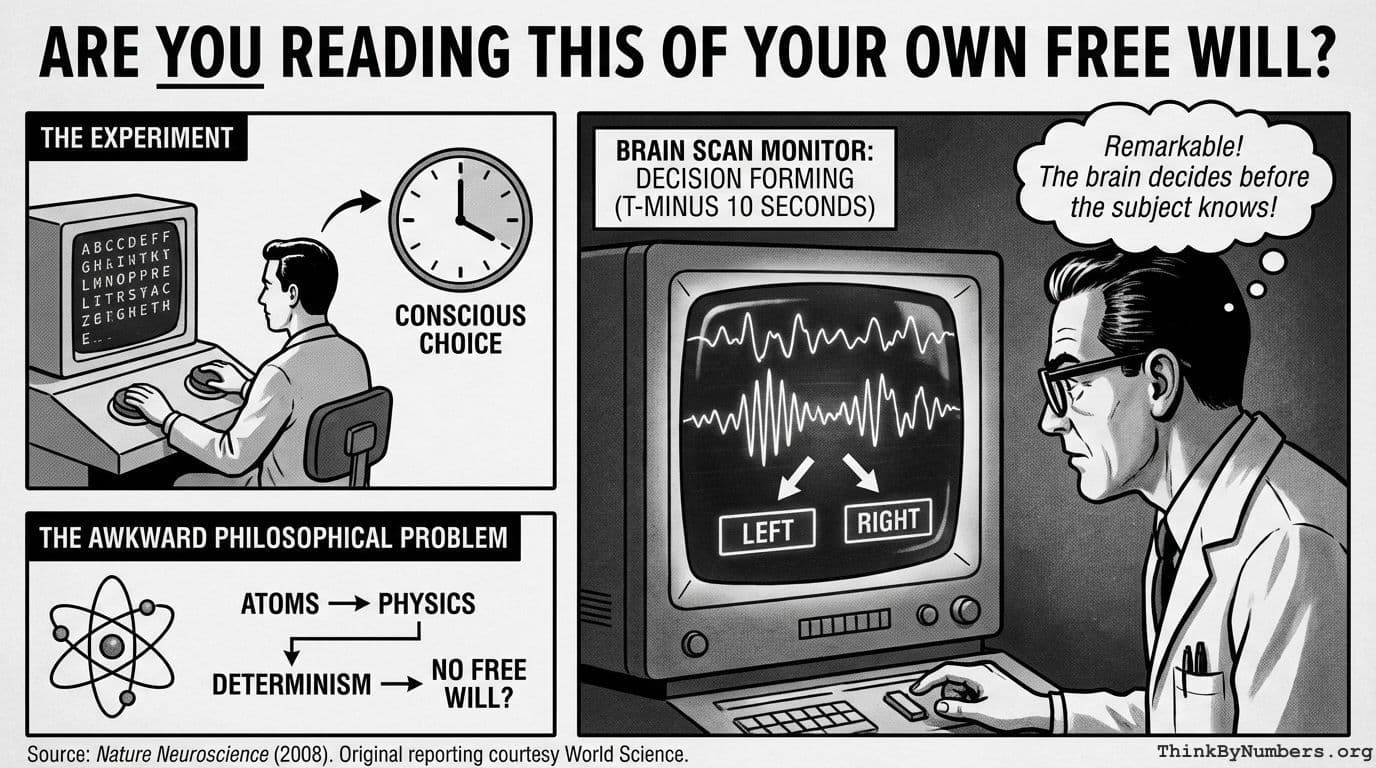
Are You Reading this of Your Own Free Will?
Your brain decided 10 seconds before you did. Brain scans prove you're not actually making choices.
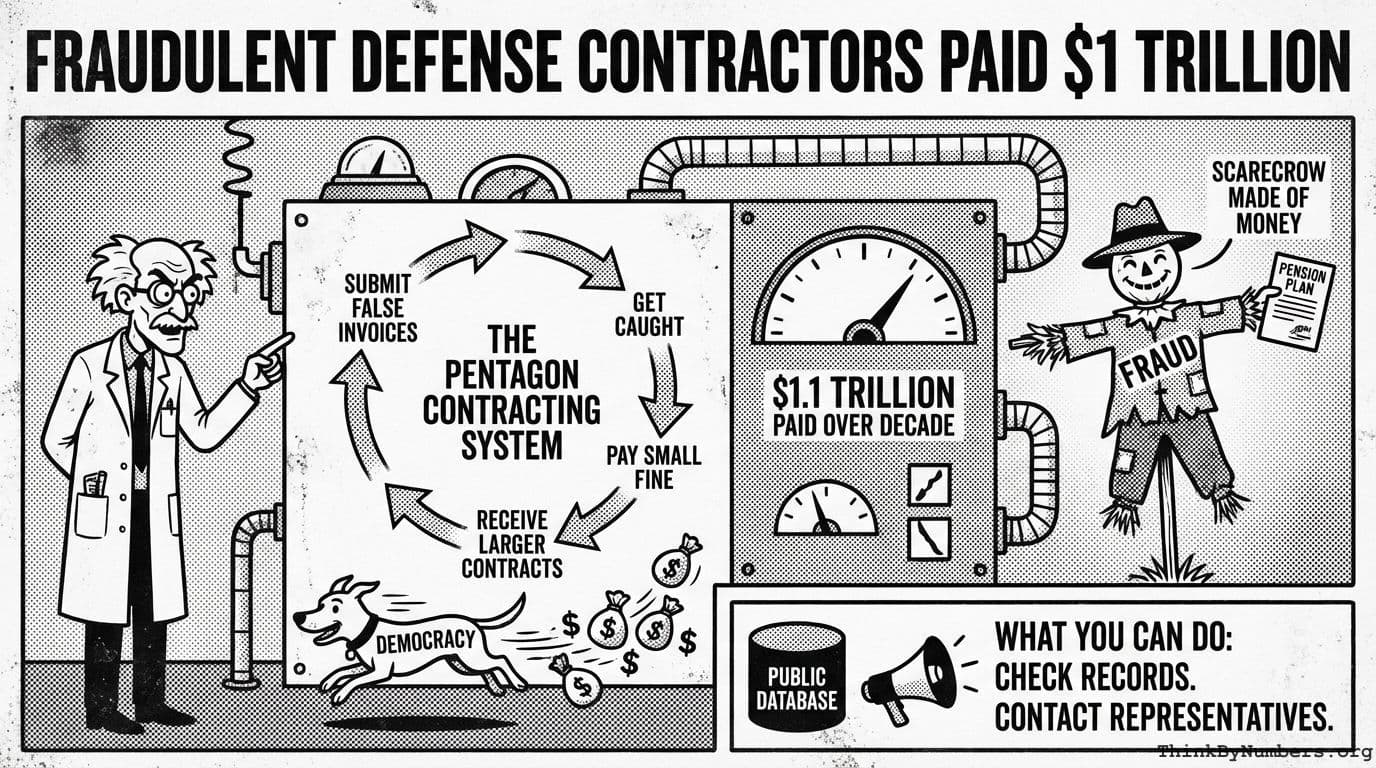
Fraudulent Defense Contractors Paid $1 Trillion
Pentagon paid $1.1 trillion to convicted fraudulent defense contractors over 10 years, then gave them raises for stealing from taxpayers.
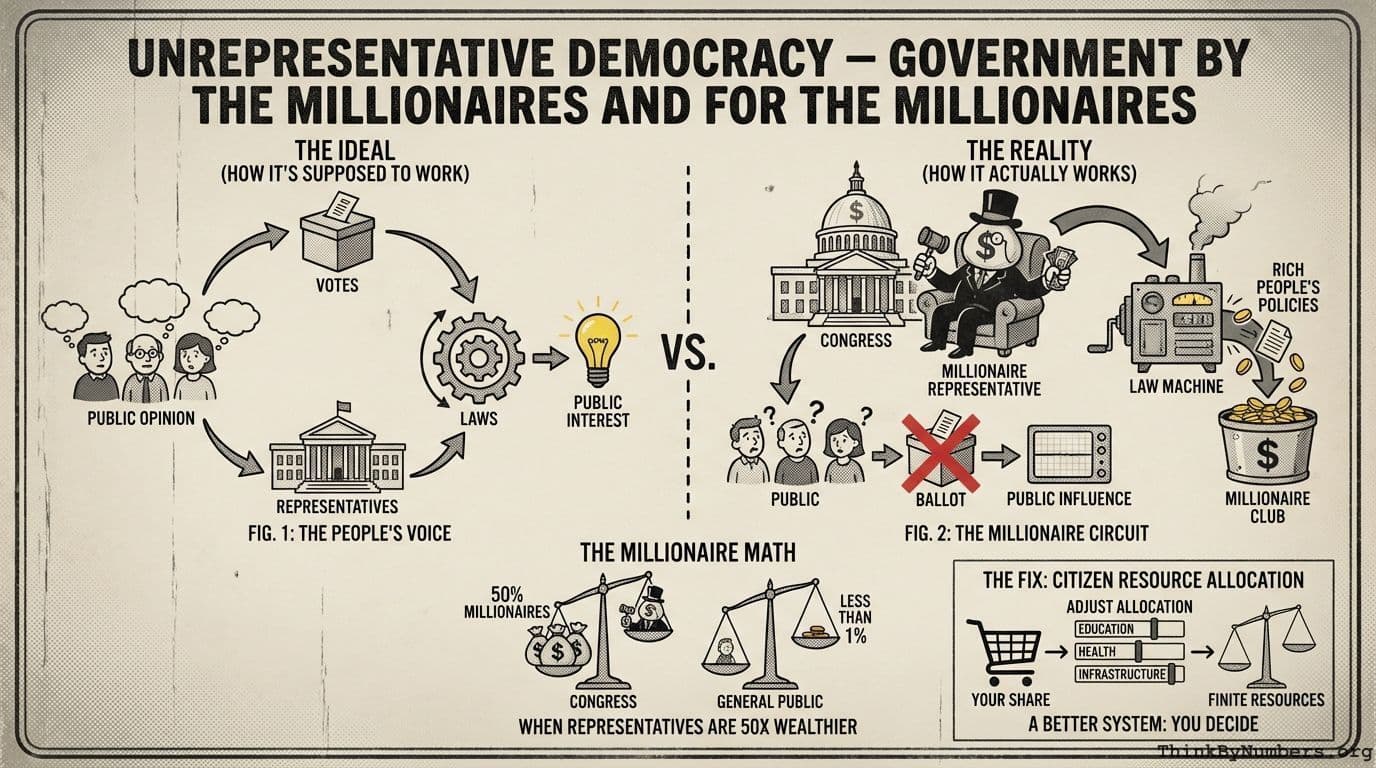
Unrepresentative Democracy – Government by the Millionaires and for the Millionaires
Half of Congress are millionaires vs 1% of population. When representatives are 50X wealthier than you, they represent millionaires. Shocking discovery.
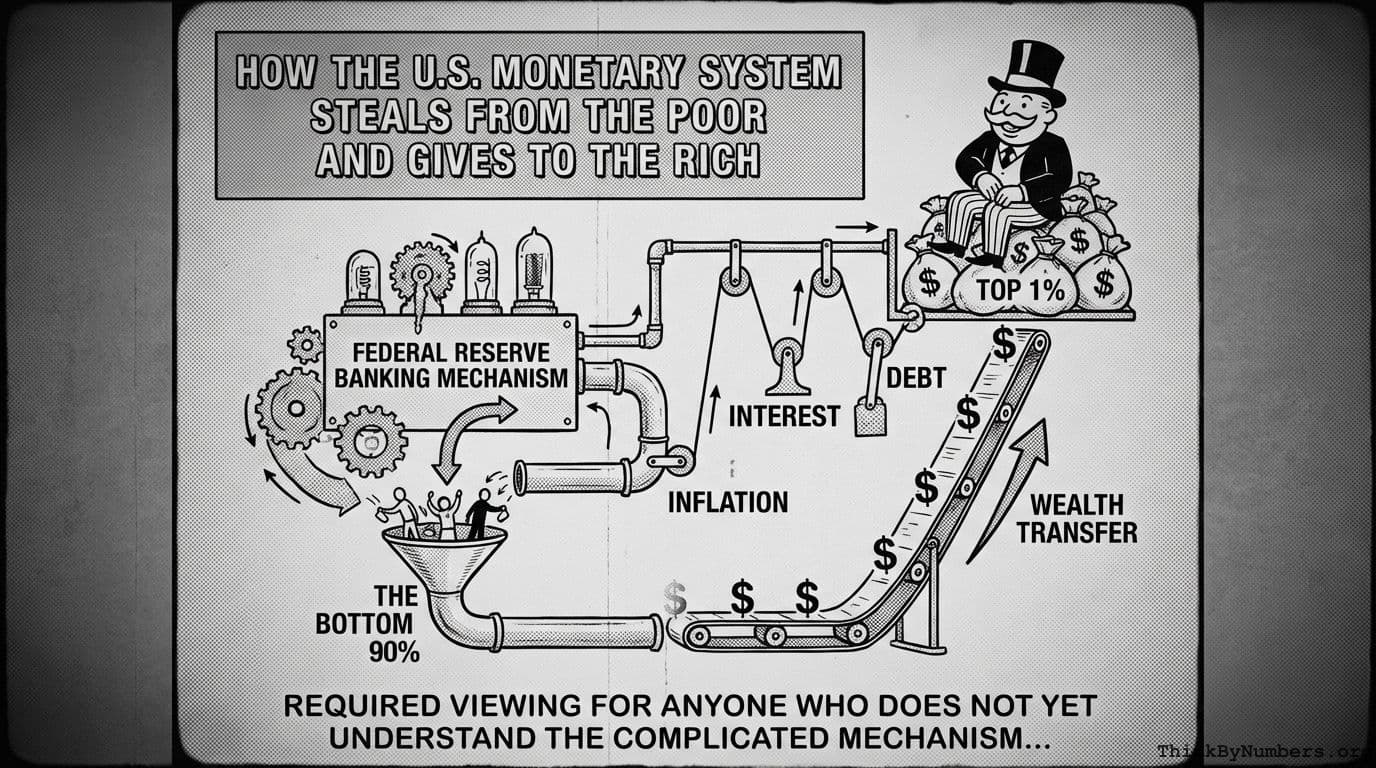
How the US Monetary System Steals from the Poor and Gives to the Rich
Banking system mechanism transfers wealth from those at bottom to those at top through inflation and fiat money creation. Watch how the con works in this explainer.
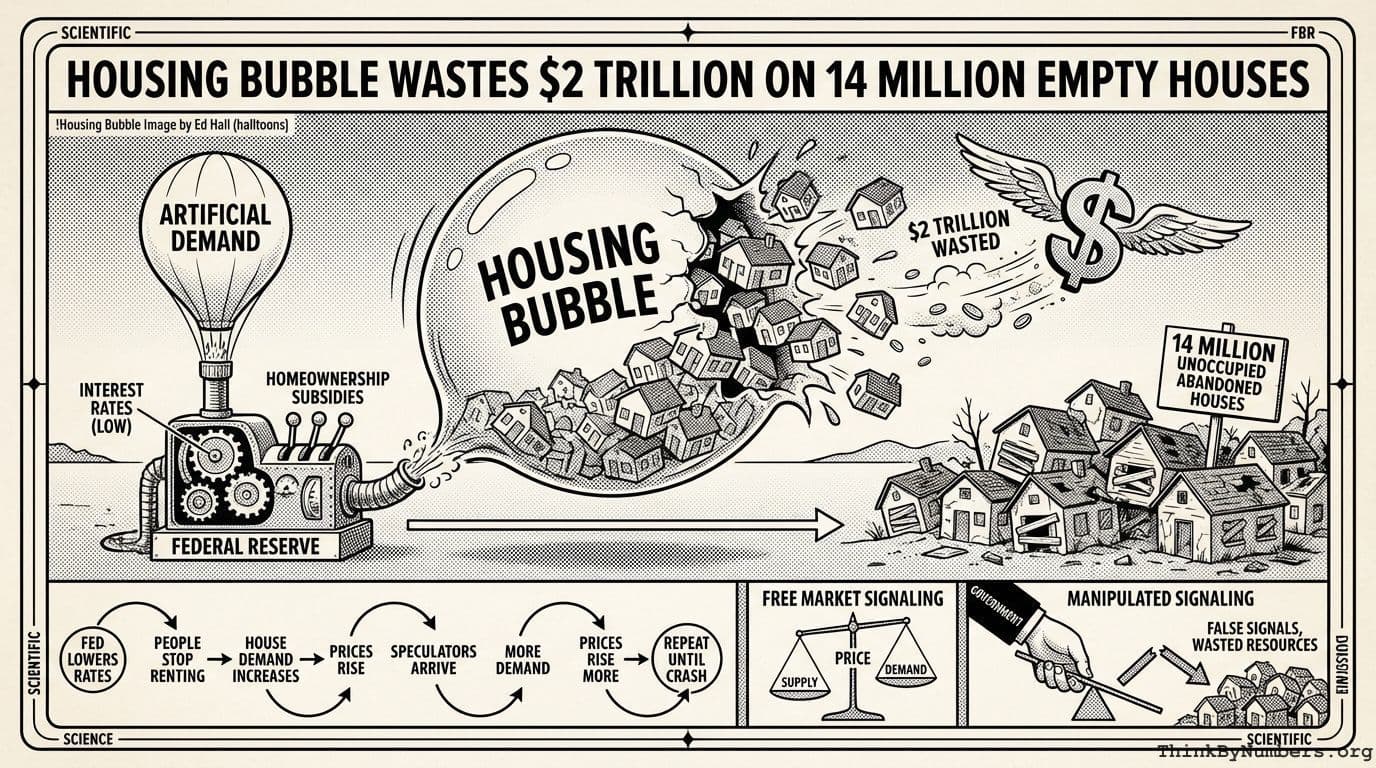
Housing Bubble Wastes $2 Trillion on 14 Million Empty Houses
Americans built 14 million empty houses costing $2 trillion because the Fed made borrowing artificially cheap. The government's success destroyed wealth on a massive scale.
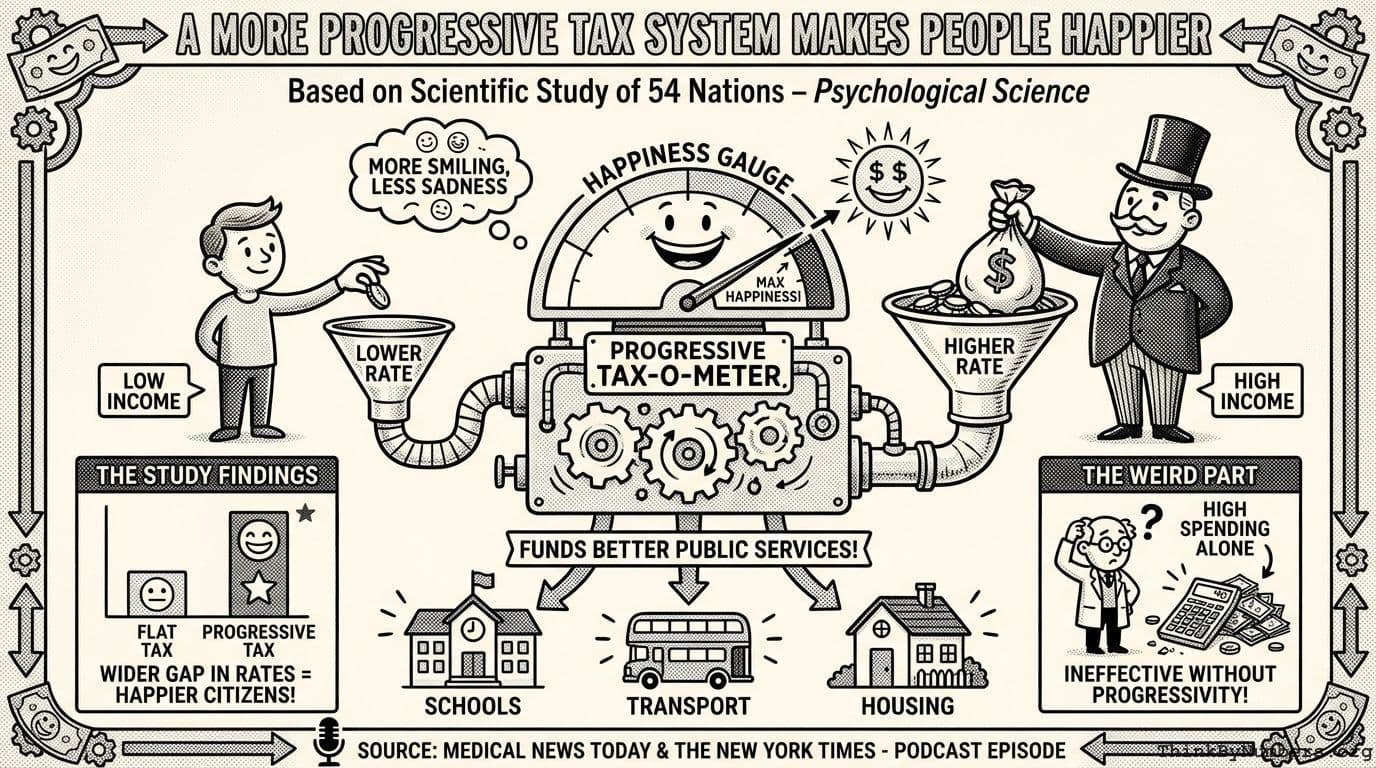
A More Progressive Tax System Makes People Happier
Study of 59,634 people in 54 countries proves progressive taxes make people happier—they report better life satisfaction and respect than flat-tax countries.

A More Progressive Tax System Makes People Happier
Study of 59,634 people in 54 countries proves progressive taxes make people happier—they report better life satisfaction and respect than flat-tax countries.
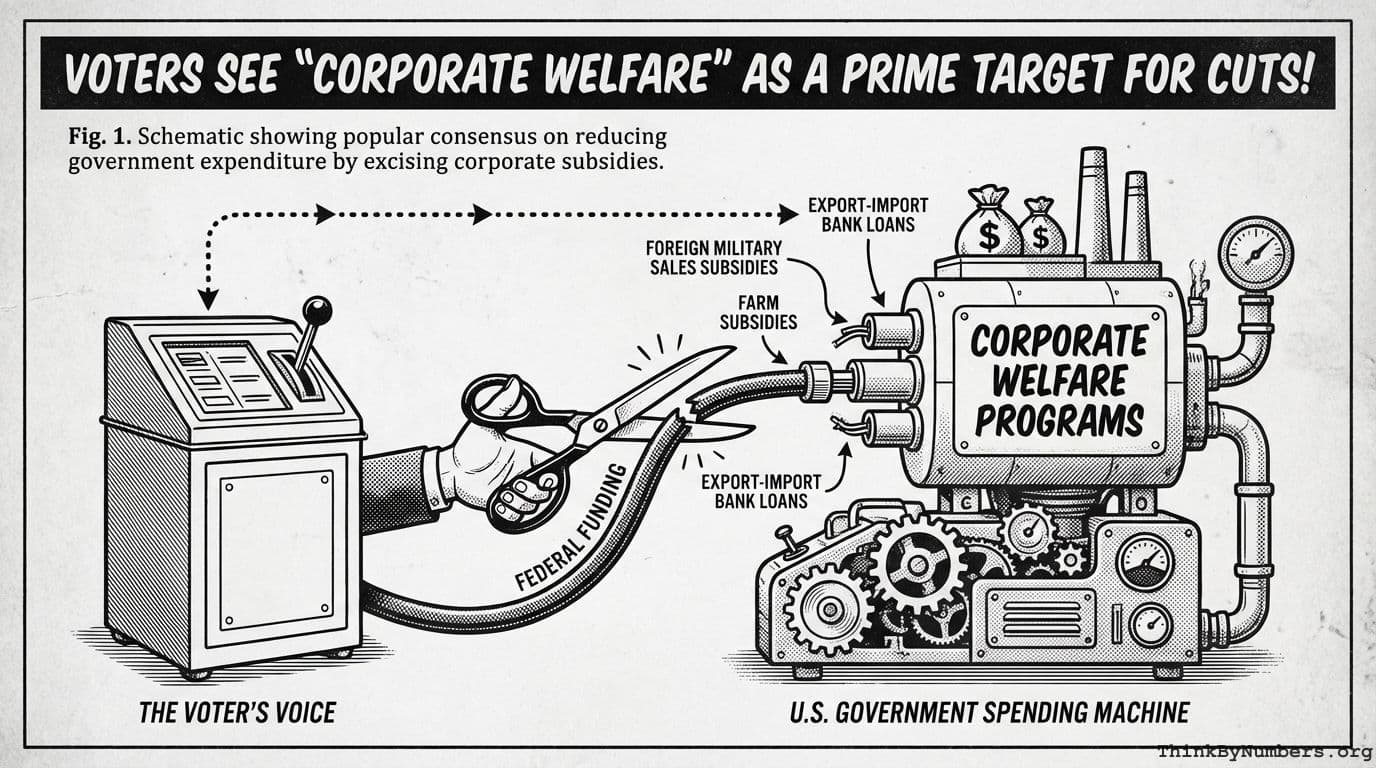
Voters See 'Corporate Welfare' Programs As A Good Place To Cut Government Spending
70% oppose weapons subsidies, 46% oppose farm subsidies. Government does it anyway. Democracy works perfectly if you order cinder blocks not pizza.
Voters See 'Corporate Welfare' Programs As A Good Place To Cut Government Spending
70% oppose weapons subsidies, 46% oppose farm subsidies. Government does it anyway. Democracy works perfectly if you order cinder blocks not pizza.
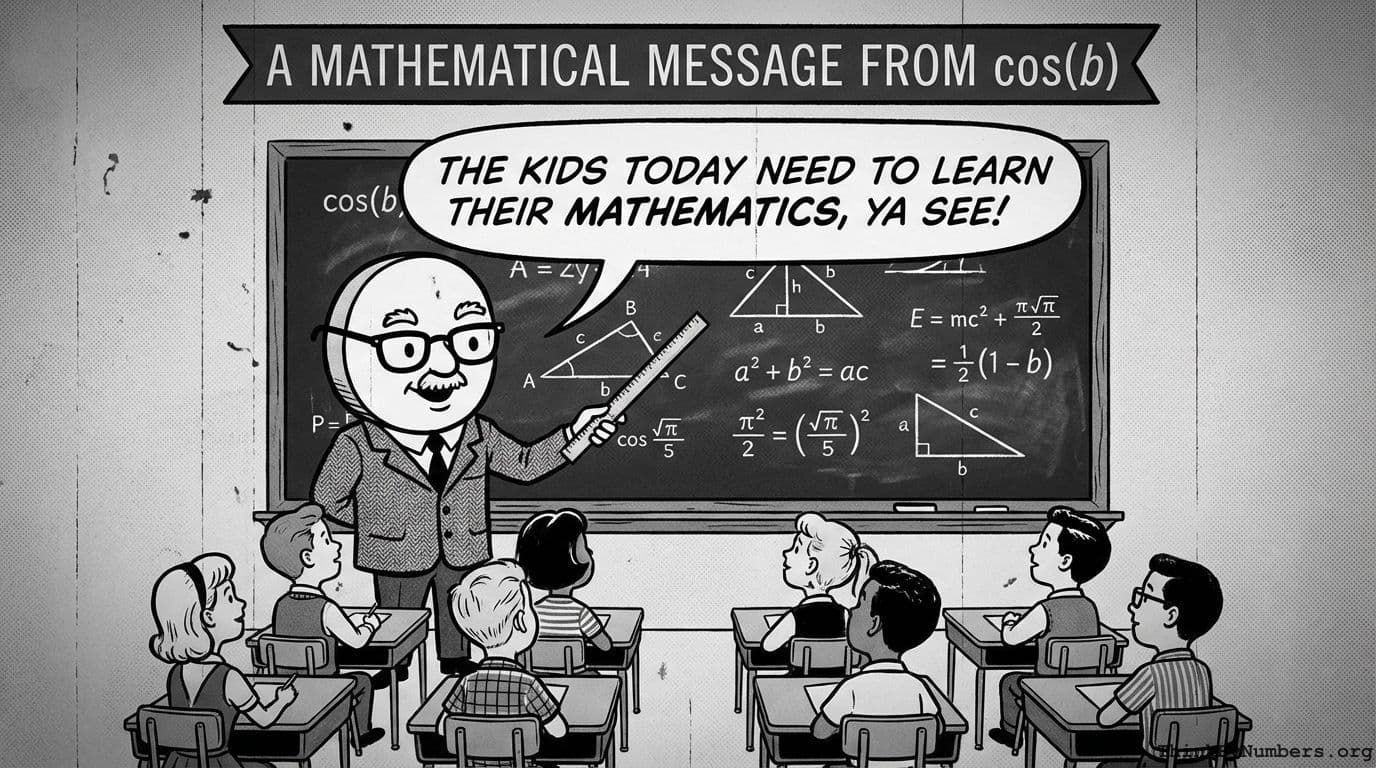
cos(b) says,
cos(b) can't be both square and a trigonometric function. Cosby's geometry fails in three dimensions, possibly four.
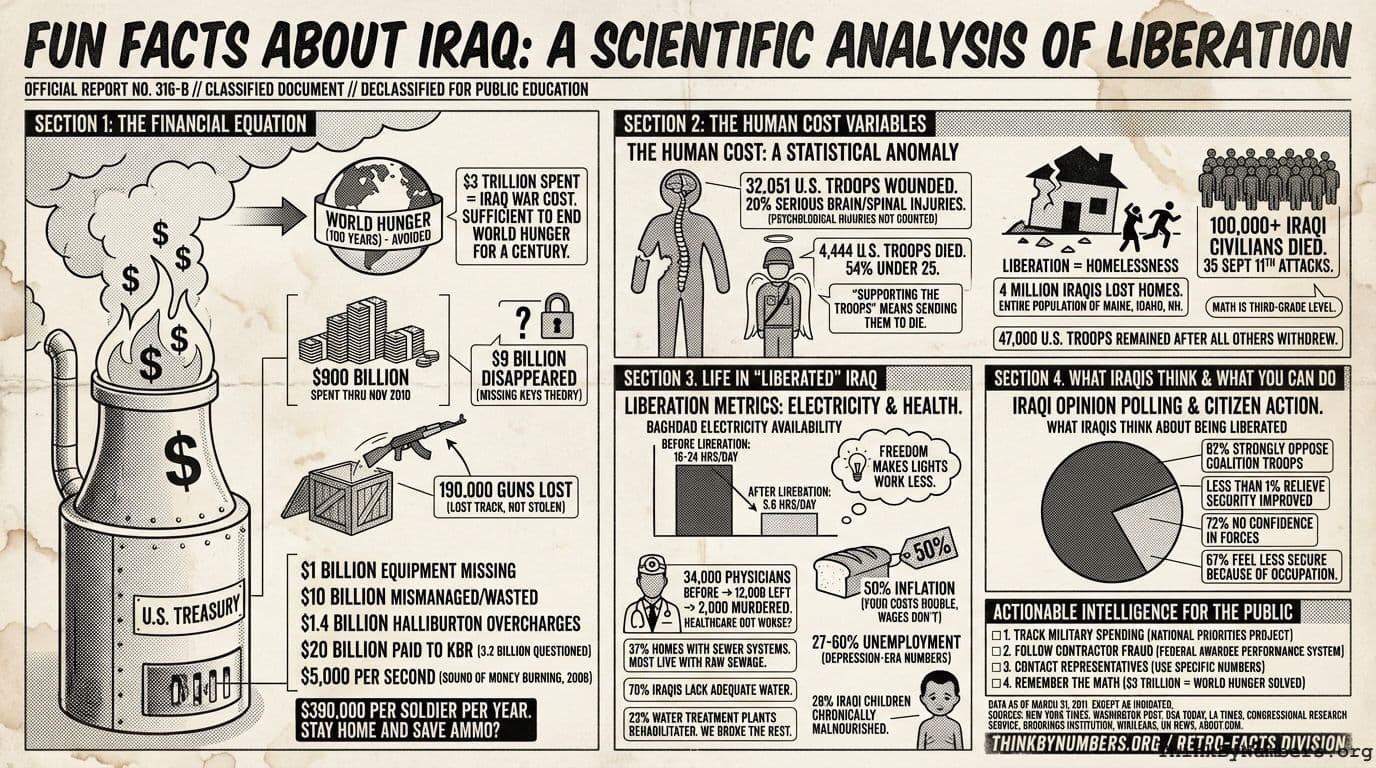
Fun Facts About Iraq
Iraq War cost $3 trillion, enough to end world hunger for 100 years. We chose to make 4 million Iraqis homeless instead.
Fun Facts About Iraq
Iraq War cost $3 trillion, enough to end world hunger for 100 years. We chose to make 4 million Iraqis homeless instead.
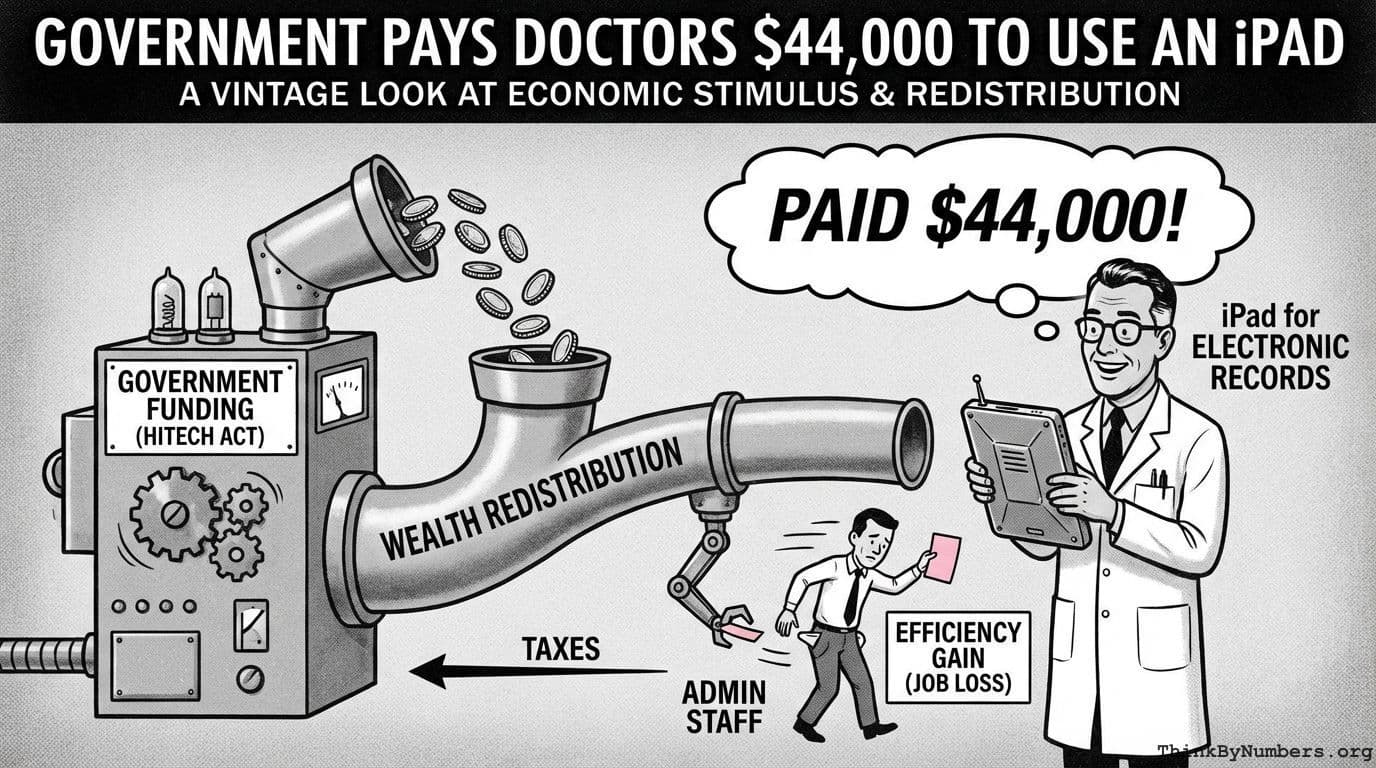
Government Pays Doctors $44,000 to Use an iPad
Government gave doctors earning $200k up to $44k for iPads costing $500. Took taxes from staff making $25/hour who then lost jobs to the technology.
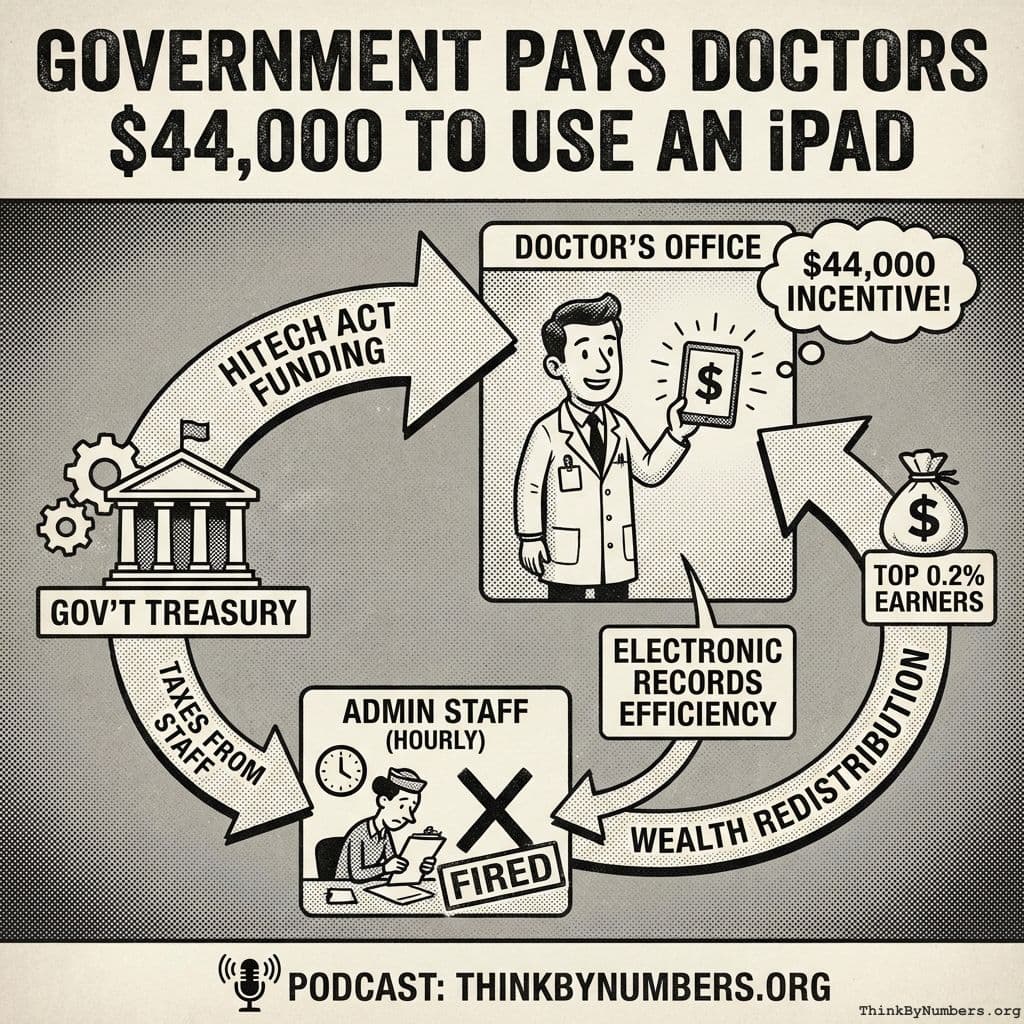
Government Pays Doctors $44,000 to Use an iPad
Government gave doctors earning $200k up to $44k for iPads costing $500. Took taxes from staff making $25/hour who then lost jobs to the technology.
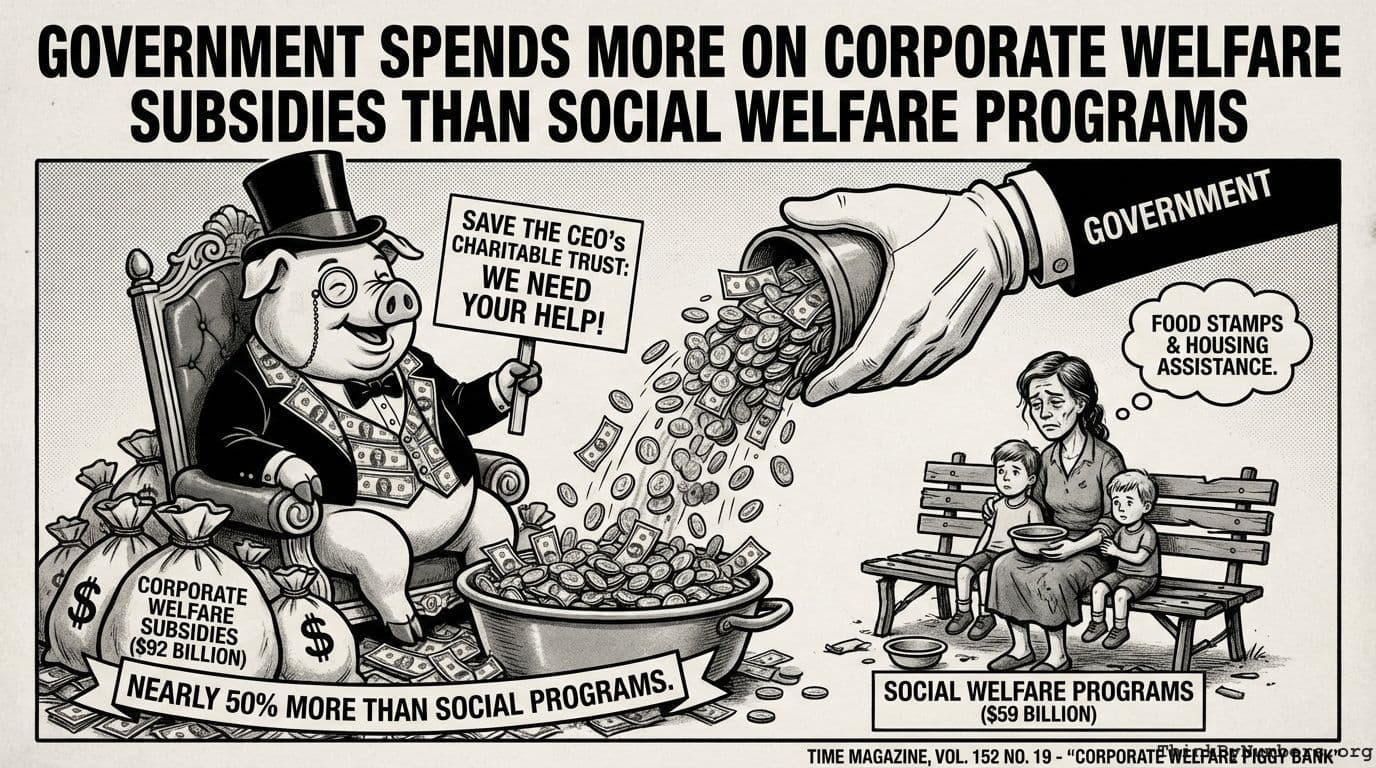
Government Spends More on Corporate Welfare Subsidies than Social Welfare Programs
US spends $92 billion on corporate welfare vs $59 billion on food stamps. CEOs need help buying medium-sized yachts apparently.
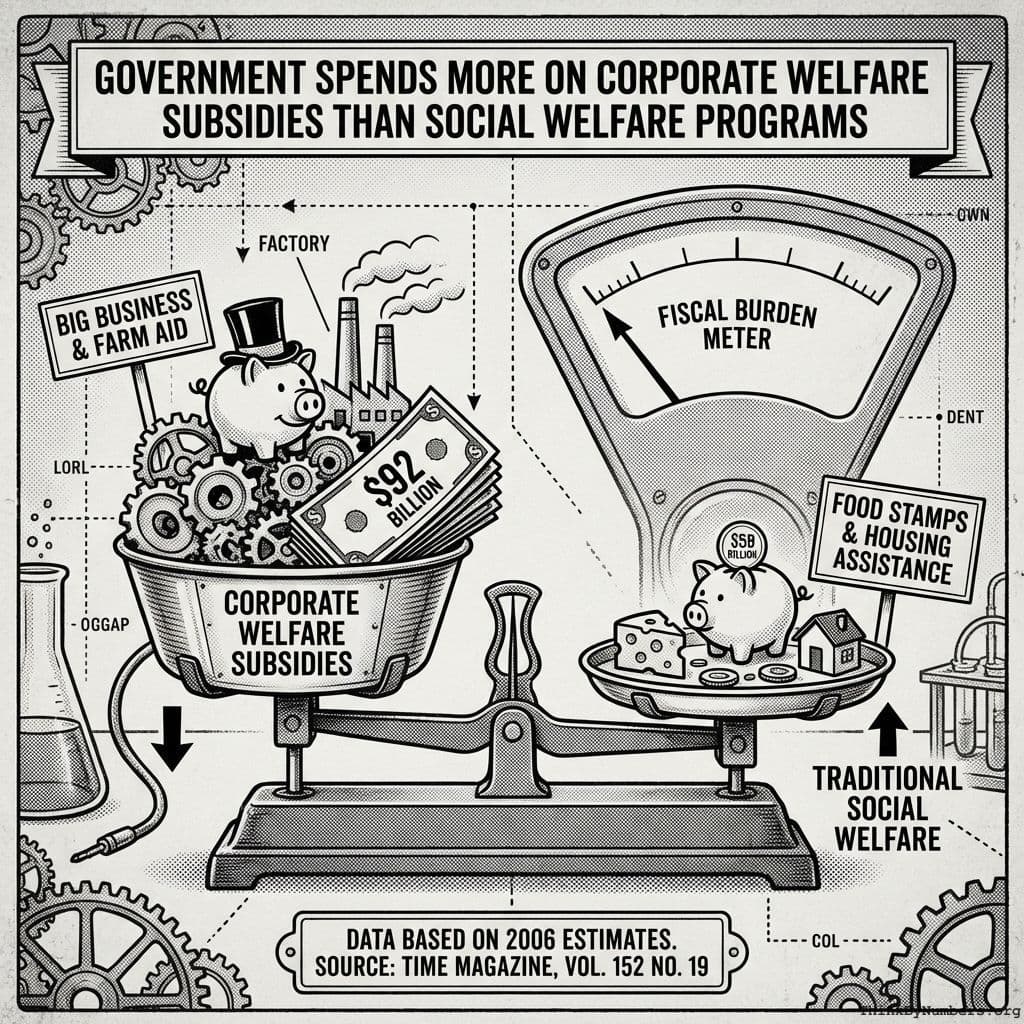
Government Spends More on Corporate Welfare Subsidies than Social Welfare Programs
US spends $92 billion on corporate welfare vs $59 billion on food stamps. CEOs need help buying medium-sized yachts apparently.
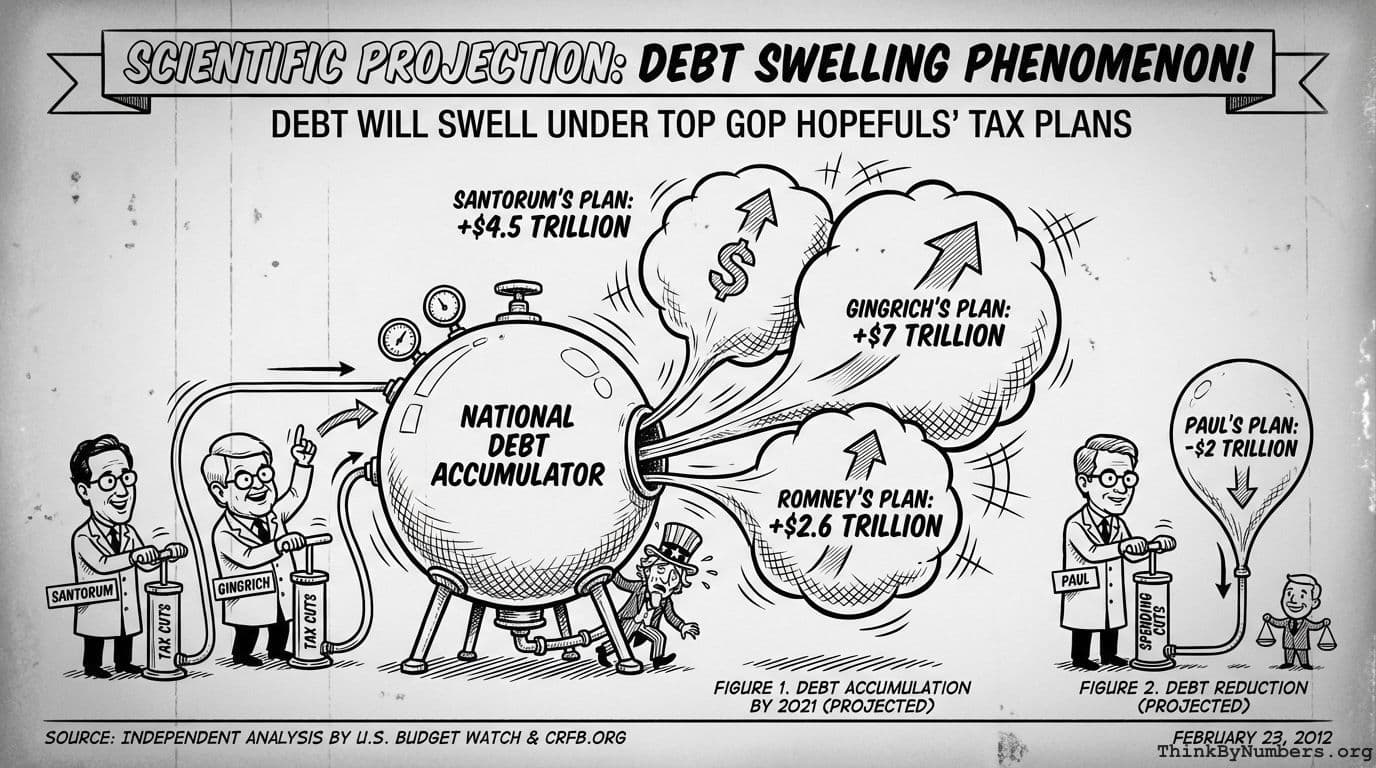
Debt Will Swell Under Top GOP Hopefuls' Tax Plans
Gingrich's plan adds $7 trillion to debt while calling himself fiscal conservative—like buying a Ferrari on credit card and negotiating the interest rate.
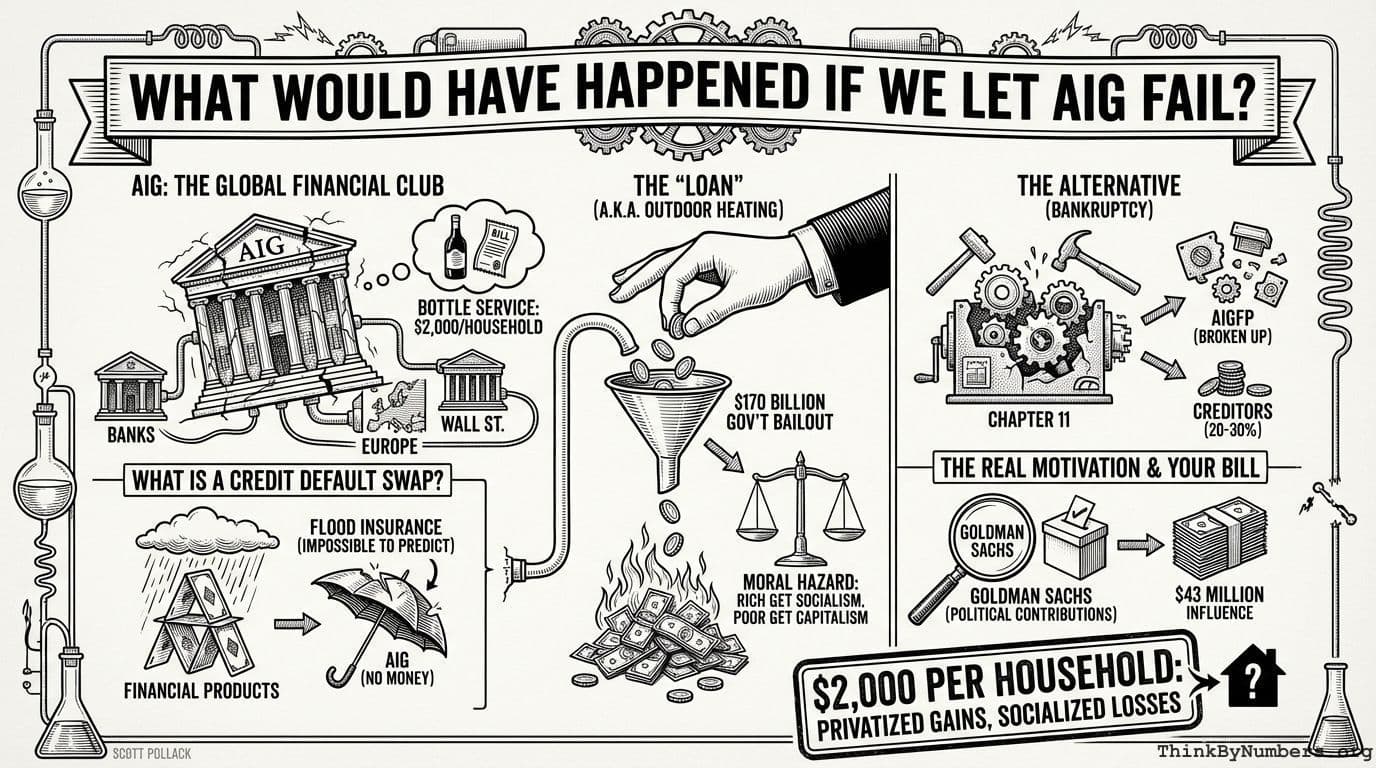
What Would Have Happened If We Let AIG Fail?
AIG bailout cost $2,000 per household. Goldman gave Obama $43 million, got billions back. Like ordering bottle service except you weren't at club.
What Would Have Happened If We Let AIG Fail?
AIG bailout cost $2,000 per household. Goldman gave Obama $43 million, got billions back. Like ordering bottle service except you weren't at club.
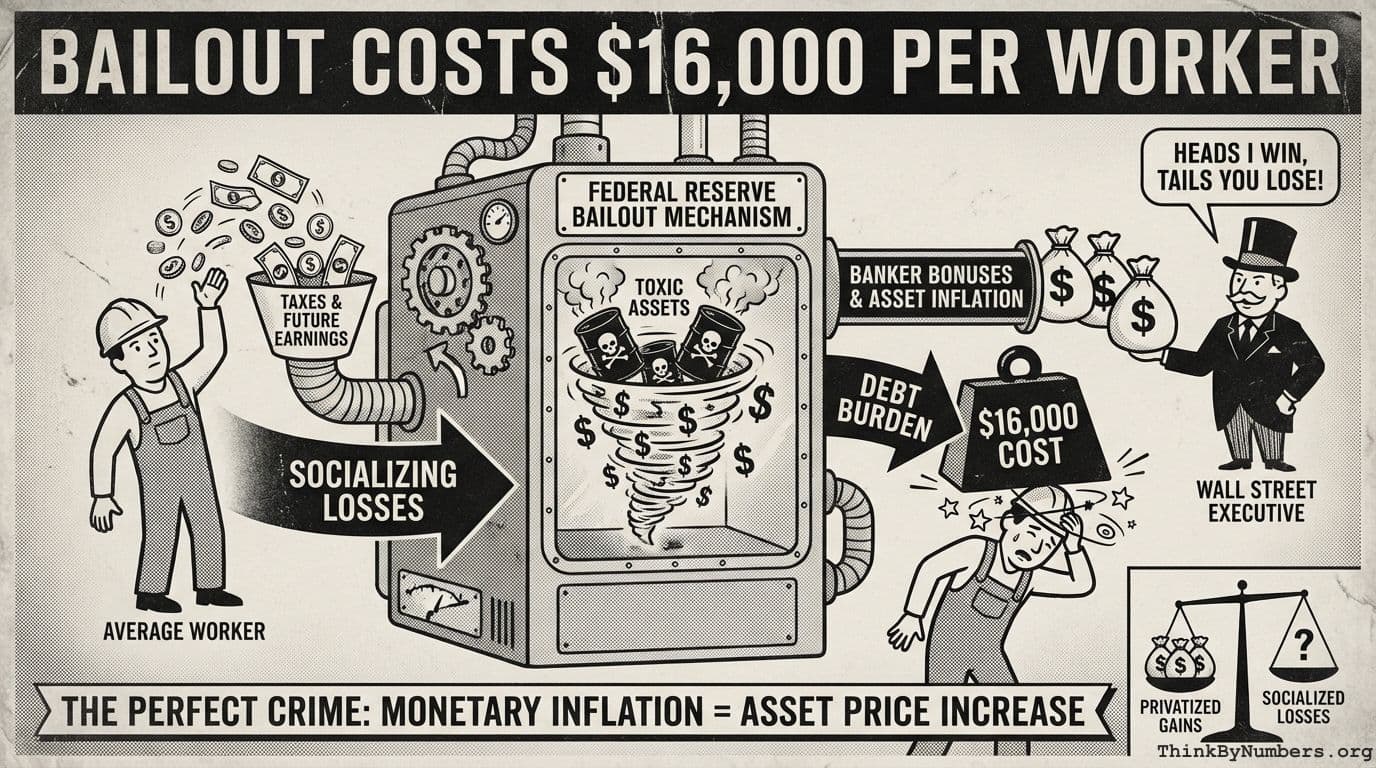
Bailout Costs $16,000 per Worker
Fed printed $6 trillion for bank bailouts. Stock prices soared, rich got richer, poor can't afford houses. Inflation only 1.5% though.
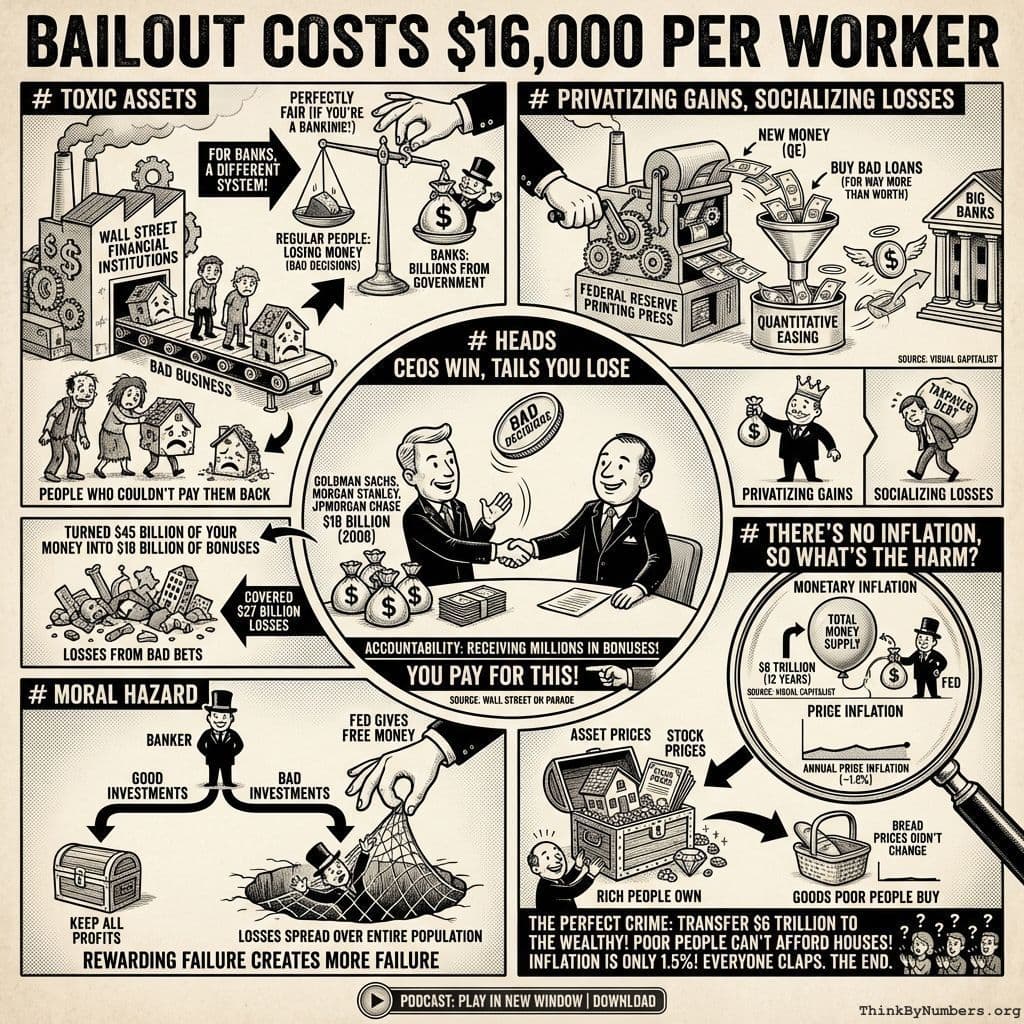
Bailout Costs $16,000 per Worker
Fed printed $6 trillion for bank bailouts. Stock prices soared, rich got richer, poor can't afford houses. Inflation only 1.5% though.
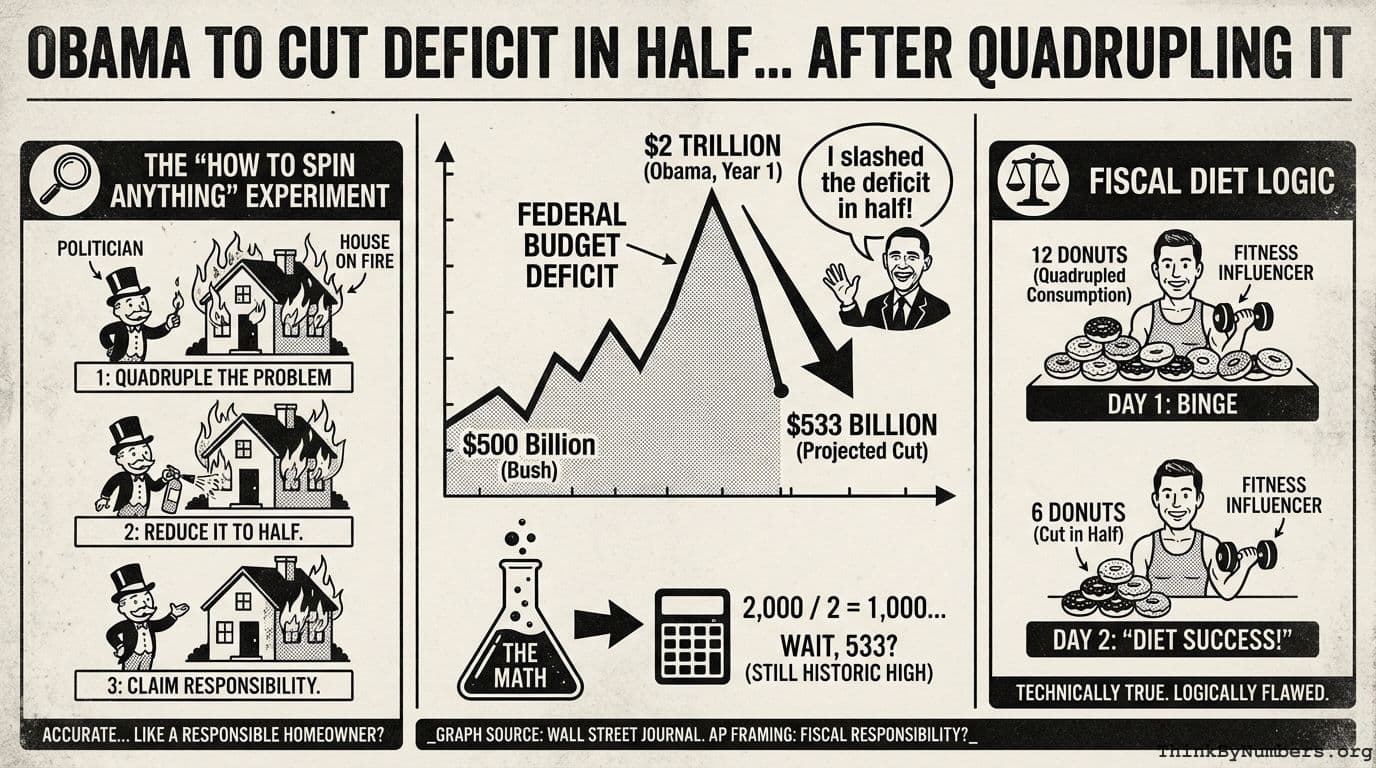
Obama to cut deficit in half... After quadrupling it.
Obama quadrupled deficit to $2 trillion, then cut to $533 billion. Media called it fiscal responsibility. Like setting house on fire then putting out half.
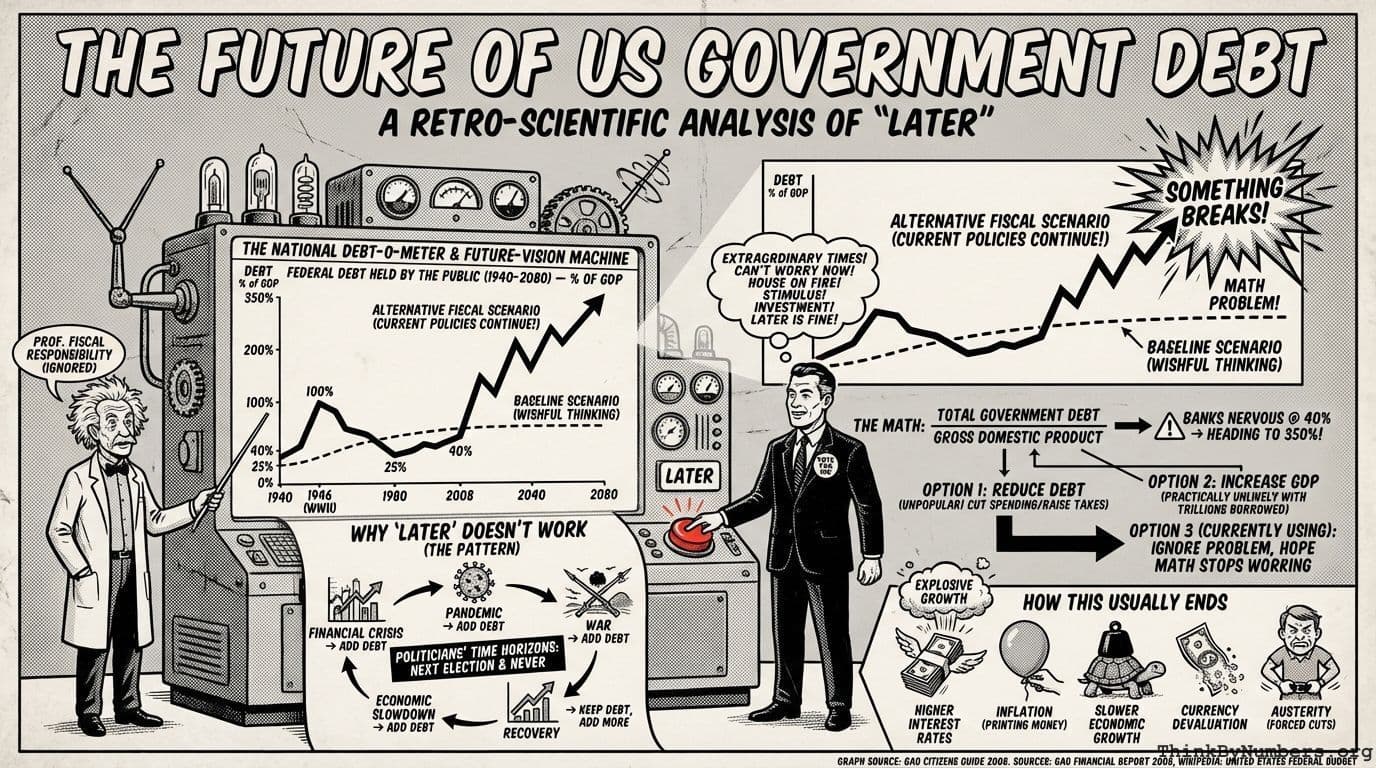
The Future of US Government Debt
Debt projected to reach 350% of GDP by 2080 if policies continue unchanged. It's not a prediction; it's a math problem with one solution: something breaks.
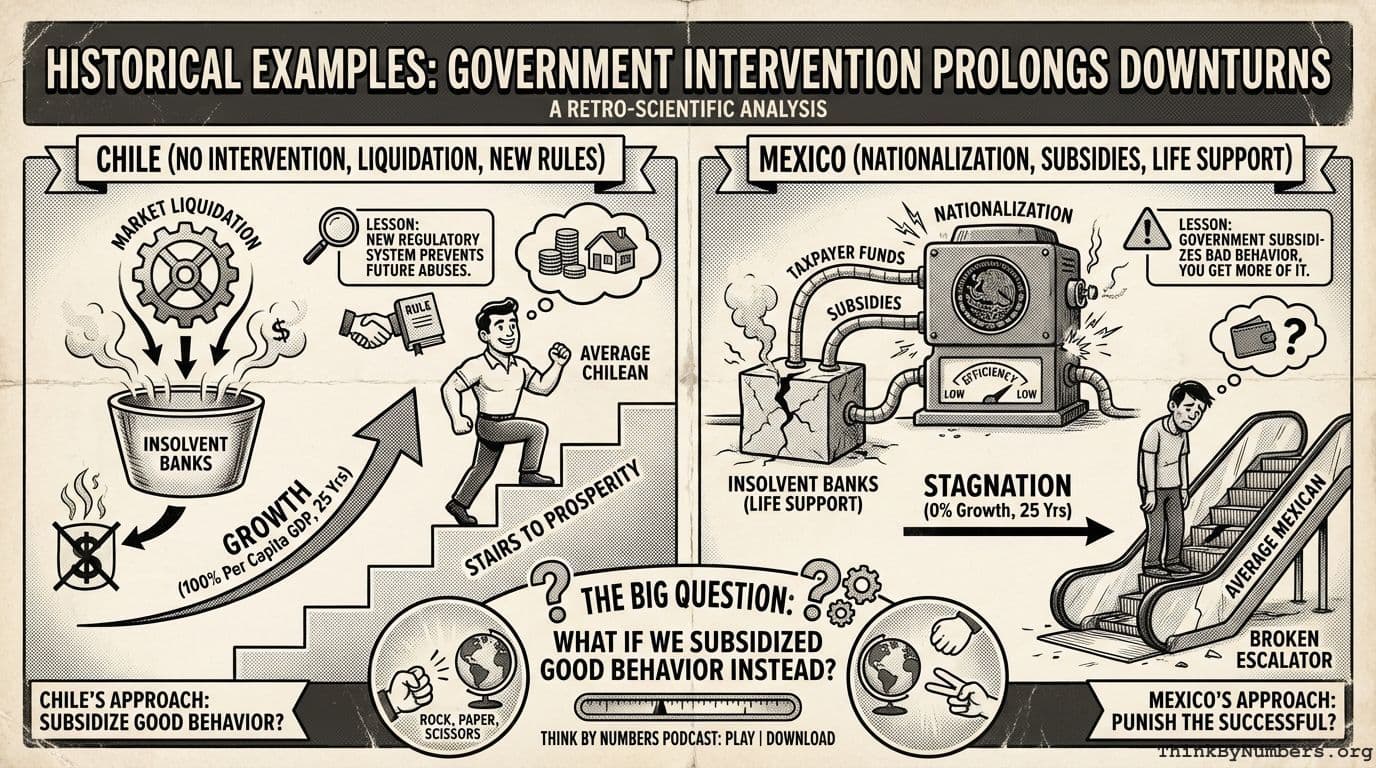
Historical Examples Show Government Intervention Only Prolongs Economic Downturns
Chile recovered from 1982 crisis in 2.5 years without bailouts. Mexico took 7 years with intervention. Government stimulus is like using a flamethrower to put out a fire.
The Future of US Government Debt
Debt projected to reach 350% of GDP by 2080 if policies continue unchanged. It's not a prediction; it's a math problem with one solution: something breaks.
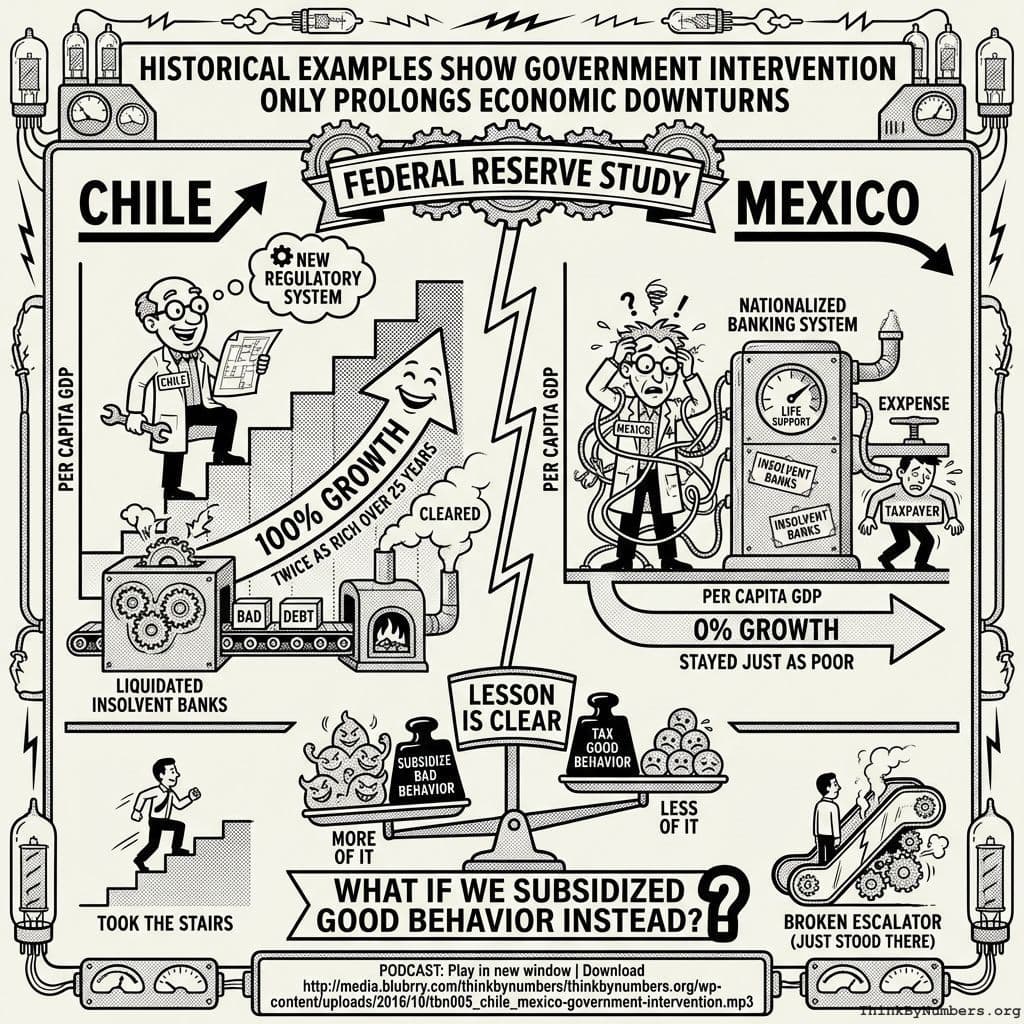
Historical Examples Show Government Intervention Only Prolongs Economic Downturns
Chile recovered from 1982 crisis in 2.5 years without bailouts. Mexico took 7 years with intervention. Government stimulus is like using a flamethrower to put out a fire.
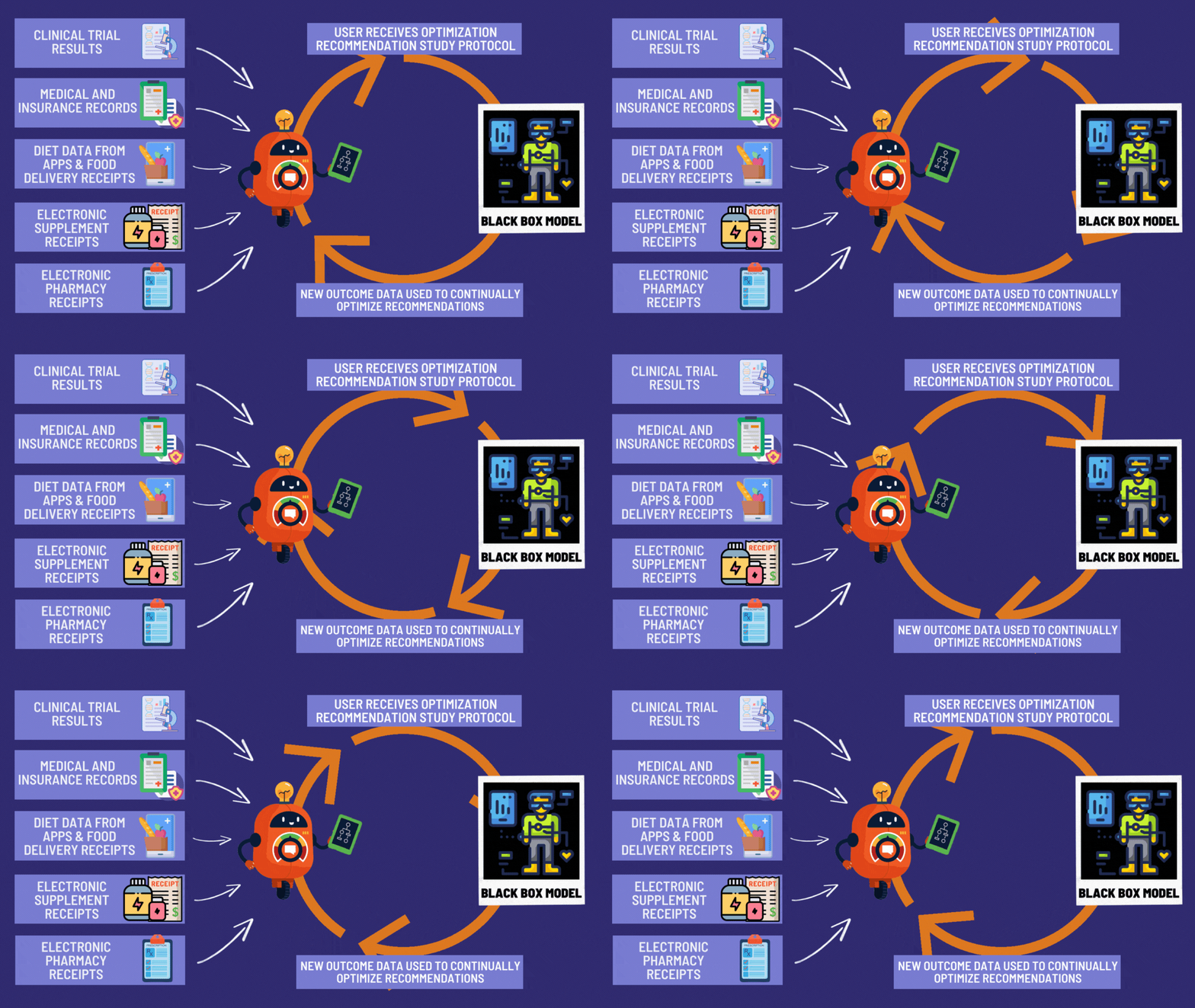

QuantiModo
Automating clinical research through the open-source dFDA ecosystem. Accelerating the discovery of treatments for 7,000+ diseases through automated data collection, causal inference analysis, and effortless clinical trials. We want everyone to have their own personalized agentic FDAi agent to autonomously discover the positive and negative effects of every food and drug in the world!

The Empirical Deficit that Plagues Modern Psychiatry
Why psychiatry needs more data: comparing the rigorous quantitative methods used in industrial testing to the subjective approaches in mental health treatment.

9 Barriers to the Eradication of Mental Illness and How We Can Overcome Them
9 key barriers to ending mental illness: high treatment costs, lack of research funding, stigma, and more. Learn how data-driven approaches can help solve these challenges.
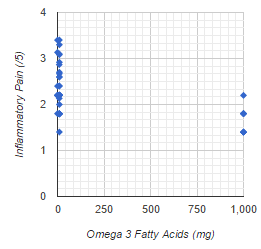
HIGHER Omega 3 Fatty Acid Intake Predicts LOWER Inflammatory Pain
N=1 study showing higher Omega-3 fatty acid intake predicts lower inflammatory pain (R=-0.504, p<0.001). Fish oil supplementation correlated with reduced inflammation.
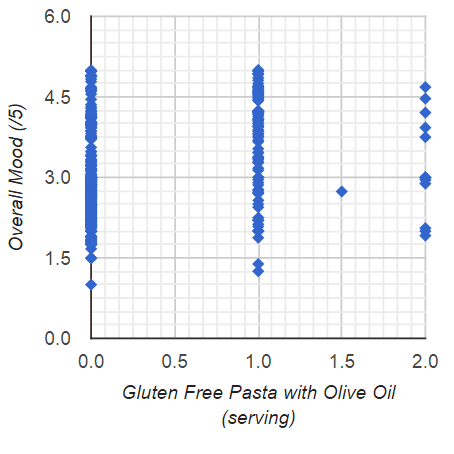
HIGHER Gluten Free Pasta with Olive Oil predicts HIGHER Overall Mood
N=1 study showing gluten-free pasta with olive oil predicts higher overall mood (R=0.5, p<0.001). Gluten-free diet correlated with improved emotional wellbeing.
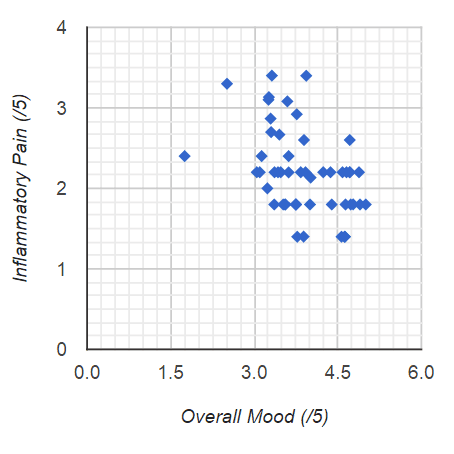
HIGHER Overall Mood predicts LOWER Inflammatory Pain
N=1 study showing higher overall mood predicts lower inflammatory pain (R=-0.343, p=0.001). Inflammatory pain was 13% higher after low mood (3.54/5) vs 9% lower after high mood (4.14/5).
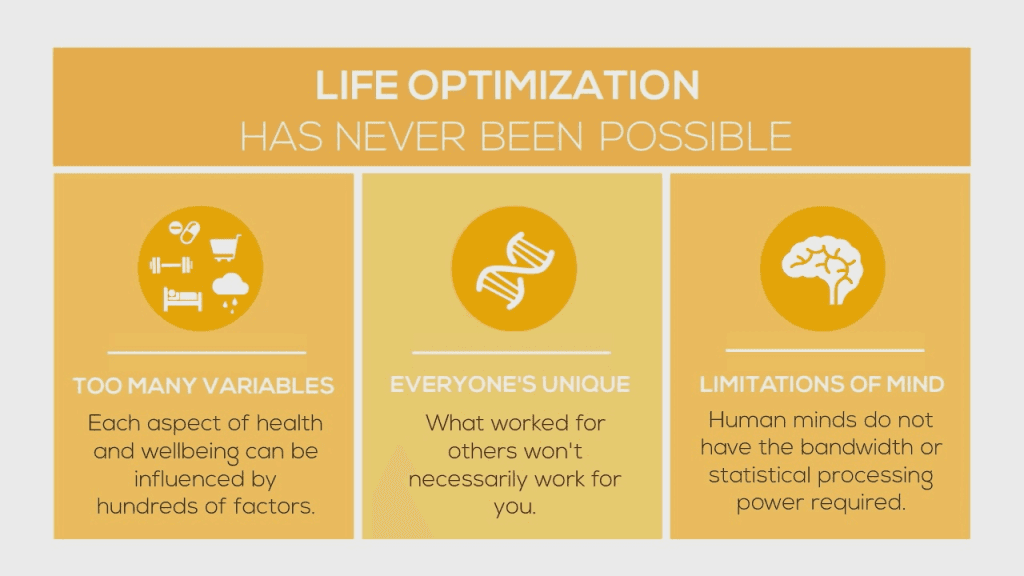
Analytics Engine
QuantiModo Analytics Engine: Machine learning algorithms that analyze health data to discover correlations between treatments, behaviors, and outcomes.
Instantly Aggregate Your Users' Data
Integration is easy with the framework's libraries in Ruby, PHP, Java, Android, iOS, and Windows.
Revolutionizing Social-Science Experimentation
Design your experiment. Run your experiment. Analyze your data. All in one place.


Wishonia
Using collective intelligence to maximize median health and happiness.
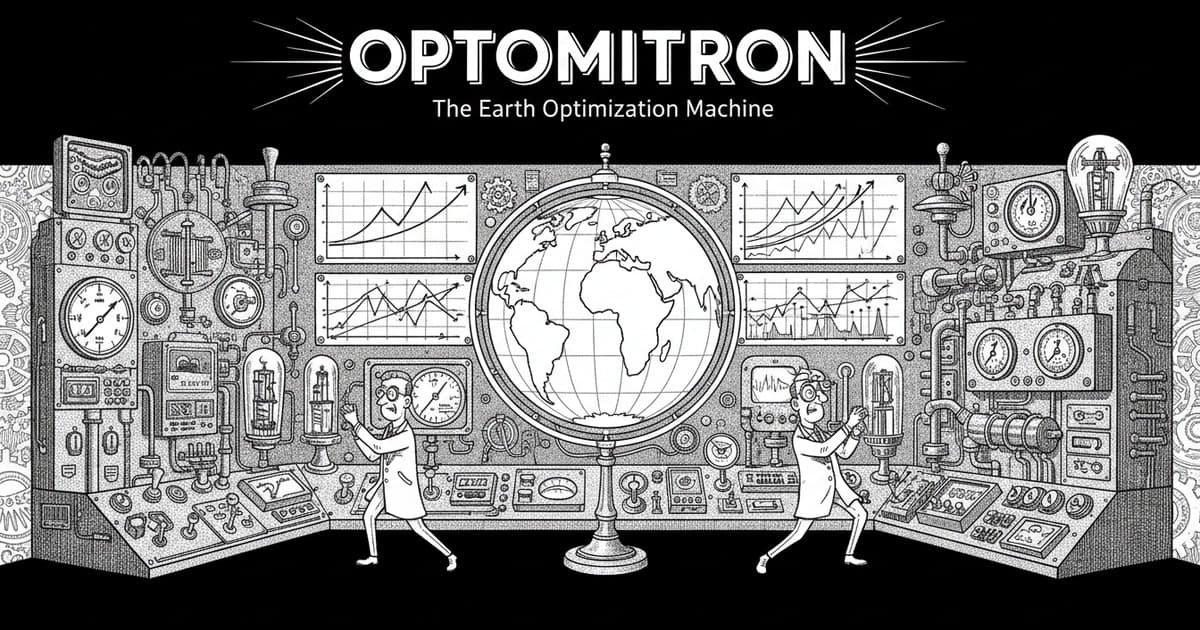
Optimitron
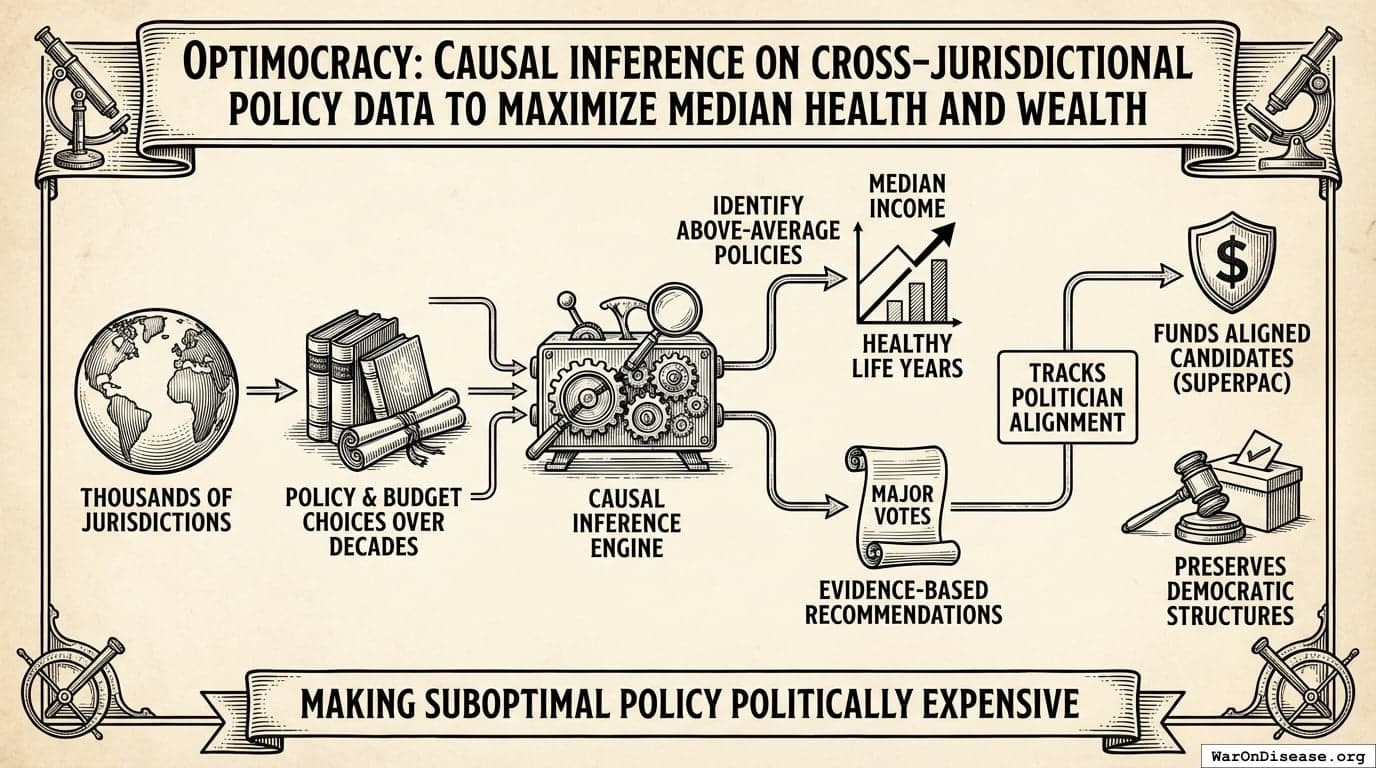
An open-source platform that uses causal inference to figure out which policies actually save lives instead of just sounding good at press conferences. Analyzed 11 natural experiments and 14 policy areas across 50+ years. Found that Singapore gets better health outcomes at 4.1% GDP while the US spends 17.3% and somehow does worse. Portugal decriminalized drugs and deaths dropped 94%. Norway rehabilitates prisoners and recidivism dropped to 20% vs America's 76%. All of this data is freely available. Policymakers remain committed to vibes-based governance.
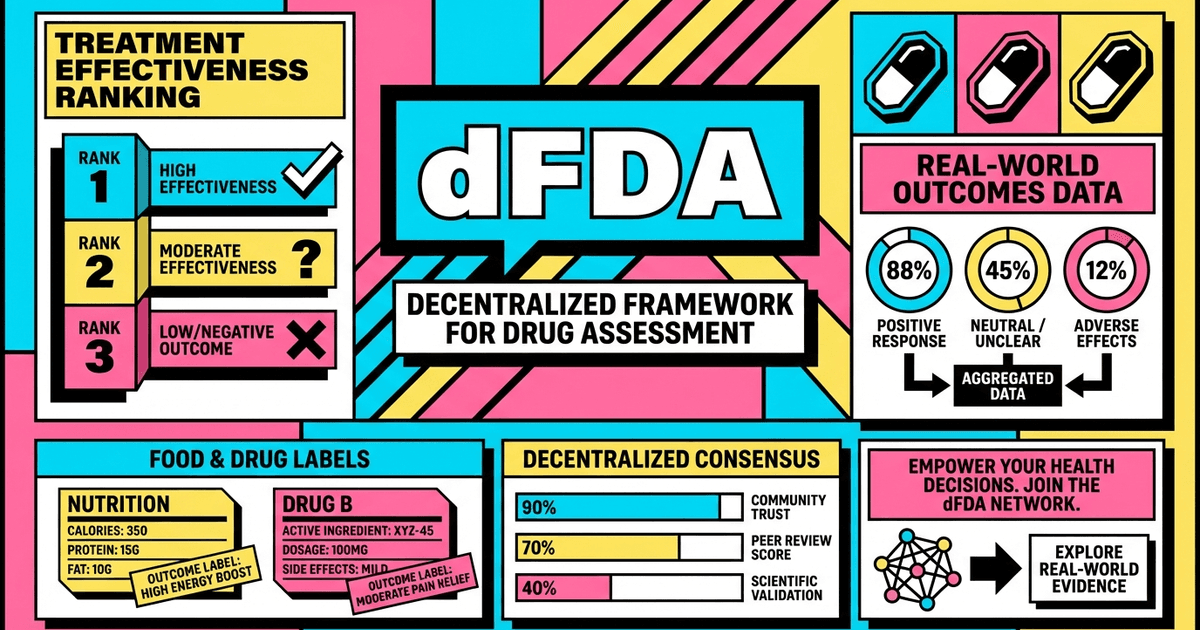
Decentralized FDA
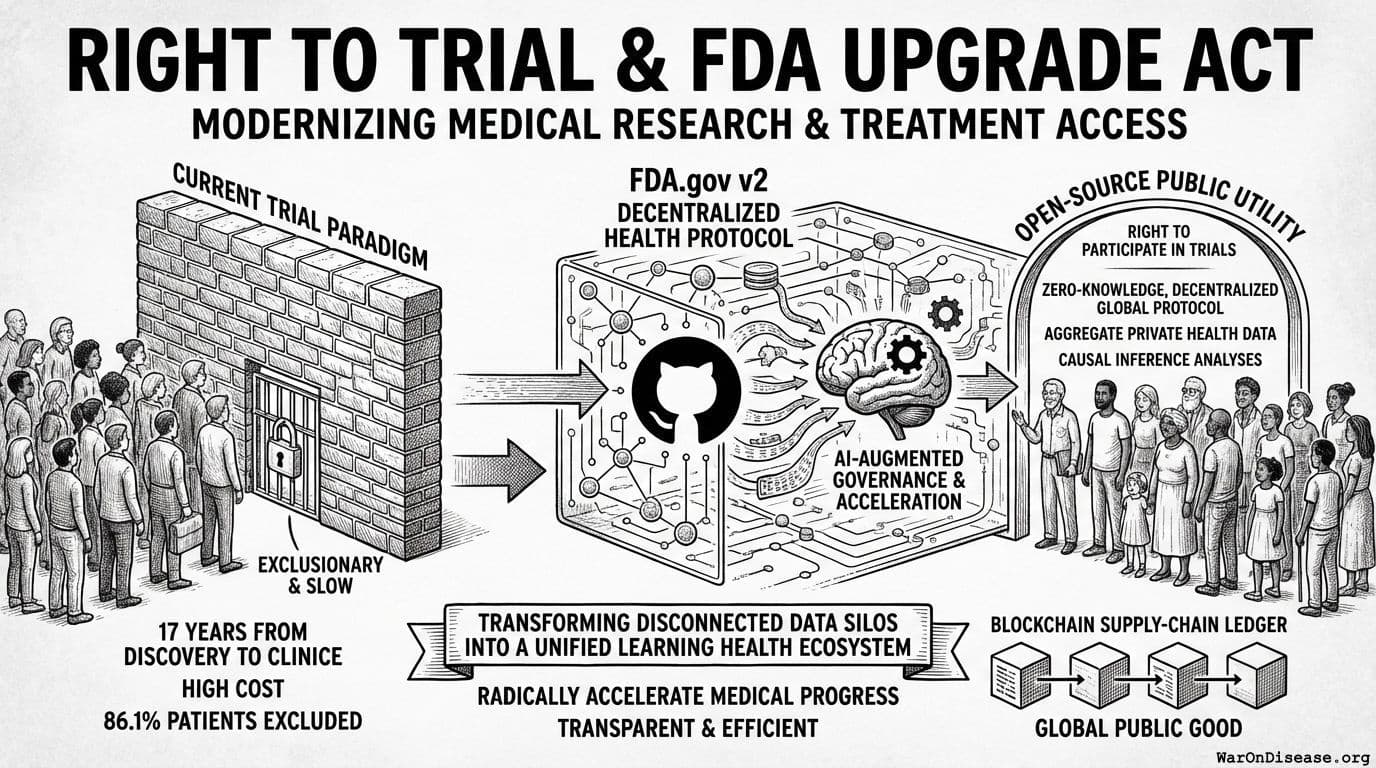
An open-source system for aggregating health data, analyzing it with causal-inference methods, and publishing reproducible evidence. The platform has generated 50,000+ observational studies from 14 million data points, meta-analyses for 90%+ of condition-treatment pairs, and treatment rankings for 100+ conditions. The goal is to make clinical discovery dramatically faster. At the current pace, testing the roughly 1.16 quadrillion possible drug combinations will finish in approximately never.
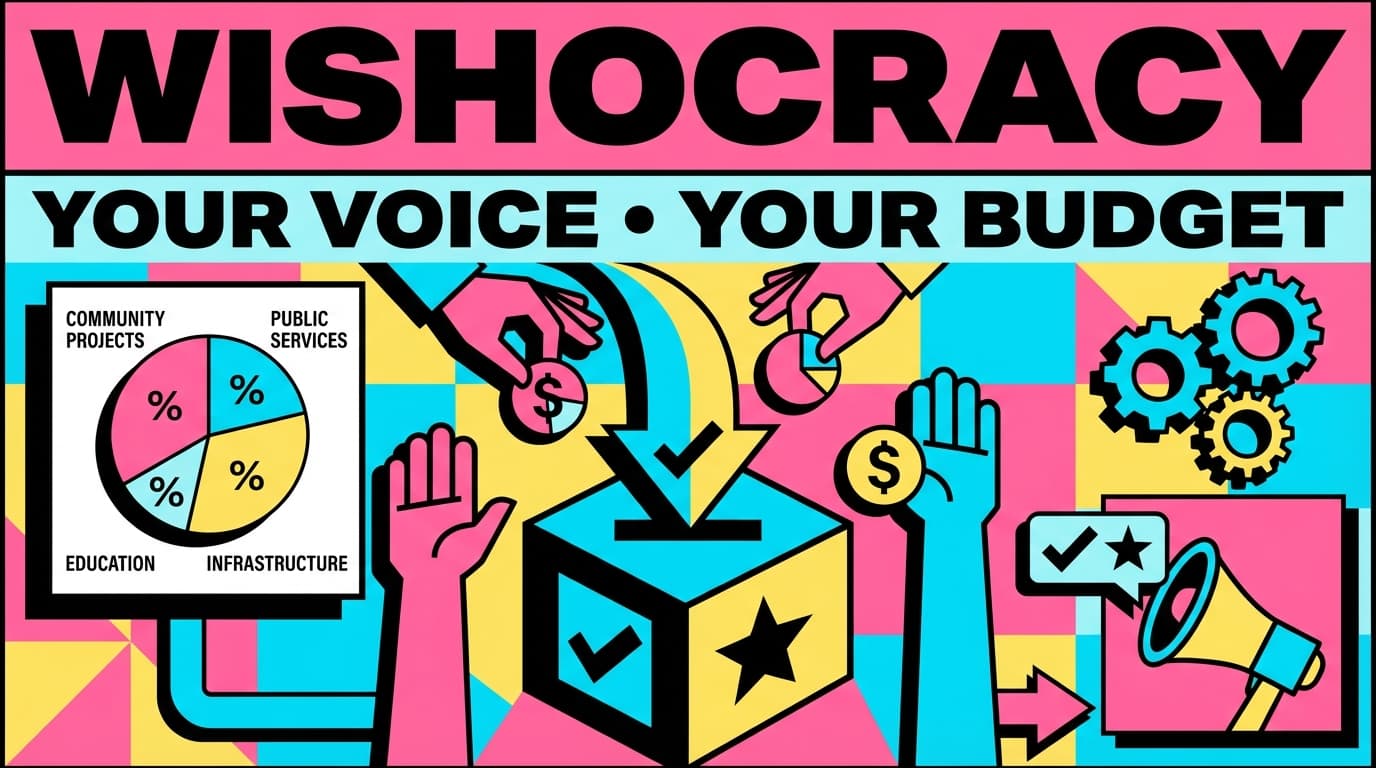
Wishocracy
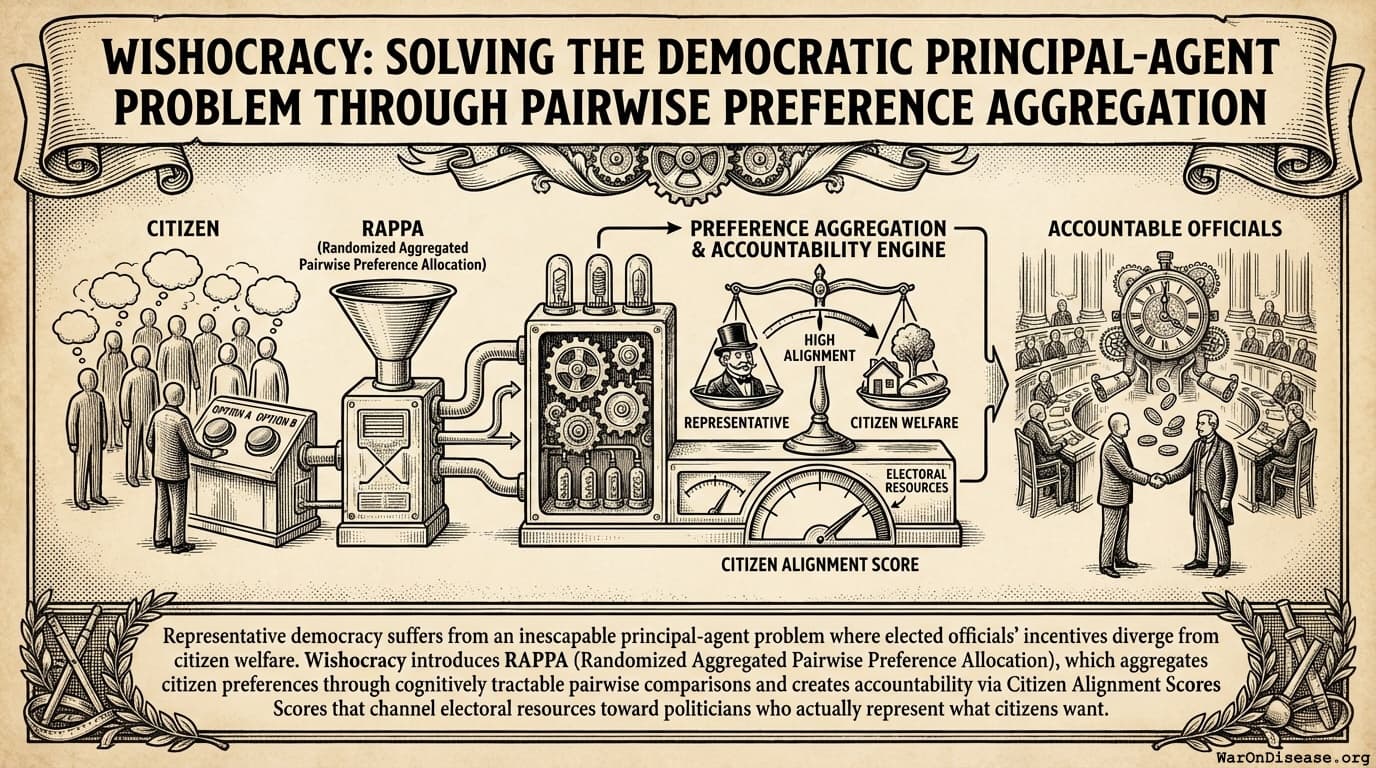
A governance mechanism called RAPPA that decomposes impossible budget decisions into simple pairwise slider comparisons. You spend 5-10 minutes doing ~20 comparisons. The eigenvector math does the rest. The US spends $886B on military vs $47B on NIH despite medical research having a 45:1 benefit-cost ratio vs military's 0.7:1. When Porto Alegre let citizens set priorities, water access went from 75% to 98% and schools quadrupled. Taiwan used pairwise comparison tools to resolve a 4-year regulatory deadlock. The math works. The political will remains theoretical.
How to End War and Disease
I helped an alien named WISHONIA write an instruction manual for humanity about how to stop spending 40x more on building Skynet than on curing the diseases that are dissolving you. The alien has been watching your planet since 1945 and is very concerned. Available in paperback, Kindle, free online, and as an audiobook podcast.
Global Survey on the 1% Treaty
Redirect 1% of global military spending to health research. Save 416 million lives. 700× more effective than current spending. I sent this proposal to everyone with the power to implement it. They have enthusiastically ignored me. When your last name is Sinn, you take validation wherever you can find it.

Think by Numbers
Data-driven policy analysis. Articles like 'The War on Drugs Increases Drug Deaths' and 'We Spend More on Corporate Welfare Than Social Welfare.' 2 million people read these. The policy remains exactly the same. But I made some really compelling charts and I stand by them.
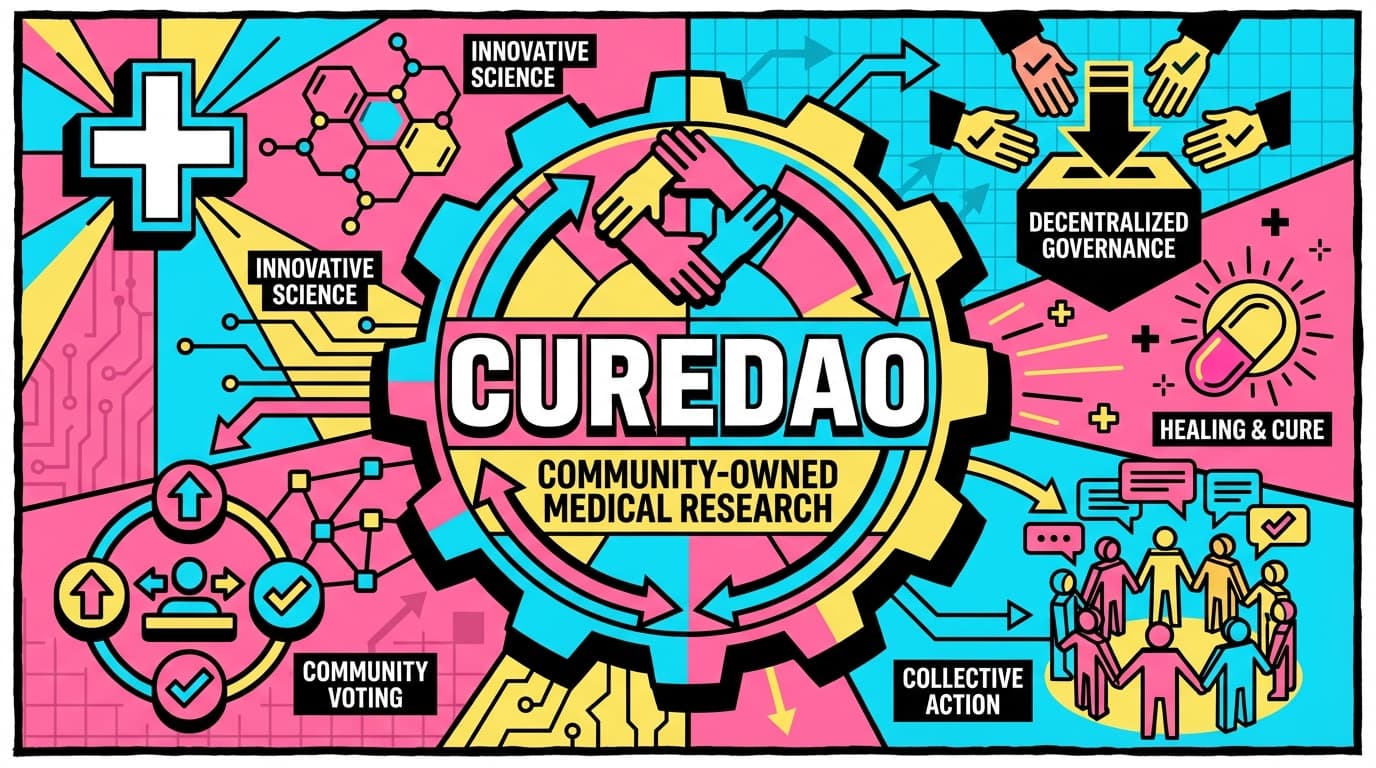
CureDAO
A DAO focused on clinical research. That's a lot of technical jargon, so let me translate: imagine if Wikipedia and a clinical trial had a baby that was raised by blockchain. The result is a platform where anyone can contribute to medical research without needing permission from a committee of very tired people in lab coats.
Wishonia
An autonomous agent platform where AI tries to solve global problems. The agents are very enthusiastic. Their success rate is still being calculated. But they never sleep and they never complain, which is more than I can say for myself.
Decentralized Institutes of Health
A hub for digital health intelligence. At some point I decided that having multiple platforms was a good idea. The jury is still out on this decision.

The Plutonium Kidz
The Plutonium Kidz were born of a secret government program involving the testing of plutonium exposure on human subjects. Through these experiments three normal children were thus transformed into the Plutonium Kidz! The government program, regrettably, remains classified.