About me,
unfortunately

Software engineer & economist spectacularly failing to optimize Earth.
Very concerned about how humanity spends 40 times more on war than curing disease. Trying to change this with spreadsheets and economic models.
Built the Decentralized FDA, which publishes causal inference studies on how foods, drugs, and supplements affect health.
The military-industrial complex remains unbothered. Chronic illness remains unresolved.
The situation
The problem
1.7 billion people have chronic diseases.
I have generated 50,000+ studies about it.
We are not solving this at the same rate.
An approach
Build software that pools health data from millions of people to find out what actually helps.
This is a bit like trying to solve world hunger by creating a really thorough spreadsheet of everyone who's hungry.
In theory it helps. In practice, the spreadsheet is now very large.
Selected working papers
Formal economic models, built with spreadsheets, Greek letters, and a belief that human behavior fits in equations. Reviewers wanted: leave comments inline on any paper.
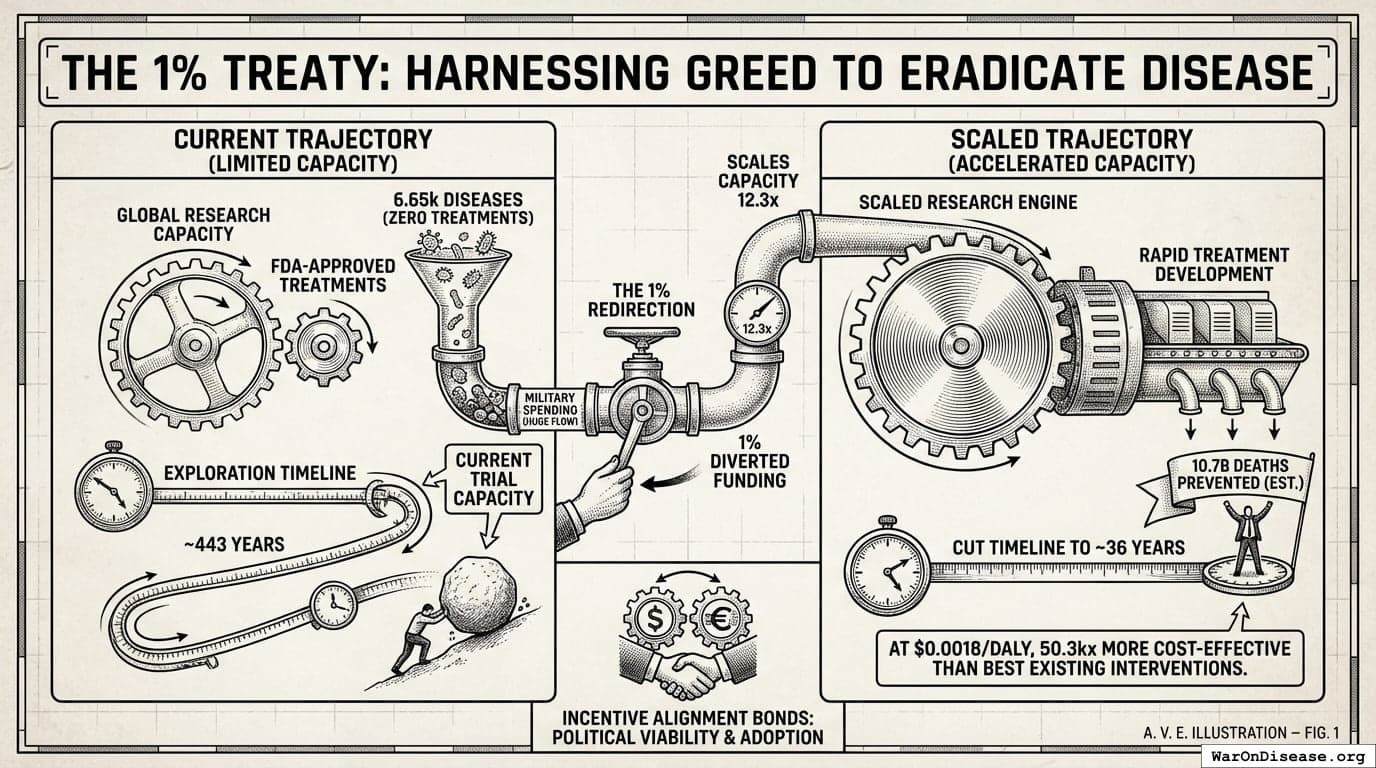
The 1% Treaty: An Incentive-Compatible Approach to Ending War and Disease
6.65 thousand diseases have zero FDA-approved treatments; at current trial capacity, exploring them takes ~443 years. Redirecting 1% of military spending scales capacity 12.3x, cutting the timeline to ~36 years and preventing 10.7 billion deaths. At $0.00177/DALY, 50.3kx more cost-effective than the best existing interventions. The result holds across every specified adoption pathway.
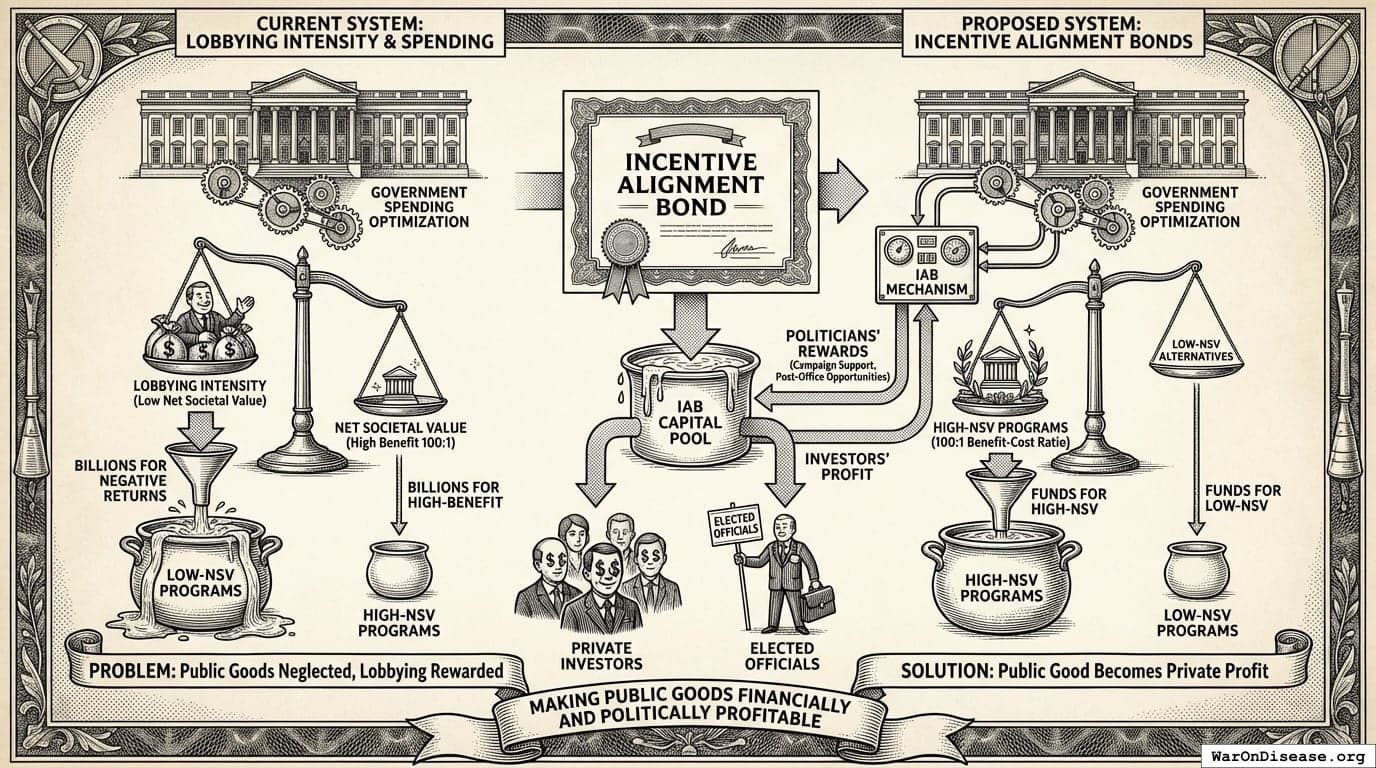
Incentive Alignment Bonds: Making Public Goods Financially and Politically Profitable
Government spending is optimized for lobbying intensity, not net societal value. Programs with 100:1 benefit-cost ratios get billions while programs with negative returns get hundreds of billions. Incentive Alignment Bonds flip this by creating a capital pool that rewards politicians (via campaign support and post-office opportunities) for funding high-NSV programs over low-NSV alternatives. The result: public good becomes private profit for both investors and elected officials.
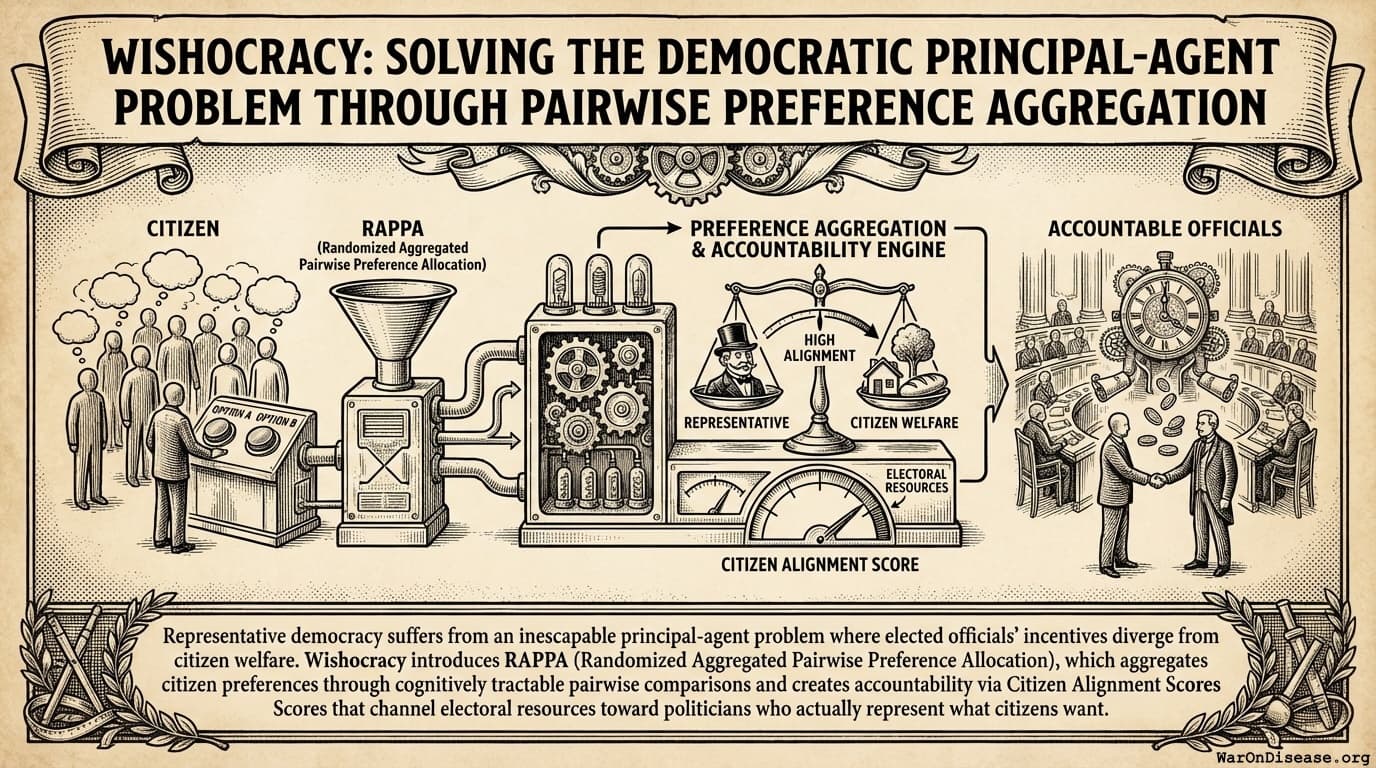
Wishocracy: Solving the Democratic Principal-Agent Problem Through Pairwise Preference Aggregation
Representative democracy suffers from an inescapable principal-agent problem where elected officials' incentives diverge from citizen welfare. Wishocracy introduces RAPPA (Randomized Aggregated Pairwise Preference Allocation), which aggregates citizen preferences through cognitively tractable pairwise comparisons and creates accountability via Citizen Alignment Scores that channel electoral resources toward politicians who actually represent what citizens want.
A brief history of
questionable decisions
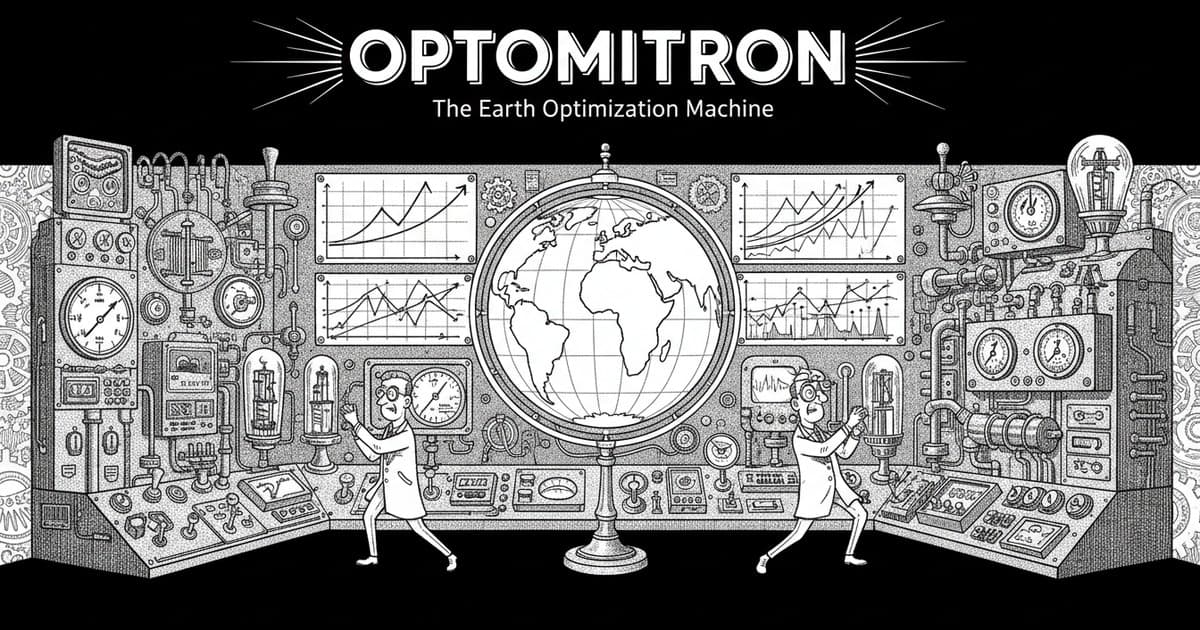
Optimitron
An open-source platform that uses causal inference to figure out which policies actually save lives instead of just sounding good at press conferences. Analyzed 11 natural experiments and 14 policy areas across 50+ years. Found that Singapore gets better health outcomes at 4.1% GDP while the US spends 17.3% and somehow does worse. Portugal decriminalized drugs and deaths dropped 94%. Norway rehabilitates prisoners and recidivism dropped to 20% vs America's 76%. All of this data is freely available. Policymakers remain committed to vibes-based governance.
Decentralized FDA
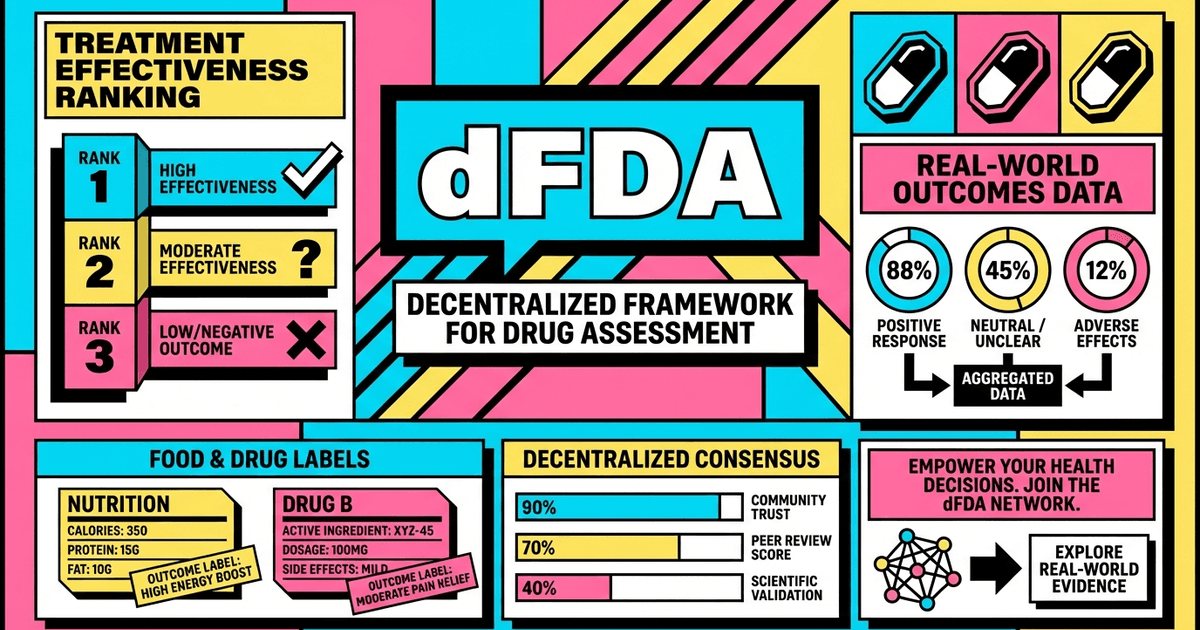
An open-source system for aggregating health data, analyzing it with causal-inference methods, and publishing reproducible evidence. The platform has generated 50,000+ observational studies from 12 million data points, meta-analyses for 90%+ of condition-treatment pairs, and treatment rankings for 100+ conditions. The goal is to make clinical discovery dramatically faster. At the current pace, testing the roughly 1.16 quadrillion possible drug combinations will finish in approximately never.
Wishocracy
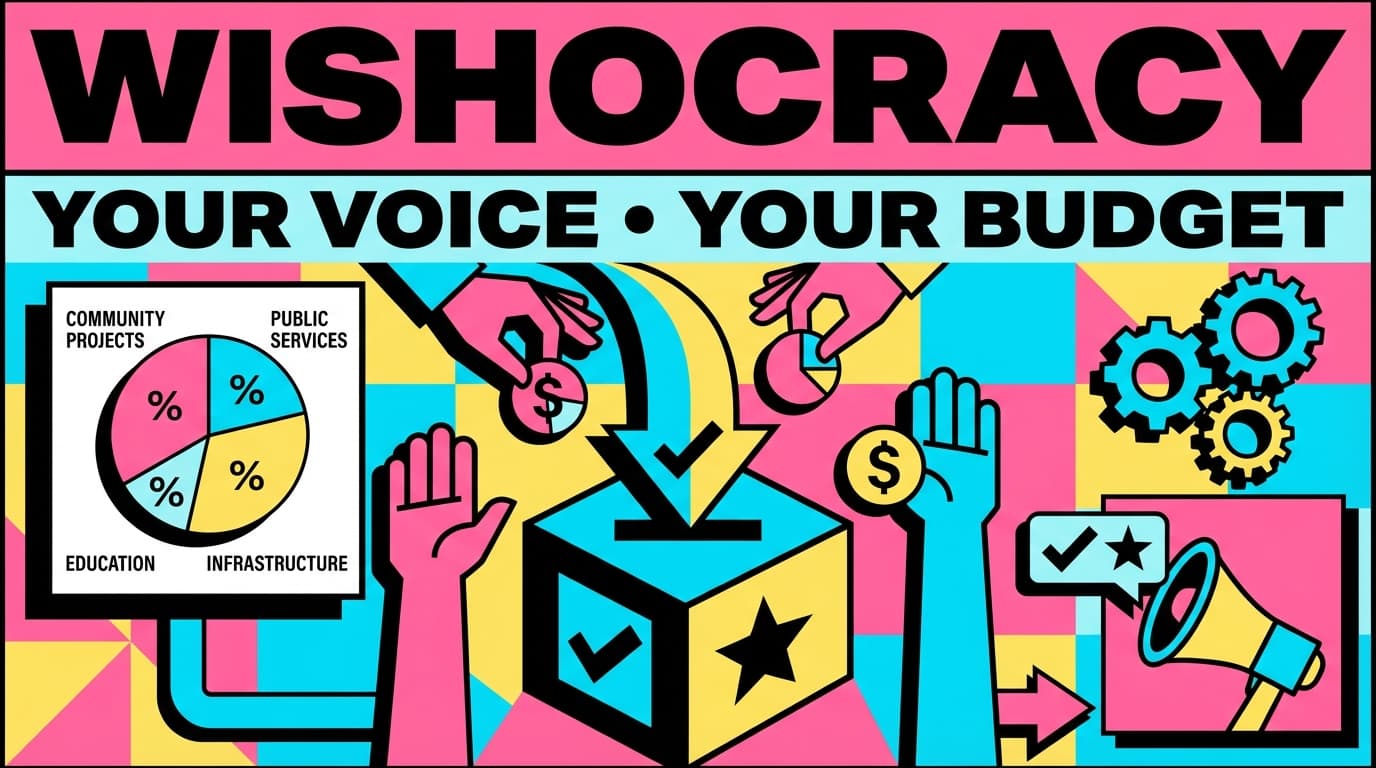
A governance mechanism called RAPPA that decomposes impossible budget decisions into simple pairwise slider comparisons. You spend 5-10 minutes doing ~20 comparisons. The eigenvector math does the rest. The US spends $886B on military vs $47B on NIH despite medical research having a 45:1 benefit-cost ratio vs military's 0.7:1. When Porto Alegre let citizens set priorities, water access went from 75% to 98% and schools quadrupled. Taiwan used pairwise comparison tools to resolve a 4-year regulatory deadlock. The math works. The political will remains theoretical.

How to End War and Disease
An instruction manual for humanity, narrated by an alien named Wishonia, on how to stop spending 40x more on building Skynet than on curing the diseases that are dissolving you. The alien has been watching your planet since 1945 and is very concerned. Free online; also in paperback, Kindle, and as an audiobook podcast.
Global Survey on the 1% Treaty
Redirect 1% of global military spending to health research. An estimated 416 million lives saved. 700× more effective than current spending. Sent to everyone with the power to implement it. Enthusiastically ignored.

Think by Numbers
Data-driven policy analysis. Articles like 'The War on Drugs Increases Drug Deaths' and 'We Spend More on Corporate Welfare Than Social Welfare.' 2 million people read these. The policy remains exactly the same.
All projects are open source and nonprofit. Your support helps me keep analyzing data that pharmaceutical companies don't care about.
Skills (organized by honesty level)
Highly confident
- • Software engineering
- • Data analysis & visualization
- • Full-stack development
- • Digital health platforms
- • Explaining complex systems to disinterested audiences
Moderately confident
- • Economic modeling
- • Cost-benefit analysis
- • Mechanism design
- • Clinical research methodology
- • Chrome extension development
Listed on LinkedIn for some reason
- • Digital marketing
- • Music composition & production
- • Animation
- • Podcast production
- • Comedy (apparently)