How can I help you?
I provide a wide variety of services, including but not limited to AI engineering, software development, websites, local tech help, health and economic modeling, and root-cause failure analysis.
Fix my computer
Computer, Wi-Fi, and printer help around Edwardsville and St. Louis. Prices posted.
Start hereHelp my small business
Websites, IT, and AI automation for small businesses. On-site around St. Louis, remote anywhere.
Start hereBuild AI or software
LLM apps, agents, web apps, and data platforms, built remotely for anyone.
Start here

Working papers
Open working papers with inline commenting. Actively seeking technical reviewers — especially economists who disagree.
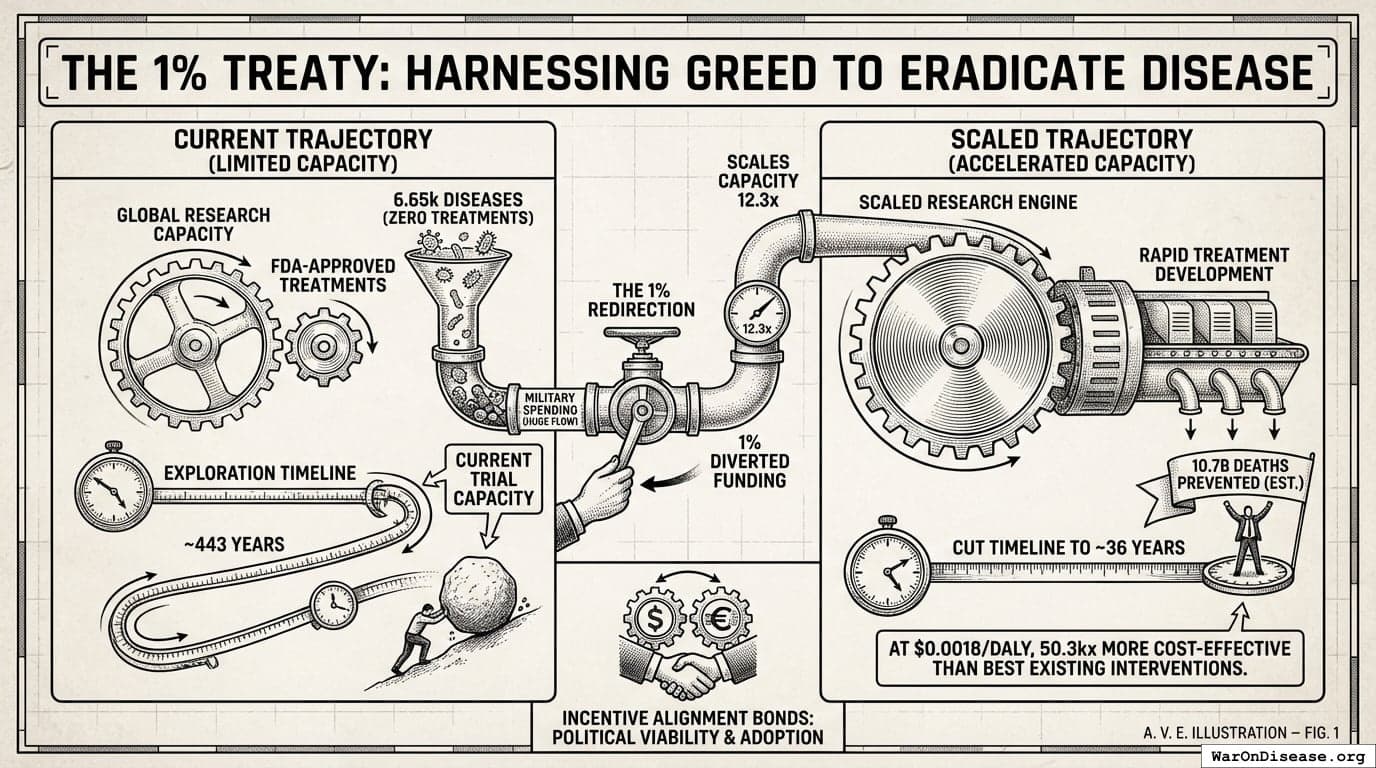
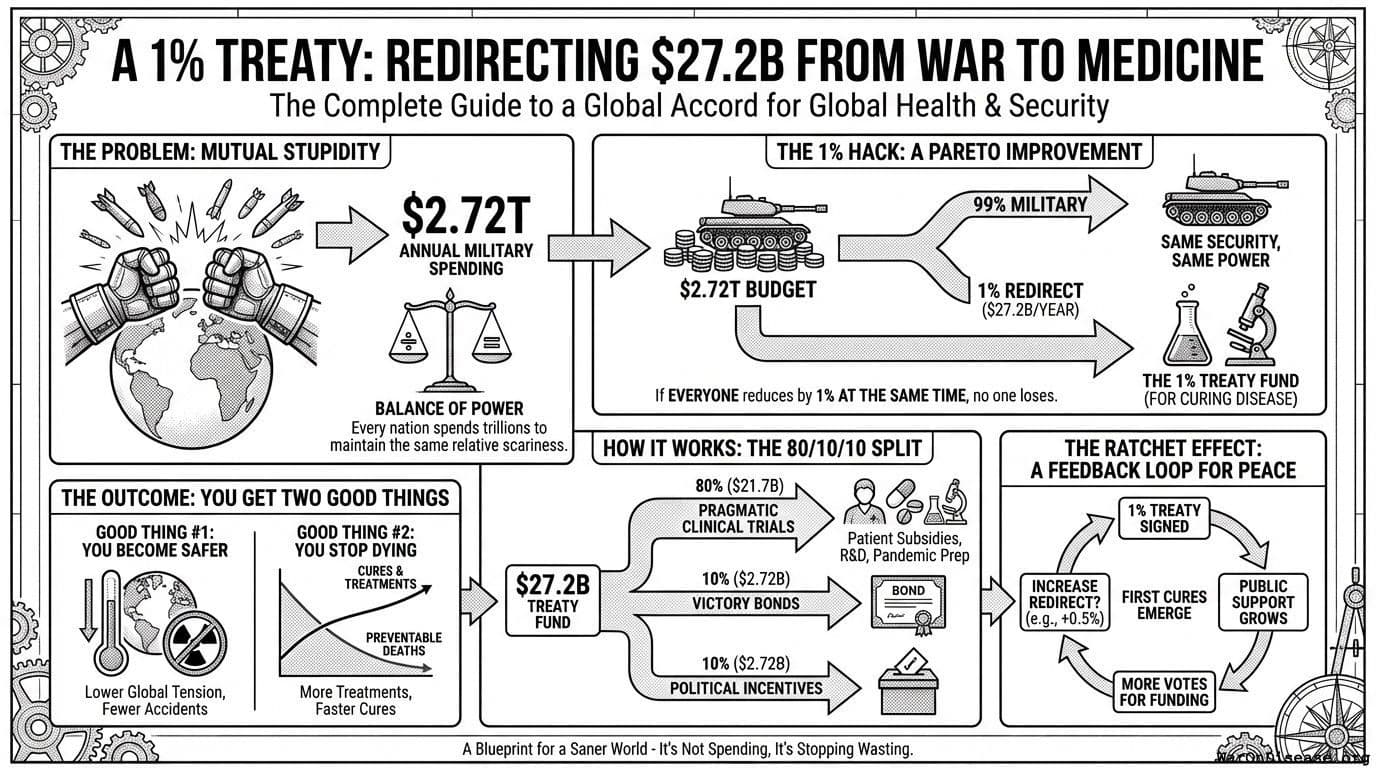
The 1% Treaty: An Incentive-Compatible Approach to Ending War and Disease
6.65 thousand diseases have zero FDA-approved treatments; at current trial capacity, exploring them takes ~443 years. Redirecting 1% of military spending scales capacity 12.3x, cutting the timeline to ~36 years and preventing 10.7 billion deaths. At $0.00177/DALY, 50.3kx more cost-effective than the best existing interventions. The result holds across every specified adoption pathway.
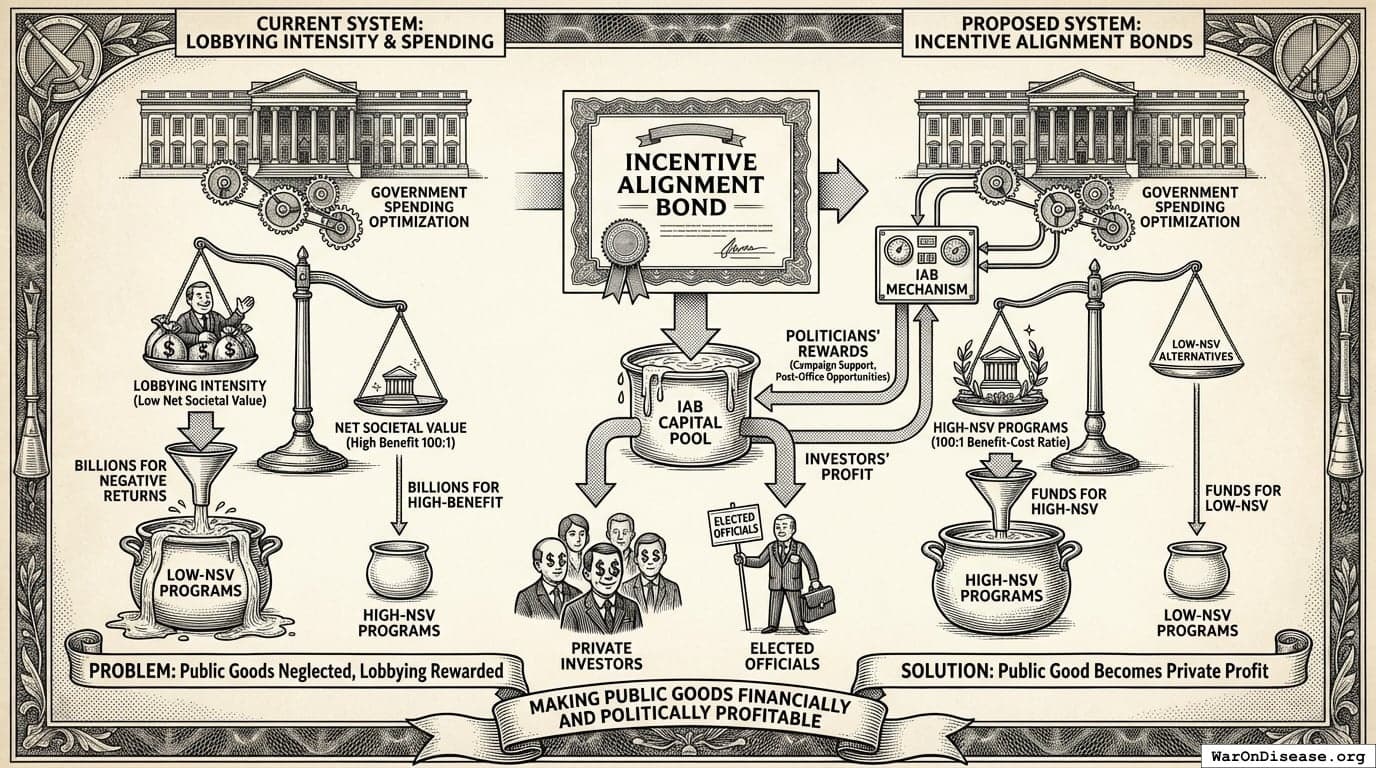
Incentive Alignment Bonds: Making Public Goods Financially and Politically Profitable
Government spending is optimized for lobbying intensity, not net societal value. Programs with 100:1 benefit-cost ratios get billions while programs with negative returns get hundreds of billions. Incentive Alignment Bonds flip this by creating a capital pool that rewards politicians (via campaign support and post-office opportunities) for funding high-NSV programs over low-NSV alternatives. The result: public good becomes private profit for both investors and elected officials.
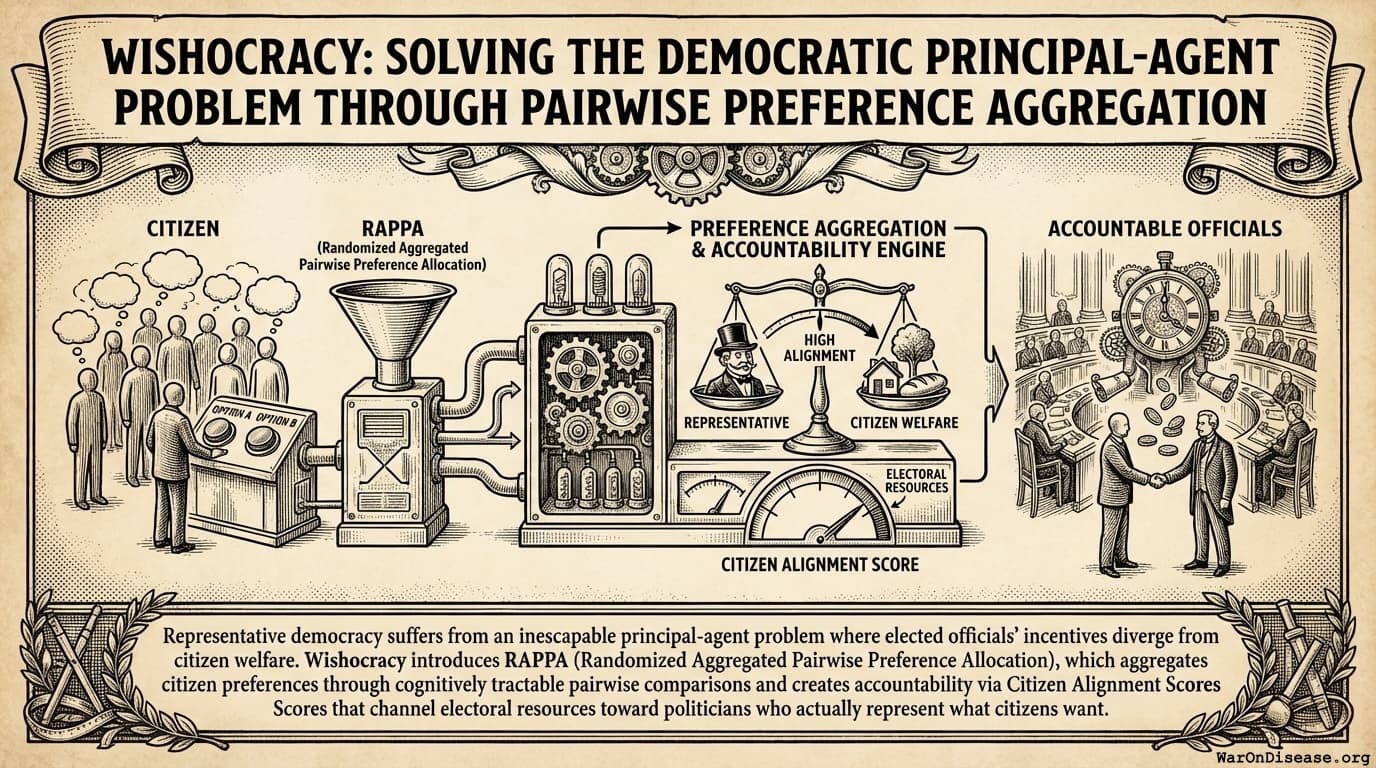
Wishocracy: Solving the Democratic Principal-Agent Problem Through Pairwise Preference Aggregation
Representative democracy suffers from an inescapable principal-agent problem where elected officials' incentives diverge from citizen welfare. Wishocracy introduces RAPPA (Randomized Aggregated Pairwise Preference Allocation), which aggregates citizen preferences through cognitively tractable pairwise comparisons and creates accountability via Citizen Alignment Scores that channel electoral resources toward politicians who actually represent what citizens want.
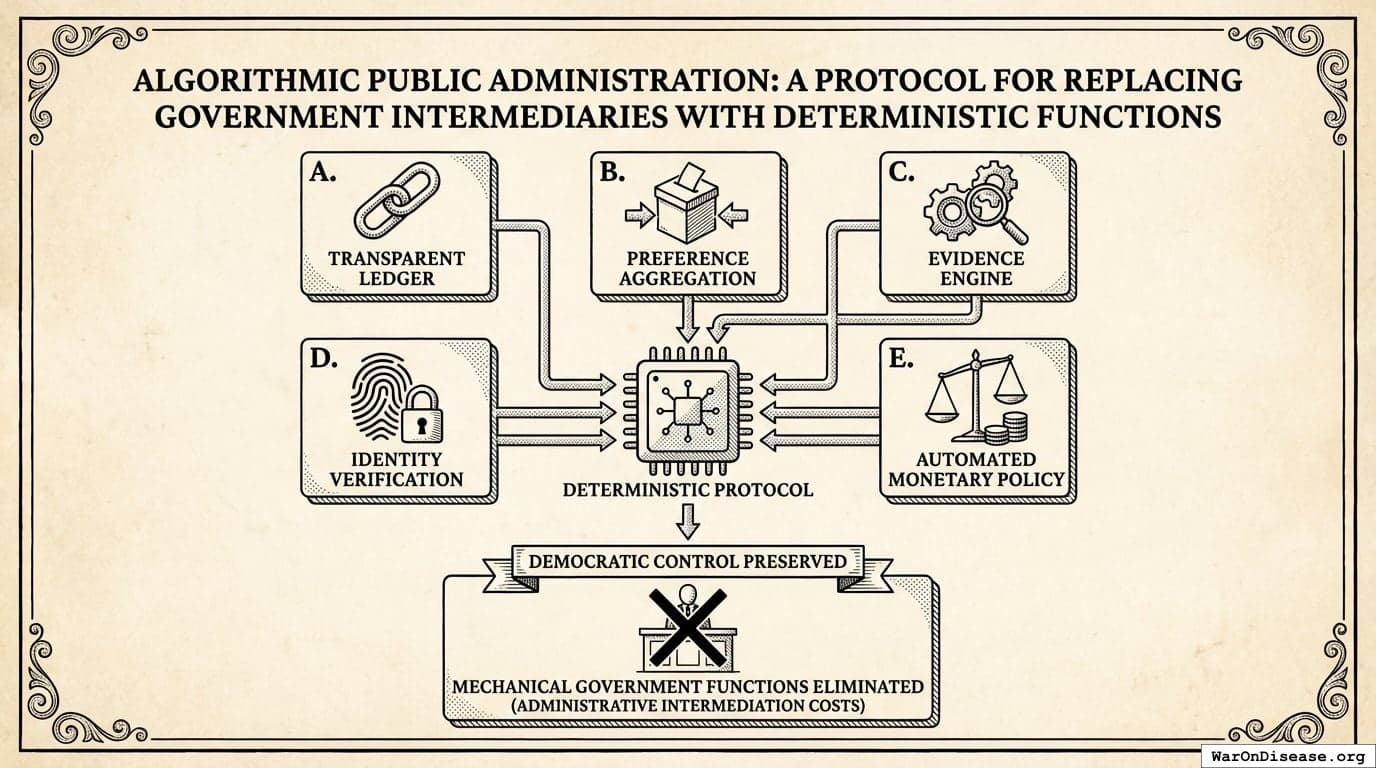
Algorithmic Public Administration: A Protocol for Replacing Government Intermediaries with Deterministic Functions
A protocol combining five primitives (transparent ledger, preference aggregation, evidence engine, identity verification, automated monetary policy) to replace mechanical government agency functions, eliminating administrative intermediation costs while preserving democratic control.
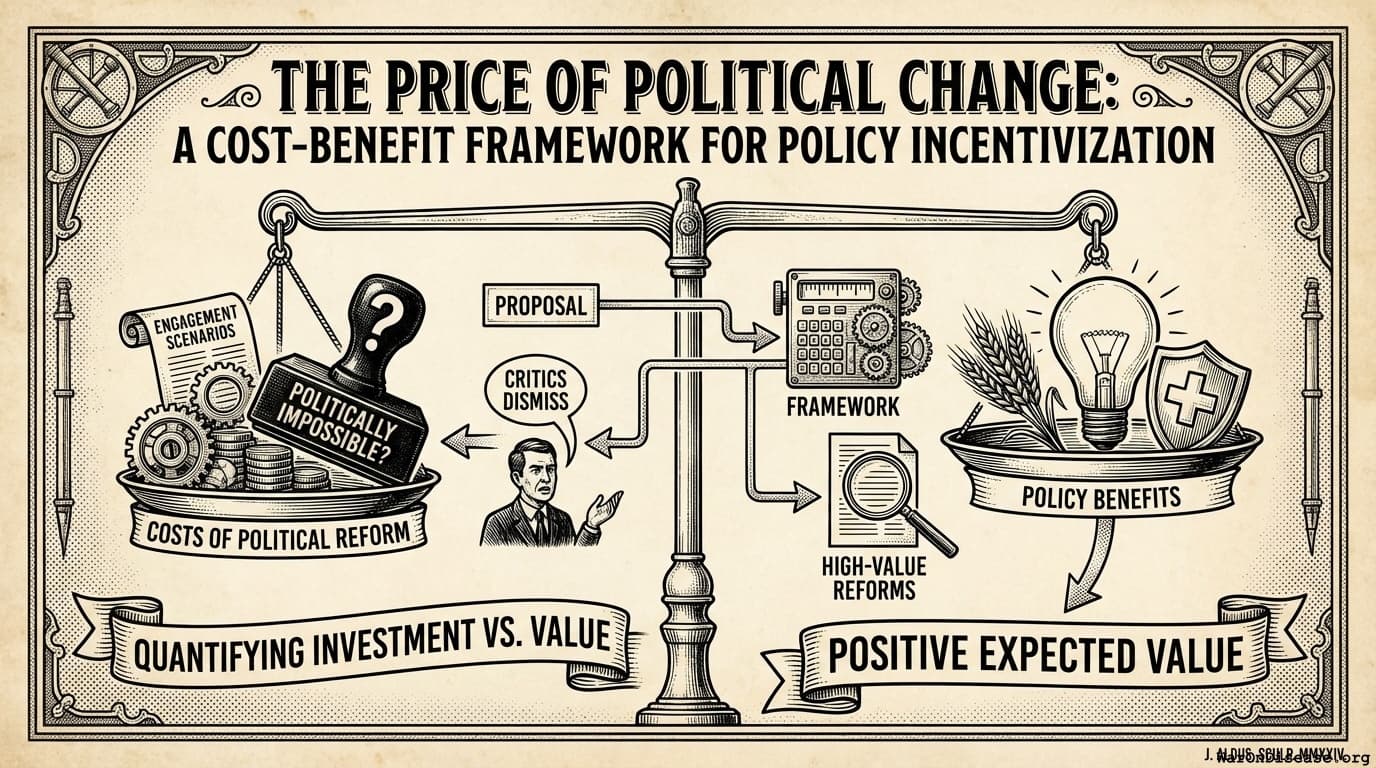
Fun Earth optimization projects
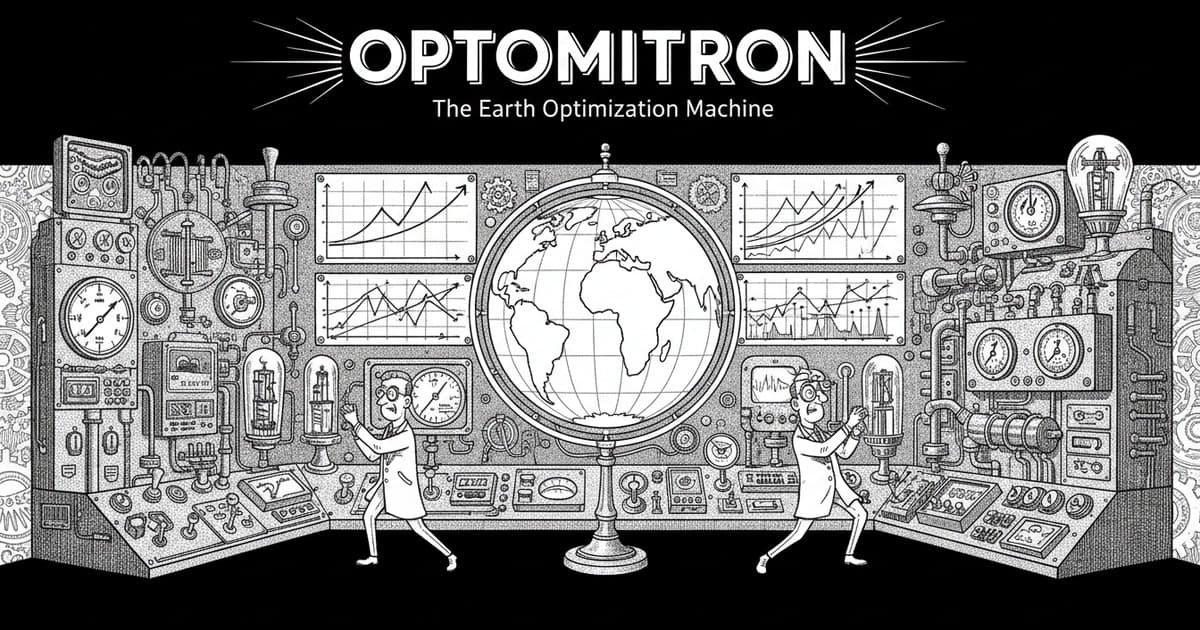
Optimitron
An open-source platform that uses causal inference to figure out which policies actually save lives instead of just sounding good at press conferences. Analyzed 11 natural experiments and 14 policy areas across 50+ years. Found that Singapore gets better health outcomes at 4.1% GDP while the US spends 17.3% and somehow does worse. Portugal decriminalized drugs and deaths dropped 94%. Norway rehabilitates prisoners and recidivism dropped to 20% vs America's 76%. All of this data is freely available. Policymakers remain committed to vibes-based governance.
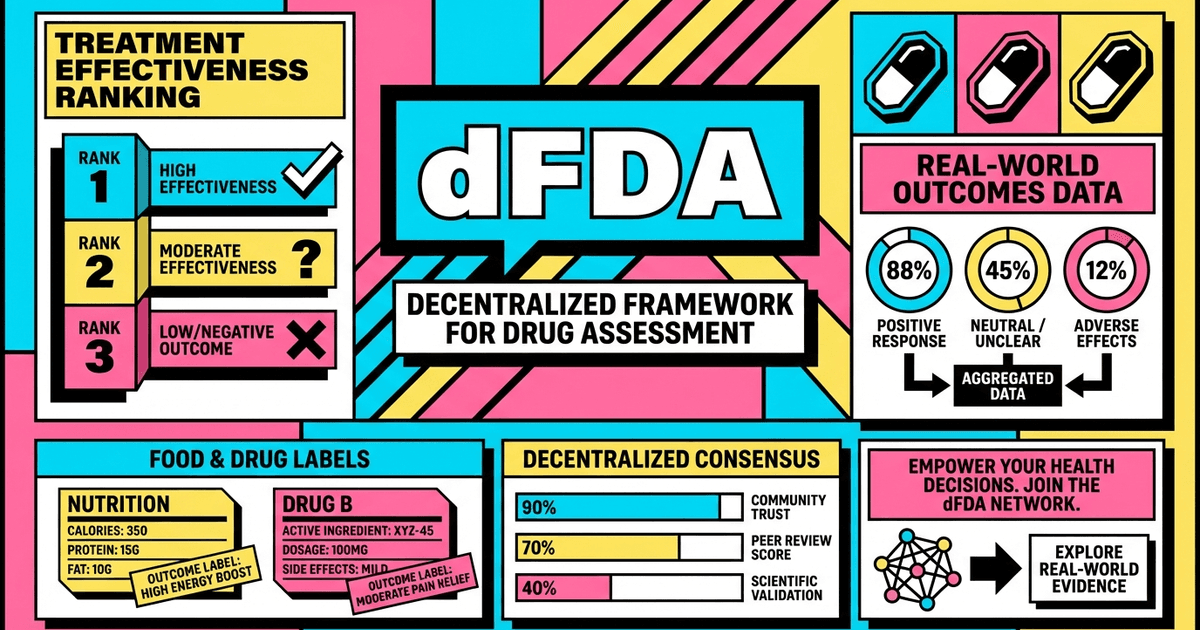
Decentralized FDA
An open-source system for aggregating health data, analyzing it with causal-inference methods, and publishing reproducible evidence. The platform has generated 50,000+ observational studies from 12 million data points, meta-analyses for 90%+ of condition-treatment pairs, and treatment rankings for 100+ conditions. The goal is to make clinical discovery dramatically faster. At the current pace, testing the roughly 1.16 quadrillion possible drug combinations will finish in approximately never.
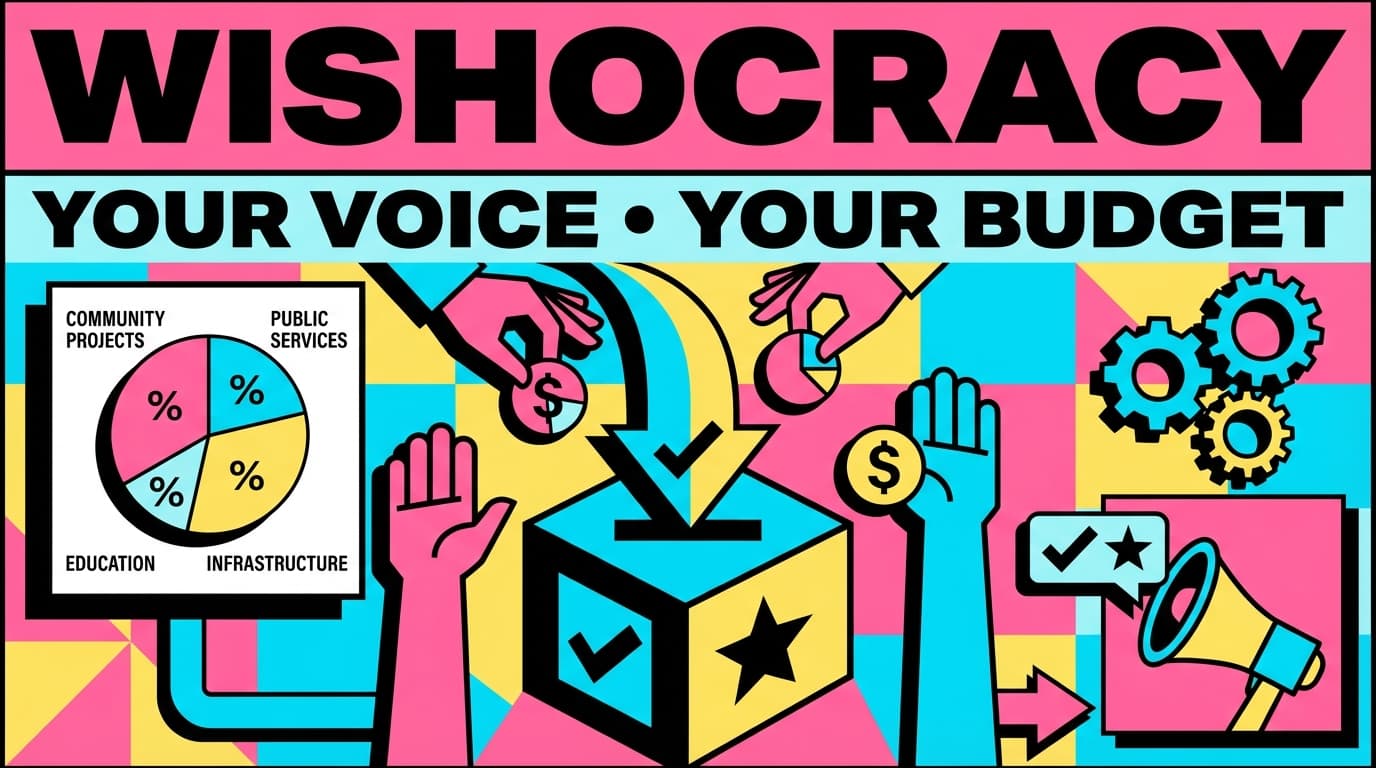
Wishocracy
A governance mechanism called RAPPA that decomposes impossible budget decisions into simple pairwise slider comparisons. You spend 5-10 minutes doing ~20 comparisons. The eigenvector math does the rest. The US spends $886B on military vs $47B on NIH despite medical research having a 45:1 benefit-cost ratio vs military's 0.7:1. When Porto Alegre let citizens set priorities, water access went from 75% to 98% and schools quadrupled. Taiwan used pairwise comparison tools to resolve a 4-year regulatory deadlock. The math works. The political will remains theoretical.


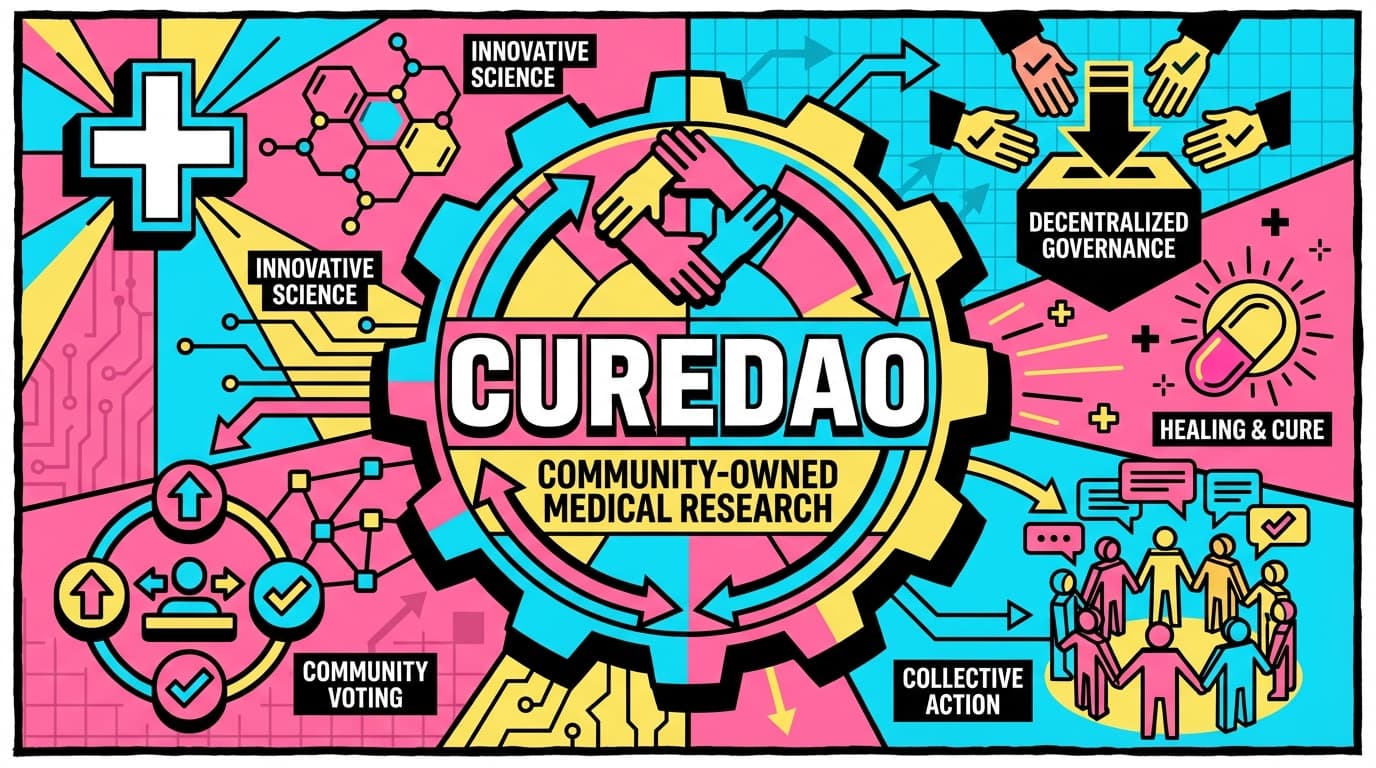
CureDAO
A DAO focused on clinical research. That's a lot of technical jargon, so let me translate: imagine if Wikipedia and a clinical trial had a baby that was raised by blockchain. The result is a platform where anyone can contribute to medical research without needing permission from a committee of very tired people in lab coats.
Recent research
192+ publications on clinical research, policy analysis, and the optimal allocation of societal resources.
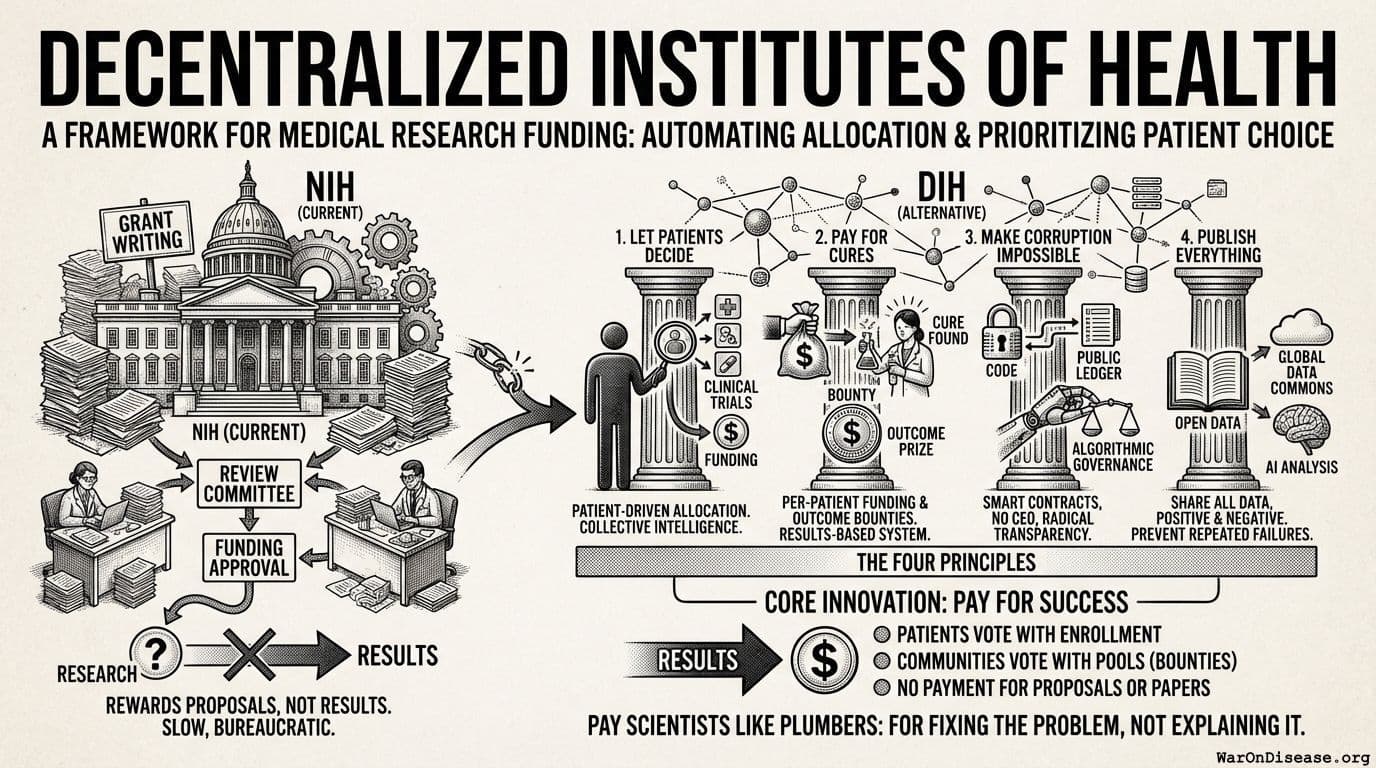
Decentralized Institutes of Health
Your military-industrial complex solved coordination for killing: weapons manufacturers, generals, politicians, and factory workers all profit from the same budget, so they all show up. Disease has no such coalition. Your Decentralized Institutes of Health builds one. It does three things: receive treaty funds, allocate them via patient choice and wishocratic voting, and pay based on results instead of grant applications. It's SHAEF for the war on disease. Same selfishness as the military-industrial complex, but pointed at biology instead of each other. Nobody gets paid for writing essays about why they should be allowed to try curing things. They get paid for curing things.

The 1% Treaty: An Incentive-Compatible Approach to Ending War and Disease
6,650 diseases have zero FDA-approved treatments; at current trial capacity, exploring them takes ~443 years. Redirecting 1% of military spending scales capacity 12.3x, cutting the timeline to ~36 years and preventing 10.7 billion deaths. At $0.00177/DALY, 50.3kx more cost-effective than the best existing interventions. The result holds across every specified adoption pathway.

Algorithmic Public Administration
A policy-neutral protocol combining five primitives (transparent ledger, preference aggregation, evidence engine, identity verification, rules-based monetary policy) to replace mechanical government functions, return diverted value to citizens, and stop spending 17.3% of GDP on humans executing functions that are algorithmic in nature, while preserving democratic control over policy ends.
Contribute data. Disturb the objective function.
Two small ways to help decide what humanity should optimize before the current algorithm spends everything on yachts and missiles.