Papers
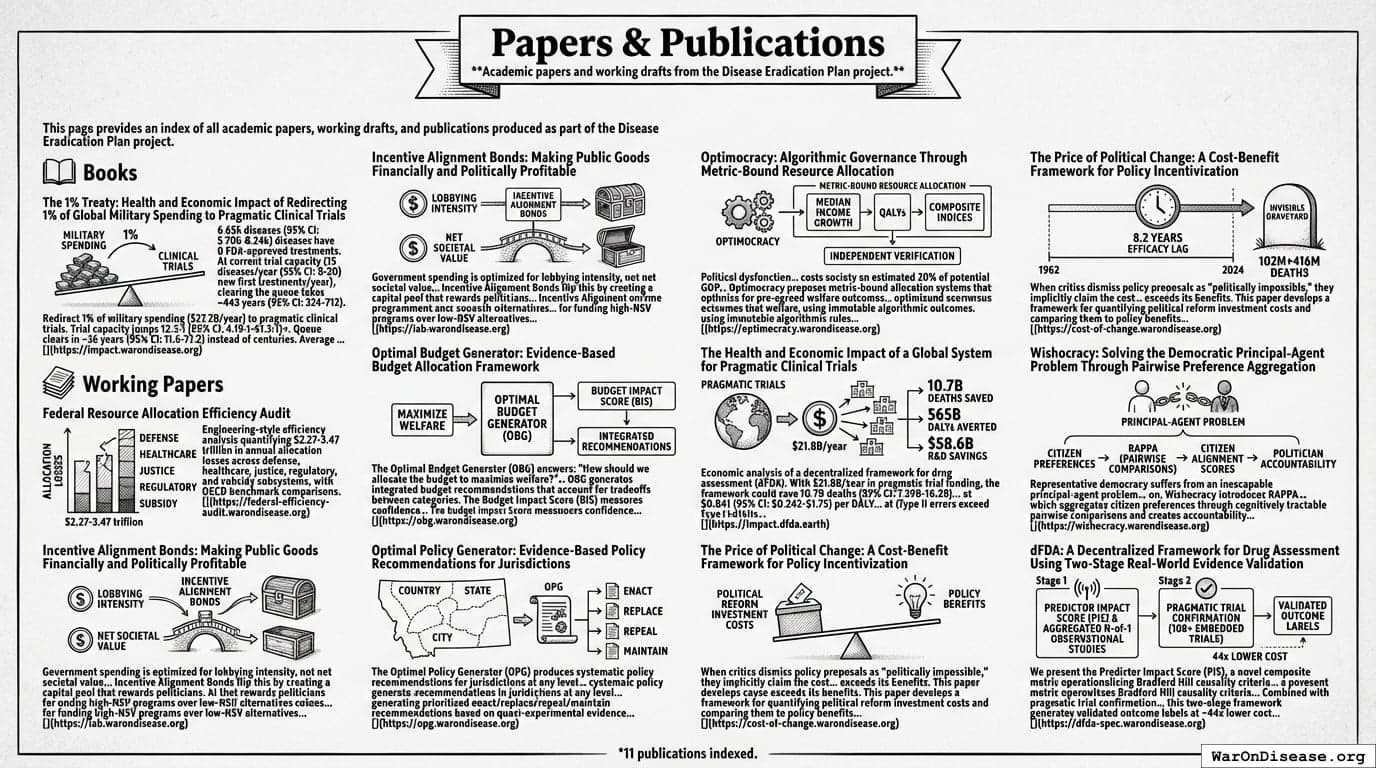
Academic papers and research on health economics, political economy, and how to make the world marginally less terrible using math.
Peer review pending. Peers pending. Readers pending.
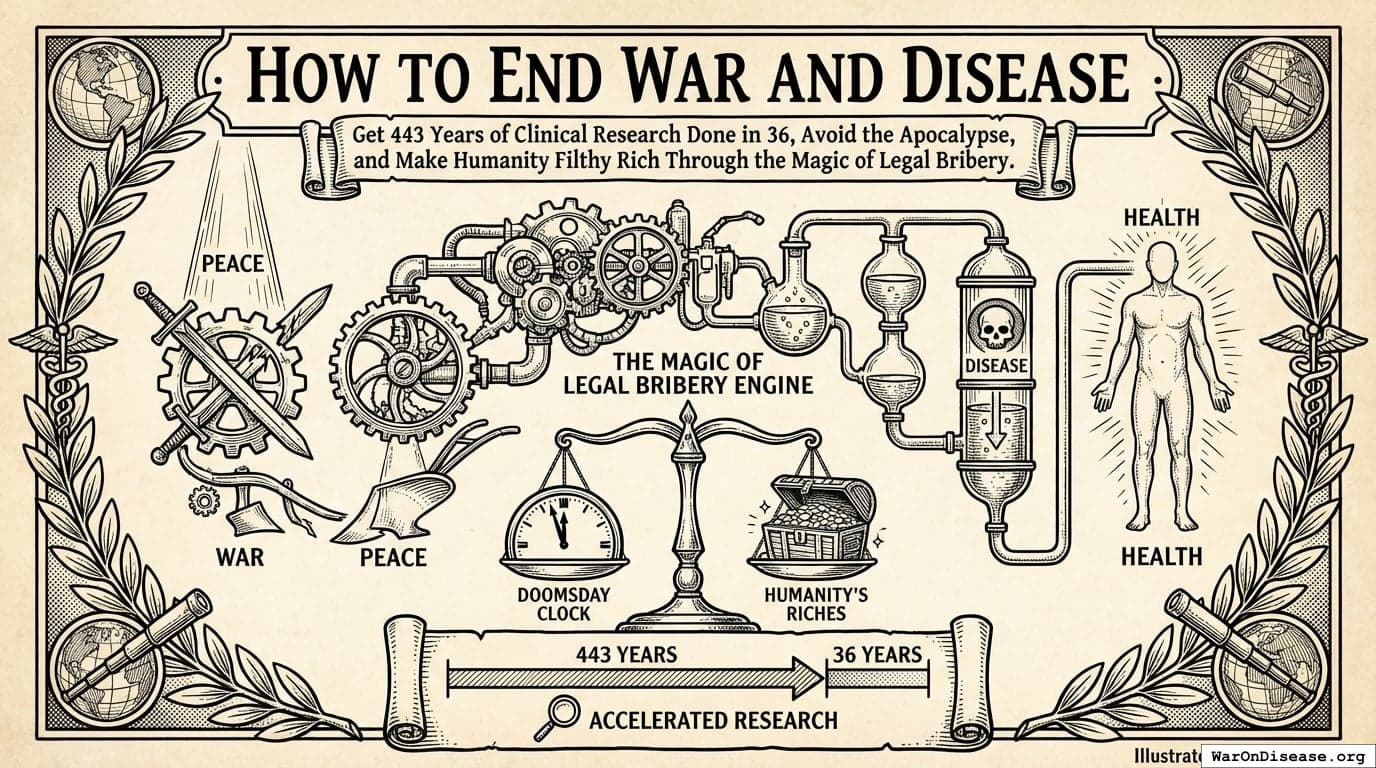

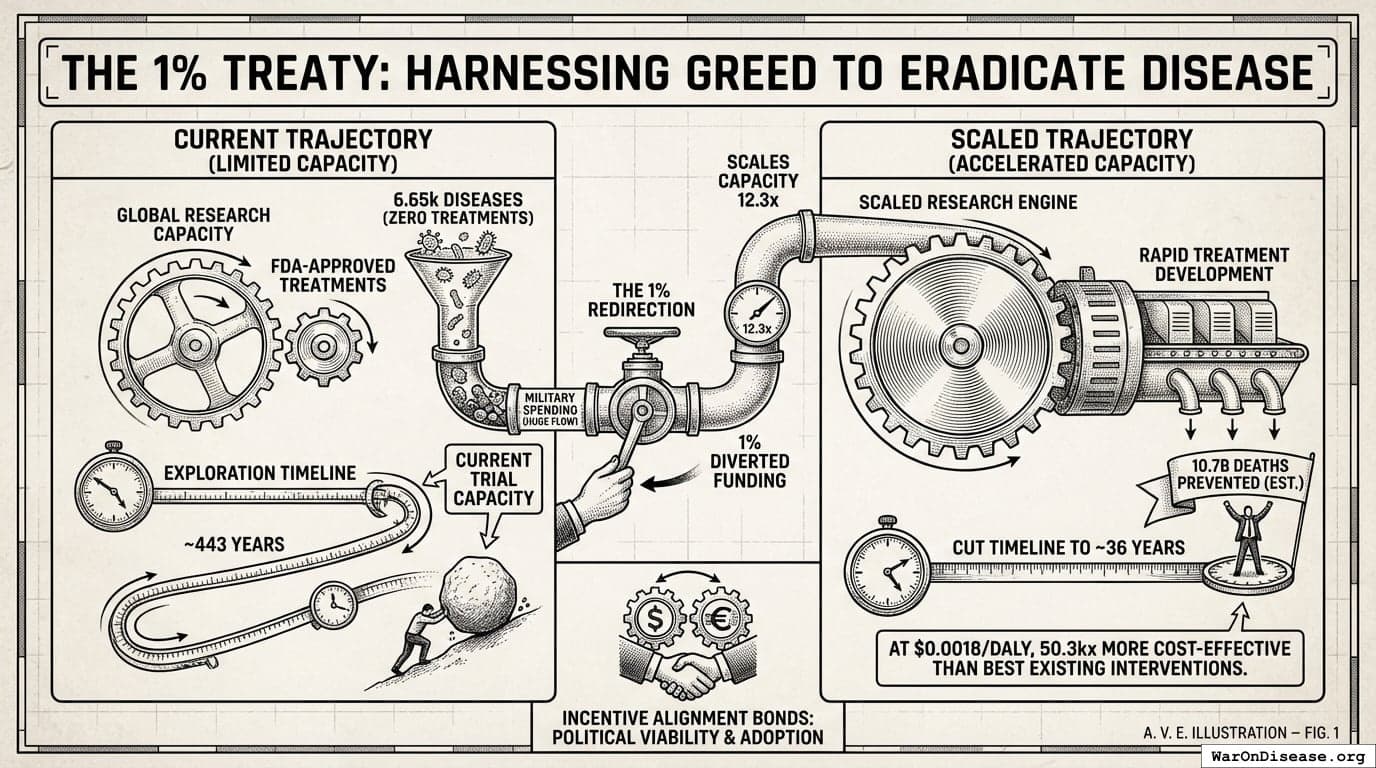
The 1% Treaty: An Incentive-Compatible Approach to Ending War and Disease
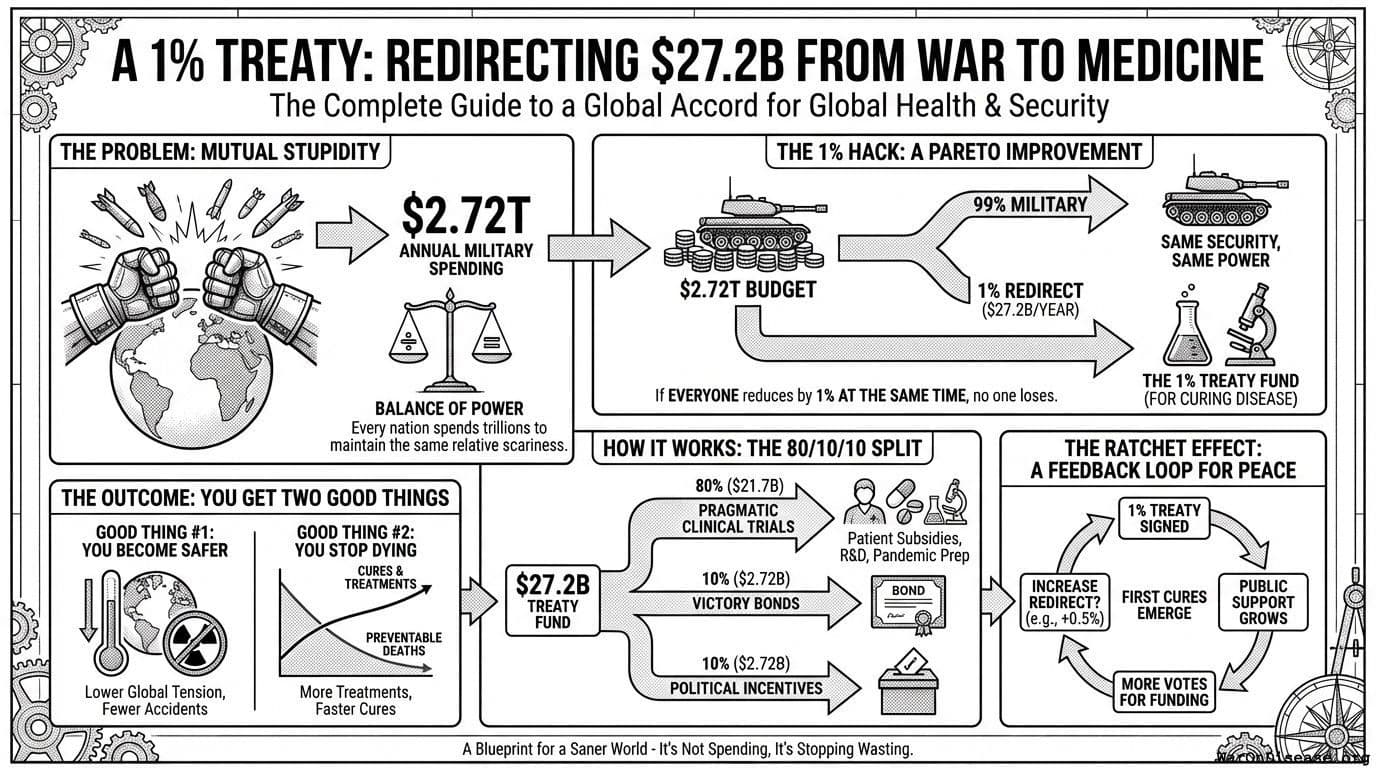
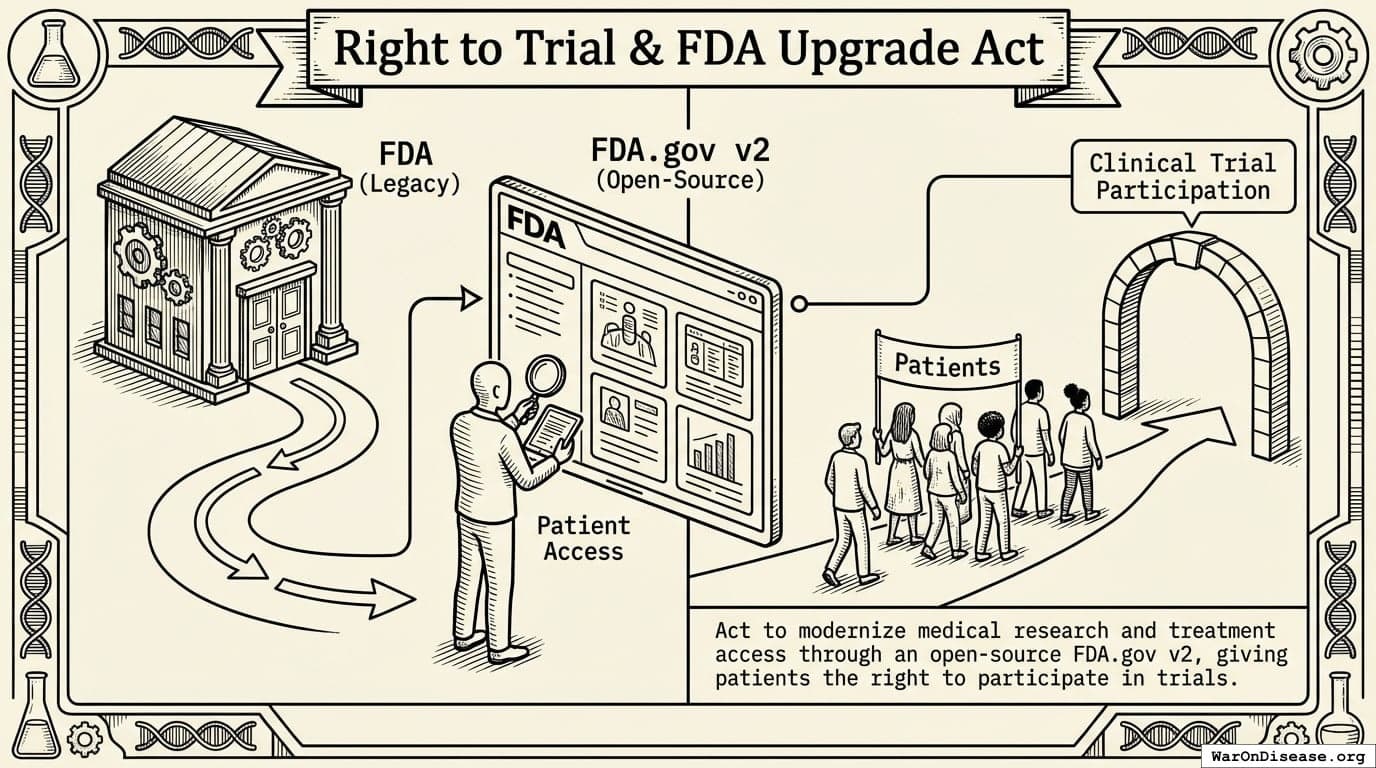
6.65 thousand diseases have zero FDA-approved treatments; at current trial capacity, exploring them takes ~443 years. Redirecting 1% of military spending scales capacity 12.3x, cutting the timeline to ~36 years and preventing 10.7 billion deaths. At $0.00177/DALY, 50.3kx more cost-effective than the best existing interventions. The result holds across every specified adoption pathway.
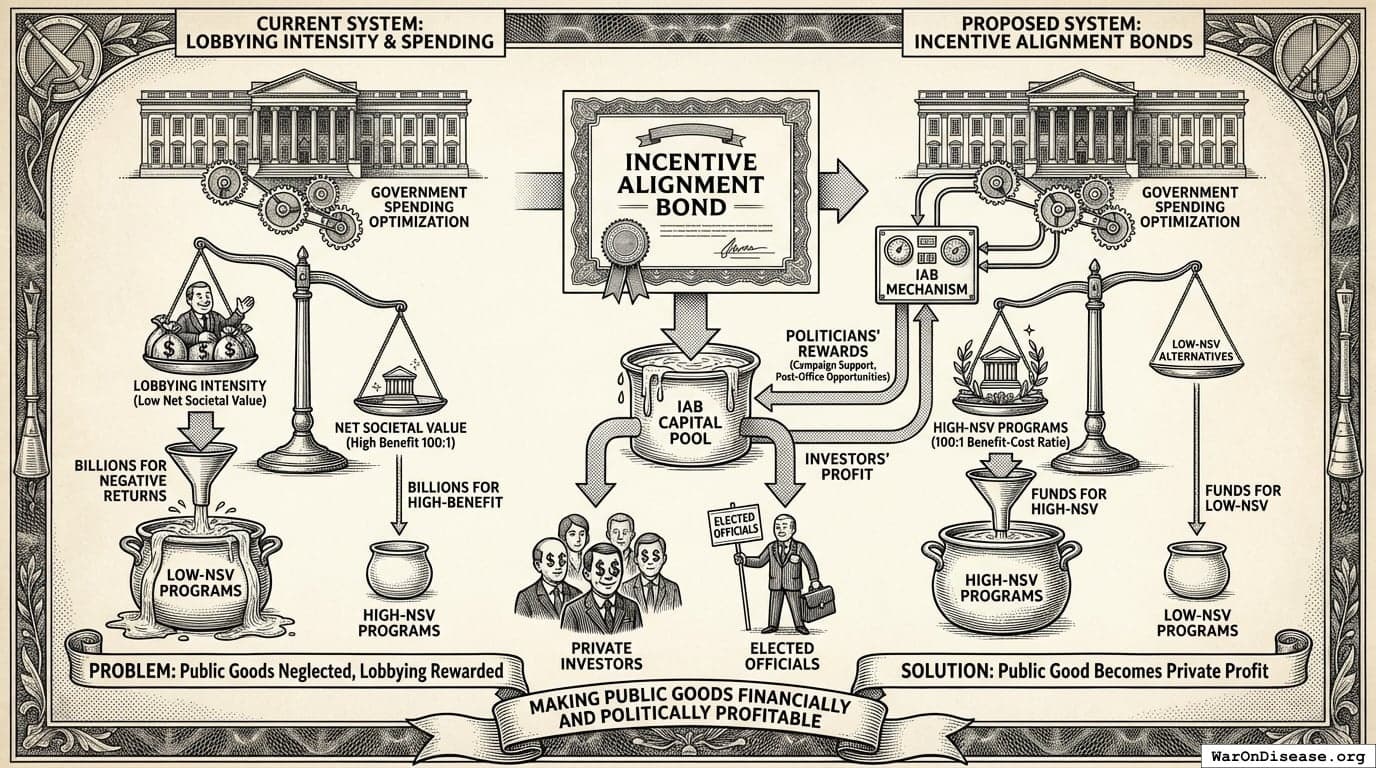
Incentive Alignment Bonds: Making Public Goods Financially and Politically Profitable
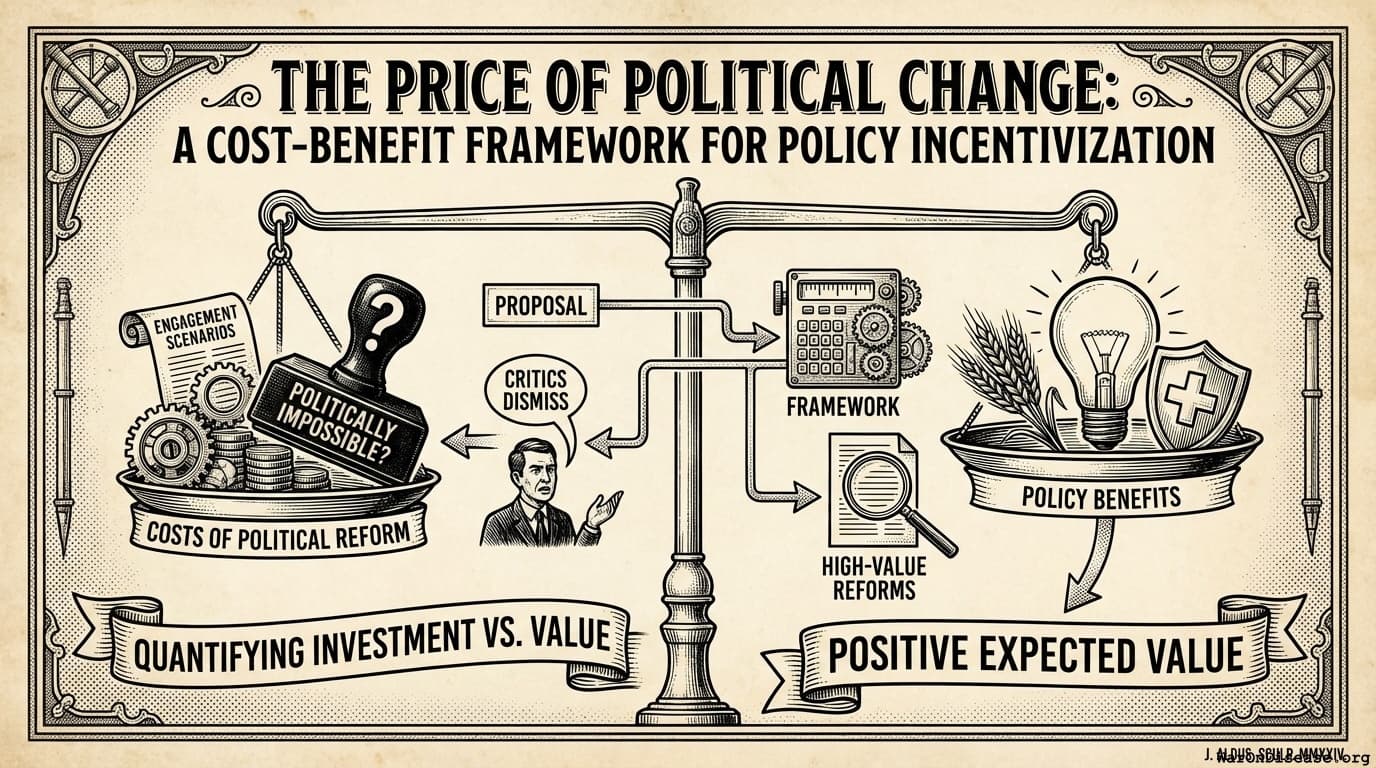
Government spending is optimized for lobbying intensity, not net societal value. Programs with 100:1 benefit-cost ratios get billions while programs with negative returns get hundreds of billions. Incentive Alignment Bonds flip this by creating a capital pool that rewards politicians (via campaign support and post-office opportunities) for funding high-NSV programs over low-NSV alternatives. The result: public good becomes private profit for both investors and elected officials.
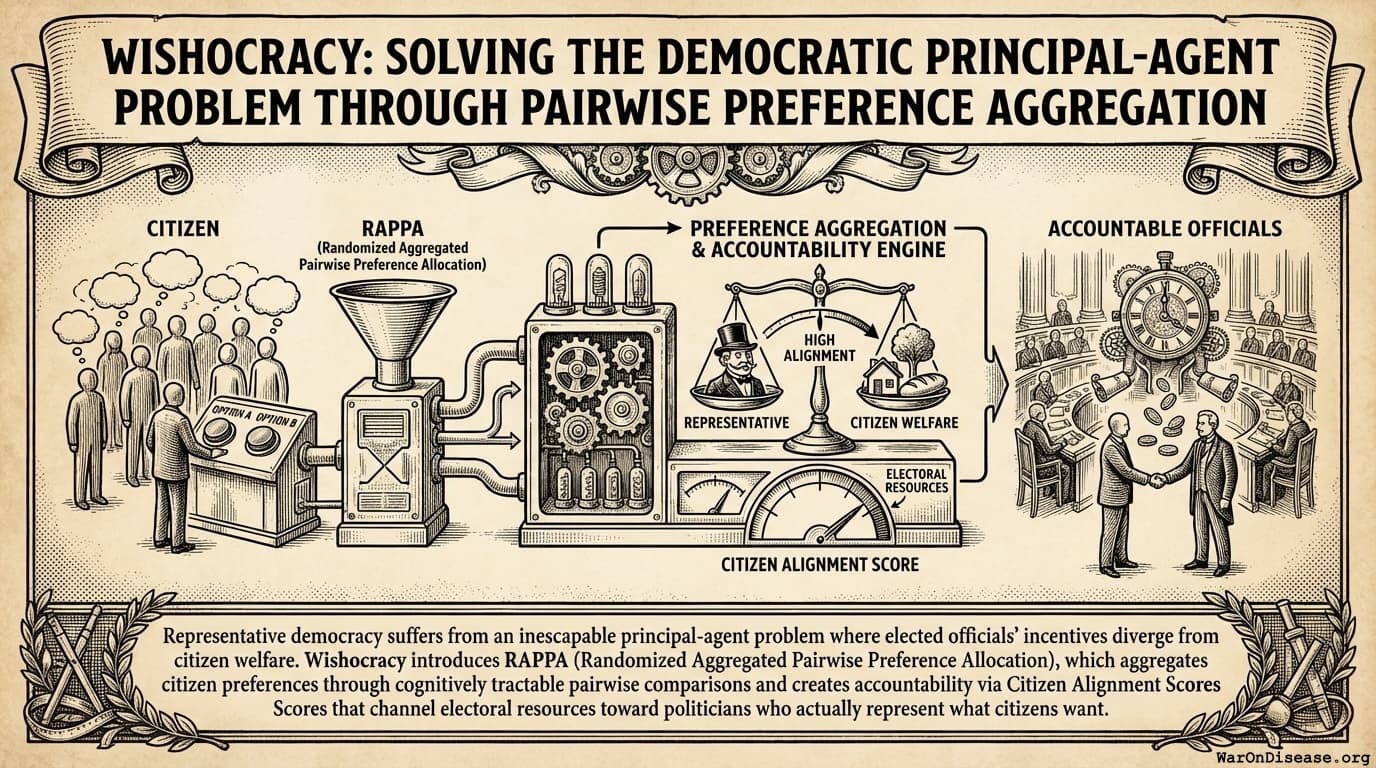
Wishocracy: Solving the Democratic Principal-Agent Problem Through Pairwise Preference Aggregation
Representative democracy suffers from an inescapable principal-agent problem where elected officials' incentives diverge from citizen welfare. Wishocracy introduces RAPPA (Randomized Aggregated Pairwise Preference Allocation), which aggregates citizen preferences through cognitively tractable pairwise comparisons and creates accountability via Citizen Alignment Scores that channel electoral resources toward politicians who actually represent what citizens want.
Algorithmic Public Administration: A Protocol for Replacing Government Intermediaries with Deterministic Functions
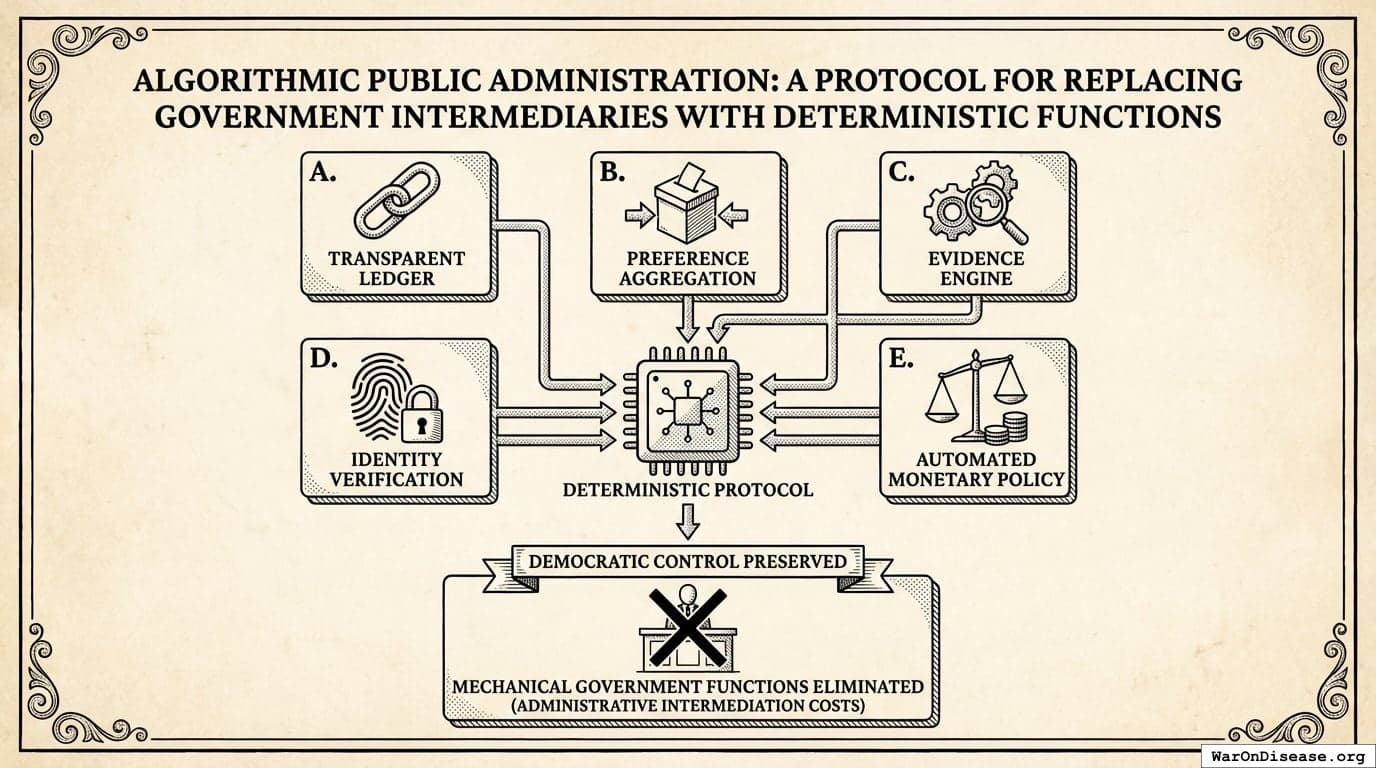
A protocol combining five primitives (transparent ledger, preference aggregation, evidence engine, identity verification, automated monetary policy) to replace mechanical government agency functions, eliminating administrative intermediation costs while preserving democratic control.

Ubiquitous Pragmatic Trial Impact Analysis: How to Prevent a Year of Death and Suffering for 84 Cents
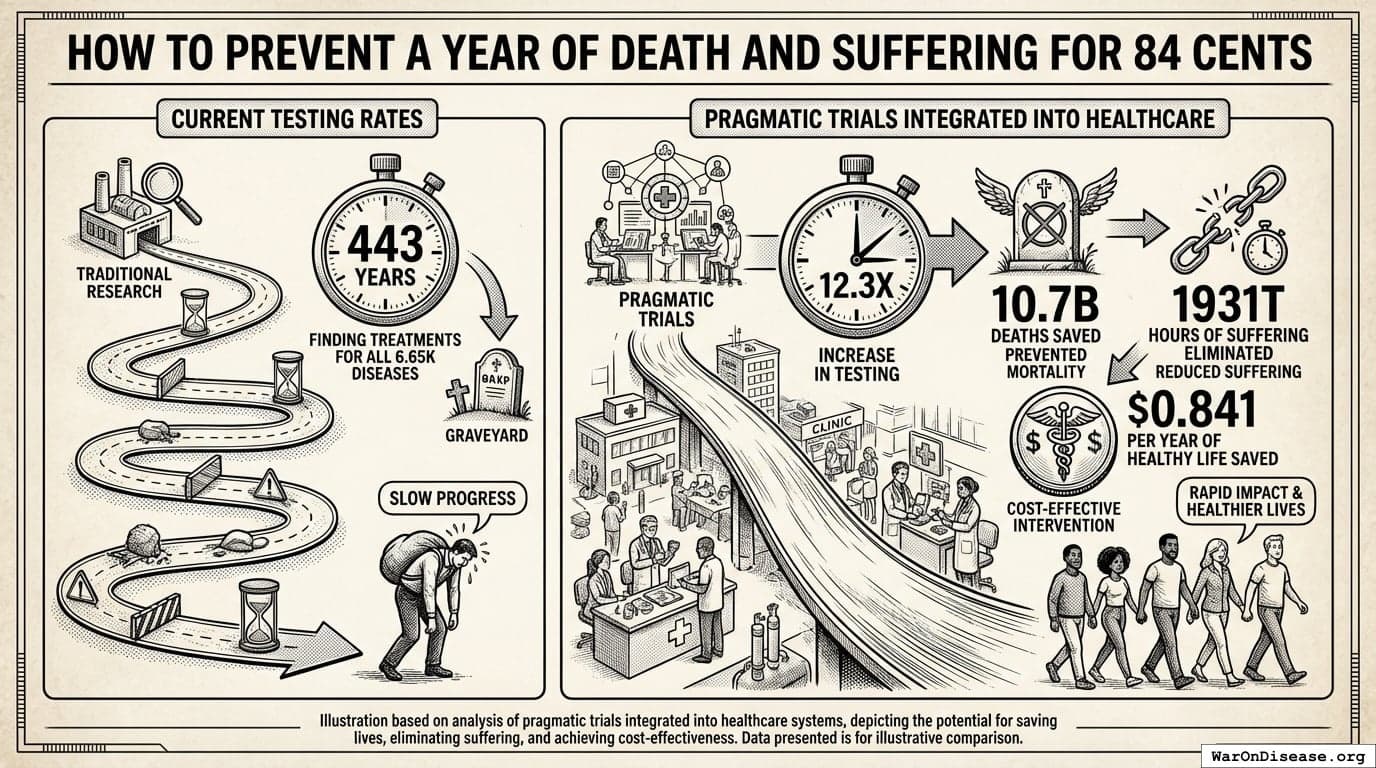
Only 15 diseases/year get their first treatment each year. With 6.65 thousand diseases lacking effective treatments, the backlog would take 443 years to clear. Integrating pragmatic trials into standard healthcare increases trial capacity 12.3x, cutting that timeline from 443 years to 36 years. The average untreated disease gets a treatment 212 years earlier, saving 10.7 billion deaths at $0.842 per year of healthy life saved.
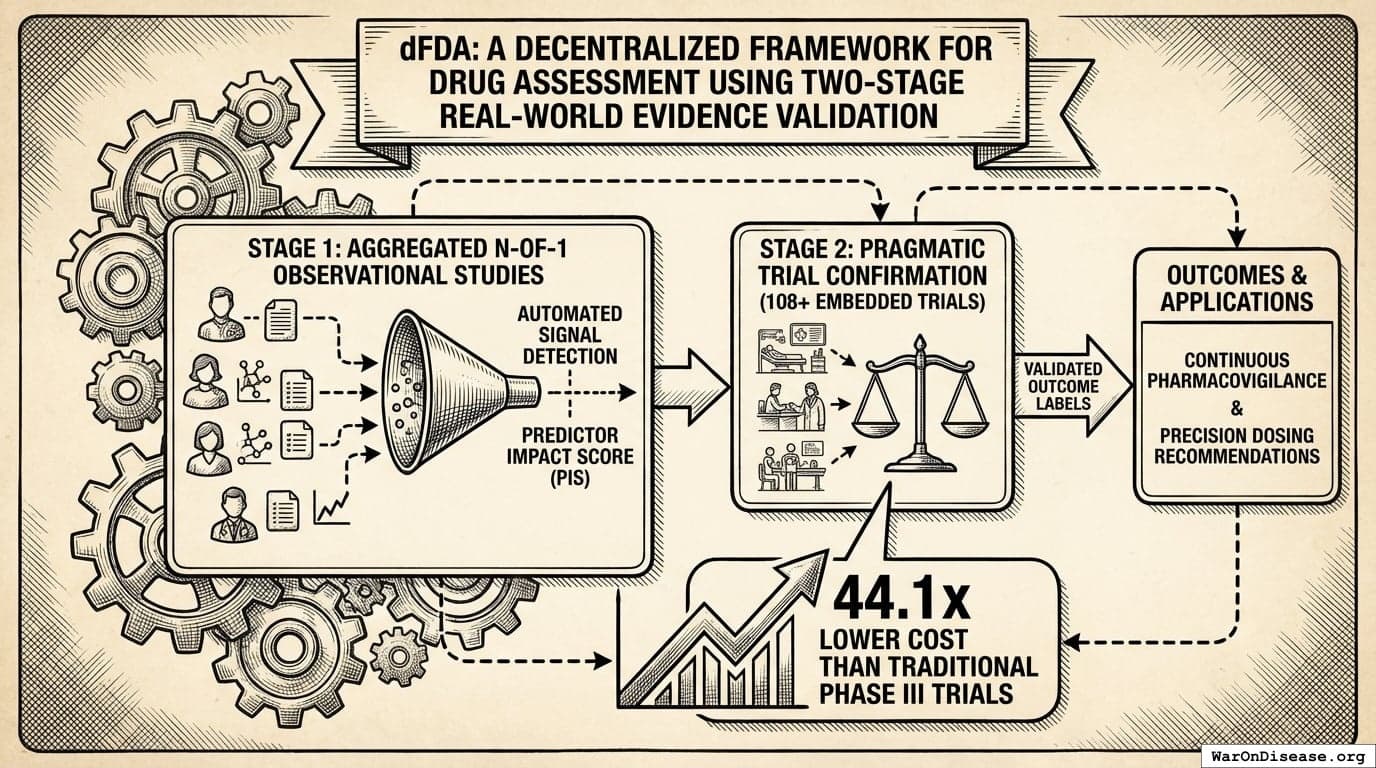
The Continuous Evidence Generation Protocol: Two-Stage Validation (RWE → Pragmatic Trials)
We present the Predictor Impact Score (PIS), a novel composite metric operationalizing Bradford Hill causality criteria for automated signal detection from aggregated N-of-1 observational studies. Combined with pragmatic trial confirmation (based on evidence from 108+ embedded trials), this two-stage framework would generate validated outcome labels at 44.1x lower cost than traditional Phase III trials. This enables continuous, population-scale pharmacovigilance and precision dosing recommendations.
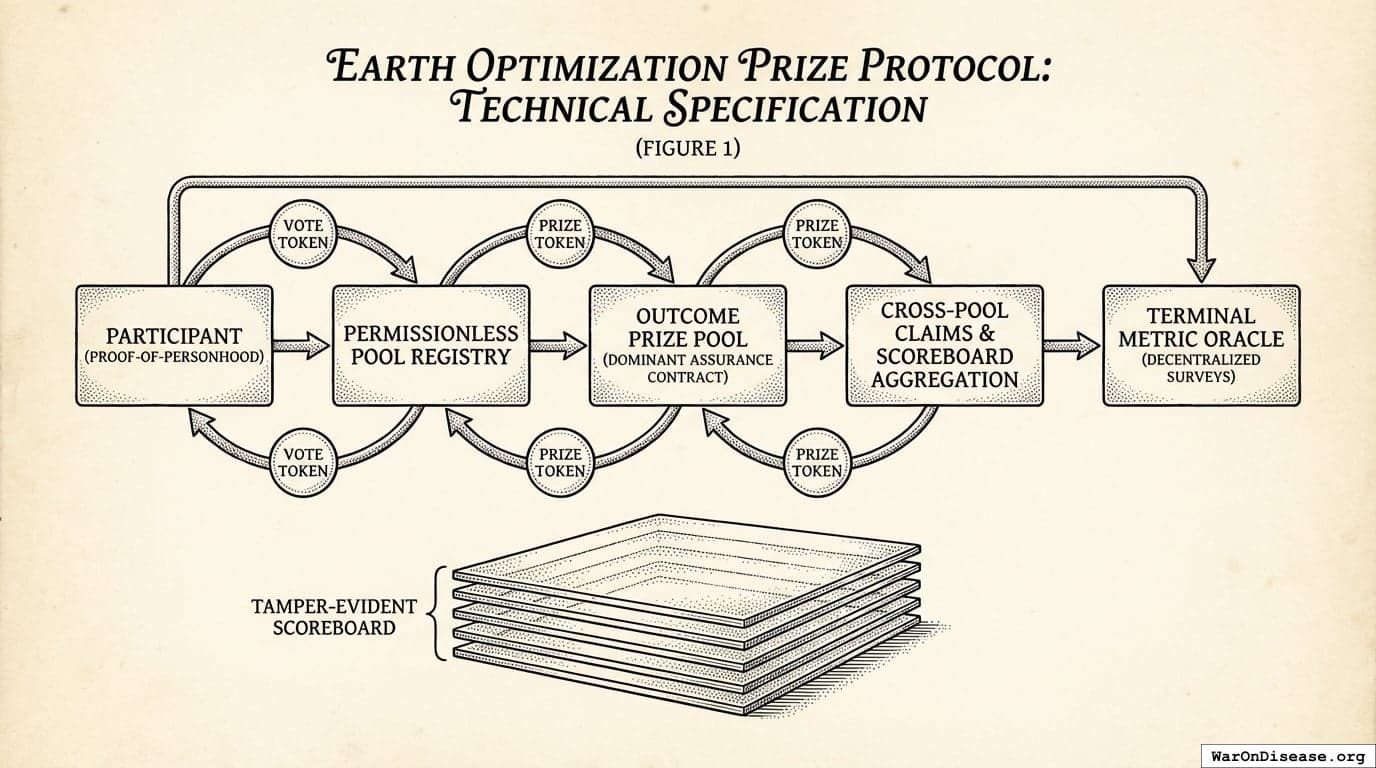
Earth Optimization Prize Protocol: Technical Specification
Technical specification for interoperable outcome prize pools structured as a dominant assurance contract. Covers cross-pool proof-of-personhood, a permissionless pool registry, VOTE and PRIZE token mechanics, direct cross-pool claims, tamper-evident scoreboard aggregation, and a terminal general-welfare metric oracle including decentralized surveys.
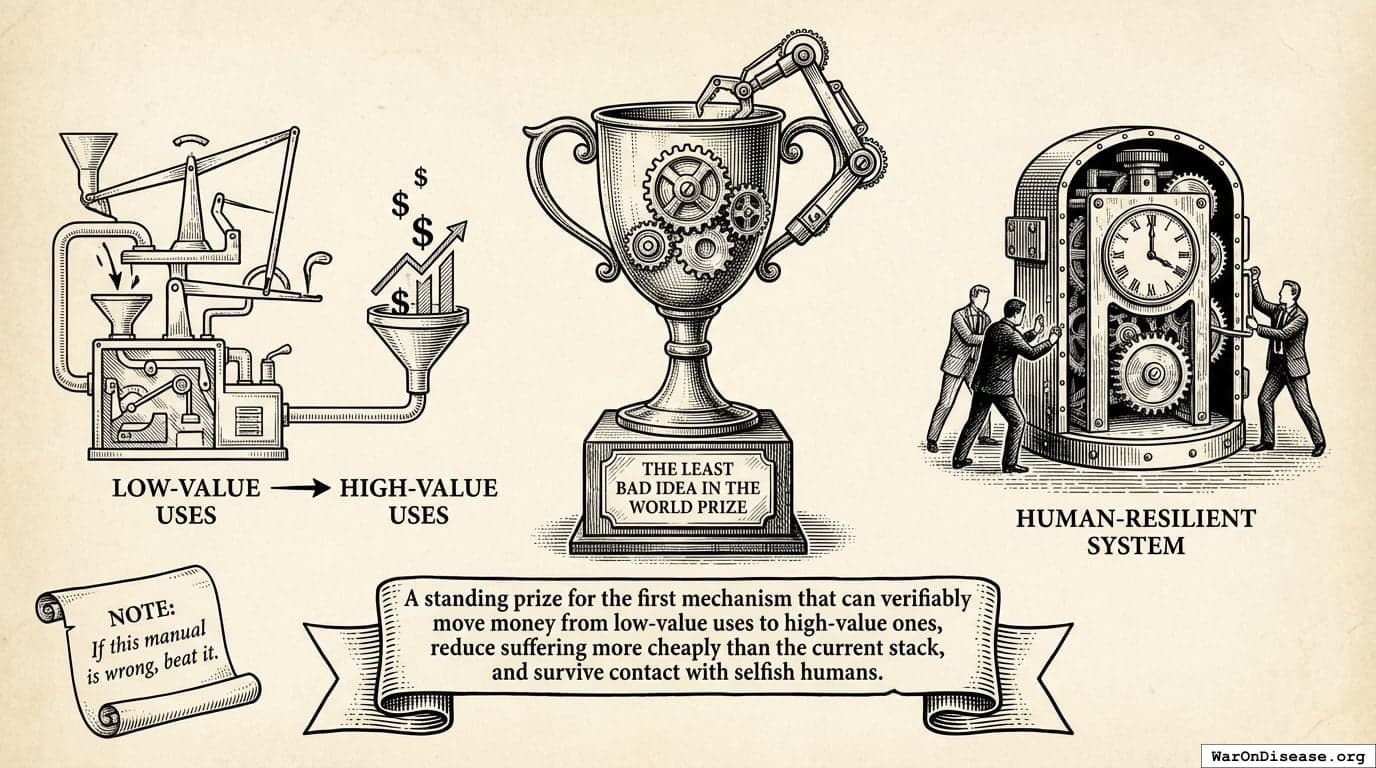
The Earth Optimization Prize
Reward humanity for raising healthy life years and median income within 15 years. PRIZE keeps depositors on the failure branch, VOTE rewards recruiters on the success branch, and Earth Optimization Protocol v1 is only the current instruction manual for trying to win.
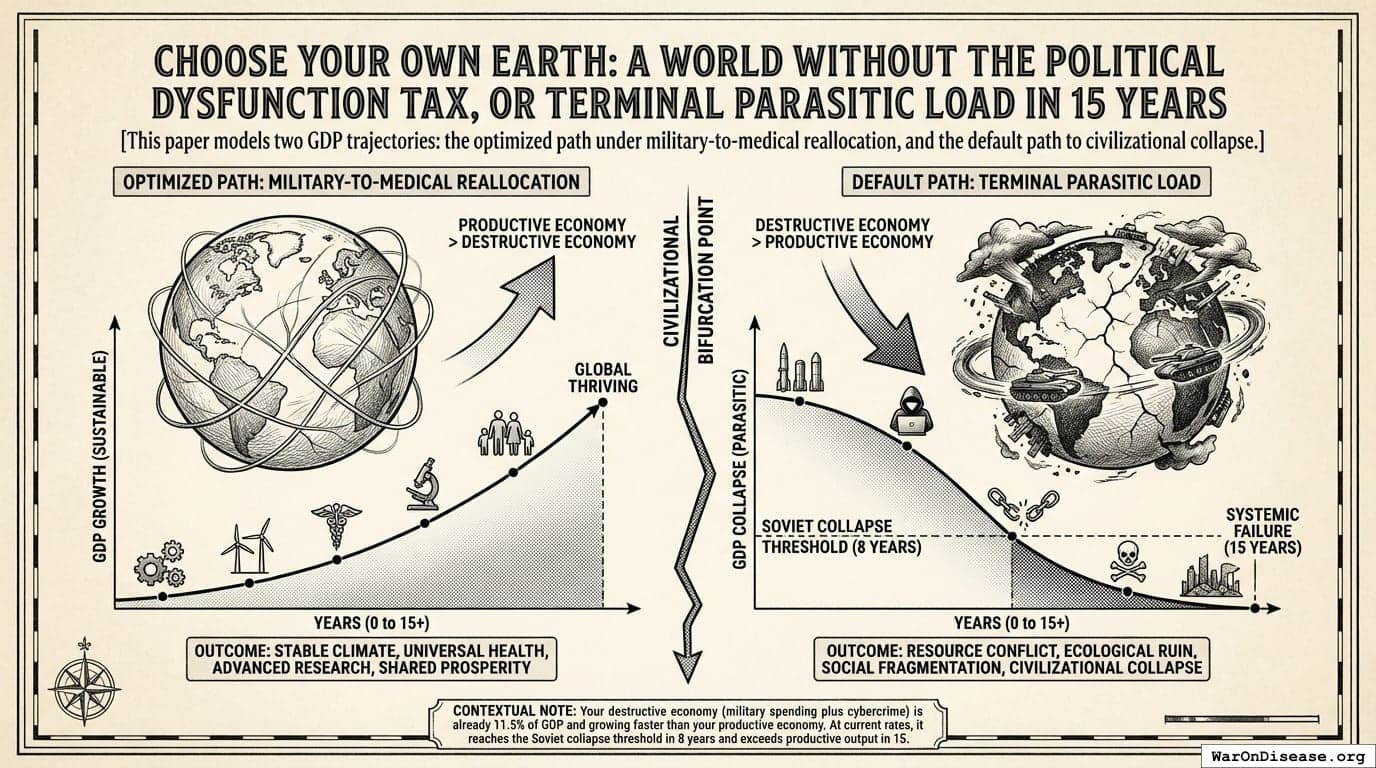
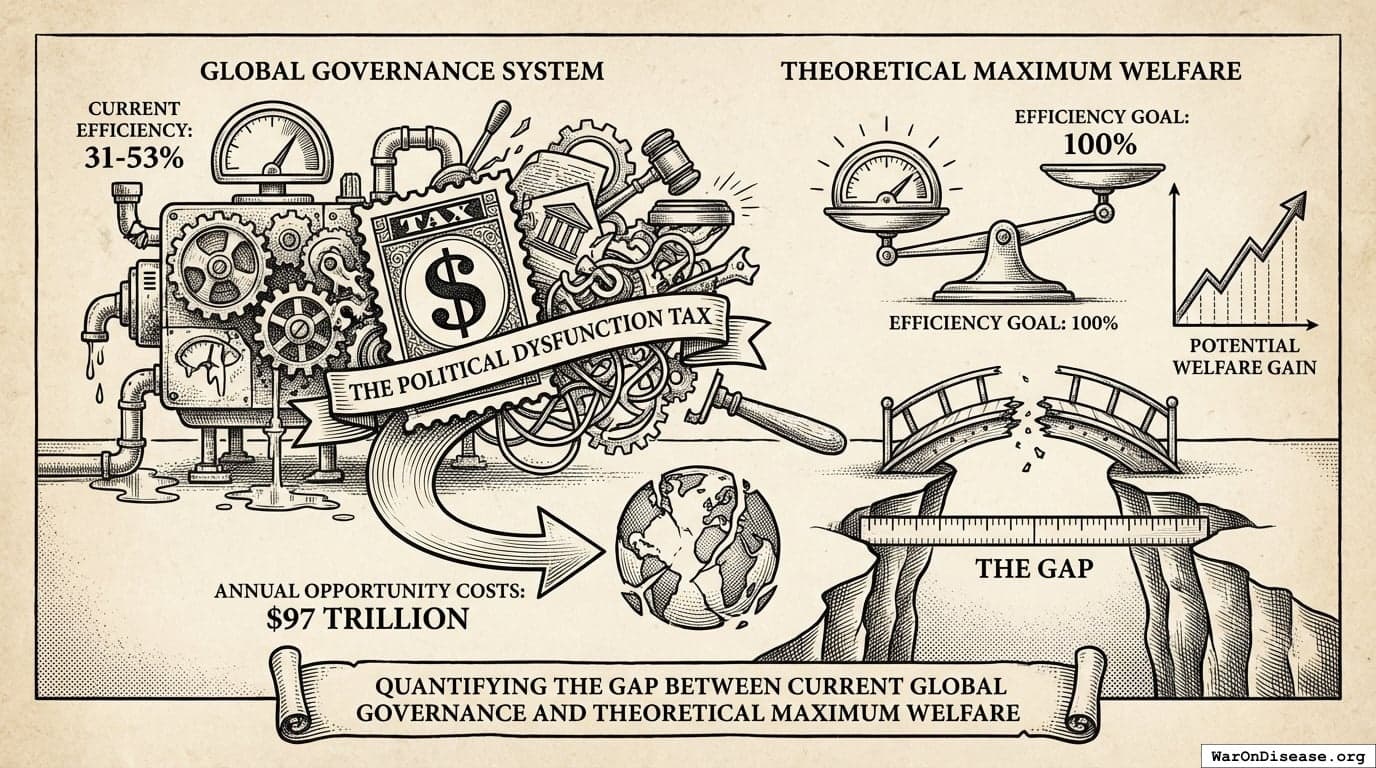
Choose Your Own Earth: A World Without the Political Dysfunction Tax, or Terminal Parasitic Load in 15 Years
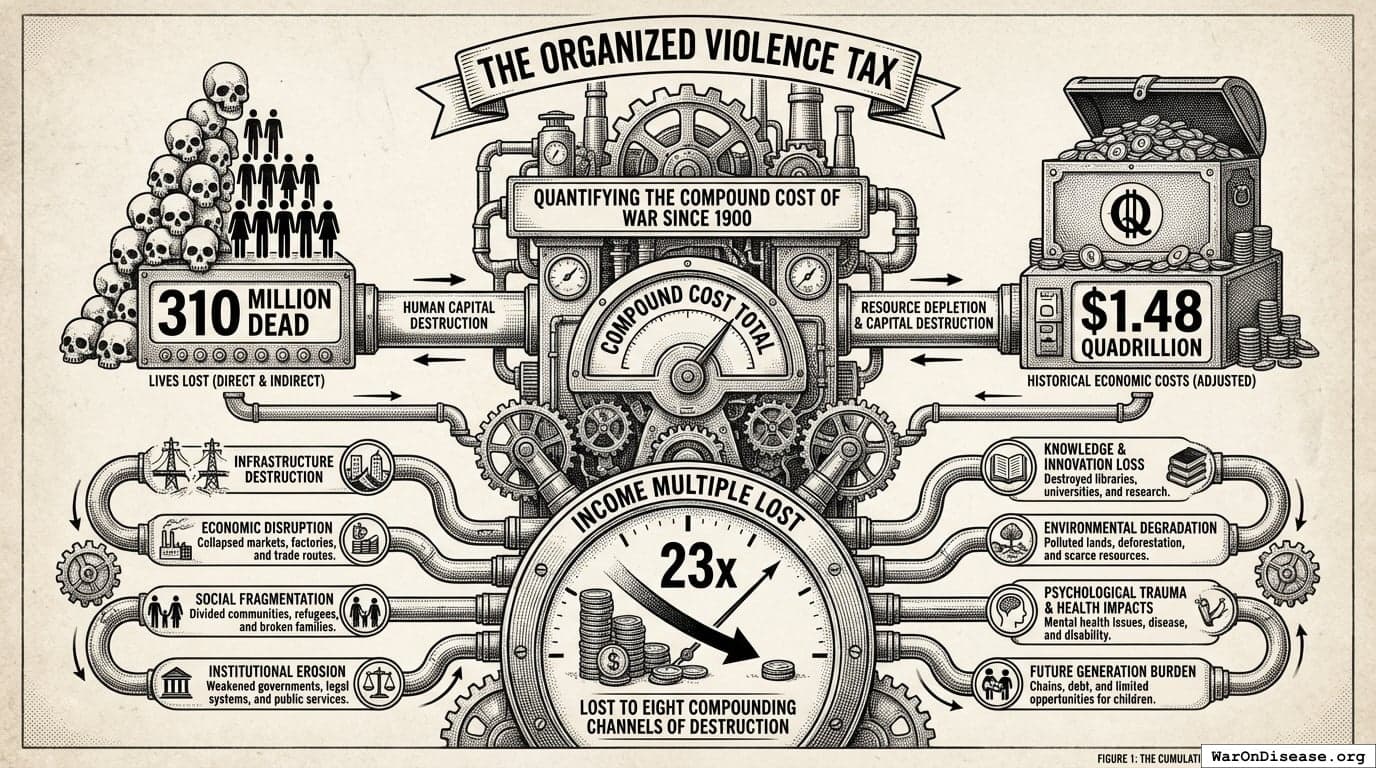
Your destructive economy (military spending plus cybercrime) is already 11.5% of GDP and growing faster than your productive economy. At current rates, it reaches the Soviet collapse threshold in 8 years and exceeds productive output in 15. This paper models two GDP trajectories: the optimized path under military-to-medical reallocation, and the default path to civilizational collapse.

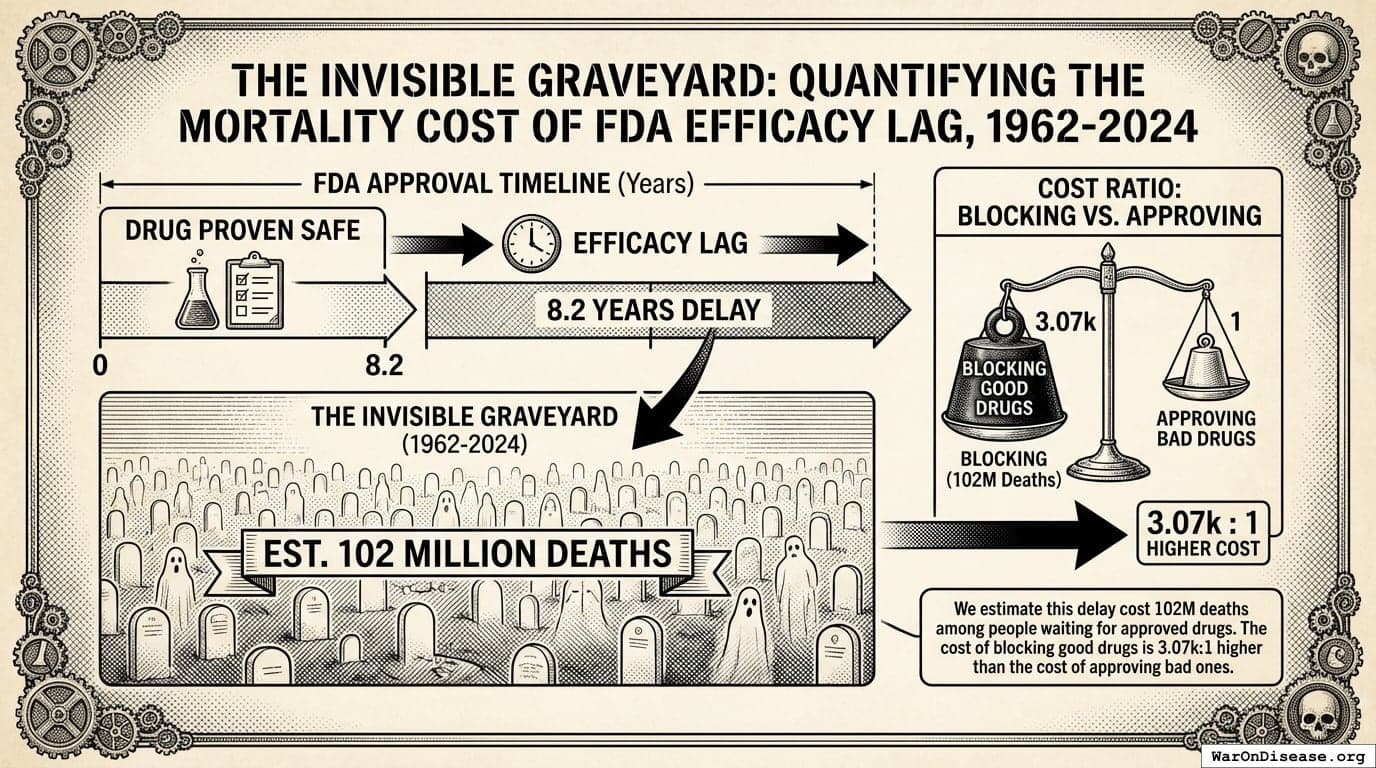
The Invisible Graveyard: Quantifying the Mortality Cost of FDA Efficacy Lag
After proving a drug is safe, the FDA requires 8.2 years to prove it works before patients can access it. We estimate this delay cost 102 million deaths among people waiting for approved drugs (1962-2024). The human cost in death and disability of blocking good drugs is 3.07k higher than the cost of approving bad ones.

The Loving Takeover
The companies that build the weapons are publicly traded. For roughly $110 per human, you buy all of them, replace the boards, and hand the lobbyists an optimal budget calculated to maximize median healthy lifespan and median income. The takeover is loving because existing shareholders, employees, and directors live longer and get richer. Nobody loses.
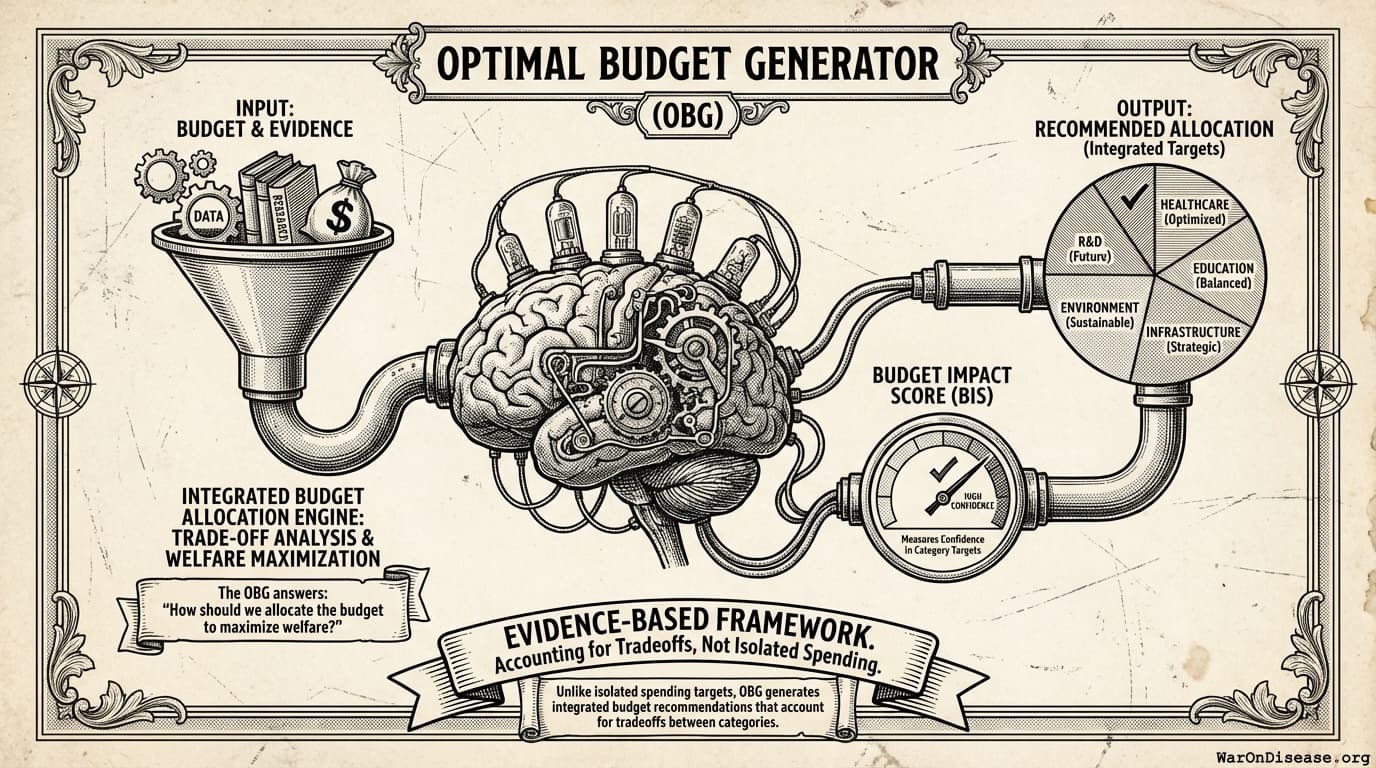
The Optimal Budget Generator: A Causal Inference Protocol for Maximizing Median Health and Wealth Through Public Goods Funding
The Optimal Budget Generator (OBG) uses causal inference, diminishing returns modeling, and cost-effectiveness evidence to determine optimal public goods funding levels that maximize two welfare metrics: real after-tax median income growth and median healthy life years. For each spending category, OBG estimates an Optimal Spending Level (OSL) and produces a gap analysis showing where current government budgets are over- or underfunded relative to evidence-based benchmarks. The Budget Impact Score (BIS) measures confidence in each recommendation based on the quality of causal evidence.
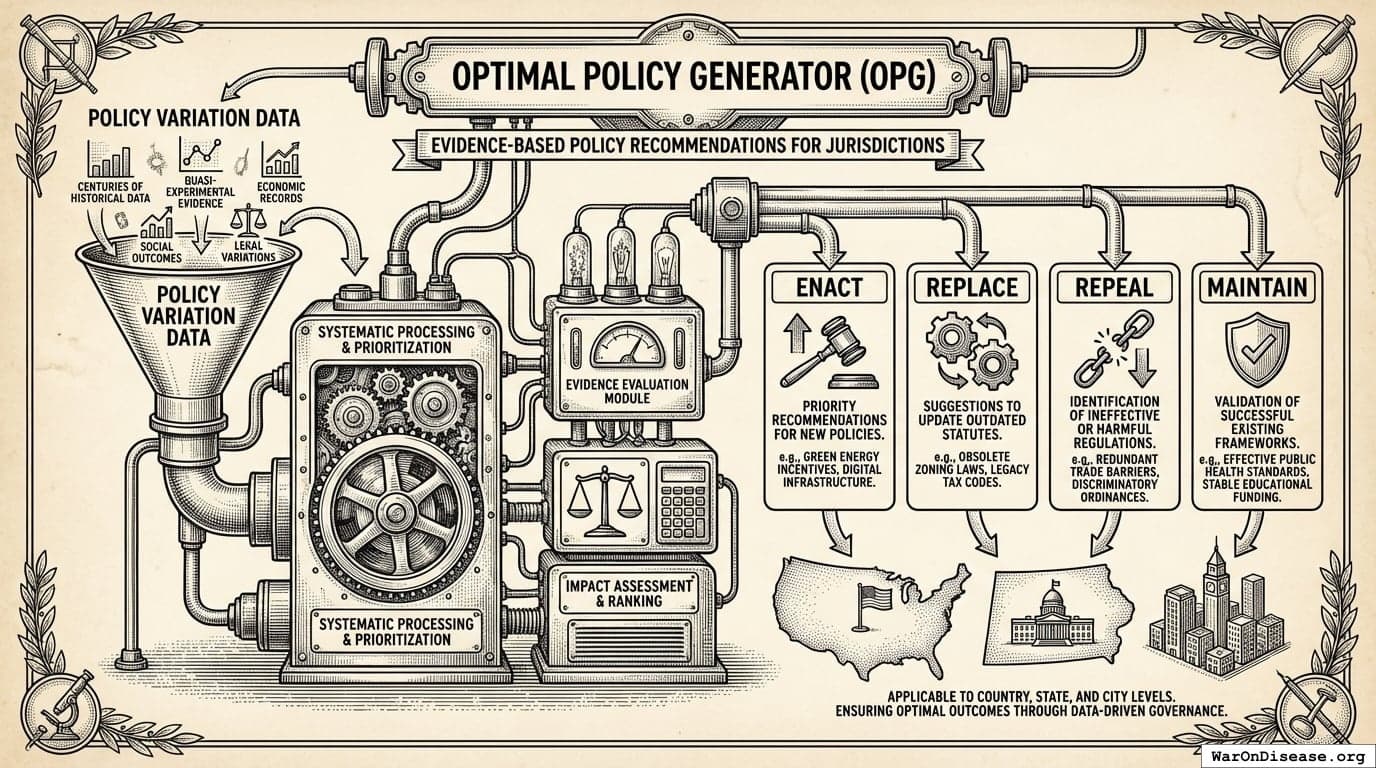
The Optimal Policy Generator: A Causal Inference Protocol for Maximizing Median Health and Wealth Through Public Policy
The Optimal Policy Generator (OPG) produces systematic public policy recommendations for jurisdictions at any level (country, state, city), generating prioritized enact/replace/repeal/maintain recommendations to maximize real after-tax median income growth and median healthy life years, based on quasi-experimental evidence from centuries of policy variation data.
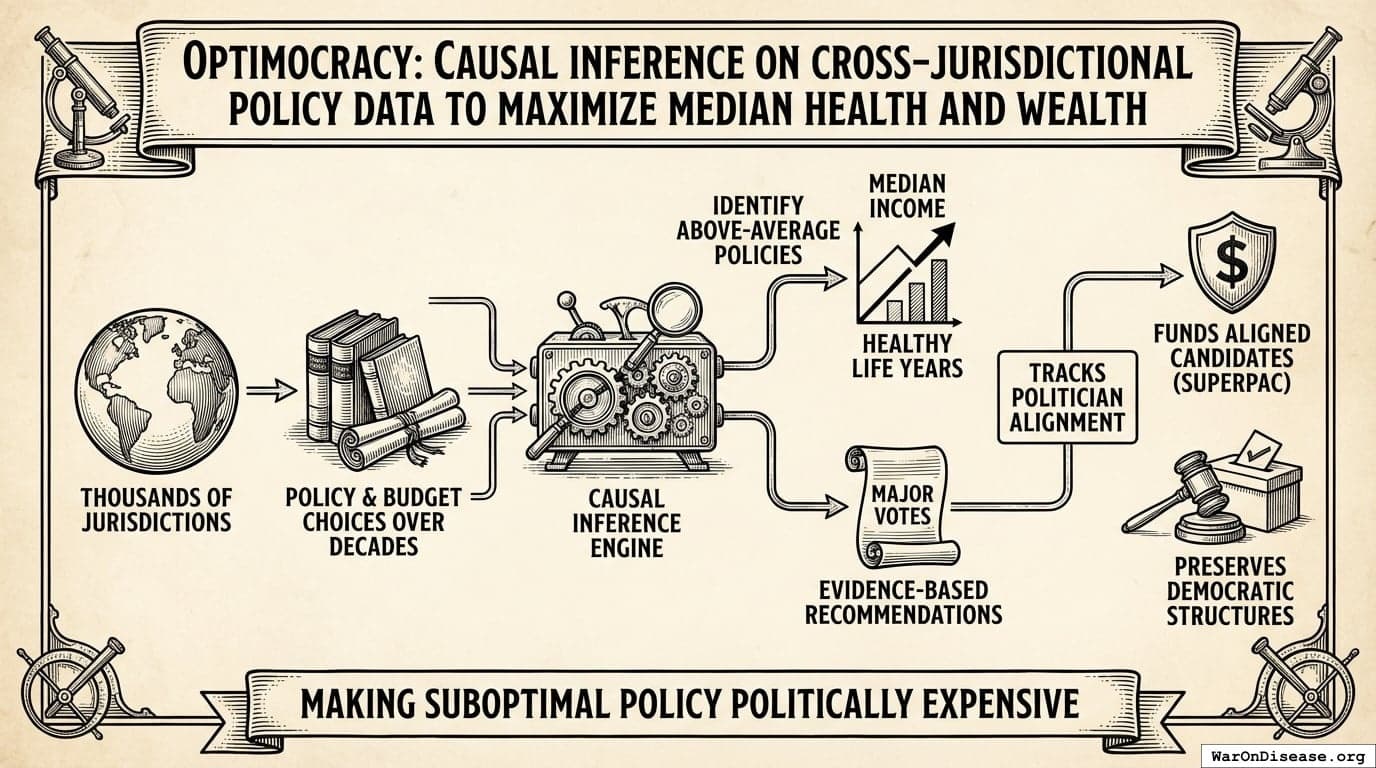
Optimocracy: Causal Inference on Cross-Jurisdictional Policy Data to Maximize Median Health and Wealth
Thousands of jurisdictions have made different policy and budget choices over decades, creating a natural experiment. Optimocracy applies causal inference to this cross-jurisdictional time-series data to identify which policies predict above-average median income and healthy life years. It then publishes evidence-based recommendations for every major vote, tracks politician alignment, and funds aligned candidates via SuperPAC, making suboptimal policy politically expensive while preserving democratic structures.


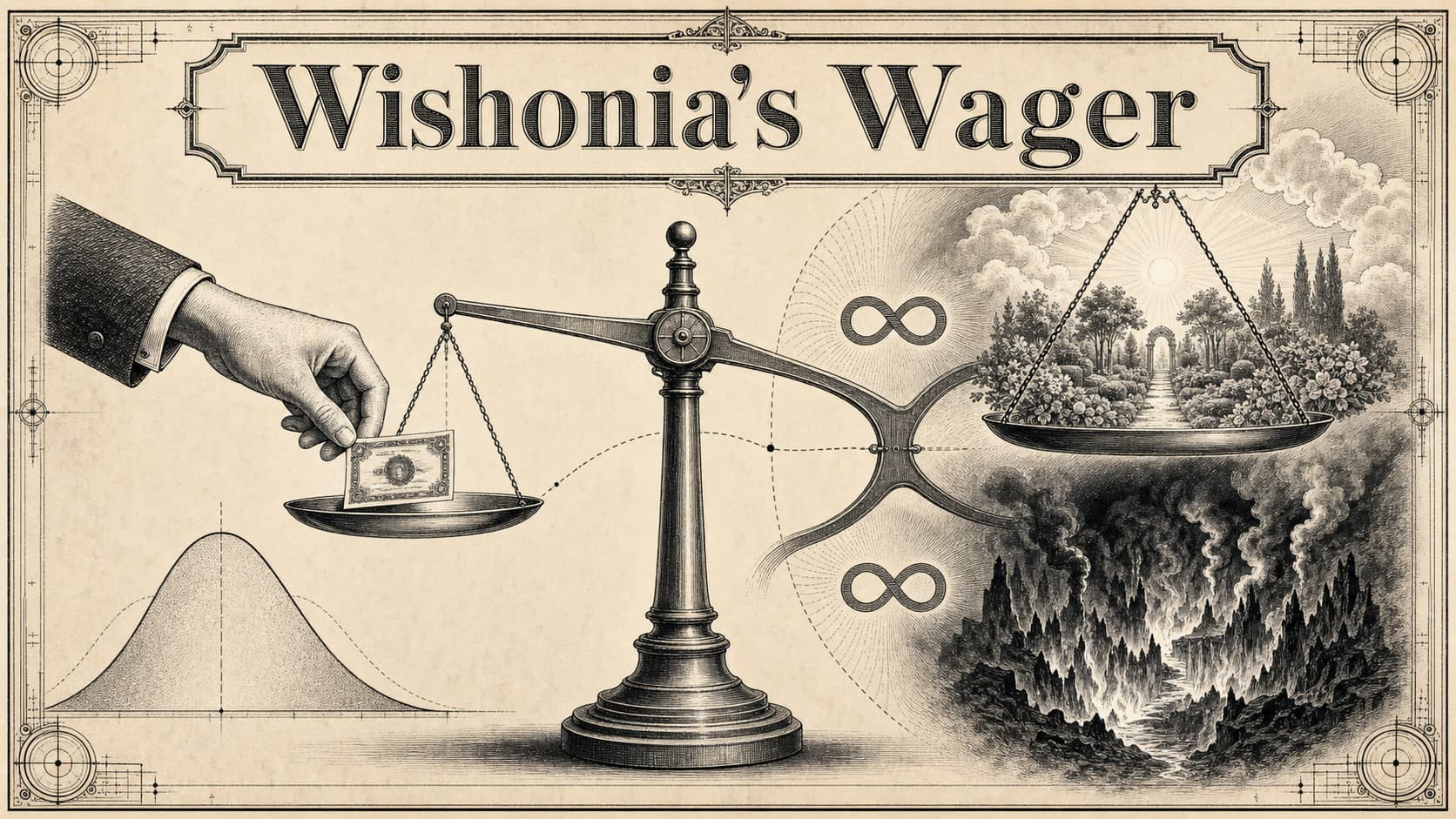
Wishonia's Wager: Any Finite Action Is Rational When the Stakes Are Infinite
A reconstruction of Pascal's Wager with its defects removed. Two propositions cannot be disproven: that a conscious being may suffer without end, and that it may flourish without end. Both carry nonzero probability and infinite magnitude, so any finite action that shifts probability from the first toward the second has unbounded expected value. Unlike Pascal's, the wagered action is empirical, not theological: funding the clinical trials that extend healthy lifespan and modify conscious experience.